




Boosting Engagement and Efficiency with InstantSearch and Merchandising

Use Cases and Deployment Scope
he implementation of Algolia has fundamentally transformed our platform's discovery phase by addressing the critical friction point of search abandonment. By leveraging Algolia’s sophisticated typo tolerance, we have effectively eliminated the "no results" barrier that often occurs when users make minor spelling errors or phonetic guesses. This ensures that the search interface remains resilient and helpful, guiding users toward the products they intend to find rather than forcing them to restart their journey. This optimization has served as a primary driver for higher conversion rates, as it maintains a fluid path from initial intent to the product page.Furthermore, we have moved beyond a one-size-fits-all search model by integrating Algolia’s AI-powered personalization engine. By capturing and analyzing individual search and click-stream data, the system now dynamically re-ranks results to align with each customer’s unique preferences and historical behavior. This transition to a more intuitive, intent-based discovery experience ensures that the most relevant items are surfaced immediately, significantly reducing the time-to-purchase. The result is a highly personalized digital environment that not only enhances the overall customer experience but also builds long-term brand loyalty through a more relevant and engaging interface.
Pros
- Typo-tolerance
- Documentation is easy to navigate and all encompassing
- Easy Integration to frameworks
- Advanced Query Suggestions and Synonyms
- Custom Ranking and Rules Engine
Cons
- API integration documentation for Laravel Scout could be improved with more step-by-step examples.
- For a beginner, its is quite a steep learning curve to implement API's in relating applications.
- Simplified UI for complex Ranking and Sorting rules
- While Algolia is incredibly powerful, the usage-based pricing model can become difficult to forecast as a business grows. For high-traffic stores, the cost per search or record can escalate quickly, making it a significant expense compared to self-hosted alternatives. Providing more granular cost-control tools or more flexible tiers for high-volume users would help in planning long-term budgets.
Return on Investment
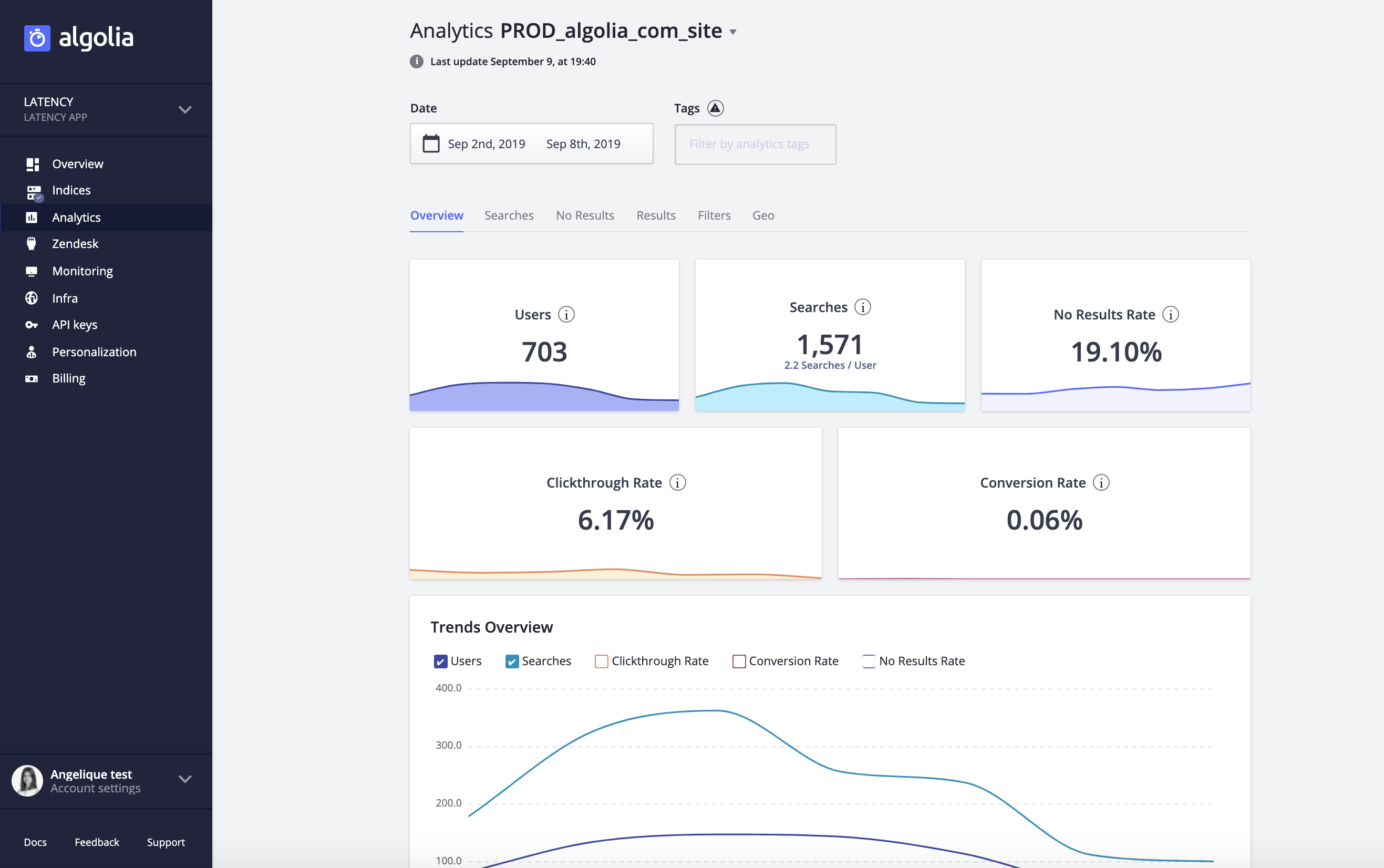
- After implementing InstantSearch, our team observed a 24% increase in click-through rate and a 45% boost in conversion rate. Additionally, the bounce rate on category pages dropped by 15% following the introduction of Merchandising.
- The time to conversion decreased from an average of 4 minutes to just 60 seconds, thanks to accurate search results being instantly delivered to customers' queries, saving them valuable time.
- Following the launch of the enhanced typo tolerance and synonym mapping, we observed a 10% decrease in customer support inquiries regarding product availability. Customers who previously reached out because they "couldn't find" a specific item are now successfully self-serving through the search bar. This reduction in support volume has allowed our team to allocate resources more effectively toward complex customer needs rather than basic navigation assistance.
- Given the limited screen real estate on mobile devices, Algolia’s "InstantSearch" results were a game-changer. We saw a 35% increase in mobile-specific conversions because users no longer had to navigate through deep menu hierarchies; they could find and purchase products with just a few taps. The speed and accuracy of the mobile search experience have bridged the gap between desktop and mobile performance across our store.
Usability
Alternatives Considered
Typeset
Other Software Used
Microsoft Teams, Microsoft Visual Studio Code, PhpStorm


