
TrustRadius: an HG Insights company

IntelliJ IDEA

Score9.3 out of 10

361 Reviews and Ratings

What is IntelliJ IDEA?

IntelliJ IDEA is an IDE that aims to give Java and Kotlin developers everything they need out of the box, including a smart code editor, built-in developer tools, framework support, database support, web development support, and much more.

Media

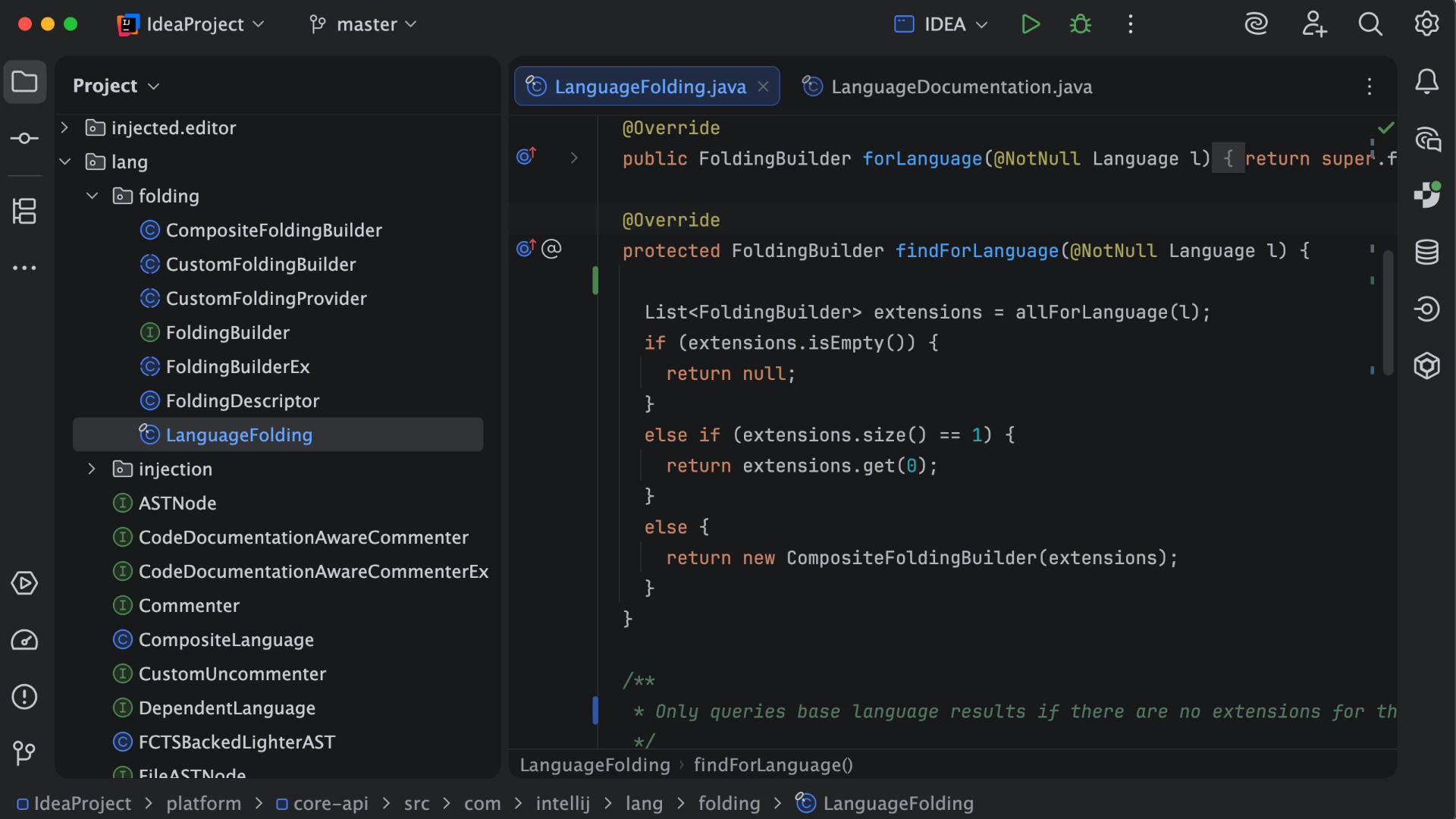
IntelliJ IDEA interface overview: the Project tool window (left) outlines the code structure and the Editor (right) is used to read, write, and explore the source code.
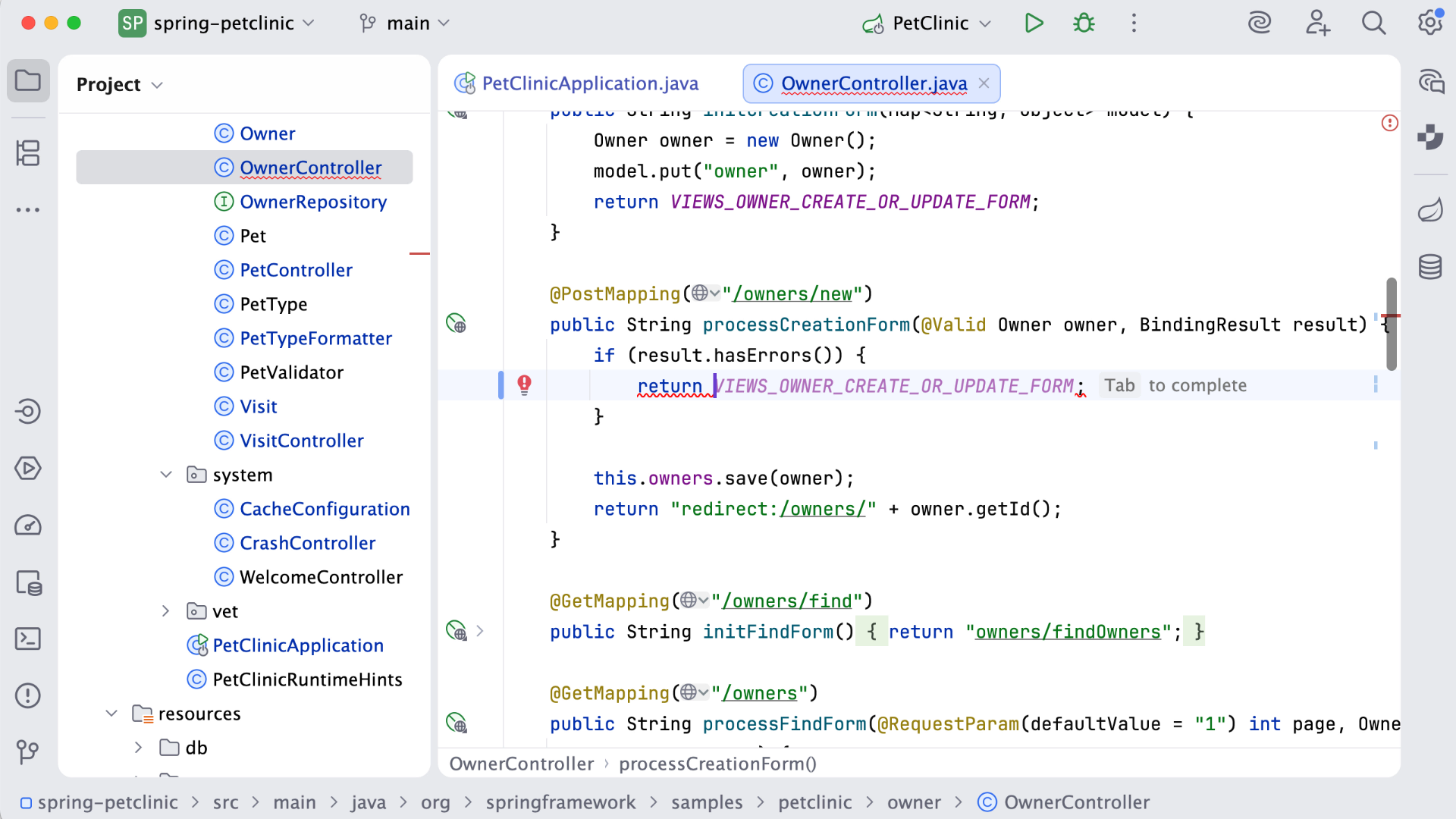
IntelliJ IDEA analyzing the context. It then suggests the most applicable and relevant code.
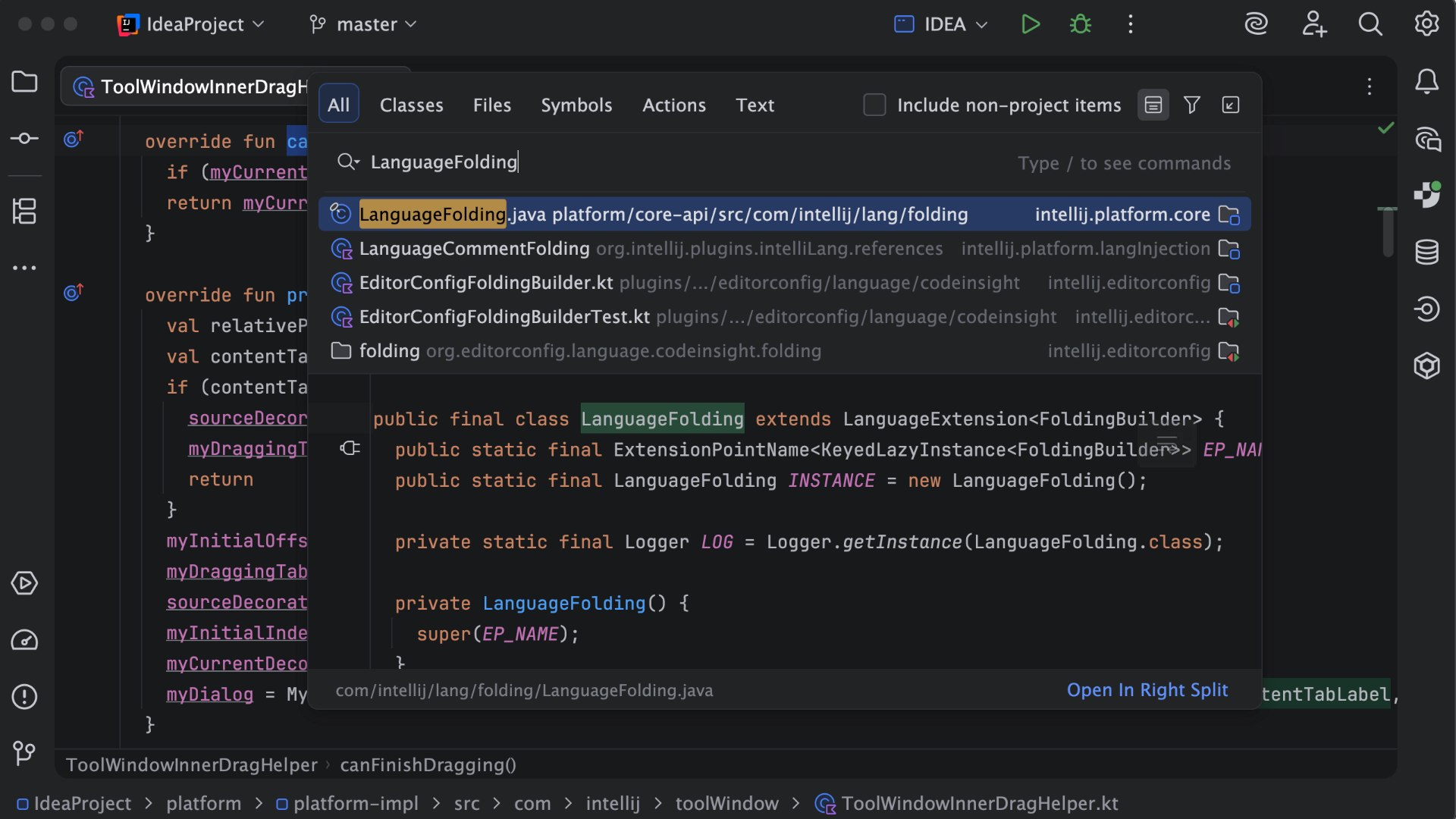
the Search Everywhere window, where users can search for files, actions, classes, symbols, settings, UI elements, and anything in Git, all from a single entry point.
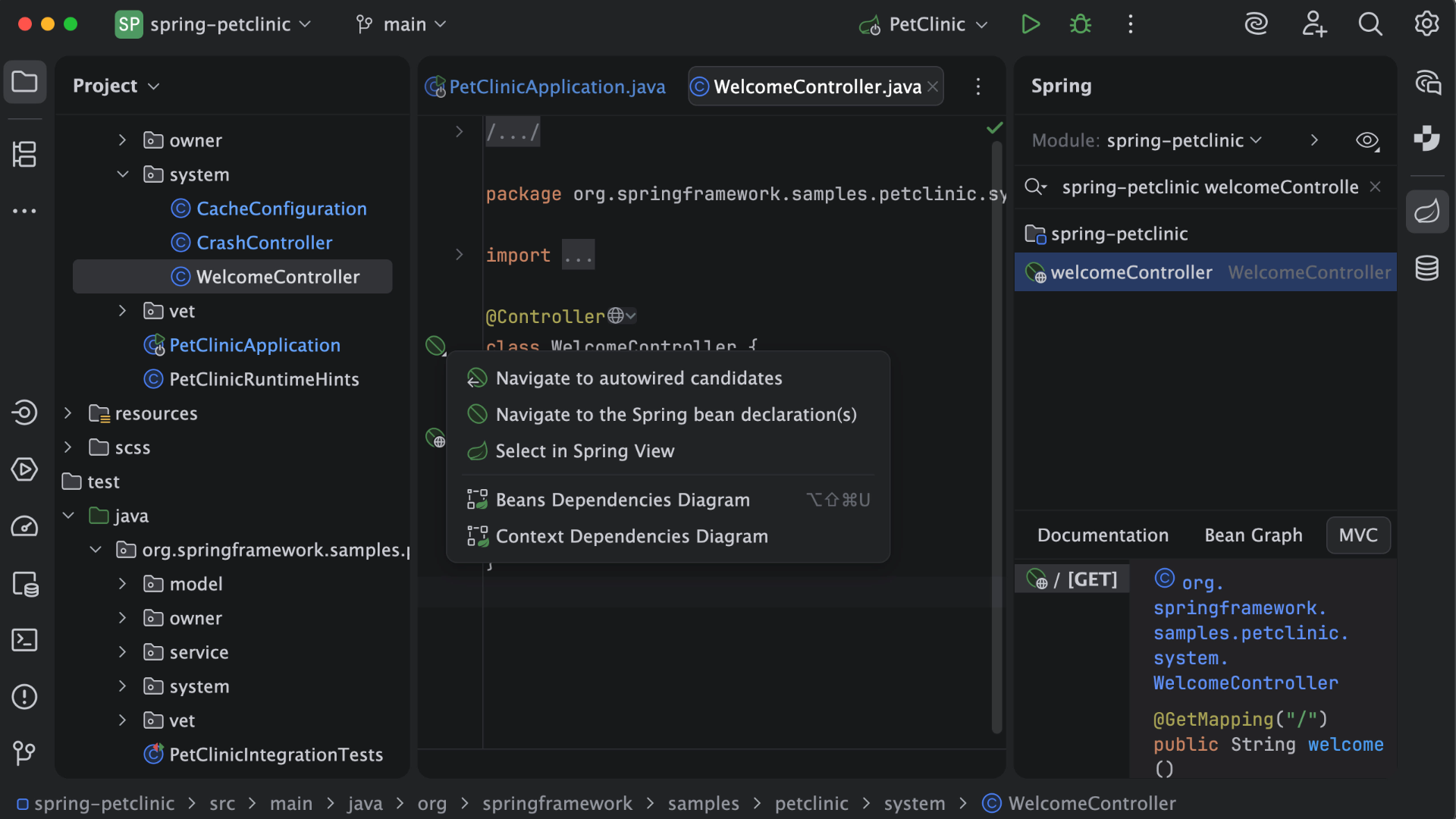
IntelliJ IDEA's support for frameworks with dedicated assistance for Spring and Spring Boot, Jakarta EE, JPA, Reactor, and other popular frameworks.
the AI Assistant that provides features for software development. It can explain code, answer questions about code fragments, provide code suggestions, generate documentation, and commit messages.
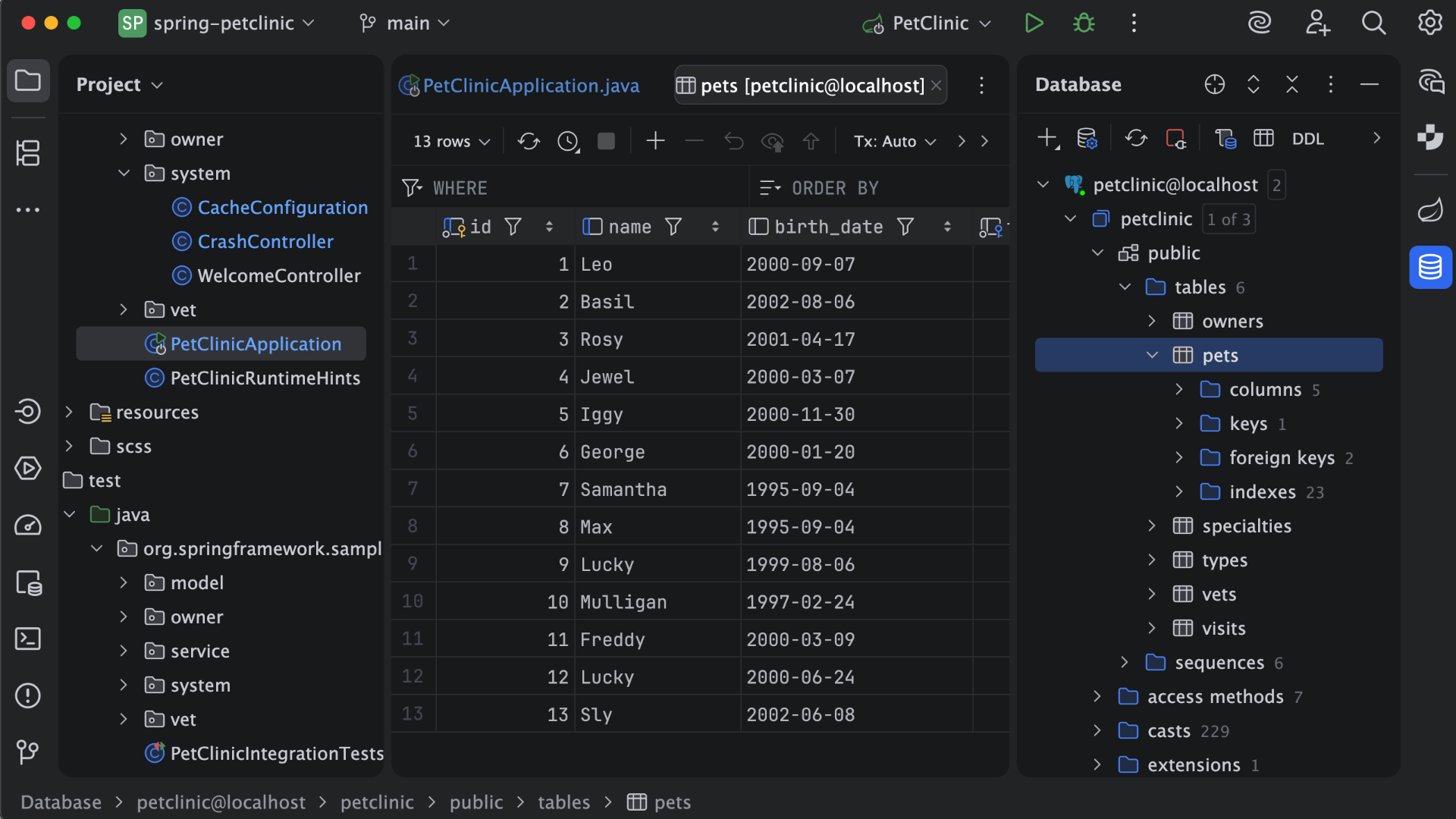
the interface to run queries, connect to databases, browse and export data, and manage schemas.

1 / 6

IntelliJ IDEA: A Java Developer's Dream IDE.

Use Cases and Deployment Scope

We use Intellij IDEA as our main IDE for all backend development and, in many cases, front-end development, although some developers prefer to use VSCode. But as far as backend development is concerned, IDEA is our main IDE. We use it for not just coding but also debugging, unit/integration testing, and general note-taking.

Pros

  • Ability to do line by line debugging.
  • Support for Java and Kotlin.
  • Support for general purpose scratch file creation which can be added to git if needed.
  • Pretty robust Git GUI which helps a lot while doing VCS Management.

Cons

  • I think can have a bit better debugging support by having a more robust hotswap.
  • Vis-a-vis front-end development would be good if we built a better Playright testing framework.
  • The GitHub copilot does not always produce code that can be lifted-and-shifted.

Return on Investment

  • Increased developer productivity in terms of coding and development.
  • Increased dev productivity when it comes to testing.
  • And GitHub copilot has helped the need for auto-generating code, thereby reducing a lot of time spent in writing tests.

Usability

Alternatives Considered

Eclipse

Other Software Used

Jira Work Management, Splunk Enterprise, VMware Aria Operations for Applications, Postman, Slack

Insights into IntelliJ IDEA.

Use Cases and Deployment Scope

I use IntelliJ IDEA for software development, primarily in Java programming. Our organization has product offerings, which are essentially SaaS products, so software development is the core of our organization. It is of utmost importance for my organization to be efficient in doing software development and, at the same time, not compromise on the security and quality of the code. IntelliJ IDEA makes this process much more convenient by providing a comprehensive environment where developers can write code, integrate the project with a database, develop pipelines, etc. One doesn't need to leave the IDE(IntelliJ IDEA) for most of their development tasks, such as using shell, running unit tests, running the project, version control, etc. IntelliJ IDEA also has excellent support for plugins to further enhance developer productivity.

Pros

  • Project Navigation and finding usage.
  • Suggestions for improving code quality.
  • Local deployment of the application and integration with git, SONAR Lint.
  • Auto-completion.
  • Database connectivity, Terminal shell and other integrations.

Cons

  • Finding if a feature exists or not in IntelliJ IDEA can be challenging.
  • For example, if we know how to format a particular file, the command is Ctrl+Alt+Shift+L, but if we don't, then finding it is difficult.
  • Setting up a project interpreter and directory structure might not be intuitive at first.
  • Git integration can be improved. For example, it isn't easy to rebase using UI in IntelliJ IDEA.

Return on Investment

  • IntelliJ IDEA has definitely proven to be a good return on investment. It has improved developer productivity by at least 50%, as developers don't have to switch between different tools for things like giving shell commands, checking database entries, etc.
  • With our recent integration with an AI code assistant tool, development time has been further reduced by at least 30%. This tool can suggest the structure of methods and classes and generate code within those functions.
  • With the license server model and our organization's geographical distribution, we saved some more on the cost, bringing the return on investment to an even higher value.

Usability

Alternatives Considered

Eclipse and Microsoft Visual Studio Code

Other Software Used

Codeium, PyCharm, Taskade

An IDE(A) that works for everything.

Use Cases and Deployment Scope

We have been using IDEA for our Android, Web / PHP, Java, React, and React Native projects for almost a decade now - I like how compact and customizable it is - while providing unparalleled non-LLM predictions and code analysis. Having the same IDE across all these platforms is a huge time saver and convenience. It also integrates well into their ecosystem (like Hub, YouTrack, and TeamCity), and self-hosting these is easier than ever since they are available as docker images.

Pros

  • Intuitive UI/UX.
  • Code analysis.
  • Customization
  • Plugins

Cons

  • There are way too many side menus accomplishing the same or similar goal. It would probably be much better if they were merged together.

Return on Investment

  • Their startup discount of 50% is pretty helpful for smaller companies.
  • The way IDEA can fit almost any language or project is a great way to save on purchasing several different IDEs.

Usability

Alternatives Considered

Microsoft Visual Studio, Microsoft Visual Studio Code, NetBeans, Eclipse, Xcode and Arduino

Other Software Used

TeamCity, YouTrack, Microsoft Visual Studio

IntelliJ IDEA is my preferred IDE

Use Cases and Deployment Scope

IntelliJ IDEA is my business unit's go to IDE for our product and project work. We primarily work in Java but with IntelliJ IDEA's extensive plugin offerings, I have used it with other languages as well. In the regulatory environment where I work, it's easy to learn and use shortcuts allow me to do hours of work in a few minutes.

Pros

  • Convenient shortcuts that are easy to learn
  • User friendly interface
  • Extensive plugin offering

Cons

  • Over simplified UI changes
  • More integration with AI
  • Customizable shortcuts

Return on Investment

  • The easy to learn and use shortcuts have created an environment of learning and sharing in my organisation.
  • Quick on boarding of knowledge from people who have been using it to people who have not.
  • Transforming hours of work into minutes.

Usability

Alternatives Considered

JetBrains Rider, PyCharm, Microsoft Visual Studio Code, Microsoft Visual Studio, WebStorm and CLion

Other Software Used

JetBrains Rider, Microsoft Visual Studio Code, CLion, WebStorm, PyCharm, ChatGPT, Atlassian Confluence, HashiCorp Terraform, AWS CloudFormation, Google Cloud CLI, Azure Cloud Shell

Defacto, efficient IDE for Java applications

Use Cases and Deployment Scope

IntelliJ IDEA is our preferred IDE for developing enterprise Java applications. Over 10000 developers use the IDE across over 300k repositories, which drives the core infrastructure of the bank, generating revenue in billions. We use it to write code, build and test our Java applications. Since our firm is a banking organization built on a complex, in-house technology and infrastructure system, an IDE is the fundamental building block.

Pros

  • Excellent plugin support for running Java applications
  • Easy to use and intuitive code editor with great syntax highlighting
  • Great inbuilt build tool support to run and debug applications from the browser

Cons

  • Its version control integration is slightly complex compared to VS code, not allowing us to stage, unstage changes easily, meaning most developers are forced to use the terminal
  • It is extremely heavy on RAM consumption and often hangs up on low RAM machines
  • Despite being the defacto Java IDE, It doesn't provide additional features to help move debug recurring Java errors

Most Important Features

  • In built maven support - supports the entire maven lifecycle from clean to deploy via just clicks. Avoids having to manually type in commands or bring external configuration
  • In built Lombok preprocessing - we needn't manually type redundant boilerplate code
  • Syntax auto suggestion - saves time on looking up standard method names

Return on Investment

  • Has greatly enhanced developer productivity by over 20% with the help of its fast syntax highlighting
  • Improved deployment cycles and reduced testing time by inbuilt syntax and sonar testing
  • Easier and more scalable way to write and maintain complex codebases, reducing the learning curve

Alternatives Considered

Microsoft Visual Studio Code

Other Software Used

Microsoft Visual Studio Code, Gitpod, Todoist: To-Do List & Task Manager