TrustRadius: an HG Insights company

Microsoft Defender for Endpoint

Score8.8 out of 10

281 Reviews and Ratings

What is Microsoft Defender for Endpoint?

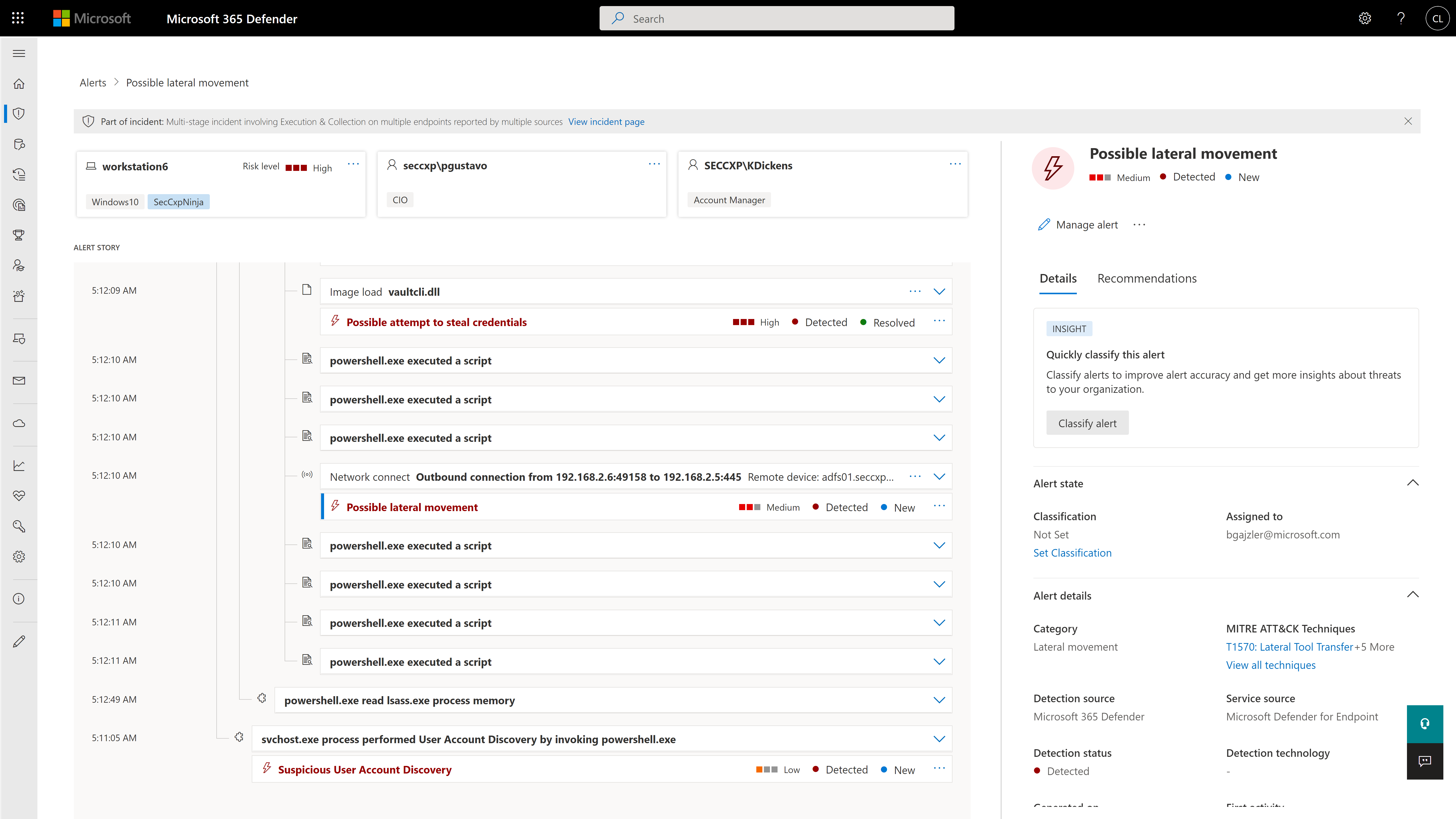
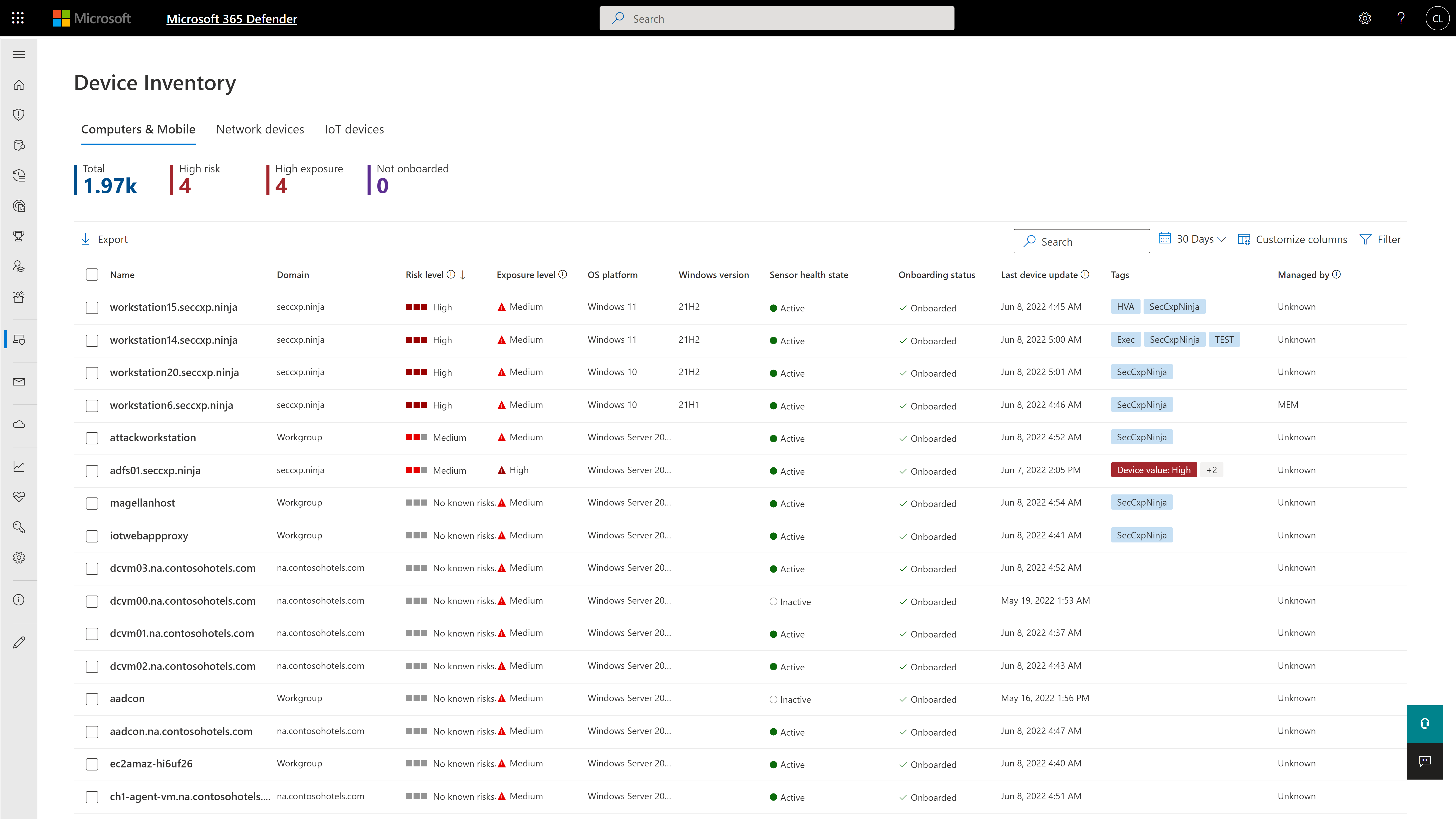
Microsoft Defender for Endpoint (formerly Microsoft Defender ATP) is a holistic, cloud delivered endpoint security solution that includes risk-based vulnerability management and assessment, attack surface reduction, behavioral based and cloud-powered next generation protection, endpoint detection and response (EDR), automatic investigation and remediation, managed hunting services, rich APIs, and unified security management.

Categories & Use Cases

Media

blocked activities
Detects & responds
discovers vulnerability
Eliminates blind spots
Risk management

1 / 5

Top Performing Features

  • Malware Detection

    Detection and blocking of zero-day file and fileless malware.

    Category average: 9.1

  • Endpoint Detection and Response (EDR)

    Continuous monitoring and response to advanced internet threats by endpoint agents.

    Category average: 9.1

  • Infection Remediation

    Capability to quarantine infected endpoint and terminate malicious processes.

    Category average: 8.6

Areas for Improvement

  • Centralized Management

    Centralized management supporting multi-factor authentication, customized views, and role-based access control.

    Category average: 8.7

  • Vulnerability Management

    Vulnerability prioritization for fixes.

    Category average: 8.6

  • Hybrid Deployment Support

    Administrators should be able to choose endpoint security on-premise, cloud, or hybrid.

    Category average: 8.1

Offers Solid Protection Against Attacks at the Endpoints.

Use Cases and Deployment Scope

We use the Microsoft Defender for Endpoint to protect data at the endpoints. Helps to keep employees laptop, desktops, phones and other devices secure and protect against cyber threats. Offers a strong encryption scheme that helps to protect data organizational data from getting in wrong hands in-case of lost of a device.

Pros

  • Protects devices from cyber attacks ( Malware and Spyware)
  • Responding to threats in real-time.
  • Automates cyber threat protection and response.
  • Seamless integration with Microsoft ecosystem.
  • Offers reliable security monitoring.

Cons

  • Learning curve for advanced features.
  • False positive in occasional instances.

Return on Investment

  • Enhances security at the endpoints.
  • Helps to boast productivity by elimination of interruptions.
  • Enhances compliance and disaster recovery.

Usability

Other Software Used

Barracuda Backup, Microsoft 365

Microsoft Defender for Endpoint should just be enabled by default

Use Cases and Deployment Scope

[...] is a manufacturing company headquartered in Montreal. We have offices across Canada and the United States. Microsoft Defender for Endpoint is deployed across our entire organization. Having a cloud based solution with a single pane of glass to manage all our assets is of the highest importance to us. Being able to receive immediate alerts when suspicious activity occurs has been extremely helpful in keeping our risks at a minimum. Microsoft Defender for Endpoint management is also smart enough to not send several alerts when an attack could be hitting multiple targets within a certain time frame or it's the same attack multiple times.

Pros

  • Consolidate alerts so you are not overwhelmed
  • Integrates with Microsoft products
  • Already licensed if you're using Office Premium or higher enterprise licenses

Cons

  • Management Interface needs work
  • Digging through analysis is not always informative
  • Constant clicking around to find all the relevant information

Return on Investment

  • Microsoft Defender for Endpoint has alerted our team when users clicked on phishing links in emails and we were able to prevent any harm
  • When a website frequently visited was compromised, Microsoft Defender for Endpoint quickly quarantined the file that was auto-downloaded.
  • The alerts for the website download were all consolidated to one incident making it easier to manage.

Usability

Return on Investment

We have Microsoft Defender for Endpoint installed across our entire organization with offices in Canada and the United States. All our workstations are Microsoft Windows based. Our servers are all Microsoft Windows Server and we have a few on-premise servers at our headquarters as well as several hosted on Microsoft Azure.

Alternatives Considered

BlackBerry Protect (CylancePROTECT) and BlackBerry Optics (CylanceOPTICS)

Other Software Used

Sage 300, WatchGuard AuthPoint

My Insights on Microsoft Defender.

Use Cases and Deployment Scope

We use the Microsoft Defender for Endpoint protection and threat response. It helps protect our organization's servers and cloud from any attacks, thus keeping our data secure. The tool helps to ensure that our endpoints are secure from any threat through threat detection and elimination automation.

Pros

  • Proactive threat detection and protection.
  • Offers comprehensive endpoint security.
  • Offers advanced threat protection.

Cons

  • Sometimes it gives false positives.

Return on Investment

  • Improved security posture.
  • Saves time.

Usability

Microsoft Defender for Endpoint

Use Cases and Deployment Scope

We basically have it on every machine and every server. The business problem it addresses is scanning our network for detectable threats, outdated software, software exploits, and vulnerabilities, and then telling us we need to get them remediated.

Pros

  • I do like the alert system, how it's picking up on things and alerting us about it, and then giving us the recommendations on remediating that particular issue.

Cons

  • The only thing is sometimes, because Microsoft has so many platforms, it gets a little confusing, like am I in the security platform? Am I in Purview? Where am I at right now? Because there's so many sites that are kind of doing a lot of the same thing, and so that does get a little confusing from time to time, but outside of that, it's a pretty good product.

Return on Investment

  • We're a young company in the field of security, not a young company, but in this area, we are young, and it's been a good starting point for us to get our security system as a whole in place.

Usability

Return on Investment

It's about 130. Windows server.

Microsoft Defender for Endpoint Review

Use Cases and Deployment Scope

We use Microsoft Defender for Endpoint as our EDR solution. We used to have a traditional AV. So the transition from the AV to the EDR was a tremendous improvement from our soft team. So we are definitely happy with it. And the scope of the use cases, the entire endpoint, plus the older software system as well.

Pros

  • Definitely on the threat action and response. We didn't have a stress-response option before, but the dependent brand point provided it instantly. Also, it's doing UVA and machine learning, which we didn't have before. So it's definitely providing more sophisticated threat-detection capabilities than we had before.

Cons

  • It's a typical Microsoft being Microsoft. The update of those products is just like a constant. And sometimes we run into issues we never expected, and then it turns out it was a detection engine update or the agent version of the data actually causing the issue.

Return on Investment

  • Another positive impact is that Microsoft Defender for Endpoint is built into the Windows OS. So naturally, it is much easier to load it out and manage it, rather than acquiring it through party ER, deploying it, and managing it separately. So that's definitely on the positive side that we observe there's a byproduct of changing Microsoft Defender for Endpoint.

Usability