Code Dx vs. Microsoft Defender for Cloud

Overview
ProductRatingMost Used ByProduct SummaryStarting Price
Code Dx
Score 0.0 out of 10
N/A
Code Dx Enterprise is an automated vulnerability management tool for applications, meant to provide security while integrating with application lifecycle management tools as well. It was acquired by Synopsys in June of 2021, and is now a Synopsys brand.N/A
Microsoft Defender for Cloud
Score 8.7 out of 10
N/A
Microsoft Defender for Cloud is a Cloud Security Posture Management (CSPM) and Cloud Workload Protection Platform (CWPP) for Azure, on-premises, and multicloud (Amazon AWS and Google GCP) resources.N/A
Pricing
Code DxMicrosoft Defender for Cloud
Editions & Modules
No answers on this topic
Offerings
Pricing Offerings
Code DxMicrosoft Defender for Cloud
Free Trial
NoYes
Free/Freemium Version
NoNo
Premium Consulting/Integration Services
NoNo
Entry-level Setup FeeNo setup feeNo setup fee
Additional DetailsContact the Synopsys Software Integrity Group (SIG) Sales team at https://www.synopsys.com/software-integrity/contact-sales.html for more detailed pricing information.
More Pricing Information
Best Alternatives
Code DxMicrosoft Defender for Cloud
Small Businesses
Action1
Action1
Score 9.5 out of 10

No answers on this topic

Medium-sized Companies
Action1
Action1
Score 9.5 out of 10
CrowdStrike Falcon
CrowdStrike Falcon
Score 9.1 out of 10
Enterprises
CrowdStrike Falcon
CrowdStrike Falcon
Score 9.1 out of 10
CrowdStrike Falcon
CrowdStrike Falcon
Score 9.1 out of 10
All AlternativesView all alternativesView all alternatives
User Ratings
Code DxMicrosoft Defender for Cloud
Likelihood to Recommend
-
(0 ratings)
8.5
(67 ratings)
Likelihood to Renew
-
(0 ratings)
8.9
(4 ratings)
Usability
-
(0 ratings)
7.9
(12 ratings)
User Testimonials
Code DxMicrosoft Defender for Cloud
Likelihood to Recommend
Synopsys
No answers on this topic
Microsoft
Well Suited - Although it allows integrations with AWS and GCP, it works well with native Azure Cloud. So if most of the workloads are primarily on Azure, one can opt for it easily. Less Appropriate - Considering the premium and unpredictable pricing, it would be less appropriate for startups and small organizations.
Read full review
Pros
Synopsys
No answers on this topic
Microsoft
  • It's really well laid out, with an easy-to-use, accessible UI.
  • With Microsoft Defender for Cloud, it has everything you need with the Safelink attachment, the Safelink emails for URL, the way it scans those URLs and attachments within the product, and you're seeing the results. And that adds an extra layer of security for the user, so you feel comfortable knowing the product monitors those. That's something I really like about that product.
Read full review
Cons
Synopsys
No answers on this topic
Microsoft
  • For a while, it didn't do a really good job of handling things like vulnerability scanning. I believe they bought a module for that, and now it's one of the options that some companies can select. And it does an excellent job of doing good vulnerability scanning on the products that it covers. I would prefer it to be able to do an agent-based scan of some other things that are not Microsoft-based, but that may be something for their future development.
Read full review
Likelihood to Renew
Synopsys
No answers on this topic
Microsoft
It is a great product that integrates nicely when running an Azure platform and even multi-cloud environment. Not looking for point-solutions but a suite that answers most requirements. It is very comfortable being able to use KQL, workbooks and automation that is native to the azure platform
Read full review
Usability
Synopsys
No answers on this topic
Microsoft
My visibility is limited because I'm only doing very small pieces of what the overall org does. And also, we have limitations on what we're allowed to use. It's not like we get a new product as users or leadership level users, and everything is on, and we can just do whatever we want. We're very restricted in what we can use any tooling within the org because of the different levels of regulatory constraints we have, because of just the nature of who we are inherently. So that's why. I don't think it's necessarily the product. I think it's more or less of what we're able to do with the product.
Read full review
Alternatives Considered
Synopsys
No answers on this topic
Microsoft
I believe Microsoft Defender for Cloud stacks up well against the other tools we looked at. It is native to the Azure platform and provides the same insights as the other tools. We selected Microsoft Defender for Cloud because it integrates well with the Azure resources and gives the needed insight, security alerts and recommendations.
Read full review
Return on Investment
Synopsys
No answers on this topic
Microsoft
  • Ensuring compliance with data protection regulations can prevent costly fines and legal issues, positively impacting ROI.
  • Effective cloud resource protection can optimize cloud spending and resource utilization, ultimately reducing cloud infrastructure costs.
  • The subscription costs associated with Defender for Cloud can add to an organization's operational expenses, impacting ROI.
  • Smaller organizations may find the feature set and complexity of Defender for Cloud unnecessary, potentially overinvesting in security solutions.
Read full review
ScreenShots

Microsoft Defender for Cloud Screenshots

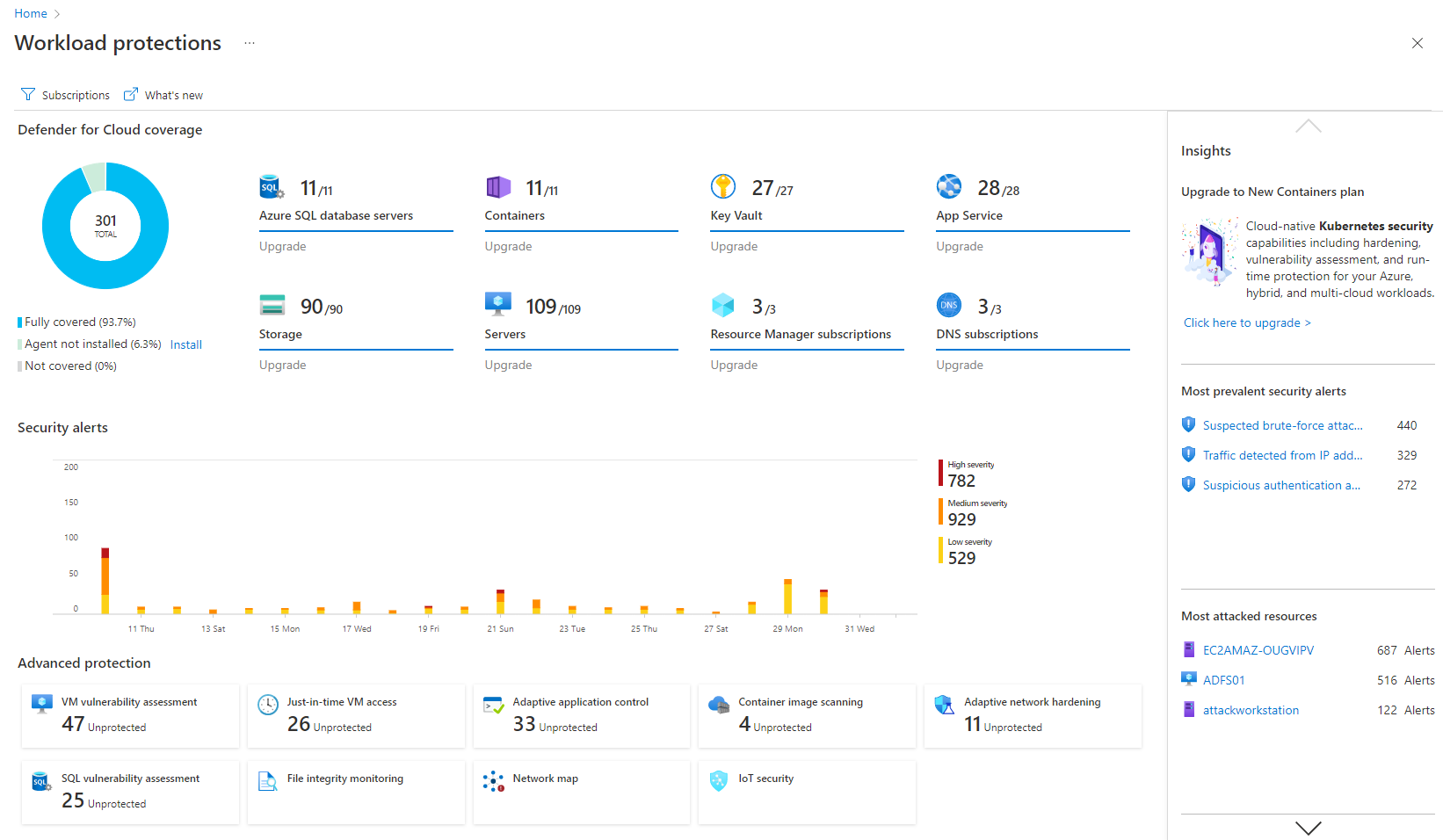
Screenshot of Remediation of critical issues in codeScreenshot of Cloud security benchmark mapped to industry FramworksScreenshot of Prioritization of critical risks with contextual threat analysisScreenshot of Workload protectionScreenshot of Unified DevOps VisibilityScreenshot of Visualizations to improve security posture proactively