Dataddo vs. dbt

Overview
ProductRatingMost Used ByProduct SummaryStarting Price
Dataddo
Score 8.0 out of 10
Mid-Size Companies (51-1,000 employees)
Dataddo is a fully-managed, no-code data integration platform that connects cloud-based applications and dashboarding tools, data warehouses, and data lakes. It offers 3 main products: - Data to Dashboards, which lets users send data from online sources straight to dashboarding apps like Tableau, Power BI, and Google Data Studio for insights in record time. A free version is available for this product. - Data Anywhere, which enables users to send data from any A to any…
$0
per month
dbt
Score 9.0 out of 10
N/A
dbt is an SQL development environment, developed by Fishtown Analytics, now known as dbt Labs. The vendor states that with dbt, analysts take ownership of the entire analytics engineering workflow, from writing data transformation code to deployment and documentation. dbt Core is distributed under the Apache 2.0 license, and paid Teams and Enterprise editions are available.
$0
per month per seat
Pricing
Dataddodbt
Editions & Modules
Free
$0
Data to Dashboards
$99
per month
Data Anywhere
$99
per month
Headless Data Integration
Custom
per year
No answers on this topic
Offerings
Pricing Offerings
Dataddodbt
Free Trial
YesYes
Free/Freemium Version
YesYes
Premium Consulting/Integration Services
YesYes
Entry-level Setup FeeNo setup feeNo setup fee
Additional DetailsData to Dashboards and Data Anywhere are both priced based on bundles of flows that can be billed monthly, or yearly for a discount. Data to Dashboards starts at $99 (billed yearly) for up to 10 data flows from any source to any dashboarding tool or Google Sheets. Data Anywhere starts at $99 (billed yearly) for up to 3 data flows from any A to any B—from apps to warehouses or dashboards (ETL, end to end), between warehouses (ETL), and from warehouses back into apps (reverse ETL). Headless Data Integration allows enterprises to build their own data products on top of the unified Dataddo API and get all integrations in one, with custom pricing.
More Pricing Information
Community Pulse
Dataddodbt
Features
Dataddodbt
Data Transformations
Comparison of Data Transformations features of Product A and Product B
Dataddo
-
Ratings
dbt
9.7
8 Ratings
18% above category average
Simple transformations00 Ratings10.08 Ratings
Complex transformations00 Ratings9.48 Ratings
Data Modeling
Comparison of Data Modeling features of Product A and Product B
Dataddo
-
Ratings
dbt
9.1
8 Ratings
15% above category average
Data model creation00 Ratings9.78 Ratings
Metadata management00 Ratings8.78 Ratings
Business rules and workflow00 Ratings9.08 Ratings
Collaboration00 Ratings10.06 Ratings
Testing and debugging00 Ratings8.08 Ratings
Best Alternatives
Dataddodbt
Small Businesses
Skyvia
Skyvia
Score 10.0 out of 10
Skyvia
Skyvia
Score 10.0 out of 10
Medium-sized Companies
IBM InfoSphere Information Server
Score 8.0 out of 10
IBM InfoSphere Information Server
Score 8.0 out of 10
Enterprises
IBM InfoSphere Information Server
Score 8.0 out of 10
IBM InfoSphere Information Server
Score 8.0 out of 10
All AlternativesView all alternativesView all alternatives
User Ratings
Dataddodbt
Likelihood to Recommend
-
(0 ratings)
10.0
(10 ratings)
Usability
-
(0 ratings)
9.7
(3 ratings)
User Testimonials
Dataddodbt
Likelihood to Recommend
Dataddo
No answers on this topic
dbt Labs
The prerequisite is that you have a supported database/data warehouse and have already found a way to ingest your raw data. Then dbt is very well suited to manage your transformation logic if the people using it are familiar with SQL. If you want to benefit from bringing engineering practices to data, dbt is a great fit. It can bring CI/CD practices, version control, automated testing, documentation generation, etc. It is not so well suited if the people managing the transformation logic do not like to code (in SQL) but prefer graphical user interfaces.
Read full review
Pros
Dataddo
No answers on this topic
dbt Labs
  • dbt supports version control through GIT, this allows teams to collaborate and track the data transformation logic.
  • dbt allows us to build data models which helps to break complex transformation logic into simple and smaller logic.
  • dbt is completely based on SQL which allows data analyst and data engineers to build the transformation logic.
  • dbt can be easily integrated with snowflake.
Read full review
Cons
Dataddo
No answers on this topic
dbt Labs
  • Field-level lineage (currently at table level)
  • Documentation inheritance - if a field is documented the downstream field of the same name could inherit the doc info
  • Adding python model support (in beta now)
Read full review
Usability
Dataddo
No answers on this topic
dbt Labs
dbt is very easy to use. Basically if you can write SQL, you will be able to use dbt to get what you need done. Of course more advanced users with more technical skills can do more things.
Read full review
Alternatives Considered
Dataddo
No answers on this topic
dbt Labs
I actually don't know what the alternative to dbt is. I'm sure one must exist other than more 'roll your own' options like Apache Airflow, say, bu tin terms of super easy managed/cloud data transforms, dbt really does seem to be THE tool to use. It's $50/month per dev, BUT there's a FREE version for 1 dev seat with no read-only access for anyone else, so you can always start with that and then buy yourself a seat later.
Read full review
Return on Investment
Dataddo
No answers on this topic
dbt Labs
  • Simplified our BI layer for faster load times
  • Increased the quality of data reaching our end users
  • Makes complex transformations manageable
Read full review
ScreenShots

Dataddo Screenshots

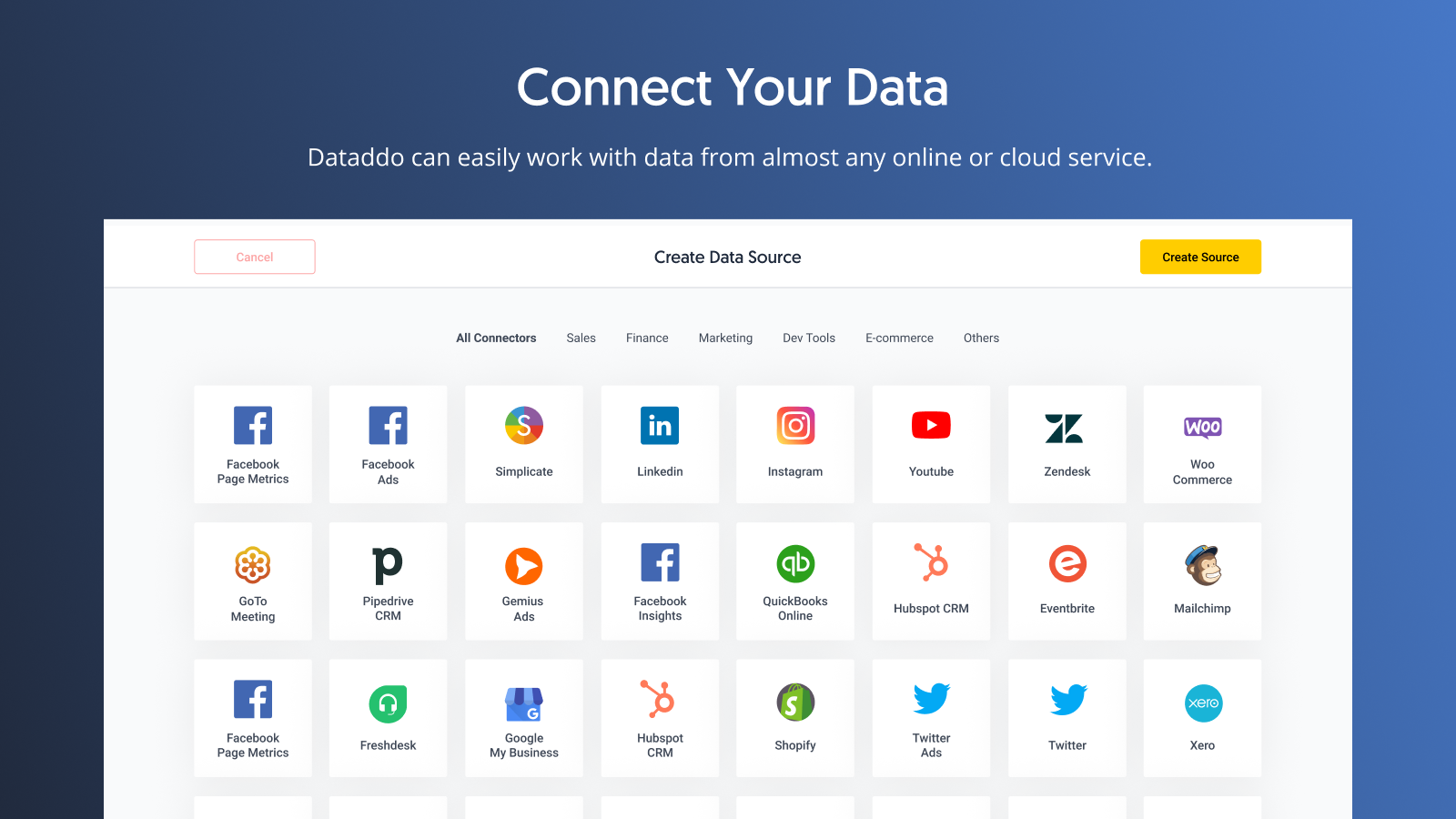
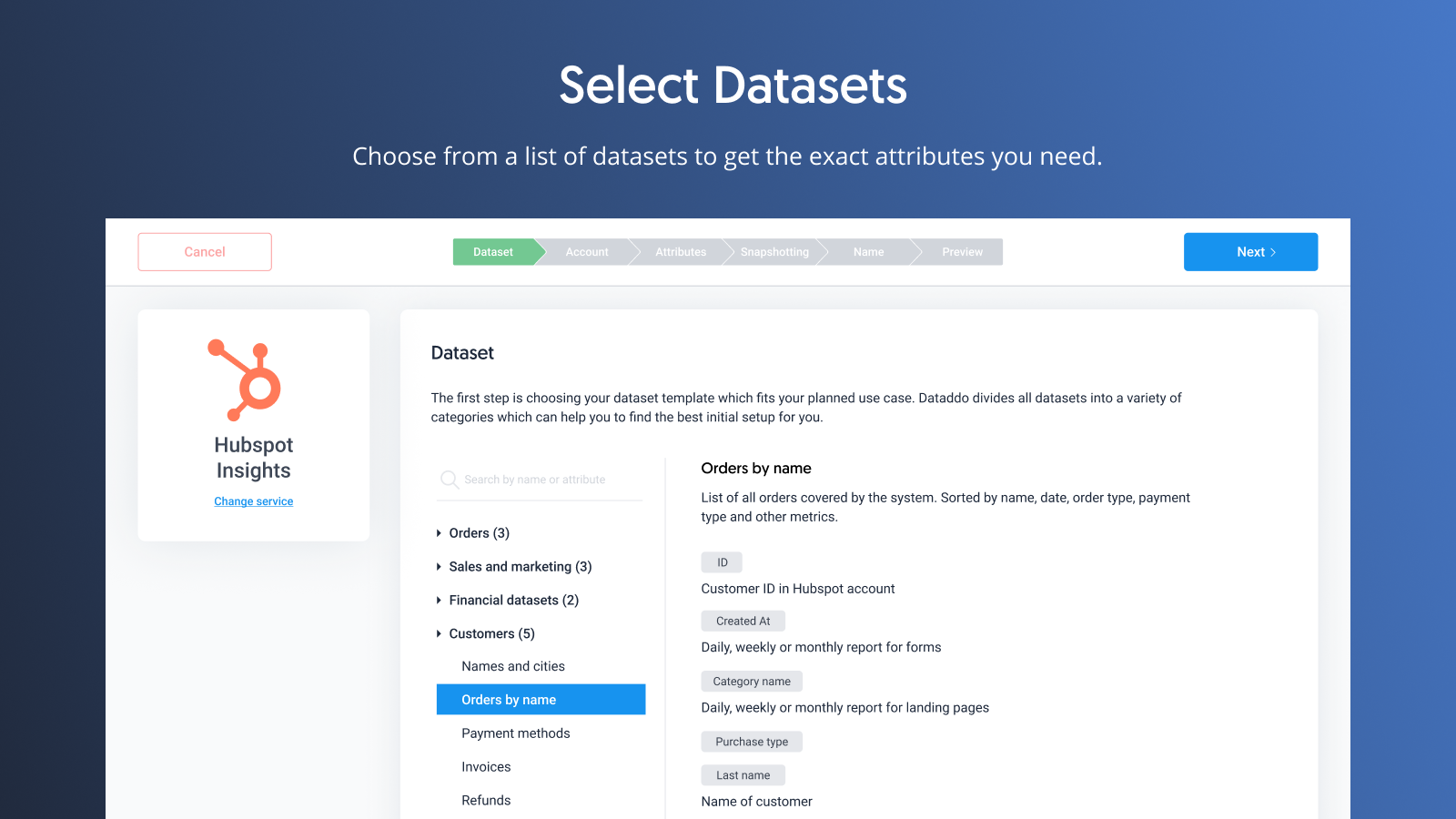
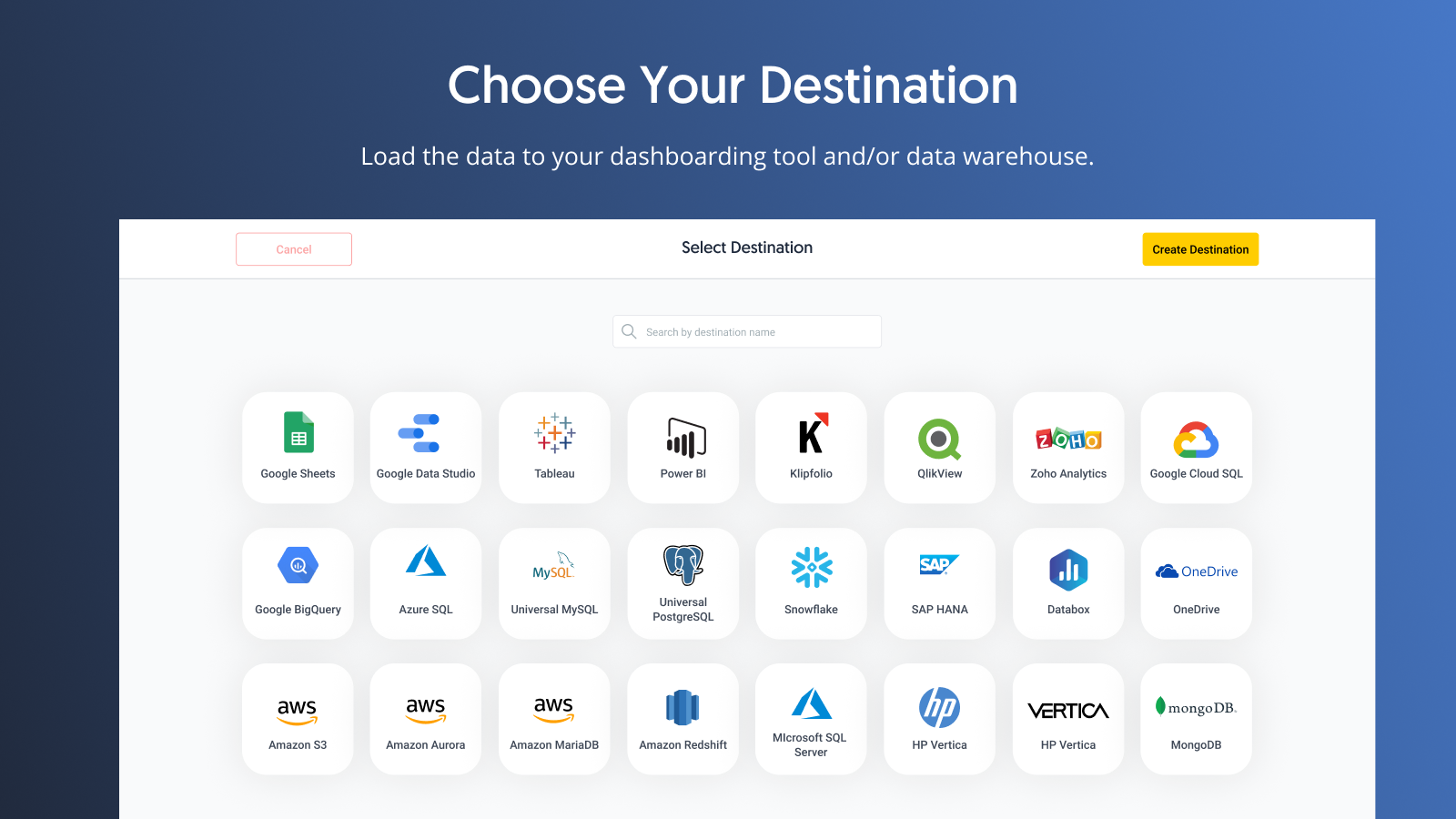
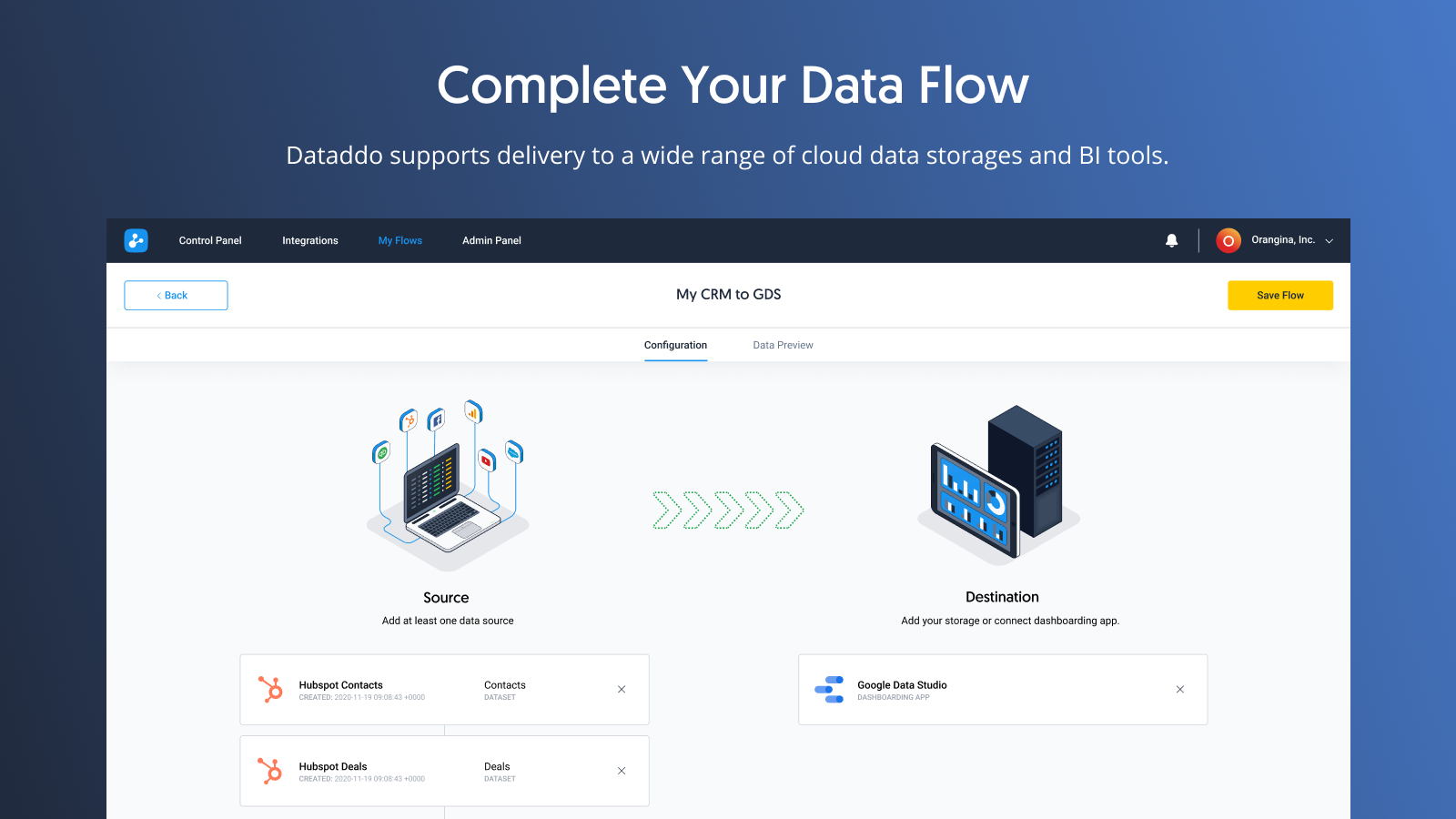
Screenshot of Connect data from any online source. Custom connectors or metrics are available upon request.Screenshot of Manage data flows on one page.Screenshot of Select services, such as HubSpot, Facebook, Google Ads, Stripe, and select a dataset to get the metrics and attributes needed.Screenshot of Choose where data should go, from data warehouses to dashboarding tools.Screenshot of Complete a data flow by connecting a source to a destination and get data flowing automatically at regular intervals.