Mandiant Advantage was a security validation solution used to test the efficacy of security controls with authentic, relevant and active attacks. Mandiant was acquired by Google in late 2022, and since, the product line has been discontinued.
N/A
Microsoft Defender for Cloud
Score8.7 out of 10
N/A
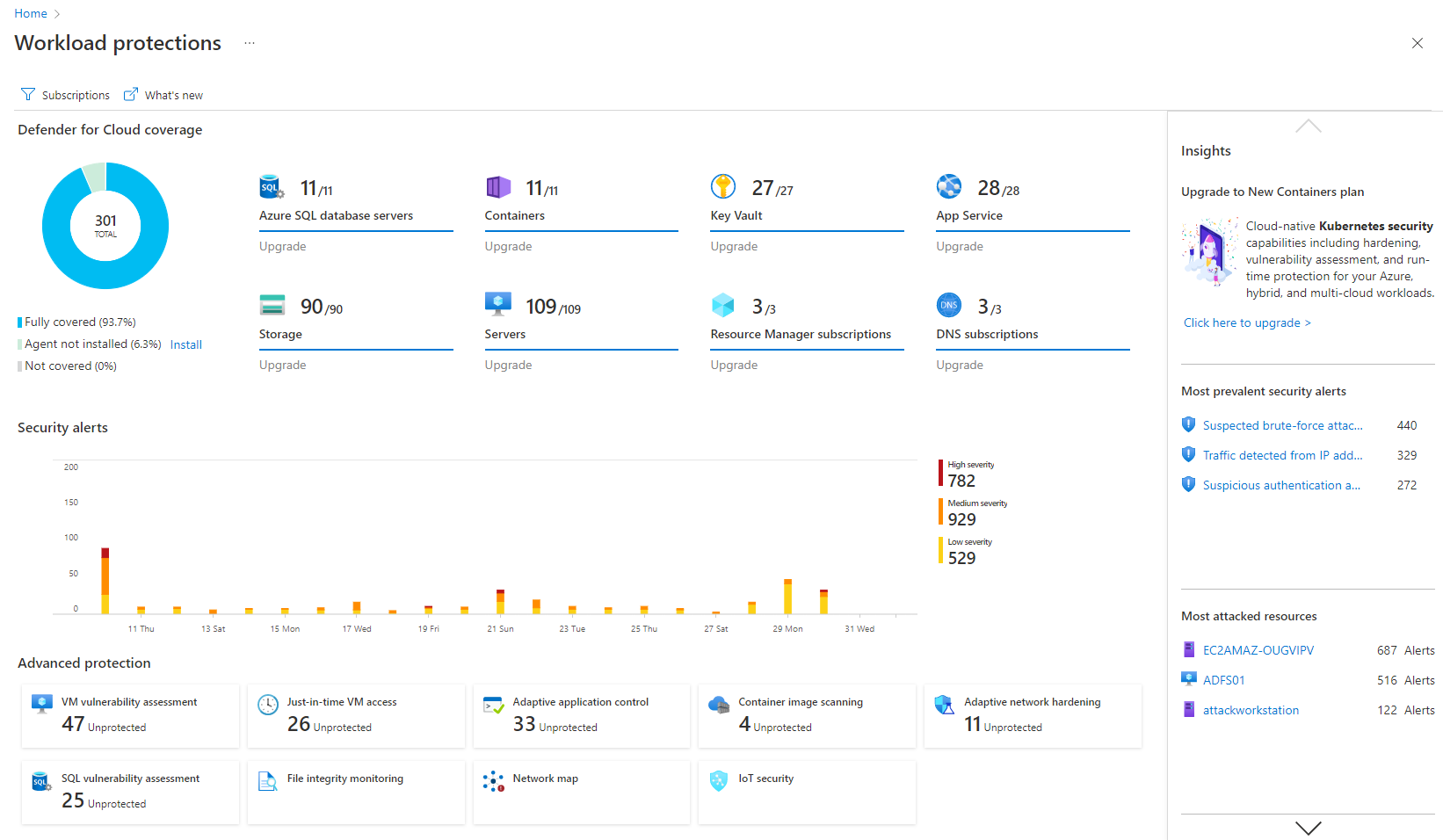
Microsoft Defender for Cloud is a Cloud Security Posture Management (CSPM) and Cloud Workload Protection Platform (CWPP) for Azure, on-premises, and multicloud (Amazon AWS and Google GCP) resources.
Mandiant Advantage Security Validation, designed by Mandiant company, can automate a testing program to give us authetic and real world data on how our security controls are effectively working / performing. This solution provides trusted evidence on how well our security controls work against threats targeting our organization. This enables security teams to emulate real attack behaviors against security controls authentically throughout the attack lifecycle and the entire security stack.
A de minimis incentive was given to thank the reviewer for their time. The incentive was not used to bias or drive a particular response, nor was the incentive contingent on a positive endorsement. More Info
I think it's good for cloud-native companies. A company that, from day zero, they're like, "We're going cloud, and this is how we're going to do it." They get it. It works well for them. Smaller organizations that are under X amount of resources- I don't know what that X might mean- but I feel like it plays well in smaller, more nimble organizations. If you're an older organization or if you're extremely large, it starts becoming a little difficult to manage at scale. And you have to sometimes throw bodies at the problem. Maybe not the most eloquent way of saying it, but that's what it feels like.
A de minimis incentive was given to thank the reviewer for their time. The incentive was not used to bias or drive a particular response, nor was the incentive contingent on a positive endorsement. More Info
Mandiant ASM combines sources of information such, as assets through the internet cloud resources and suppliers from third parties. This comprehensive approach provides organizations with an understanding of their external attack surface.
With scanning Mandiant ASM identifies threats and vulnerabilities present on the external attack surface and promptly notifies users. Whenever a new threat or vulnerability is detected an alert is generated to empower enterprises to take action in mitigating the risks.
Mandiant ASM assesses risks based on their likelihood of exploitation impact on organizations and severity. This prioritization enables organizations to focus their efforts, on addressing the risks effectively.
A de minimis incentive was given to thank the reviewer for their time. The incentive was not used to bias or drive a particular response, nor was the incentive contingent on a positive endorsement. More Info
It's really well laid out, with an easy-to-use, accessible UI.
With Microsoft Defender for Cloud, it has everything you need with the Safelink attachment, the Safelink emails for URL, the way it scans those URLs and attachments within the product, and you're seeing the results. And that adds an extra layer of security for the user, so you feel comfortable knowing the product monitors those. That's something I really like about that product.
A de minimis incentive was given to thank the reviewer for their time. The incentive was not used to bias or drive a particular response, nor was the incentive contingent on a positive endorsement. More Info
A de minimis incentive was given to thank the reviewer for their time. The incentive was not used to bias or drive a particular response, nor was the incentive contingent on a positive endorsement. More Info
Integrations with on-premise workloads can sometimes be challenging. Needs improvement and well standardised integration points
Vulnerability categories can be difficult to understand. It should allow teams to focus on critical findings and help them keep aside low-severity or suppressed vulnerabilities
Pricing can be improved as it can be over-priced for smaller businesses and would potentially affect their ROI due to the small scale
A de minimis incentive was given to thank the reviewer for their time. The incentive was not used to bias or drive a particular response, nor was the incentive contingent on a positive endorsement. More Info
It is a great product that integrates nicely when running an Azure platform and even multi-cloud environment. Not looking for point-solutions but a suite that answers most requirements. It is very comfortable being able to use KQL, workbooks and automation that is native to the azure platform
A de minimis incentive was given to thank the reviewer for their time. The incentive was not used to bias or drive a particular response, nor was the incentive contingent on a positive endorsement. More Info
My visibility is limited because I'm only doing very small pieces of what the overall org does. And also, we have limitations on what we're allowed to use. It's not like we get a new product as users or leadership level users, and everything is on, and we can just do whatever we want. We're very restricted in what we can use any tooling within the org because of the different levels of regulatory constraints we have, because of just the nature of who we are inherently. So that's why. I don't think it's necessarily the product. I think it's more or less of what we're able to do with the product.
A de minimis incentive was given to thank the reviewer for their time. The incentive was not used to bias or drive a particular response, nor was the incentive contingent on a positive endorsement. More Info
There are many parameters which are the differentiator between mandiant and Cymulate but some of the key differentitors are listed below: 1) Manpower costs are less and justified as compared to Cymulate 2) Better technologies innovation 3) Good reputation in market 4) Good cummulative man hour experience Also, they are in the market from last 20 years and they have a huge client base.
A de minimis incentive was given to thank the reviewer for their time. The incentive was not used to bias or drive a particular response, nor was the incentive contingent on a positive endorsement. More Info
I believe Microsoft Defender for Cloud stacks up well against the other tools we looked at. It is native to the Azure platform and provides the same insights as the other tools. We selected Microsoft Defender for Cloud because it integrates well with the Azure resources and gives the needed insight, security alerts and recommendations.
A de minimis incentive was given to thank the reviewer for their time. The incentive was not used to bias or drive a particular response, nor was the incentive contingent on a positive endorsement. TR verified that a representative sample of customers was invited. More Info
Automation plays a role in saving time by streamlining operations related to attack surface management. These include automated asset discovery, vulnerability scanning and continuous monitoring of threat intelligence. As a result security teams can allocate their efforts towards projects such as security planning and incident response.
ASM provides a view of the external attack surface, for businesses encompassing internet facing assets, cloud resources and third party vendors. This enhances the understanding of assets enabling organizations to identify and prioritize risks effectively and make decisions on security investments
One notable advantage is cost savings. By eliminating the need to purchase and maintain security tools ASM becomes a solution for enterprises. It can replace products, like asset discovery tools, vulnerability management tools and threat intelligence feeds with its capabilities.
A de minimis incentive was given to thank the reviewer for their time. The incentive was not used to bias or drive a particular response, nor was the incentive contingent on a positive endorsement. More Info
A de minimis incentive was given to thank the reviewer for their time. The incentive was not used to bias or drive a particular response, nor was the incentive contingent on a positive endorsement. More Info