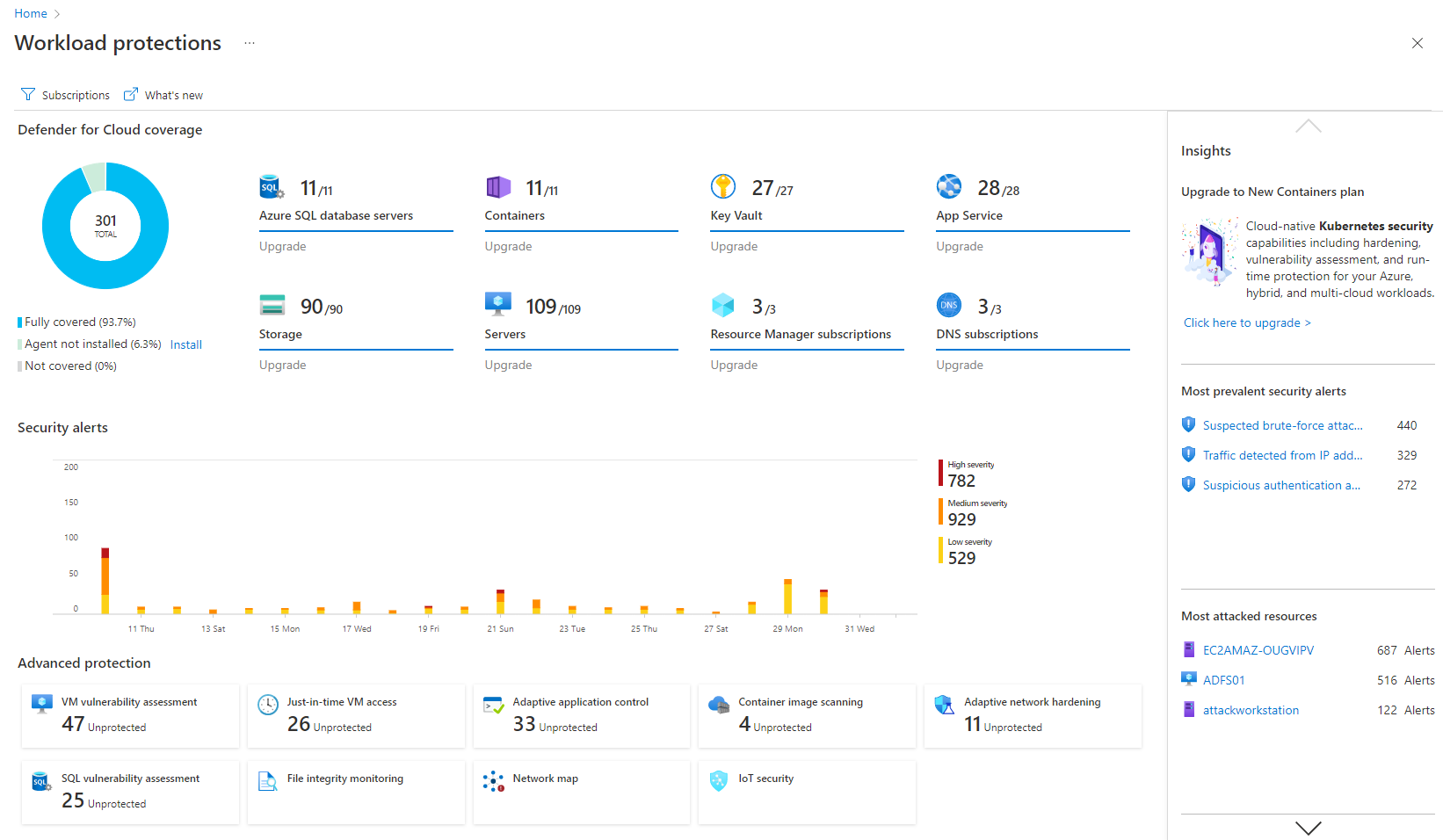
Microsoft Defender for Cloud is a Cloud Security Posture Management (CSPM) and Cloud Workload Protection Platform (CWPP) for Azure, on-premises, and multicloud (Amazon AWS and Google GCP) resources.
N/A
InsightIDR
Score8.6 out of 10
N/A
In addition to their incident response service, Rapid7 offers InsightIDR, a combined XDR and SIEM that provides user behavior and threat analytics.
$5.89
per month per asset
Pricing
Microsoft Defender for Cloud
InsightIDR
Editions & Modules
No answers on this topic
InsightIDR Advanced
$5.89
per month per asset
Offerings
Pricing Offerings
Microsoft Defender for Cloud
InsightIDR
Free Trial
Yes
Yes
Free/Freemium Version
No
No
Premium Consulting/Integration Services
No
No
Entry-level Setup Fee
No setup fee
No setup fee
Additional Details
—
*500 asset minimum. Billed annually. All amounts are shown in U.S. dollars. International prices vary.
I think it's good for cloud-native companies. A company that, from day zero, they're like, "We're going cloud, and this is how we're going to do it." They get it. It works well for them. Smaller organizations that are under X amount of resources- I don't know what that X might mean- but I feel like it plays well in smaller, more nimble organizations. If you're an older organization or if you're extremely large, it starts becoming a little difficult to manage at scale. And you have to sometimes throw bodies at the problem. Maybe not the most eloquent way of saying it, but that's what it feels like.
A de minimis incentive was given to thank the reviewer for their time. The incentive was not used to bias or drive a particular response, nor was the incentive contingent on a positive endorsement. More Info
It has been brilliant for us in terms of understanding the behaviour affecting our endpoints and assets. We have full visibility of our alerts, which menas we can act on them immediately. We use a single pain of glass with dashboards that can be easily drilled down into to get further information. It has laso helped us eo create bespoke reports for senios Managmeent, while at the same time supports other teams like Network Mnagement and Operations.
A de minimis incentive was given to thank the reviewer for their time. The incentive was not used to bias or drive a particular response, nor was the incentive contingent on a positive endorsement. More Info
It's really well laid out, with an easy-to-use, accessible UI.
With Microsoft Defender for Cloud, it has everything you need with the Safelink attachment, the Safelink emails for URL, the way it scans those URLs and attachments within the product, and you're seeing the results. And that adds an extra layer of security for the user, so you feel comfortable knowing the product monitors those. That's something I really like about that product.
A de minimis incentive was given to thank the reviewer for their time. The incentive was not used to bias or drive a particular response, nor was the incentive contingent on a positive endorsement. More Info
Rapid7 InsightIDR does a very good job at keeping virus definitions up to date so that our threat intelligence is very up to date when knowing what to protect against.
It helps us by scanning all of our infrastructure components and highlights where improvements need to be made in security so we can be proactive with our security initiatives.
It has automated response mechanisms to triage and resolve any potentials risks allowing us to save time in the long run.
A de minimis incentive was given to thank the reviewer for their time. The incentive was not used to bias or drive a particular response, nor was the incentive contingent on a positive endorsement. More Info
Integrations with on-premise workloads can sometimes be challenging. Needs improvement and well standardised integration points
Vulnerability categories can be difficult to understand. It should allow teams to focus on critical findings and help them keep aside low-severity or suppressed vulnerabilities
Pricing can be improved as it can be over-priced for smaller businesses and would potentially affect their ROI due to the small scale
A de minimis incentive was given to thank the reviewer for their time. The incentive was not used to bias or drive a particular response, nor was the incentive contingent on a positive endorsement. More Info
A de minimis incentive was given to thank the reviewer for their time. The incentive was not used to bias or drive a particular response, nor was the incentive contingent on a positive endorsement. More Info
It is a great product that integrates nicely when running an Azure platform and even multi-cloud environment. Not looking for point-solutions but a suite that answers most requirements. It is very comfortable being able to use KQL, workbooks and automation that is native to the azure platform
My visibility is limited because I'm only doing very small pieces of what the overall org does. And also, we have limitations on what we're allowed to use. It's not like we get a new product as users or leadership level users, and everything is on, and we can just do whatever we want. We're very restricted in what we can use any tooling within the org because of the different levels of regulatory constraints we have, because of just the nature of who we are inherently. So that's why. I don't think it's necessarily the product. I think it's more or less of what we're able to do with the product.
A de minimis incentive was given to thank the reviewer for their time. The incentive was not used to bias or drive a particular response, nor was the incentive contingent on a positive endorsement. More Info
I believe Microsoft Defender for Cloud stacks up well against the other tools we looked at. It is native to the Azure platform and provides the same insights as the other tools. We selected Microsoft Defender for Cloud because it integrates well with the Azure resources and gives the needed insight, security alerts and recommendations.
A de minimis incentive was given to thank the reviewer for their time. The incentive was not used to bias or drive a particular response, nor was the incentive contingent on a positive endorsement. TR verified that a representative sample of customers was invited. More Info
The biggest advantage it has the lightweight agent and smooth and less traffic chaos in network during log collection. Cloud Security always require extra efforts but InsightIDR reduce that burden as it has highly anticipated agents to which knows what they need to do when they captured malicious traffic.log collection and threat intelligence is major part in and xdr and here it stand out along others in the market, I started my career as qualys administration but I like InsightIDR much now.
A de minimis incentive was given to thank the reviewer for their time. The incentive was not used to bias or drive a particular response, nor was the incentive contingent on a positive endorsement. More Info
A de minimis incentive was given to thank the reviewer for their time. The incentive was not used to bias or drive a particular response, nor was the incentive contingent on a positive endorsement. More Info
Rapid7 InsightIDR has allowed us to be proactive in securing our systems as the vulnerability scans give us a lens at what we need to fortify when it comes to security.
In recent incidents its allowed us to save time and money as it mostly detects issues accurately and we are able to bring systems back quickly without too much downtime for the business.
With recent updates, we are confident that Rapid7 InsightIDR is a good solution for the long run as they are always making adjustments to their platform and improving it with every release.
A de minimis incentive was given to thank the reviewer for their time. The incentive was not used to bias or drive a particular response, nor was the incentive contingent on a positive endorsement. More Info