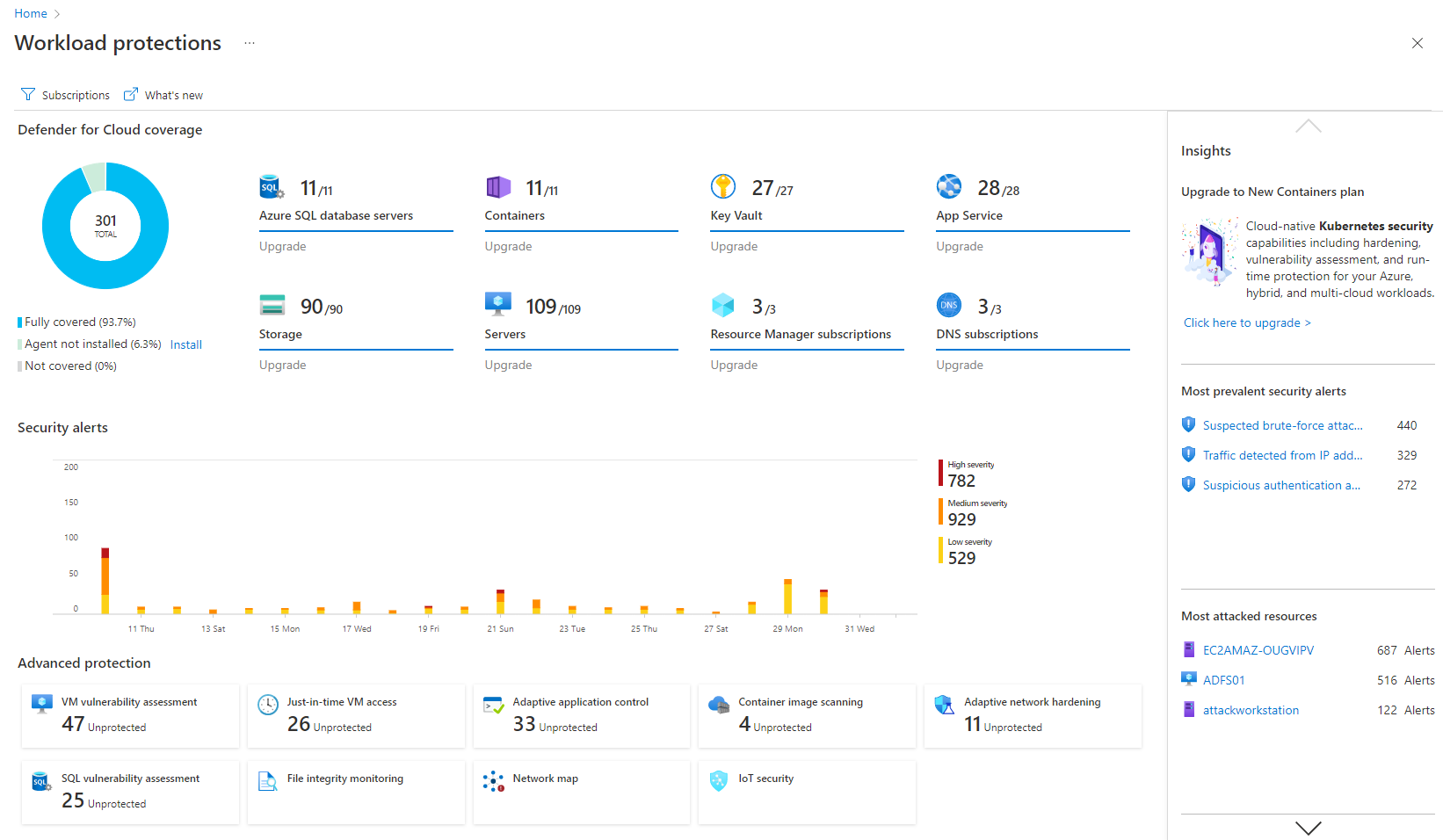
Microsoft Defender for Cloud is a Cloud Security Posture Management (CSPM) and Cloud Workload Protection Platform (CWPP) for Azure, on-premises, and multicloud (Amazon AWS and Google GCP) resources.
N/A
Tenable Nessus
Score 8.8 out of 10
N/A
Tenable headquartered in Columbia offers Nessus, a vulnerability scanning and security assessment solution used to analyze an entity's security posture, vulnerability testing, and provide configuration assessments.
So, for companies that are strictly Microsoft-based for PCs, it's a good thing for them to have. Some that are more Mac-based or Linux-based have some gaps, and I think there are some gaps in the availability of vulnerability scanning for third-party software that gets loaded onto those machines. Microsoft does a really good job of scanning the products that are good for Windows devices, but they struggle a bit on the Linux side and a little bit on the Mac side. So I'd like to see them try to improve.
It is an excellent tool for scanning servers, workstations, and network devices to identify missing patches and misconfiguration; we regularly use it to confirm patch effectiveness after the update; it also helps us for preparing audits such as iso 27001, and regulatory requirements, it also helps us to identify open ports and services that violate security.
It's really well laid out, with an easy-to-use, accessible UI.
With Microsoft Defender for Cloud, it has everything you need with the Safelink attachment, the Safelink emails for URL, the way it scans those URLs and attachments within the product, and you're seeing the results. And that adds an extra layer of security for the user, so you feel comfortable knowing the product monitors those. That's something I really like about that product.
Nessus is best at performing vulnerability scans, in fact, it gives findings and moreover accurate findings of the assessments. It does not do penetration testing or exploit the vulnerabilities because it is concerned about scanning the systems/applications.
In fact, Nessus has multiple profiles/policies to perform different types of scans such as, scans oriented for PCI-DSS, malware scans, web application scans, bad shell shock detection scan to name a few.
Nessus has the ability to classify the vulnerabilities into risk-based categories from critical to even informational which I think is one of the things that separates Nessus from other vulnerability scanners.
I think Microsoft Defender for Cloud could do a better job of making some of the security alerts easier to understand and easier to resolve.
Since there are some popular ITSM tools that a lot of companies use, I think Microsoft should make it a lot easier for Microsoft Defender for Cloud to integrate with the popular ITSM tools.
The should be a way for users to trigger their own scans for data security related events.
The tool has lots of options for setting up before scanning any device, this methodology could be simplified further with default configuration for various devices predefined, anyhow we can use this technique by making use of policies.
For advanced users we cannot disable the plugins inside the plugin groups, we can enable the whole set of plugins at a time, for few hundreds its ok, but thousands of plugins are of waste of resource and time.
It is a great product that integrates nicely when running an Azure platform and even multi-cloud environment. Not looking for point-solutions but a suite that answers most requirements. It is very comfortable being able to use KQL, workbooks and automation that is native to the azure platform
Nessus is best and easy to use application for Vulnerabilities finding and reporting, it has multiple platforms and wide scope covering almost all devices for security improvement so far, thus we are very likely to continue its services.
My visibility is limited because I'm only doing very small pieces of what the overall org does. And also, we have limitations on what we're allowed to use. It's not like we get a new product as users or leadership level users, and everything is on, and we can just do whatever we want. We're very restricted in what we can use any tooling within the org because of the different levels of regulatory constraints we have, because of just the nature of who we are inherently. So that's why. I don't think it's necessarily the product. I think it's more or less of what we're able to do with the product.
Tenable Nessus is a great product and provides a lot of value, but it is difficult to set up and use and the amount of data it generates can be overwhelming. It does help us prioritize based on the severity of the detection, however there are sometimes mitigating factors that we have implemented that Nessus does not account for, which causes lots of noise in the reports.
I haven't needed to contact support yet. But issues are easily solved with a quick internet search which means support and by extension, the larger community are involved and knowledgeable.
Microsoft Defender for Cloud is definitely the choice with the latest market trend and attacks that are currently happening. Microsoft has been able to safe guard a lot after the recent serious attacks happening globally in the digital world. There is a trust in this software and with the latest updates and machine learning capabilities, Microsoft Defender for Cloud should be the choice.
Sometimes when we identify a vulnerability with Nessus that has an exploit, we made a proof of concept with Metasploit in order to show to the IT managers the importance of the software/hardware hardening.
Nessus certainly has a positive impact while me while performing my job, either as security research, or performing vulnerability assessments for clients. It gives a lot of information about the system/application after performing scans. The number of false positives is also less compared to other vulnerability scanners.
The professional edition is very useful as policy templates available in this edition are very handy and useful even to perform compliance scan like PCI DSS scan.
Also, the ability to export the scan results into reports in formats like HTML, PDF is very useful which could be for performing system/application reviews.