
HAProxy Community Edition vs. miniOrange Reverse Proxy
HAProxy Community Edition vs. miniOrange Reverse Proxy
| Product | Rating | Most Used By | Product Summary | Starting Price |
|---|---|---|---|---|
 HAProxy Community Edition | N/A | HAProxy Community Edition is a free, open source reverse-proxy offering high availability, load balancing, and proxying for TCP and HTTP-based applications. It is presented as suited for very high traffic web sites. | $0 | |
 miniOrange Reverse Proxy | N/A | A reverse proxy server is helpful in protecting systems against web vulnerabilities, which adds an extra degree of security. The reverse proxy provides protection between external clients and internal services. It provides various features like Rate Limiting, IP Restriction, Load Balancing, CORS, etc. The reverse proxy server, which acts as a gateway between users and an application origin server, behaves like a network traffic cop. | $10 per month per user |
| HAProxy Community Edition | miniOrange Reverse Proxy | |||||||||||||||
|---|---|---|---|---|---|---|---|---|---|---|---|---|---|---|---|---|
| Editions & Modules | No answers on this topic | No answers on this topic | ||||||||||||||
| Offerings |
| |||||||||||||||
| Entry-level Setup Fee | No setup fee | Optional | ||||||||||||||
| Additional Details | — | — | ||||||||||||||
| More Pricing Information | ||||||||||||||||
| HAProxy Community Edition | miniOrange Reverse Proxy |
|---|
| HAProxy Community Edition | miniOrange Reverse Proxy | |
|---|---|---|
| Small Businesses |  NGINX Score 9.1 out of 10 | No answers on this topic |
| Medium-sized Companies | NGINX Score 9.1 out of 10 |  Check Point Email Security Score 9.1 out of 10 |
| Enterprises | NGINX Score 9.1 out of 10 | Check Point Email Security Score 9.1 out of 10 |
| All Alternatives | View all alternatives | View all alternatives |
| HAProxy Community Edition | miniOrange Reverse Proxy | |
|---|---|---|
| Likelihood to Recommend | 9.0 (7 ratings) | - (0 ratings) |
| Usability | 9.1 (2 ratings) | - (0 ratings) |
| Support Rating | 9.7 (2 ratings) | - (0 ratings) |
| HAProxy Community Edition | miniOrange Reverse Proxy | |
|---|---|---|
| Likelihood to Recommend | Open Source
 AMJITH LAL S Senior Network Administrator | miniOrange No answers on this topic |
| Pros | Open Source
| miniOrange No answers on this topic |
| Cons | Open Source
| miniOrange No answers on this topic |
| Usability | Open Source
| miniOrange No answers on this topic |
| Support Rating | Open Source
| miniOrange No answers on this topic |
| Alternatives Considered | Open Source
 José Javier Dominguez Reina Jefe de Proyecto | miniOrange No answers on this topic |
| Return on Investment | Open Source
| miniOrange No answers on this topic |
| ScreenShots | miniOrange Reverse Proxy Screenshots 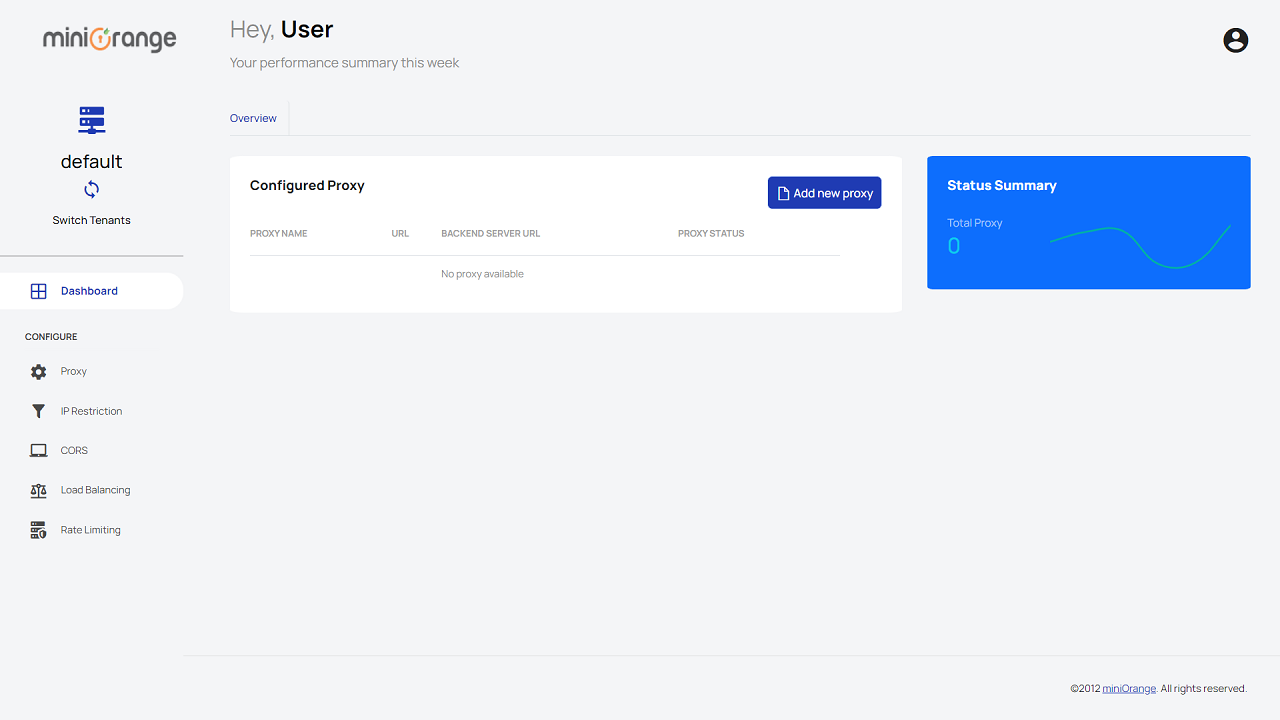  |