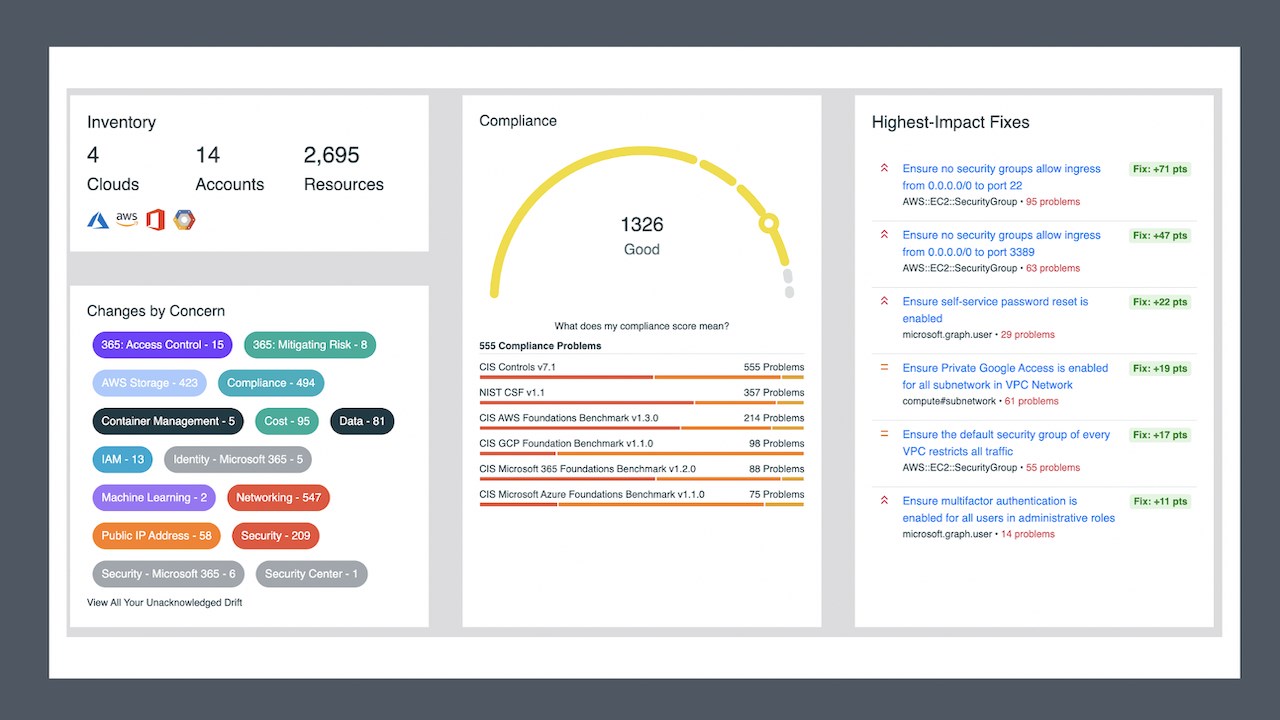
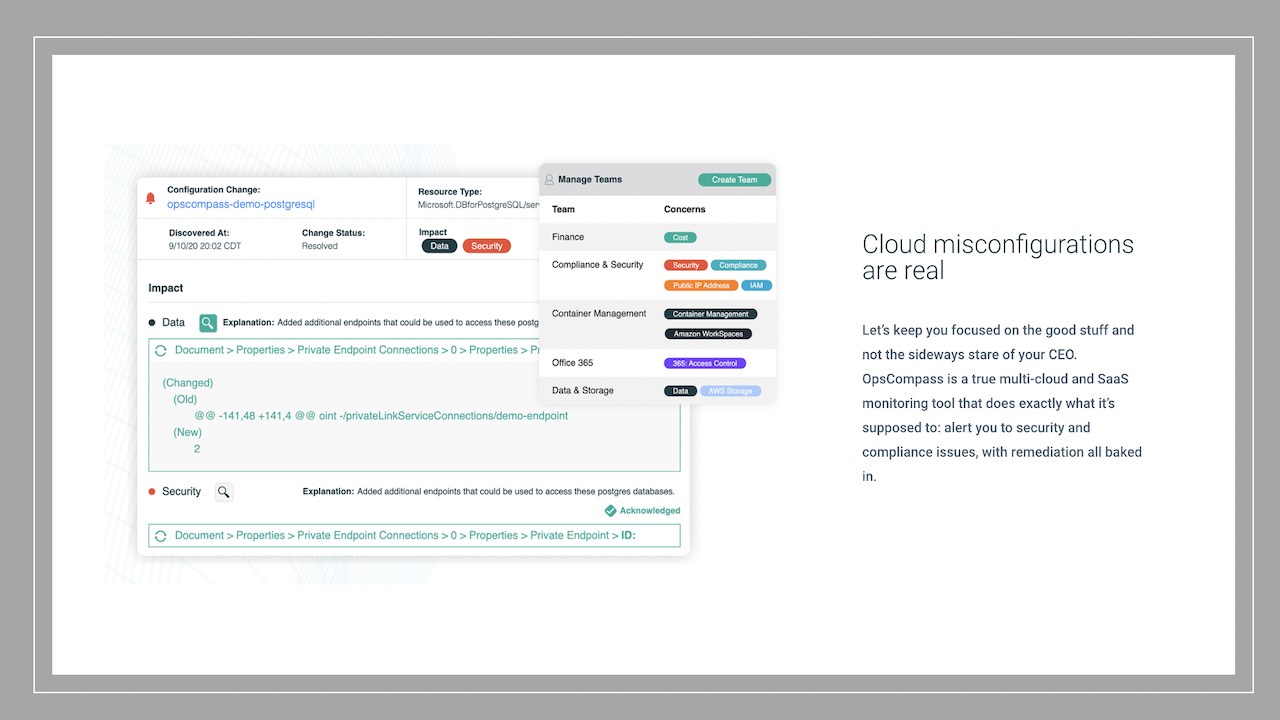
OpsCompass is an enterprise-ready cloud security management software that drives multi-cloud operational control, visibility, and security to Microsoft Azure, AWS, and Google Cloud Platform. Its UI is designed to provide clear data visualization for resource management, remediation, and configuration drift management. OpsCompass utilizes CIS SecureSuite benchmarks as industry-accepted system hardening standards, and are used by organizations in meeting compliance requirements for FISMA, PCI DSS,…
$0
Red Hat Virtualization (discontinued)
Score6.1 out of 10
N/A
Red Hat Virtualization (formerly Red Hat Enterprise Virtualization, broadly known as RHEV) is an enterprise level server and desktop virtualization solution. Red Hat Virtualization also contains the functionality of Red Hat Enterprise Virtualization for Desktop in later editions of the platform.
$999
Per Year Per Hypervisor
Pricing
OpsCompass
Red Hat Virtualization (discontinued)
Editions & Modules
Free Tier
$0
Pro
Starts at $500/month
Number of cloud resources
Enterprise
Custom
Standard
$999.00
Per Year Per Hypervisor
Premium
$1,499.00
Per Year Per Hypervisor
Offerings
Pricing Offerings
OpsCompass
Red Hat Virtualization (discontinued)
Free Trial
Yes
No
Free/Freemium Version
Yes
No
Premium Consulting/Integration Services
Yes
No
Entry-level Setup Fee
No setup fee
No setup fee
Additional Details
—
—
More Pricing Information
Features
OpsCompass
Red Hat Virtualization (discontinued)
Cloud Management
Comparison of Cloud Management features of OpsCompass and Red Hat Virtualization (discontinued)
Feature
OpsCompass
7.5
2 Ratings
16% below category average
Red Hat Virtualization (discontinued)
-
Ratings
Cloud Management Security
7.32 Ratings
00 Ratings
Cost Management
7.72 Ratings
00 Ratings
Cloud Management Performance Monitoring
5.92 Ratings
00 Ratings
Governance and Compliance
8.22 Ratings
00 Ratings
Resource Management
8.62 Ratings
00 Ratings
Server Virtualization
Comparison of Server Virtualization features of OpsCompass and Red Hat Virtualization (discontinued)
We previously had separate products to manage Azure and AWS, each with different capabilities, and it was very complex for our team to go back and forth and try to make sense of each environment. OpsCompass is very well suited to give you a single view of our entire cloud environment. OpsCompass also brings excellent compliance policies. We were not highly skilled with these policies, but the product made it easy to perform an assessment of our current state and identify areas where we had non-compliance issues. CIS policies were a great area to start and we later tried the Microsoft 365 policies, which were also helpful. More policies would be great to see.
RHEV is well suited for organizations that need a cost-effective and flexible solution for their environment. As its vendor-independent software, easily install on any type of hardware. RHEV provides a GUI interface to manage the software, which makes the management of the software easier for the end-user. RHEV is best for non-production or less critical applications. RHEV can be easily integrated with other REDHAT software.
A de minimis incentive was given to thank the reviewer for their time. The incentive was not used to bias or drive a particular response, nor was the incentive contingent on a positive endorsement. More Info
A de minimis incentive was given to thank the reviewer for their time. The incentive was not used to bias or drive a particular response, nor was the incentive contingent on a positive endorsement. More Info
1- RHVM API is pretty slow, especially after creating a VM it is not possible to retrieve the VM details (i.e VM's MAC Address) fast enough, where we need to place a pause in our Ansible Playbook, make the automation process slow.
2- RHV is still using collected to monitor the hypervisors which is deviating from Red Hat policy for other RHEL based applications to use PCP to monitor, which is richer in features.
3- It will be great if it is possible to patch the hypervisors using other tools such as satellite and not only via RHVM.
4- In the past Red Hat used to present patches in the z release (i.e. 4.3.z), and features in the y release (i.e 4. y), but starting from 4.4 that is mixed together wherein the Z release you get both patches and features, that is not good because that requires a lot of time to test when we patch as it includes features as well.
5- Engineering team has to be more reactive when new feature is requested.
A de minimis incentive was given to thank the reviewer for their time. The incentive was not used to bias or drive a particular response, nor was the incentive contingent on a positive endorsement. More Info
In this price range, we didn't find any other tools that provide this degree of cloud resource visibility. It's been an efficiency game-changer. I hope we'll see new modules as they expand their features to include active resource management policies. They've done such a good job of anticipating the needs of our CloudOps team, I plan to evaluate those new features (if/when they arrive).
RHEV is an excellent product, includes more features, is less expensive, and has rock solid reliability and is backed with the best Red Hat Support in the industry. RHEV uses KVM under the hood which is used by all the big players in the industry (AWS, Rackspace, etc) to lower their overall costs and improve efficiency and profits and that's why RHEV is an excellent solution!
A de minimis incentive was given to thank the reviewer for their time. The incentive was not used to bias or drive a particular response, nor was the incentive contingent on a positive endorsement. More Info
A de minimis incentive was given to thank the reviewer for their time. The incentive was not used to bias or drive a particular response, nor was the incentive contingent on a positive endorsement. More Info