Quantum Boost vs. TensorFlow

Overview
ProductRatingMost Used ByProduct SummaryStarting Price
Quantum Boost
Score 0.0 out of 10
N/A
Quantum Boost is an advanced online platform that uses artificial intelligence to reach set targets through the fewest possible experiments. Key features: Faster than DoE: Quantum Boost uses AI algorithms to ensure targets are achieved in the fewest amount of experiments possible. Flexible project development: Ability to update project definitions without losing all the knowledge gained so far, unlike most DoE software. User-friendliness:…
$95
per month
TensorFlow
Score 7.7 out of 10
N/A
TensorFlow is an open-source machine learning software library for numerical computation using data flow graphs. It was originally developed by Google.N/A
Pricing
Quantum BoostTensorFlow
Editions & Modules
Trial
$0
14 days
Starter
$95
per month
Enterprise
Custom
per year
No answers on this topic
Offerings
Pricing Offerings
Quantum BoostTensorFlow
Free Trial
YesNo
Free/Freemium Version
YesNo
Premium Consulting/Integration Services
NoNo
Entry-level Setup FeeNo setup feeNo setup fee
Additional Details
More Pricing Information
Community Pulse
Quantum BoostTensorFlow
Best Alternatives
Quantum BoostTensorFlow
Small Businesses
InterSystems IRIS
InterSystems IRIS
Score 8.0 out of 10
InterSystems IRIS
InterSystems IRIS
Score 8.0 out of 10
Medium-sized Companies
Posit
Posit
Score 10.0 out of 10
Posit
Posit
Score 10.0 out of 10
Enterprises
Posit
Posit
Score 10.0 out of 10
Posit
Posit
Score 10.0 out of 10
All AlternativesView all alternativesView all alternatives
User Ratings
Quantum BoostTensorFlow
Likelihood to Recommend
-
(0 ratings)
6.0
(15 ratings)
Usability
-
(0 ratings)
9.0
(1 ratings)
Support Rating
-
(0 ratings)
9.1
(2 ratings)
Implementation Rating
-
(0 ratings)
8.0
(1 ratings)
User Testimonials
Quantum BoostTensorFlow
Likelihood to Recommend
Quantum Boost Ltd
No answers on this topic
Open Source
TensorFlow is great for most deep learning purposes. This is especially true in two domains: 1. Computer vision: image classification, object detection and image generation via generative adversarial networks 2. Natural language processing: text classification and generation. The good community support often means that a lot of off-the-shelf models can be used to prove a concept or test an idea quickly. That, and Google's promotion of Colab means that ideas can be shared quite freely. Training, visualizing and debugging models is very easy in TensorFlow, compared to other platforms (especially the good old Caffe days). In terms of productionizing, it's a bit of a mixed bag. In our case, most of our feature building is performed via Apache Spark. This means having to convert Parquet (columnar optimized) files to a TensorFlow friendly format i.e., protobufs. The lack of good JVM bindings mean that our projects end up being a mix of Python and Scala. This makes it hard to reuse some of the tooling and support we wrote in Scala. This is where MXNet shines better (though its Scala API could do with more work).
Read full review
Pros
Quantum Boost Ltd
No answers on this topic
Open Source
  • A vast library of functions for all kinds of tasks - Text, Images, Tabular, Video etc.
  • Amazing community helps developers obtain knowledge faster and get unblocked in this active development space.
  • Integration of high-level libraries like Keras and Estimators make it really simple for a beginner to get started with neural network based models.
Read full review
Cons
Quantum Boost Ltd
No answers on this topic
Open Source
  • RNNs are still a bit lacking, compared to Theano.
  • Cannot handle sequence inputs
  • Theano is perhaps a bit faster and eats up less memory than TensorFlow on a given GPU, perhaps due to element-wise ops. Tensorflow wins for multi-GPU and “compilation” time.
Read full review
Usability
Quantum Boost Ltd
No answers on this topic
Open Source
Support of multiple components and ease of development.
Read full review
Support Rating
Quantum Boost Ltd
No answers on this topic
Open Source
Community support for TensorFlow is great. There's a huge community that truly loves the platform and there are many examples of development in TensorFlow. Often, when a new good technique is published, there will be a TensorFlow implementation not long after. This makes it quick to ally the latest techniques from academia straight to production-grade systems. Tooling around TensorFlow is also good. TensorBoard has been such a useful tool, I can't imagine how hard it would be to debug a deep neural network gone wrong without TensorBoard.
Read full review
Implementation Rating
Quantum Boost Ltd
No answers on this topic
Open Source
Use of cloud for better execution power is recommended.
Read full review
Alternatives Considered
Quantum Boost Ltd
No answers on this topic
Open Source
Keras is built on top of TensorFlow, but it is much simpler to use and more Python style friendly, so if you don't want to focus on too many details or control and not focus on some advanced features, Keras is one of the best options, but as far as if you want to dig into more, for sure TensorFlow is the right choice
Read full review
Return on Investment
Quantum Boost Ltd
No answers on this topic
Open Source
  • Learning is s bit difficult takes lot of time.
  • Developing or implementing the whole neural network is time consuming with this, as you have to write everything.
  • Once you have learned this, it make your job very easy of getting the good result.
Read full review
ScreenShots

Quantum Boost Screenshots

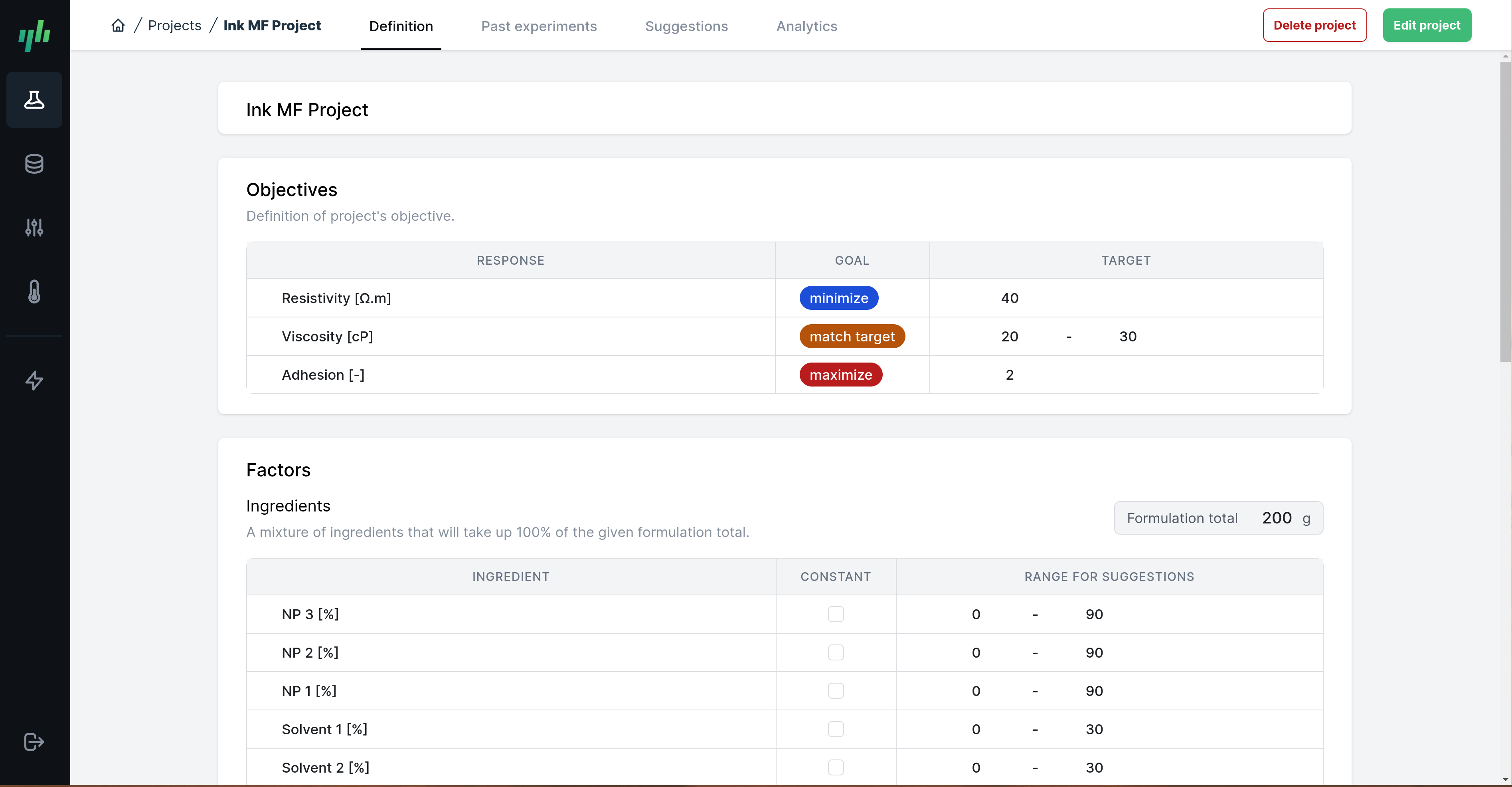
Screenshot of Editing a project definitionScreenshot of Generating suggestionsScreenshot of Completed generation of suggestions with the probability of reaching targetsScreenshot of Adding a categorical factor to the organizationScreenshot of Editing the project spreadsheet for experimental valuesScreenshot of Analytics