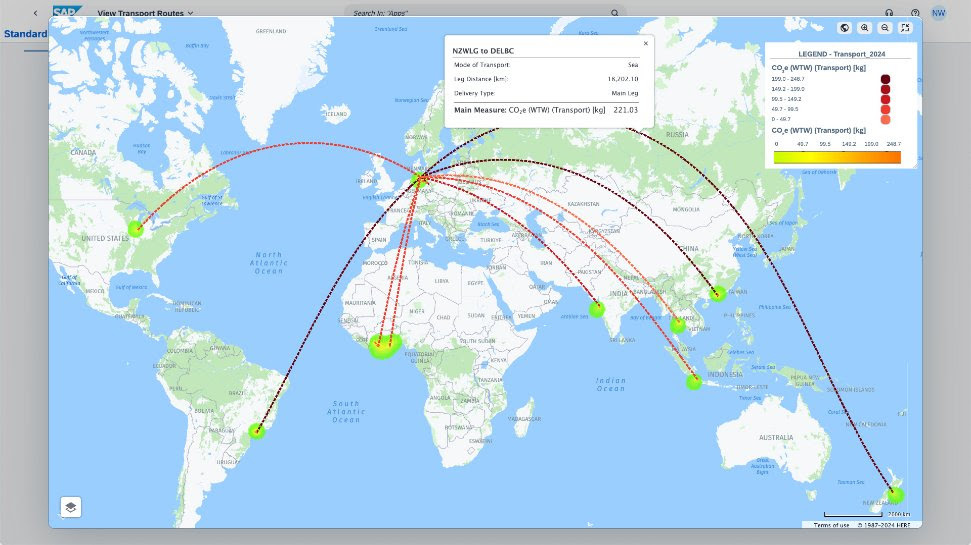
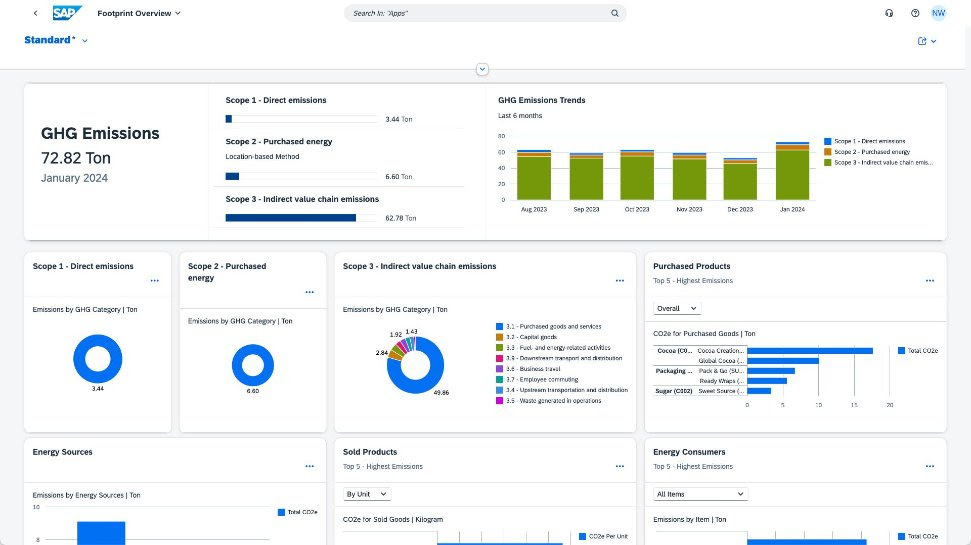
SAP Product Footprint Management is a software solution used to calculate product footprints periodically and at scale across the entire product lifecycle.
We already use some SAP products so we ultimately selected this. We evaluated the Microsoft equivalent but because the integration with Power BI analytics would not have been valuable to us, we chose to go with SAP. The Microsoft offering also didn’t feel as specialised. SAP …
A de minimis incentive was given to thank the reviewer for their time. The incentive was not used to bias or drive a particular response, nor was the incentive contingent on a positive endorsement. TR verified that a representative sample of customers was invited. More Info
Verified User
Chose SAP Sustainability Footprint Management
SAP Sustainability Footprint Management provides better opportunity to analyse the different aspects and provide an hollistic approach for calculates a company's total carbon footprint and attributes emissions to products and corporate overhead, aiming to achieve a balanced …
A de minimis incentive was given to thank the reviewer for their time. The incentive was not used to bias or drive a particular response, nor was the incentive contingent on a positive endorsement. TR verified that a representative sample of customers was invited. More Info
You can use it in a manufacturing environment or a software business in an office where environmental impact is less visible. We have regulators who require detailed data reporting. This system helps us meet that need. As the organisation is large with global operations, it is necessary to have a single system for the data. The concept of a carbon footprint is difficult to quantify but this platform helps visualise it and outputs data that can be reported. It is also an obvious choice where a company is already using some SAP ecosystem products because it integrates. It may be overkill for smaller companies with lightweight reporting needs. I also feel that the data you feed the system is crucial to get quality reports.
A de minimis incentive was given to thank the reviewer for their time. The incentive was not used to bias or drive a particular response, nor was the incentive contingent on a positive endorsement. TR verified that a representative sample of customers was invited. More Info
A de minimis incentive was given to thank the reviewer for their time. The incentive was not used to bias or drive a particular response, nor was the incentive contingent on a positive endorsement. TR verified that a representative sample of customers was invited. More Info
A de minimis incentive was given to thank the reviewer for their time. The incentive was not used to bias or drive a particular response, nor was the incentive contingent on a positive endorsement. TR verified that a representative sample of customers was invited. More Info
Easy and intuitive. I just question how accurate the reporting is. However it is based on the data you feed the system. If that is good quality then the reports will reflect reality and give you clues as to where improvements can be made to an environmental management system etc. I think there is room to improve in terms of third party system integrations to automate data entry and save some time in the workflow. Usability improvements could be made but as the system is technical I think it is great to use once you are used to it
A de minimis incentive was given to thank the reviewer for their time. The incentive was not used to bias or drive a particular response, nor was the incentive contingent on a positive endorsement. TR verified that a representative sample of customers was invited. More Info
SAP Sustainability Footprint Management provides better opportunity to analyse the different aspects and provide an hollistic approach for calculates a company's total carbon footprint and attributes emissions to products and corporate overhead, aiming to achieve a balanced emission level through all production stages. with a special focus on holistic steering and ESG reporting, climate action, circular economy, and social responsibility.
A de minimis incentive was given to thank the reviewer for their time. The incentive was not used to bias or drive a particular response, nor was the incentive contingent on a positive endorsement. TR verified that a representative sample of customers was invited. More Info
A de minimis incentive was given to thank the reviewer for their time. The incentive was not used to bias or drive a particular response, nor was the incentive contingent on a positive endorsement. TR verified that a representative sample of customers was invited. More Info