Amazon SageMaker enables developers and data scientists to quickly and easily build, train, and deploy machine learning models at any scale. Amazon SageMaker removes all the barriers that typically slow down developers who want to use machine learning.
N/A
DataRobot
Score 8.2 out of 10
N/A
The DataRobot AI Platform is presented as a solution that accelerates and democratizes data science by automating the end-to-end journey from data to value and allows users to deploy AI applications at scale. DataRobot provides a centrally governed platform that gives users AI to drive business outcomes, that is available on the user's cloud platform-of-choice, on-premise, or as a fully-managed service. The solutions include tools providing data preparation enabling users to explore and…
N/A
H2O.ai
Score 6.4 out of 10
N/A
An open-source end-to-end GenAI platform for air-gapped, on-premises or cloud VPC deployments. Users can Query and summarize documents or just chat with local private GPT LLMs using h2oGPT, an Apache V2 open-source project. And the commercially available Enterprise h2oGPTe provides information retrieval on internal data, privately hosts LLMs, and secures data.
N/A
Pricing
Amazon SageMaker
DataRobot
H2O.ai
Editions & Modules
No answers on this topic
No answers on this topic
No answers on this topic
Offerings
Pricing Offerings
Amazon SageMaker
DataRobot
H2O.ai
Free Trial
No
Yes
No
Free/Freemium Version
No
Yes
Yes
Premium Consulting/Integration Services
No
No
No
Entry-level Setup Fee
No setup fee
No setup fee
No setup fee
Additional Details
—
—
—
More Pricing Information
Community Pulse
Amazon SageMaker
DataRobot
H2O.ai
Considered Multiple Products
Amazon SageMaker
Verified User
Anonymous
Chose Amazon SageMaker
Amazon SageMaker comes with other supportive services like S3, SQS, and a vast variety of servers on EC2. It's very comfortable to manage the process and also support the end application by one click hosting option. Also, it charges on the base of what you use and how long you …
Amazon SageMaker took the heavy lifting out of building and creating models. It allowed for our organization to use our current system for integration and essentially added on a feature to help all levels of Data scientists and IT professionals in our department and company as …
We have not invested in another machine learning software at this time and so far this has proved very successful with our machine learning teams. As mentioned, I am training these individuals simply on the fundamentals of the software and using it/customizing it for their …
I've done machine learning through python before, however having to code and test each model individually was very time consuming and required a lot of expertise. The data Robot approach, is an excellent way of getting to a well placed starting point. You can then pick up the …
DataRobot outperforms SPSS in terms of speed and efficiency. While I continue to rely on SPSS for tasks like data cleanup and data engineering, I have noticed that DataRobot significantly excels when it comes to building models. Its speed and user-friendly interface make it the …
Comparable to H2O but my company chose DataRobot so that's why I'm using it. Pricing is reasonable and the feature coverage is probably better from an end-to-end perspective. DataRobot has less flexibility than Amazon SageMaker but is a lot simpler to use, which again for a …
Alteryx is more of data processing only with user-friendly interface for non-technical users. Data Robot is more than that and can provide intelligent models for machine learning.
I have not used any comparable products. Compared to using commonly available open source libraries for machine learning, DataRobot automatically manages the partition of data, pre-processing of data, construction of processing pipelines and the evaluation of models on an …
Robots vs. Robots. It was necessarily me who selected DR instead, but having used both, I find that DR is better suited to our needs and is just more accessible. You don't need to be a complete expert in the field to be able to use DR's platform, more just being able to …
When we ran the purchase process, two factors were critical: price of course and the customer success service as we were new in this datascience world. H2O and DataRobot were the finalists (Dataiku too expensive for our needs), but we decide to choose DataRobot as they give us …
DataRobot provided the perfect balance of features and price points. The other tools we tried were very expensive and provided extra things that we really didn't need. Some of the other tools also required you to host them on a server at your institution or pay for their cloud …
We consistently return to DataRobot for its ease of use and ability to get the job done without major hurdles. Thus far, we just haven't found that in other products. H2O.ai (Driverless AI): several test models did not complete, and H2O.ai team could not explain why. Sagemaker:…
We've just had an intro but DataRobot is much more specialized in predictive analytics. Dataiku seems for me a platform that aims to cover a little bit all the steps or processes of a D&A team and with this approach, you may be doing a trade-off in quality and power
DataRobot is the product that seemed to have the most professional platform all in all. It was also the best one for the second part of the model development, which is monitoring what the model is doing in production and governing what that model was doing, giving us the …
I have used Knime, RapidMiner, and Weka before I heard about H2O, but amongst all I really liked H2O. However, nowadays Googles AutoML and AWS SageMaker AutoML platform are really competitive, but more costly than H2O.
Both are open source (though H2O only up to some level). Both comprise of deep learning, but H2O is not focused directly on deep learning, while Tensor Flow has a "laser" focus on deep learning. H2O is also more focused on scalability. H2O should be looked at not as a …
H2O provided all the needed features such as Linear Modeling, Targeted Learning, Predictive Analytics including GLM, Trees, Neural networks and ensemble with ease. We are also able to pick and choose what we want without deploying all the bulky tools unlike others. Able to …
Amazon Sagemaker suits well in areas of data science and Machine learnings where medium to high-volume data is to be used for analysis. For a lean and platform agnostic deployment, it provides kubernetes integration to containerize the solution and deploy on any platform. It is one of the best solution for technical users for training Machine Learning models.
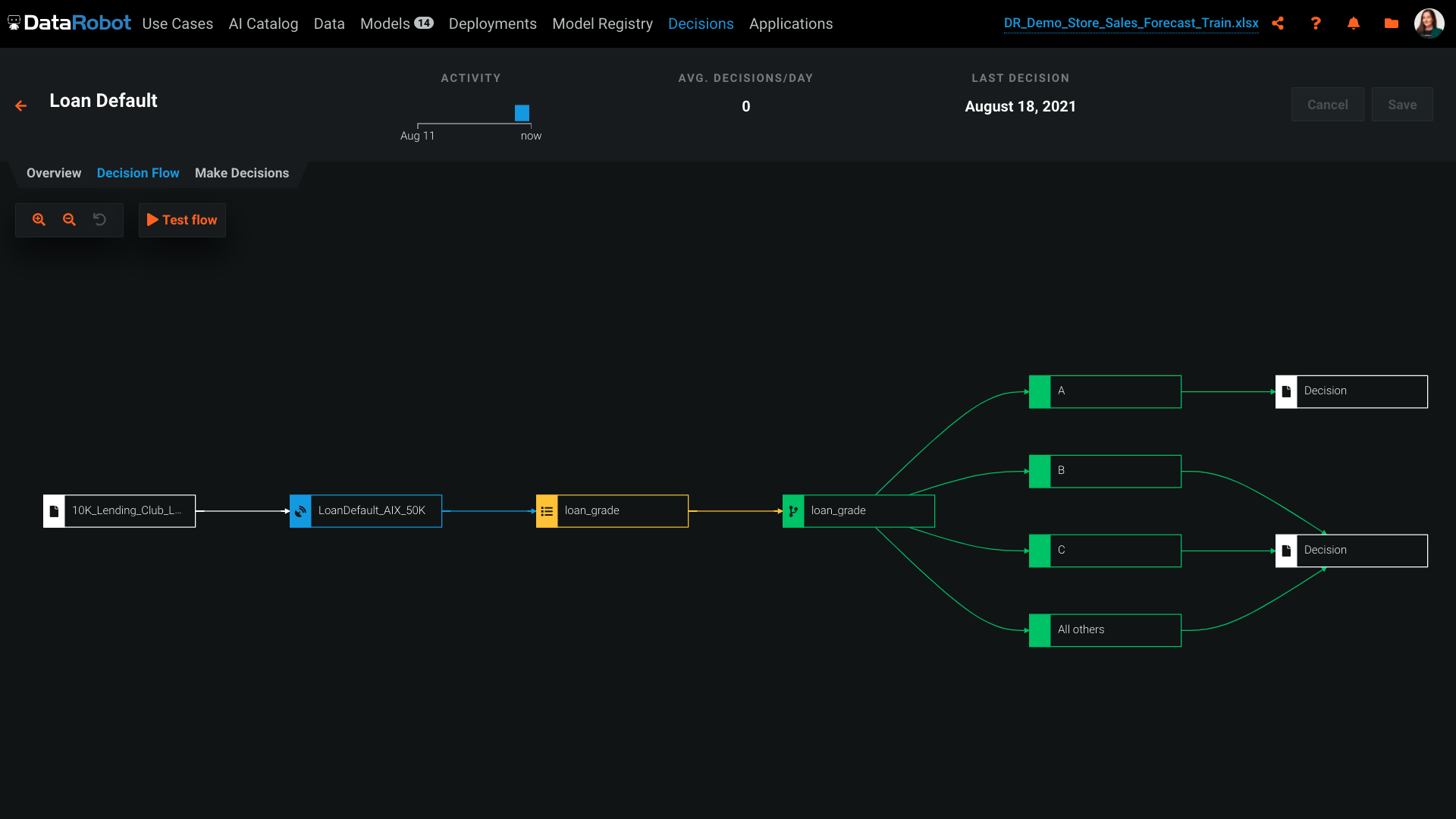
DataRobot can be used for risk assessment, such as predicting the likelihood of loan default. It can handle both classification and regression tasks effectively. It relies on historical data for model training. If you have limited historical data or the data quality is poor, it may not be the best choice as it requires a sufficient amount of high-quality data for accurate model building.
Use H2O.ai whenever you need easy to use tool, when you must be cost efficient (you can not charge the client extra money for software licenses used), need a tool with lots of algorithms that are normally used in data analytics, or need to work on one machine (it is either not allowed to move data to cloud storage or simply not necessary to connect to Hadoop, etc.). Also, you can call H2O directly from Python which makes analysis more efficient.
SageMaker is useful as a managed Jupyter notebook server. Using the notebook instances' IAM roles to grant access to private S3 buckets and other AWS resources is great. Using SageMaker's lifecycle scripts and AWS Secrets Manager to inject connection strings and other secrets is great.
SageMaker is good at serving models. The interface it provides is often clunky, but a managed, auto-scaling model server is powerful.
SageMaker is opinionated about versioning machine learning models and useful if you agree with its opinions.
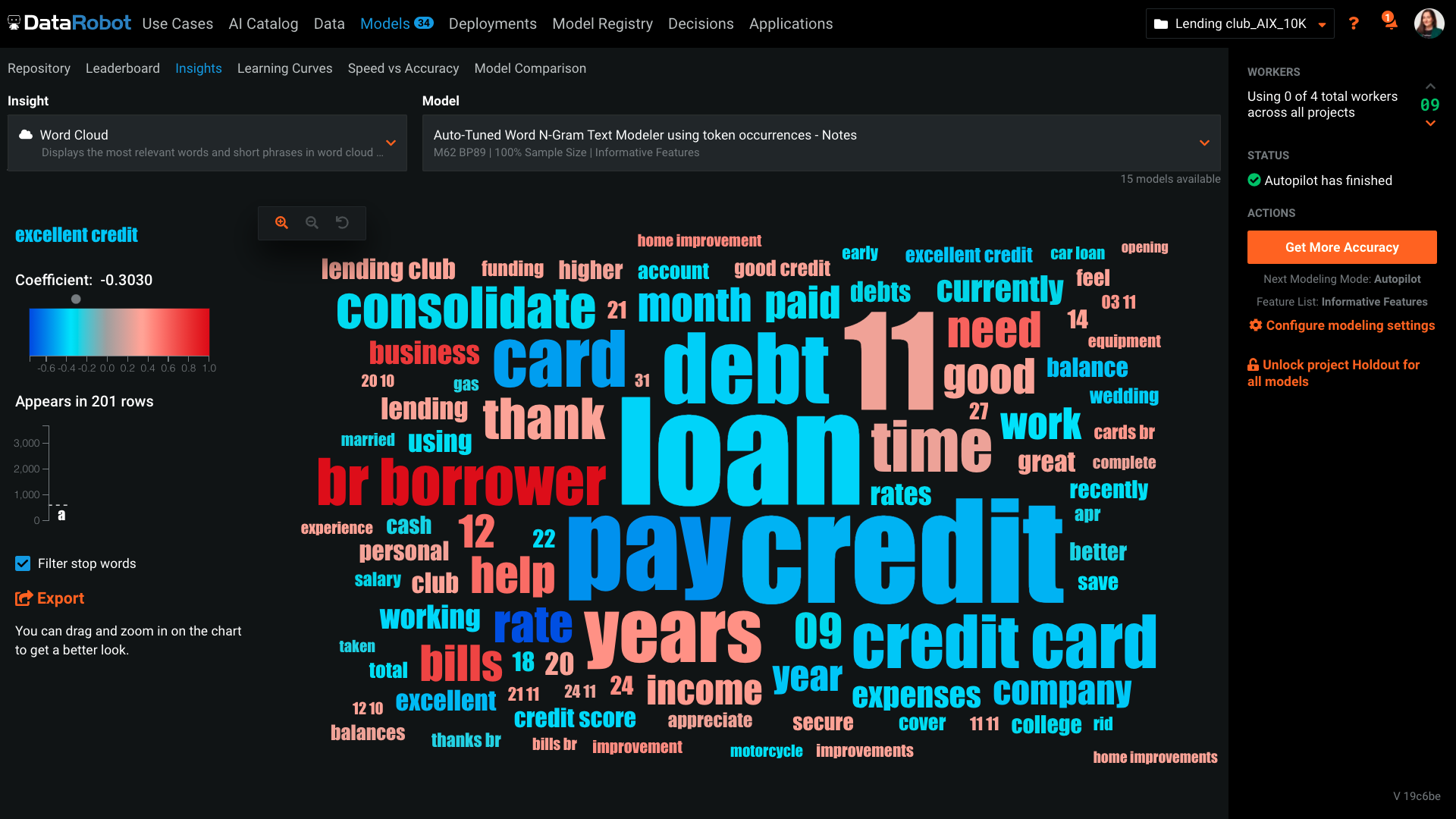
Further improvements to their text analysis tool, to be more like the Qualtrics text analysis tool, would be a great addition. Qualtrics has templates built into their text analysis tool for customer service, quality control, etc, and will automatically slot your text responses into categories associated with certain sub areas of those larger categories.
This is not really a drawback, but rather a warning - the Drivereless AI is not a replacement for a data scientist yet, and will not replace data scientists in the next decade neither. The Driverless AI feature delivers reliable results only if the analyst is sure about the meaning of input data. The data quality is usually a major issue and no tool can detect the meaning of data in the input. Data scientists are also required for business interpretation of the findings. So be careful, and do not rely on this feature without a good understanding of what it really does in each step.
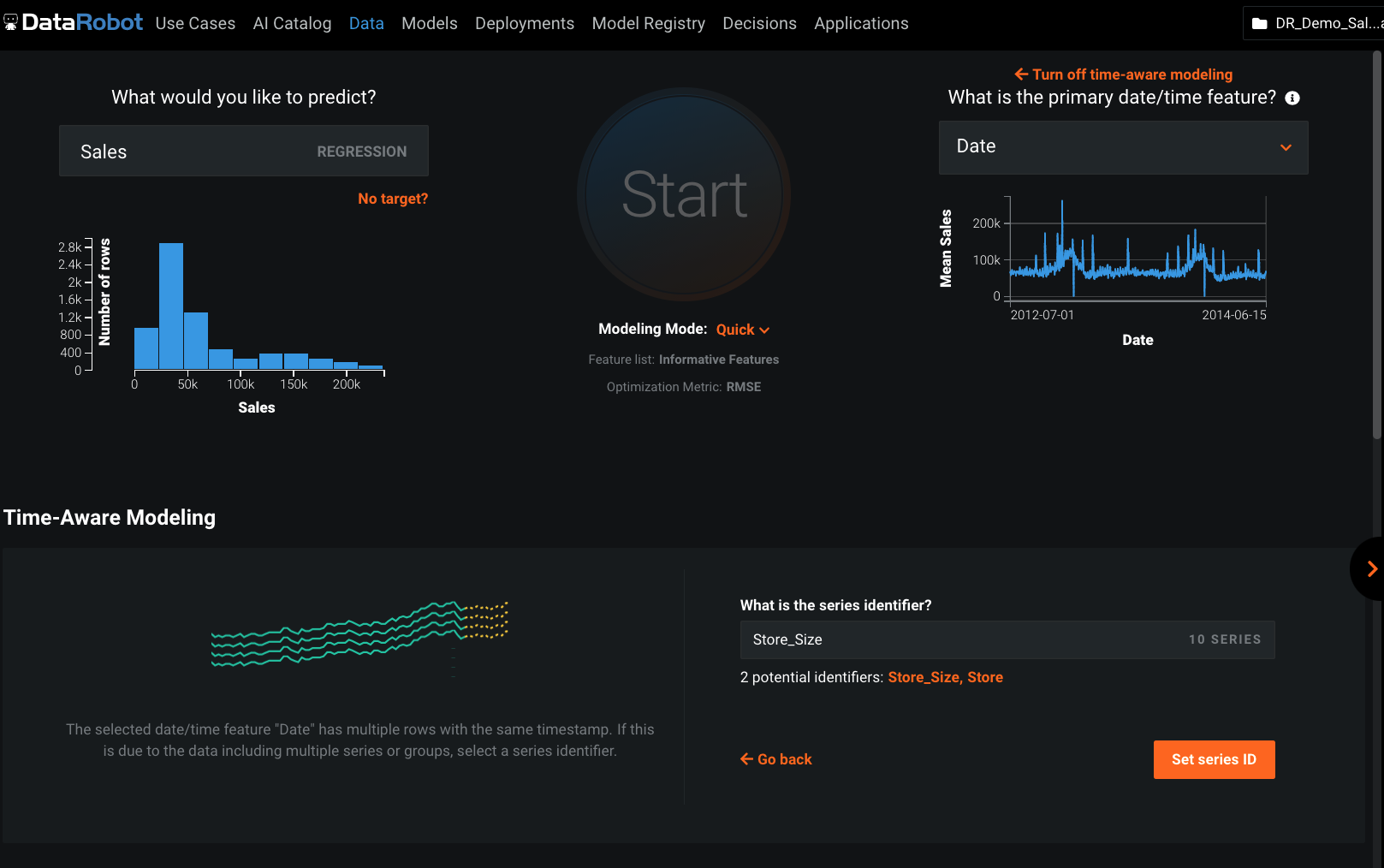
DataRobot presents a machine-learning platform designed by data scientists from an array of backgrounds, to construct and develop precise predictive modeling in a fraction of the time previously taken. The tech invloved addresses the critical shortage of data scientists by changing the speed and economics of predictive analytics. DataRobot utilizes parallel processing to evaluate models in R, Python, Spark MLlib, H2O and other open source databases. It searches for possible permutations and algorithms, features, transformation, processes, steps and tuning to yield the best models for the dataset and predictive goal.
As I am writing this report I am participating with Datarobot Engineers in an complex environment and we have their whole support. We are in Mexico and is not common to have this commitment from companies without expensive contract services. Installing is on premise and the client does not want us to take control and they, the client, is also limited because of internal IT regulations ,,, soo we are just doing magic and everybody is committed.
We have not invested in another machine learning software at this time and so far this has proved very successful with our machine learning teams. As mentioned, I am training these individuals simply on the fundamentals of the software and using it/customizing it for their needs. It has been very easy to do this and has gotten great reviews across the organization so far.
I've done machine learning through python before, however having to code and test each model individually was very time consuming and required a lot of expertise. The data Robot approach, is an excellent way of getting to a well placed starting point. You can then pick up the model from there and fine tune further if you need.
I have used Knime, RapidMiner, and Weka before I heard about H2O, but amongst all I really liked H2O. However, nowadays Googles AutoML and AWS SageMaker AutoML platform are really competitive, but more costly than H2O.
Positive impact: saving in infrastructure expenses - compared to other bulky tools this costs a fraction
Positive impact: ability to get quick fixes from H2O when problems arise - compared to waiting for several months/years for new releases from other vendors
Positive impact: Access to H2O core team and able to get features that are needed for our business quickly added to the core H2O product