Apache Airflow is an open source tool that can be used to programmatically author, schedule and monitor data pipelines using Python and SQL.
N/A
Hevo
Score 4.2 out of 10
N/A
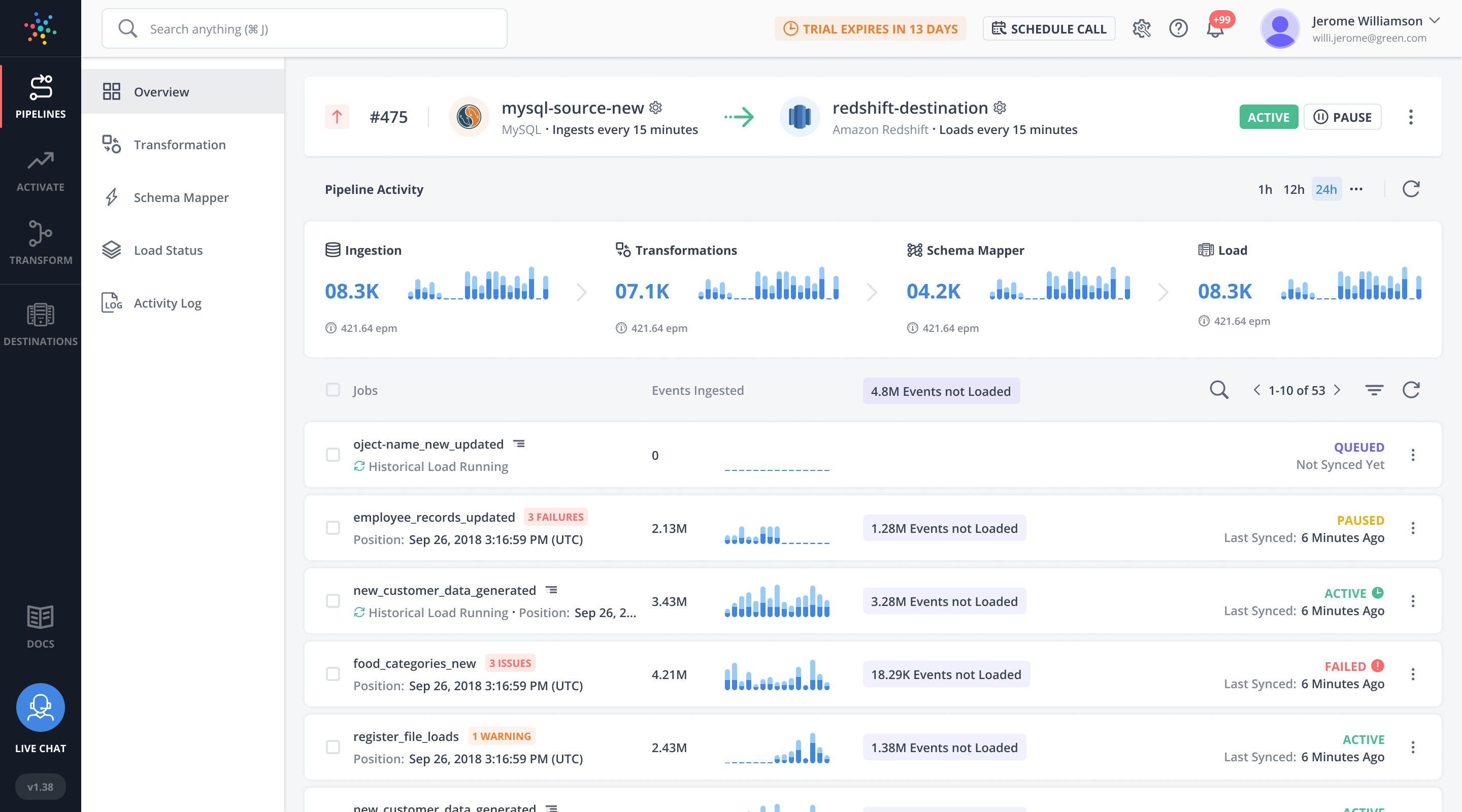
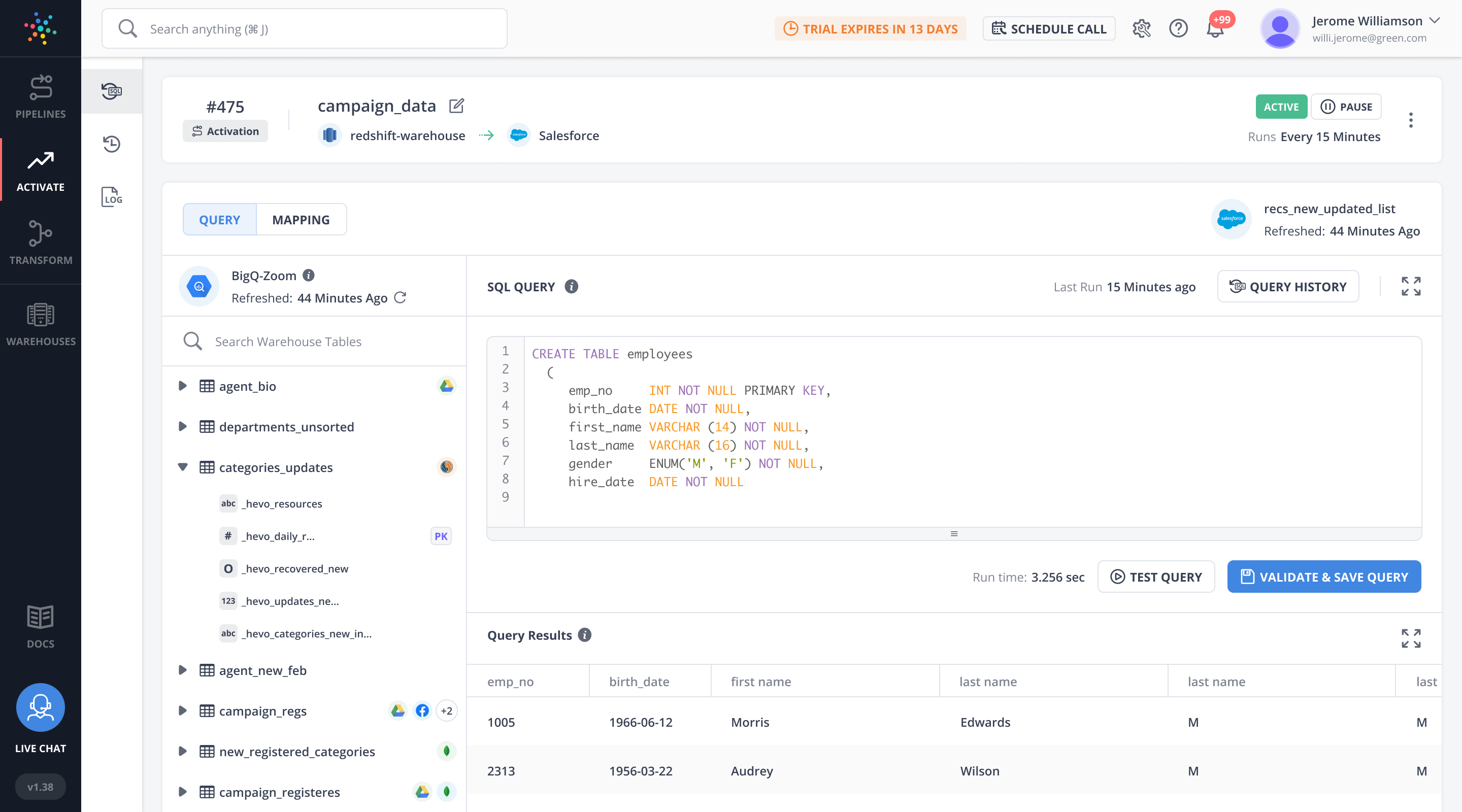
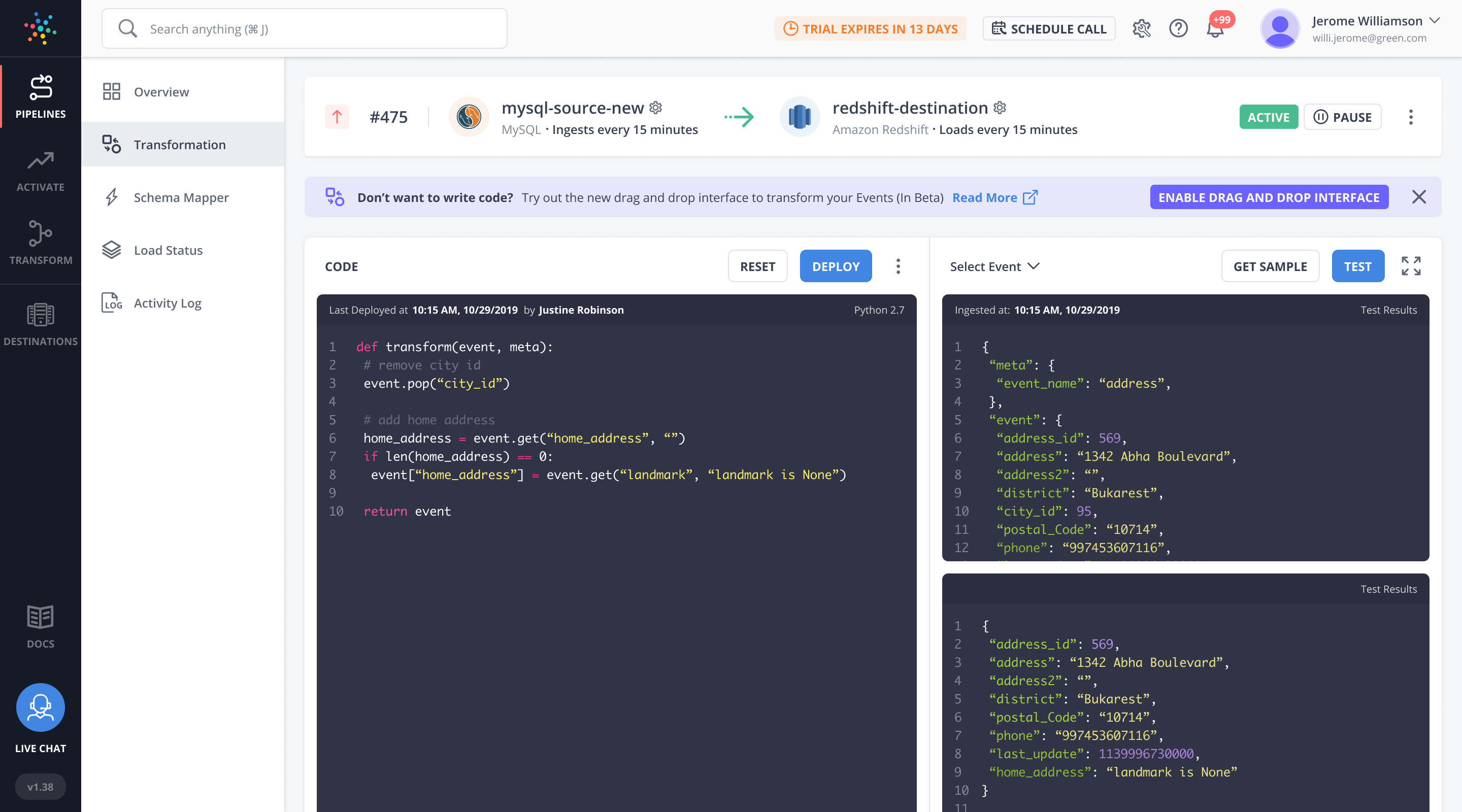
Hevo Data is a no-code, bi-directional data pipeline platform specially built for modern ETL, ELT, and Reverse ETL Needs. It helps data teams streamline and automate org-wide data flows to save engineering time/week and drive faster reporting, analytics, and decision making. The platform supports 100+ ready-to-use integrations across Databases, SaaS Applications, Cloud Storage, SDKs, and Streaming Services. The platform boasts 500 data-driven companies spread across 35+…
$0
per month
Pricing
Apache Airflow
Hevo Data
Editions & Modules
No answers on this topic
Free
$0
per month
Starter
$149 to $999
Per Month (Paid Yearly)
Business
Custom Pricing
Offerings
Pricing Offerings
Apache Airflow
Hevo
Free Trial
No
Yes
Free/Freemium Version
Yes
Yes
Premium Consulting/Integration Services
No
No
Entry-level Setup Fee
No setup fee
No setup fee
Additional Details
—
Hevo offers a Free Plan and a 14-day Free Trial for all the paid plans.
More Pricing Information
Community Pulse
Apache Airflow
Hevo Data
Considered Both Products
Apache Airflow
Verified User
Anonymous
Chose Apache Airflow
Step functions are only available in AWS but Apache Airflow provides cross cloud access. Apache Airflow also provides flexibility to pause, start and re-trigger dags. Provides executors where we can run in-house calculations if needed and which requires no integration with …
Apache Airflow is suited for a much wider set of use cases compared to Databricks. You can run it anywhere, and there is also no vendor lock-in. With Airflow, we can utilize almost any compute engine. Same thing we want to do with Databricks. There might be some level of …
Multiple DAGs can be orchestrated simultaneously at varying times, and runs can be reproduced or replicated with relative ease. Overall, utilizing Apache Airflow is easier to use than other solutions now on the market. It is simple to integrate in Apache Airflow, and the …
Using Jenkins and Kafka, it is not for the same purpose, although it might be similar. I would say AirFlow is really what it says on the can - workflow management. For our organisation, the purpose is clear. So long your aim is to have a rich workflow scheduler and job …
Much easy to deploy Apache Airflow as opposed to other products, with flexible deployment options as well as flexible integration with other tools and platforms.
There are a number of reasons to choose Apache Airflow over other similar platforms- Integrations—ready-to-use operators allow you to integrate Airflow with cloud platforms (Google, AWS, Azure, etc) Apache Airflow helps with backups and other DevOps tasks, such as submitting a …
digdag (https://www.digdag.io/)- Digdag is a very simple build, run, schedule, and monitor complex pipelines of tasks with a simple implementation and no configuration. Easy to write YAMLs
Airflow has a better community and widely adopted. Has a better UI and better documentation
Overall using Apache Airflow is easy to use compare than other other tools available in the market, It is easy to integrate in apache airflow and the workflow can be monitored and scheduling can be done easily using apache airflow, recommend this tool for Automating the data …
Fivetran is a really good product, but it is extremely pricey. Especially if you don't have dollar buying power in your country. If you don't require complex transforms and data governance tools then Hevo is much cheaper and probably a better fit for purpose product. …
Much lower cost and faster syncs but not as good support. More flexible in terms of pricing, though. Fivetran requires annual contracts and is very inflexible.
For a quick job scanning of status and deep-diving into job issues, details, and flows, AirFlow does a good job. No fuss, no muss. The low learning curve as the UI is very straightforward, and navigating it will be familiar after spending some time using it. Our requirements are pretty simple. Job scheduler, workflows, and monitoring. The jobs we run are >100, but still is a lot to review and troubleshoot when jobs don't run. So when managing large jobs, AirFlow dated UI can be a bit of a drawback.
Hevo Data is professionally sound in data management and credible analytical processes, where there is proper sourcing and data connectivity, from the different sources. Further, Hevo Data brings huge transformation and analytical approaches, which increases the viability of every operation in the company, and results are credibly issued. The integration that Hevo Data provides is comprehensively sound, and it gives quality coordination.
Apache Airflow is one of the best Orchestration platforms and a go-to scheduler for teams building a data platform or pipelines.
Apache Airflow supports multiple operators, such as the Databricks, Spark, and Python operators. All of these provide us with functionality to implement any business logic.
Apache Airflow is highly scalable, and we can run a large number of DAGs with ease. It provided HA and replication for workers. Maintaining airflow deployments is very easy, even for smaller teams, and we also get lots of metrics for observability.
If we are getting data from other sheets then sheet which is connected to Hevo Data doesn't updates in real-time.
Hevo Data change time in it's workbench on its own. For e.g. If our database timestamp is in UTC format then Hevo Data will automatically change the time to IST but if I run the same code outside the Hevo Data workbench then time is still in UTC. This creates lots of confusion while working on Hevo Data.
For its capability to connect with multicloud environments. Access Control management is something that we don't get in all the schedulers and orchestrators. But although it provides so many flexibility and options to due to python , some level of knowledge of python is needed to be able to build workflows.
Apache Airflow is suited for a much wider set of use cases compared to Databricks. You can run it anywhere, and there is also no vendor lock-in. With Airflow, we can utilize almost any compute engine. Same thing we want to do with Databricks. There might be some level of difficulty based on the support.
1. Cost efficient 2. Creation of automated pipeline 3. Can load data from multiple data sources 4. Updates data in near real-time - We were able to get near real time insights from the data model which we have created in hevo 5. It has good integration with different BI tools