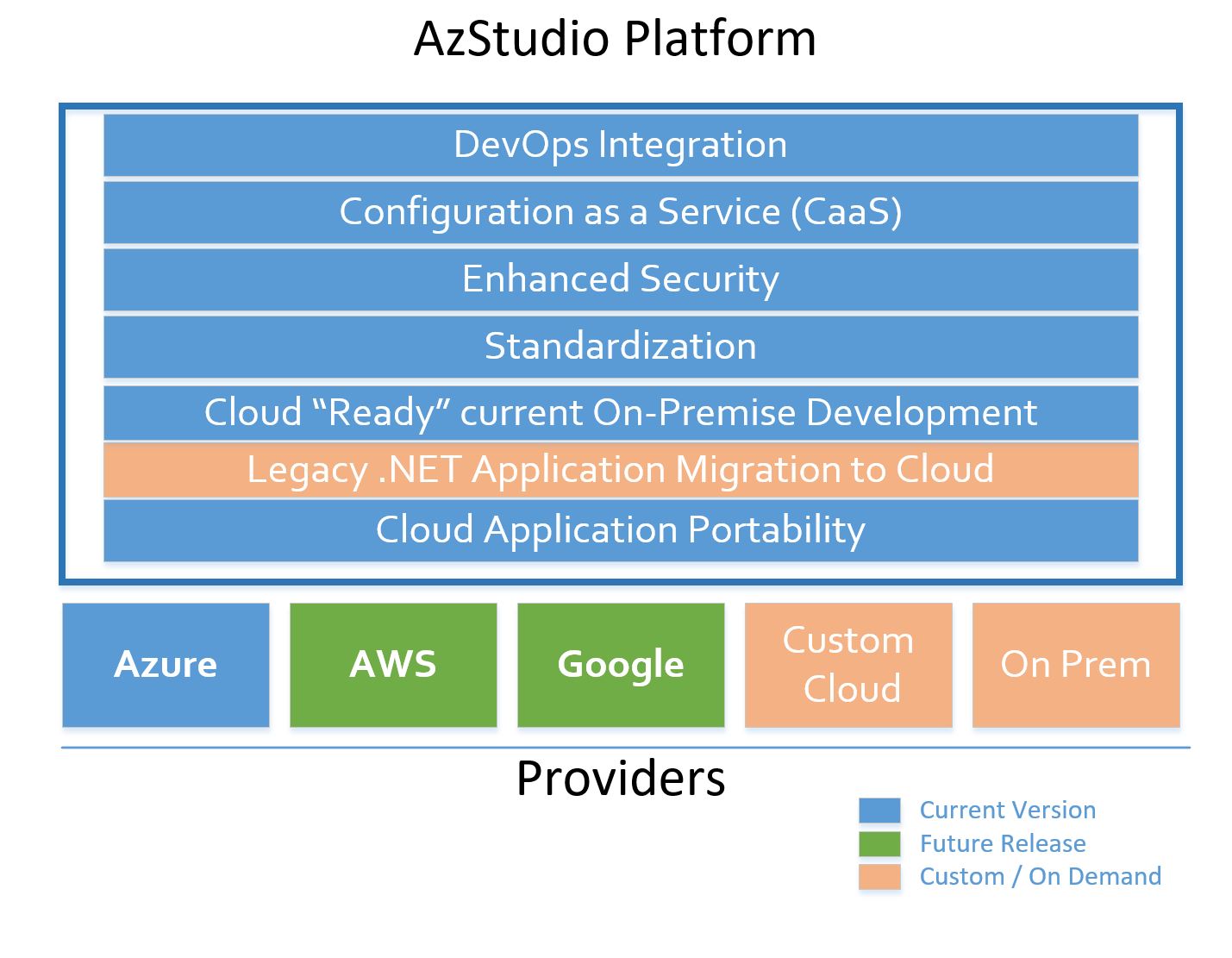
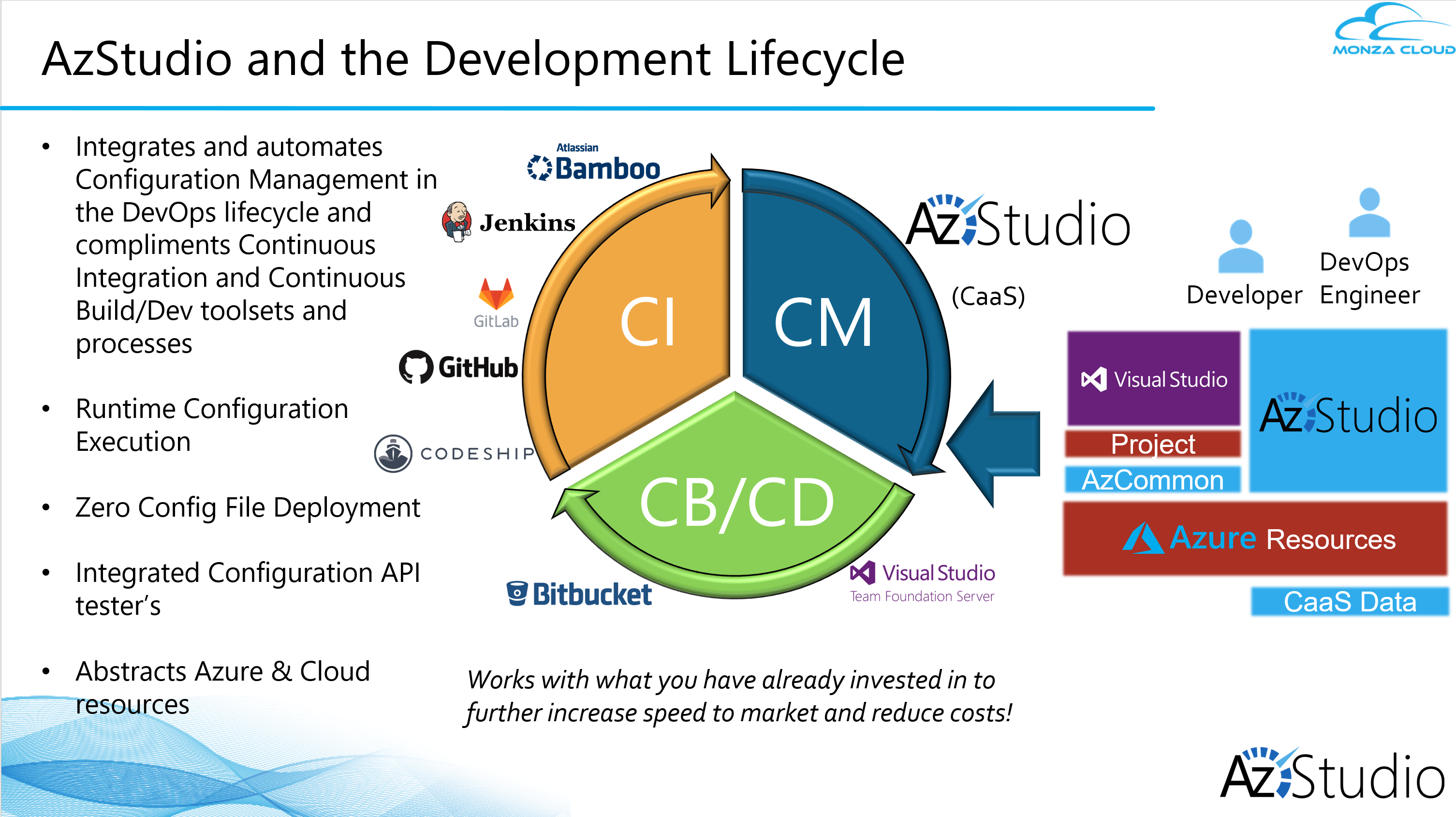
AzStudio is a unified workbench of tools, a platform, that allows developers to code faster than you thought possible. AzStudio aims to accelerate development and drastically increase your speed to market of Azure PaaS Applications. It also expedites Legacy .Net modernization to PaaS efforts and enables Multi-Cloud portability while providing standardized best-practices and enhanced security. According to the vendor, this is done by leveraging a patent-pending Configuration as a Service (CaaS)…
$300
per developer / per month
Oracle WebLogic Server
Score 6.9 out of 10
N/A
Oracle WebLogic Server is a unified and extensible platform for developing, deploying and running enterprise applications, such as Java, for on-premises and in the cloud. WebLogic Server offers a scalable implementation of Java Enterprise Edition (EE) and Jakarta EE.
N/A
Pricing
AzStudio
Oracle WebLogic Server
Editions & Modules
AzStudio Enterprise
$300.00
per developer / per month
No answers on this topic
Offerings
Pricing Offerings
AzStudio
Oracle WebLogic Server
Free Trial
Yes
No
Free/Freemium Version
No
No
Premium Consulting/Integration Services
No
No
Entry-level Setup Fee
Optional
No setup fee
Additional Details
Enterprise – Starting at $300.00/per user(dev/QA/tester/etc.) per month (billed annually) + 18% Annual Maintenance and Support
•Unlimited application capacity
•Unlimited scalability
•Unlimited environments
•On-premises/Private/Public/Hybrid Cloud deployment options
•Base customer support and maintenance services
Base Customer Support services include:
•Unlimited how-to email support
•Online case submission via email
•Self-service resources via Monza Cloud Knowledge Base
•Unlimited access to online video training and tutorials
—
More Pricing Information
Community Pulse
AzStudio
Oracle WebLogic Server
Considered Both Products
AzStudio
No answer on this topic
Oracle WebLogic Server
Verified User
Anonymous
Chose Oracle WebLogic Server
I have only used WebSphere for an evaluation period but I felt it was even harder to learn and it's cost was going to be bigger in the long run. Oracle WebLogic Server was more like the middle ground for what we needed at the time, both in terms of costs and learning curve.
As mentioned earlier we didn't choose Oracle WebLogic Server, but received it as part of the application we bought. After using it for a few years we found it to be a stable product that has a bit of a learning curve compared to Microsoft IIS but is as stable and maybe even …
I wasn't involved in selecting the server we were using but in our team we've made some efforts to improve the local deployment process by trying some other Applicational servers too. Apache Tomcat was a more lightweight solution for sure, and it coped well with our applications …
Oracle Weblogic Application Server is very robust and has good features and stability. It is a very sought-after tool for deploying many kinds of applications.
Director, eCommerce Analytics and Digital Marketing
Chose Oracle WebLogic Server
I believe the Oracle WebLogic Suite is probably a better all encompassing suite of development tools for the IT department. [It] is probably a bit more expensive than other competitors like apache tomcat or NGINX, but is worth the investment if you consider the savings from …
Oracle WebLogic Application Server is a leading server side container. It is far superior than IBM's WebSphere application server, JBOSS or Tomcat server. The easiness of using Oracle's weblogic application server is much user friendly and also it has great support and user …
Oracle Weblogic Application Server gains its reputation from the performance, easy of maintenance, to be compared with the competitor solutions. However, Weblogic is "all-in-on" solution, sometimes it is too fat for some business needs that only requires part of the full …
The main competitor is Wildfly and Websphere. The choice it's all about the bundled cost regarding the chosen OS and Java vendor. All three are almost the same in terms of performance and features. An exceptional alternative from the OSS ecosystem is Payara. Payra has some …
Applications Developer Information Technology Specialist
Chose Oracle WebLogic Server
Oracle WebLogic Application Server is much more stable when compared to opensource application servers like Oracle GlassFish Server or Apache Tomcat. Coming to JBoss Enterprise Application Server, Oracle WebLogic Application Server has better support with most of the cloud …
Apache Tomcat requires a lot of out-of-the-box set-up that is difficult to work with, especially when it comes to production-ready configurations. The only advantage it has over Oracle WLS is that it's free, which is probably why many commercial server products are bundled with …
Apache tomcat is used by the group of developers in our organization but the major student ERP production systems do run on WebLogic due to its feature-rich nature and stability. Although the cost is considered a hindrance to its wider use.
We are using OBIEE application and when we install an application it is installed automatically with the application. We selected the WebLogic Server for better administration and maintenance of the application. It is very important for us to keep our production application up …
WebSphere is another major contender and they have pitching and are more updated/streamlined. I still prefer WebLogic from an administrator standpoint. Support is much better and there are more options for finding answers to issues or new features.
Red Hat JBoss EAP is good and open source. We chose Oracle WebLogic because we are using Oracle products like Oracle Enterprise Manager and it's very easy to integrate WebLogic with it. Also, for our mission critical applications, we wanted an application server with great …
Compared to the alternatives, Weblogic is on the heavier side and requires more configuration to get it running. Instance startup time is also relatively long, but this could be due to the application size deployed on the server. Licensing cost for WebLogic would also be higher …
I see Oracle WebLogic Application Server being appropriate when an application needs several different data sources and messaging providers configured and accessible, with a configured level of control of resources (connection pools) and timeouts. It is also advisable to create distributed resources that you can configure as always active to provide more processing power, or as failover for situations of availability in case of disaster recovery, for example. An application where the number of required resources configured is very small and almost non-changeable, and no scalability is required, some other options exist in the market with less cost.
I love that the weblogic dashboard allows you to manage applications and see the status of each application.
Oracle WebLogic Application Server simplifies usage periods in the development and production of business applications.
Oracle WebLogic Server allows me to define various aspects of data source entry, including creating a specific multiple connection to facilitate data entry.
Performance and administration are highlighted in weblogic.
The Admin UI should be further simplified, the UI design was not too user-friendly— too many options and clicks required, difficult for the new beginners to figure out what they are looking for.
The admin server becomes the single failure point, although Oracle suggested some workarounds by setting VIP and VHost, it was not quite easy and straight forward.
Domain replication is hard, requiring a lot of knowledge and scripts efforts.
Admin will hang if the node manager communication encounters some issues for one or some nodes in the domain/cluster.
Not able to kill/terminate the stuck thread, the only way is to restart the managed server (JVM)
Oracle WebLogic Server has so many features that sometimes it's hard to find the right place to setup things, I think the dated user interface does not help with that either. This has a direct impact when deciding to use it as your application server, you'd need to have the right people and invest the time needed to master it. If you're application justifies it then it will definitely be a great choice in the long run.
I wasn't involved in selecting the server we were using but in our team we've made some efforts to improve the local deployment process by trying some other Applicational servers too. Apache Tomcat was a more lightweight solution for sure, and it coped well with our applications needs, configuration and performance wise. Despite that, since we didn't got clearance to change that into our local servers, we kept using Weblogic to guarantee compliance between the testing environments and production.