Caffe2 is a lightweight deep learning framework from Facebook Open Source.
N/A
Neuton.AI
Score 0.0 out of 10
N/A
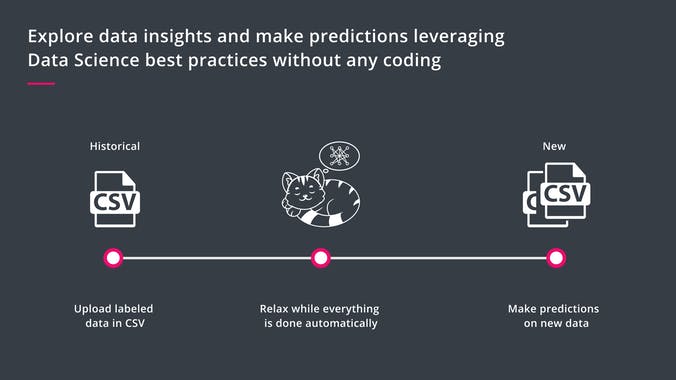
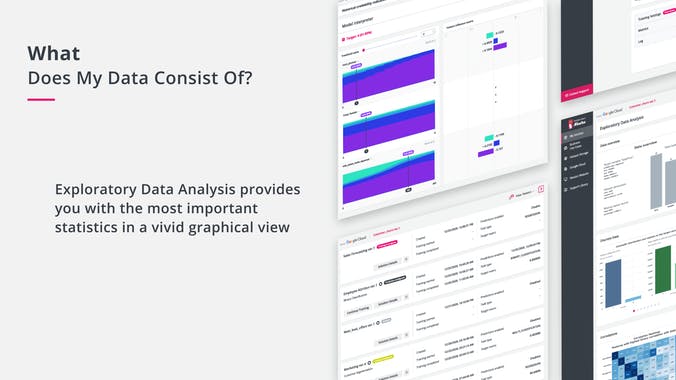
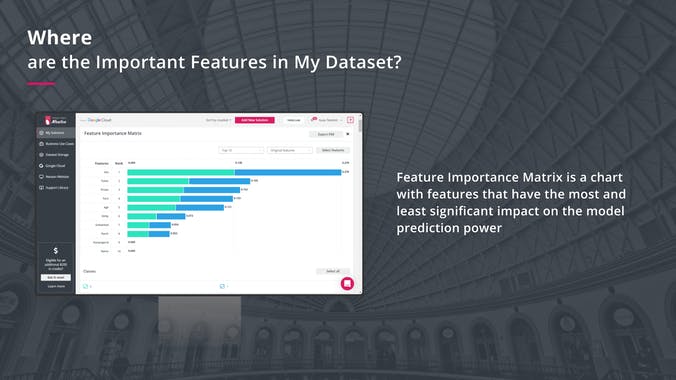
The world is about to get way more digitized as the demand for AI is booming. However, the implementation of such revolutionary technologies requires the laborious and time-consuming efforts of data scientists and not all companies are ready to spend that much time and financial resources on that. So Neuton.AI aims to help democratize AI tools and make them available for a mass user without any data science expertise at all. After analyzing the best data science practices, the…
N/A
Pytorch
Score 9.3 out of 10
N/A
Pytorch is an open source machine learning (ML) framework boasting a rich ecosystem of tools and libraries that extend PyTorch and support development in computer vision, NLP and or that supports other ML goals.
N/A
Pricing
Caffe2
Neuton.AI
Pytorch
Editions & Modules
No answers on this topic
No answers on this topic
No answers on this topic
Offerings
Pricing Offerings
Caffe2
Neuton.AI
Pytorch
Free Trial
No
Yes
No
Free/Freemium Version
No
No
No
Premium Consulting/Integration Services
No
No
No
Entry-level Setup Fee
No setup fee
No setup fee
No setup fee
Additional Details
—
—
—
More Pricing Information
Community Pulse
Caffe2
Neuton.AI
Pytorch
Considered Multiple Products
Caffe2
No answer on this topic
Neuton.AI
No answer on this topic
Pytorch
Verified User
Engineer
Chose Pytorch
The syntax of PyTorch is much better in my opinion, and the programming style is more pythonic and easier to use. I also think PyTorch is a lot easier to debug than the competitors I've listed (Caffe2 and TensorFlow). I do like some of the examples given on tensorflows website, …
They have created Pytorch Lightening on top of Pytorch to make the life of Data Scientists easy so that they can use complex models they need with just a few lines of code, so it's becoming popular. As compared to TensorFlow(Keras), where we can create custom neural networks by just adding layers, it's slightly complicated in Pytorch.
The big advantage of PyTorch is how close it is to the algorithm. Oftentimes, it is easier to read Pytorch code than a given paper directly. I particularly like the object-oriented approach in model definition; it makes things very clean and easy to teach to software engineers.
Pytorch is very, very simple compared to TensorFlow. Simple to install, less dependency issues, and very small learning curve. TensorFlow is very much optimised for robust deployment but very complicated to train simple models and play around with the loss functions. It needs a lot of juggling around with the documentation. The research community also prefers PyTorch, so it becomes easy to find solutions to most of the problems. Keras is very simple and good for learning ML / DL. But when going deep into research or building some product that requires a lot of tweaks and experimentation, Keras is not suitable for that. May be good for proving some hypotheses but not good for rigorous experimentation with complex models.