CloudFoundry is a free, open source cloud computing platform supported by the non-profit CloudFoundry. It is not tied to any particular cloud service, but can be self-hosted or run on any cloud service preferred.
N/A
WSO2 Developer Platform
Score8.7 out of 10
N/A
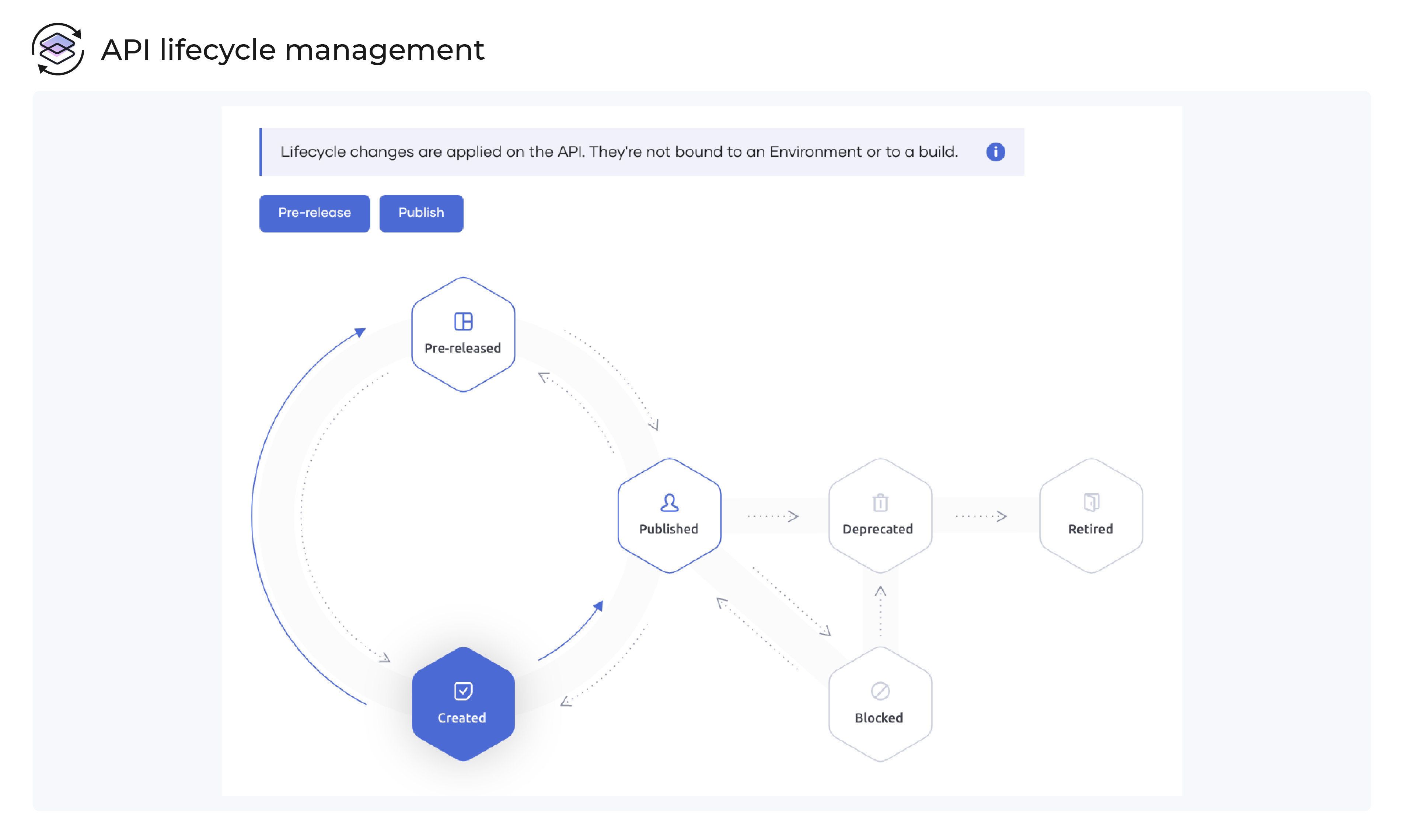
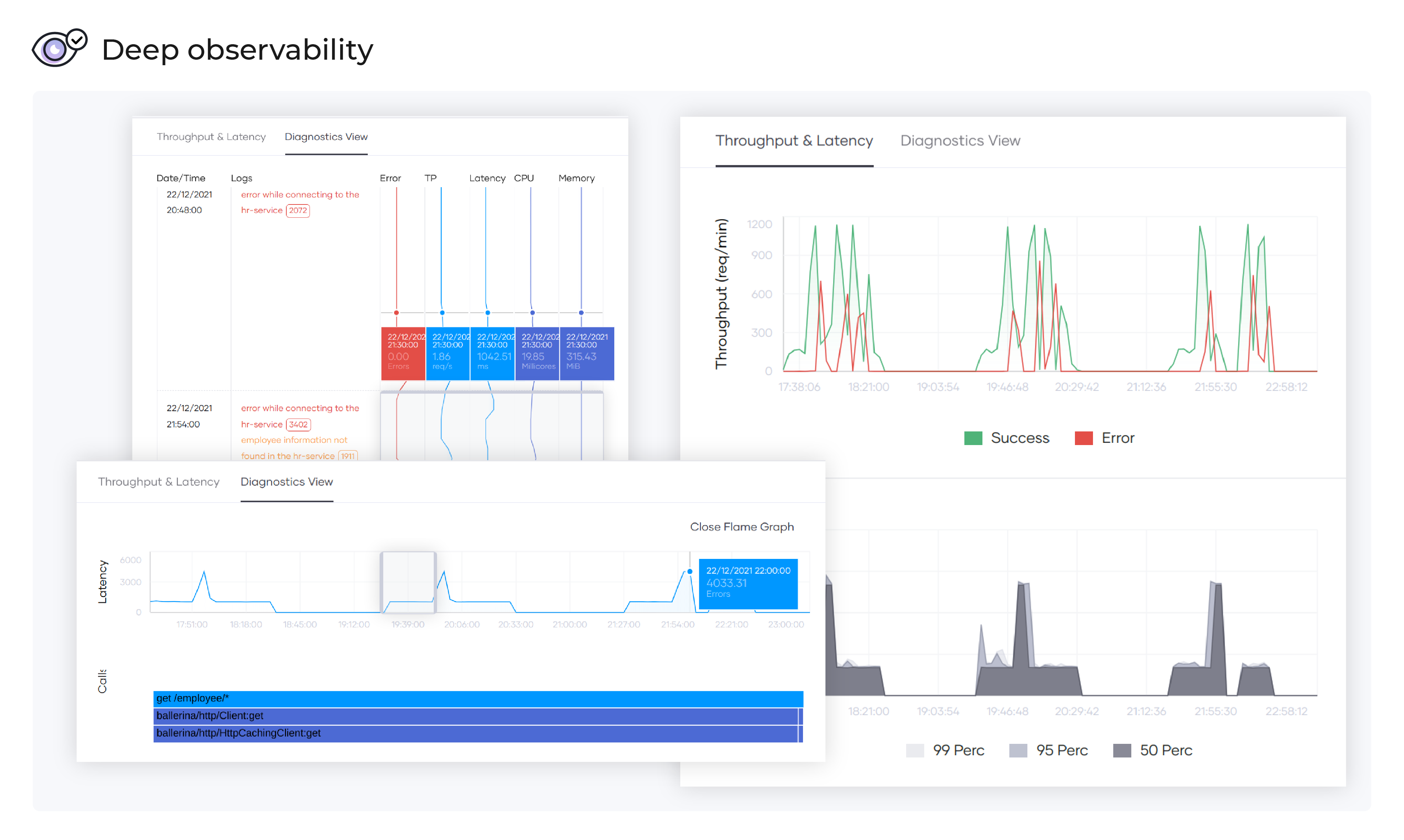
WSO2 Developer Platform (formerly WSO2 Choreo) is an AI-native Internal Developer Platform (IDP) that functions as a unified control plane for cloud-native application delivery. The platform provides a centralized internal developer portal and execution engine to abstract underlying infrastructure complexity, standardize deployments, and automate the software development lifecycle across Kubernetes environments.
$0
1 project, up to 5 components
Pricing
CloudFoundry
WSO2 Developer Platform
Editions & Modules
No answers on this topic
Free
$0
1 project, up to 5 components. $100 in Choreo infrastructure credits per month.
Pay-As-You-Go
$150
per month Up to 10 projects and 30 components. $150 per component per month. Pass-through infrastructure costs.
Enterprise
Custom Quote
per year Unlimited projects and components. Discounts based on annual commitments available. Pass-through infrastructure costs, or use a data plane.
Offerings
Pricing Offerings
CloudFoundry
WSO2 Developer Platform
Free Trial
No
No
Free/Freemium Version
Yes
Yes
Premium Consulting/Integration Services
No
Yes
Entry-level Setup Fee
No setup fee
No setup fee
Additional Details
—
1 step is a maximum of 500ms of compute time. An incoming event, message, or outgoing API call is a minimum of 1 step.
More Pricing Information
Features
CloudFoundry
WSO2 Developer Platform
Platform-as-a-Service
Comparison of Platform-as-a-Service features of CloudFoundry and WSO2 Developer Platform
A de minimis incentive was given to thank the reviewer for their time. The incentive was not used to bias or drive a particular response, nor was the incentive contingent on a positive endorsement. More Info
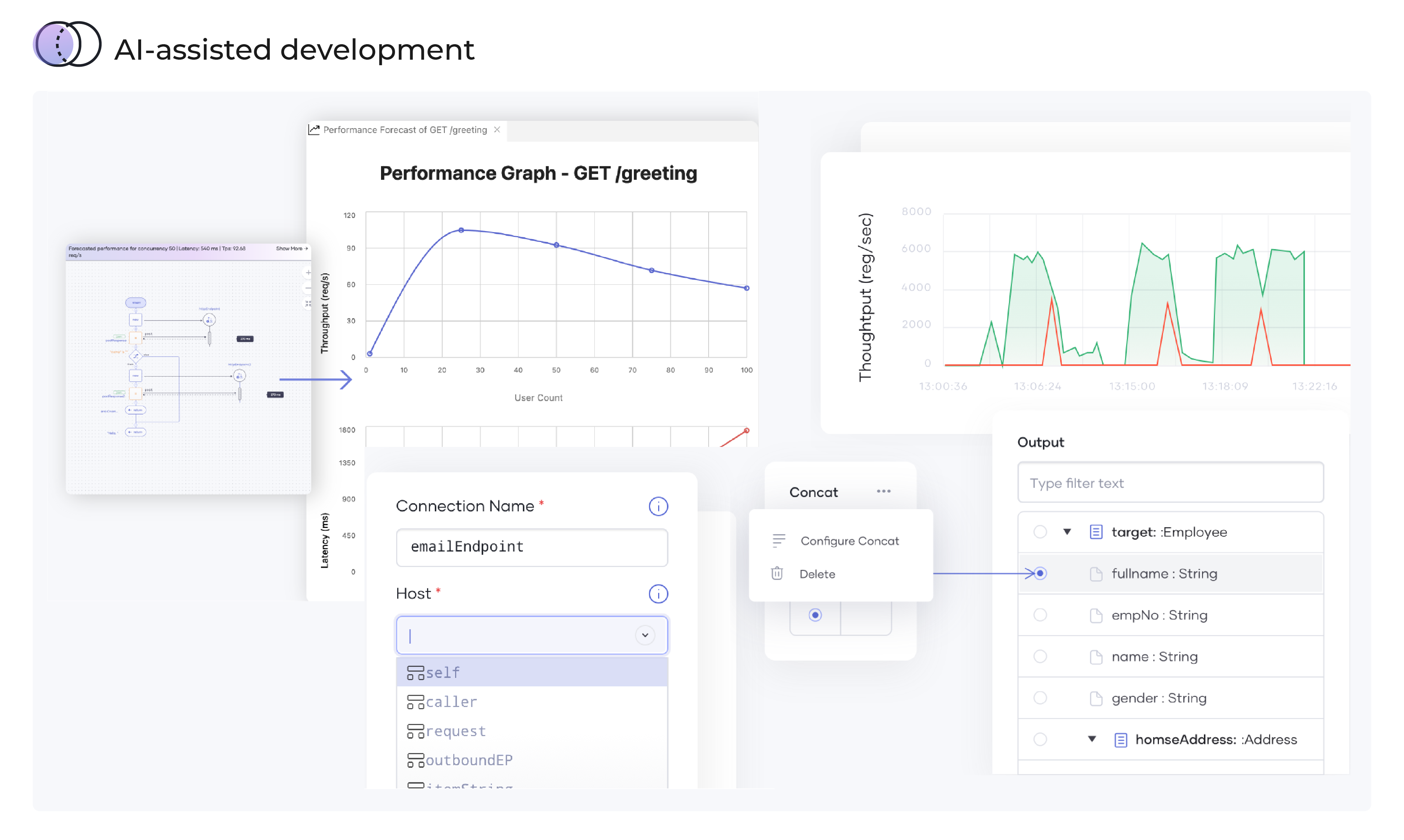
While you are developing your code, my case is codes for bots, you'll have more power and if you have an API ally that shows forecasts of latencies and throughputs: Choreo by WS02 is that friend. It is very ideal in giving insights on intelligent data mapping, code anomalies as you develop the codes or applications.
A de minimis incentive was given to thank the reviewer for their time. The incentive was not used to bias or drive a particular response, nor was the incentive contingent on a positive endorsement. More Info
Support for Orgs and Spaces that allow for managing users and deployables within a large organization.
Easy deployment, deploying code is as simple as executing single line from CLI, thanks to build-packs.
Solid and rich CLI, that allows for various operations on the instance.
Isolated Virtual Machines called Droplets, that provide clean run time environment for the code. This used to be a problem with Weblogic and other application servers, where multiple applications are run on the same cluster and they share resources.
SSH capability for the droplet (isolated VM's are called droplets), that allows for real time viewing of the App code while the application is running.
Support for multiple languages, thanks to build-packs.
Support for horizontal scaling, scaling an instance horizontally is a breeze.
Support for configuring environment variable using the service bindings.
Supports memory and disk space limit allocation for individual applications.
Supports API's as well as workers (processes without endpoints)
Supports blue-green deployment with minimal down time
A de minimis incentive was given to thank the reviewer for their time. The incentive was not used to bias or drive a particular response, nor was the incentive contingent on a positive endorsement. More Info
A de minimis incentive was given to thank the reviewer for their time. The incentive was not used to bias or drive a particular response, nor was the incentive contingent on a positive endorsement. More Info
Does not support stateful containers and that would be a nice to have.
Supports showing logs, but does not persist the logs anywhere. This makes relying on Cloud Foundry's logs very unreliable. The logs have to be persisted using other third party tools like Elk and Kibana.
A de minimis incentive was given to thank the reviewer for their time. The incentive was not used to bias or drive a particular response, nor was the incentive contingent on a positive endorsement. More Info
A de minimis incentive was given to thank the reviewer for their time. The incentive was not used to bias or drive a particular response, nor was the incentive contingent on a positive endorsement. More Info
While Docker shines in providing support for volumes and stateful instances, Cloud foundry shines in providing support for deploying stateless services. Heroku shines in integrating with Git and using commits to git as hooks to trigger deployments right from the command line. But it does not provide on-premise solution that Cloud foundry provides.
A de minimis incentive was given to thank the reviewer for their time. The incentive was not used to bias or drive a particular response, nor was the incentive contingent on a positive endorsement. More Info
Positive impact, since it simplifies the deployment time by a huge margin. Without cloud foundry, deploying a code needs coordination with infrastructure teams, while with cloud foundry, its a simple one line command. This reduces the deployment time from at least few hours to few minutes. Faster deployments promote faster dev cycle iterations.
Code maintenance such as upgrading a Node or Java version is as simple as updating the build-pack. Without cloud foundry, using web logic, the specific version only supports a specific version of Java. So updating the version involves upgrading the version of web logic that needs to involve few teams. So without cloud foundry, it takes at least few days, with cloud foundry, its a matter of few mins.
Overall, happier Developers and thats harder to quantify.
A de minimis incentive was given to thank the reviewer for their time. The incentive was not used to bias or drive a particular response, nor was the incentive contingent on a positive endorsement. More Info
A de minimis incentive was given to thank the reviewer for their time. The incentive was not used to bias or drive a particular response, nor was the incentive contingent on a positive endorsement. More Info