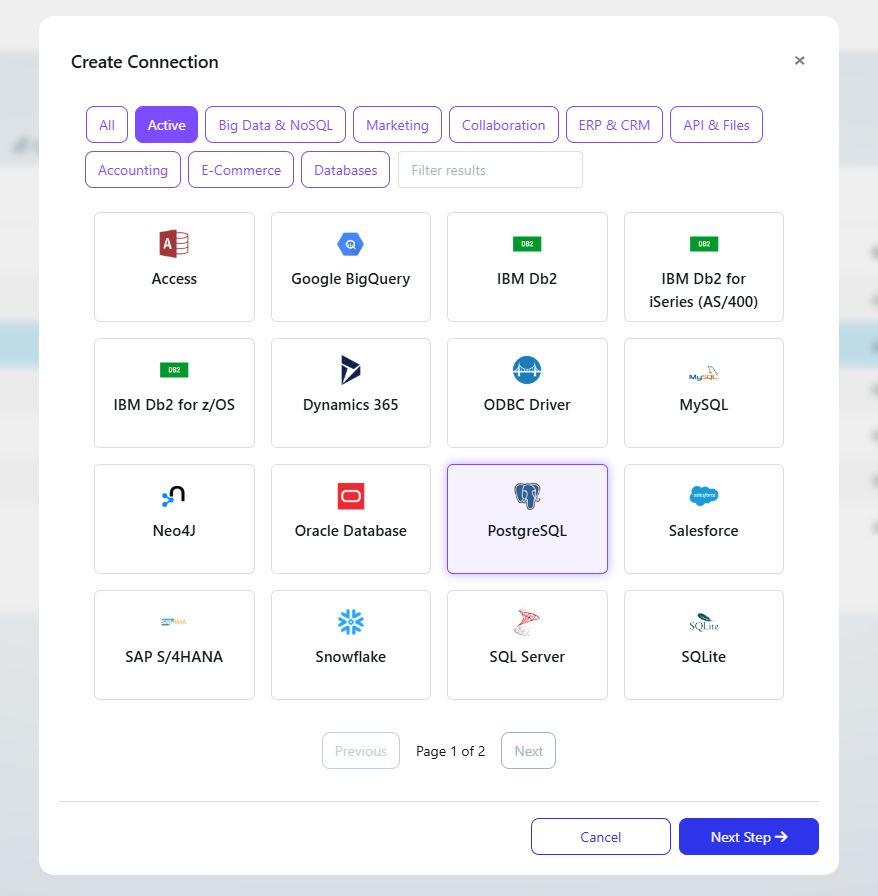
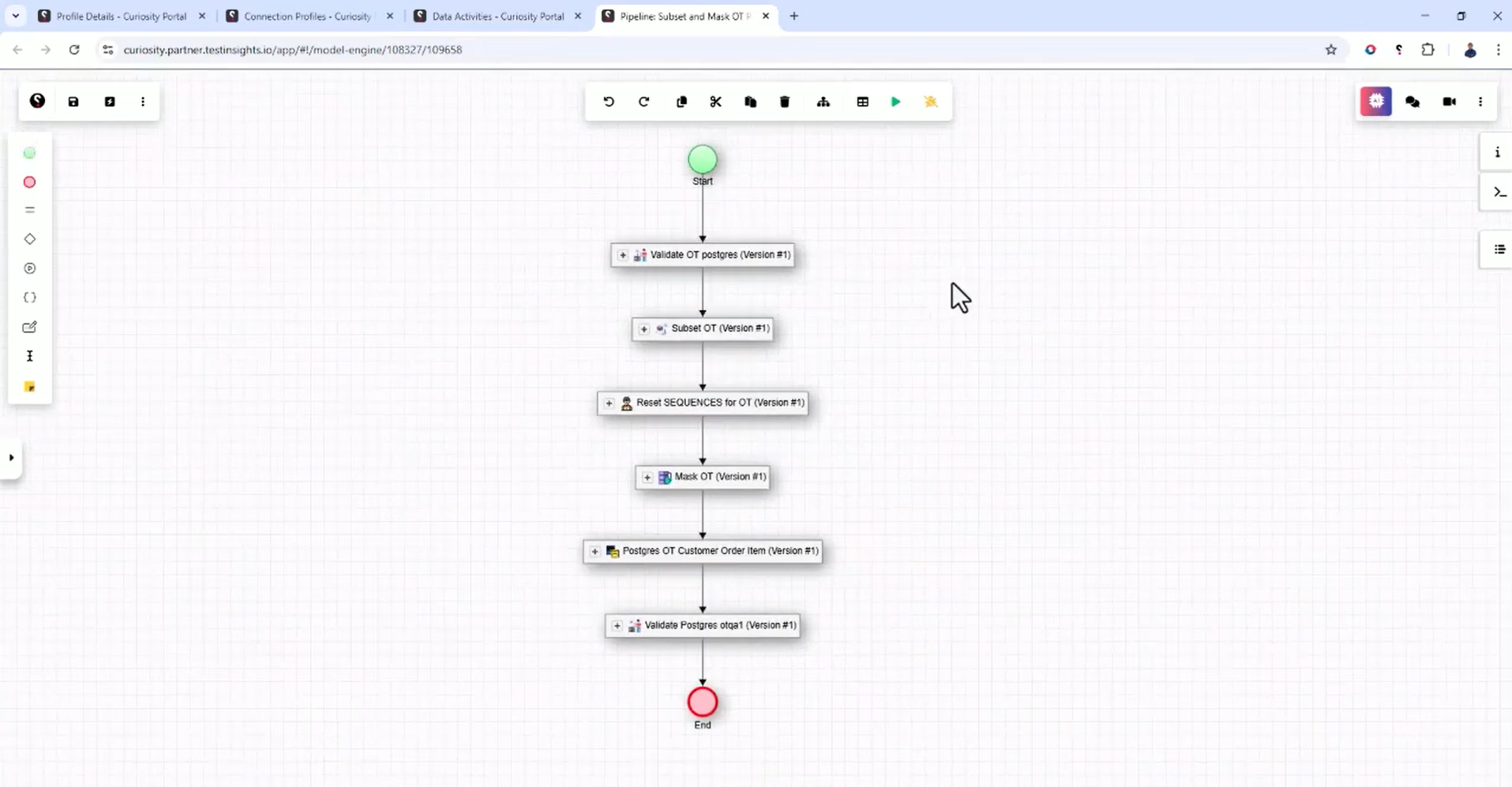
Curiosity Enterprise Test Data vs. MySQL

Overview
ProductRatingMost Used ByProduct SummaryStarting Price
Curiosity Enterprise Test Data
Score 0.0 out of 10
Enterprise companies (1,001+ employees)
The Enterprise Test Data platform from Curiosity Software focuses on alleviating challenges related to test data management for enterprises, with the help of AI. It excels at handling issues associated with data complexity, legacy, scalability, and regulatory compliance. Enterprise Test Data aims to assist teams by easing their intricate application landscape and ensuring certainty and clarity throughout the data journey.N/A
MySQL
Score 8.2 out of 10
N/A
MySQL is a popular open-source relational and embedded database, now owned by Oracle.N/A
Pricing
Curiosity Enterprise Test DataMySQL
Editions & Modules
No answers on this topic
Offerings
Pricing Offerings
Curiosity Enterprise Test DataMySQL
Free Trial
NoNo
Free/Freemium Version
NoNo
Premium Consulting/Integration Services
YesNo
Entry-level Setup FeeOptionalNo setup fee
Additional Details
More Pricing Information
Community Pulse
Curiosity Enterprise Test DataMySQL
Best Alternatives
Curiosity Enterprise Test DataMySQL
Small Businesses

No answers on this topic

InfluxDB
InfluxDB
Score 8.8 out of 10
Medium-sized Companies
SAP HANA Cloud
SAP HANA Cloud
Score 8.9 out of 10
SQLite
SQLite
Score 8.0 out of 10
Enterprises
Perforce Delphix
Perforce Delphix
Score 9.9 out of 10
SQLite
SQLite
Score 8.0 out of 10
All AlternativesView all alternativesView all alternatives
User Ratings
Curiosity Enterprise Test DataMySQL
Likelihood to Recommend
-
(0 ratings)
8.4
(146 ratings)
Likelihood to Renew
-
(0 ratings)
9.0
(5 ratings)
Usability
-
(0 ratings)
7.9
(18 ratings)
Support Rating
-
(0 ratings)
9.0
(3 ratings)
Implementation Rating
-
(0 ratings)
8.0
(1 ratings)
User Testimonials
Curiosity Enterprise Test DataMySQL
Likelihood to Recommend
Curiosity Software
No answers on this topic
Oracle
MySQL is best suited for applications on platform like high-traffic content-driven websites, small-scale web apps, data warehouses which regards light analytical workloads. However its less suited for areas like enterprise data warehouse, OLAP cubes, large-scale reporting, applications requiring flexible or semi-structured data like event logging systems, product configurations, dynamic forms.
Read full review
Pros
Curiosity Software
No answers on this topic
Oracle
  • Stable - it just runs, with minimal downtime or errors
  • Fast - well-structured data is quickly written and read
  • Secure - MySQL is easy to keep data secure from people and applications that shouldn't see it
  • Easy to use - SQL is industry standard so no problems with adding, editing and reading data stored in MySQL
Read full review
Cons
Curiosity Software
No answers on this topic
Oracle
  • Learning curve: is big. Newbies will face problems in understanding the platform initially. However, with plenty of online resources, one can easily find solutions to problems and learn on the go.
  • Backup and restore: MySQL is not very seamless. Although the data is never ruptured or missed, the process involved is not very much user-friendly. Maybe, a new command-line interface for only the backup-restore functionality shall be set up again to make this very important step much easier to perform and maintain.
Read full review
Likelihood to Renew
Curiosity Software
No answers on this topic
Oracle
For teaching Databases and SQL, I would definitely continue to use MySQL. It provides a good, solid foundation to learn about databases. Also to learn about the SQL language and how it works with the creation, insertion, deletion, updating, and manipulation of data, tables, and databases. This SQL language is a foundation and can be used to learn many other database related concepts.
Read full review
Usability
Curiosity Software
No answers on this topic
Oracle
I give MySQL a 9/10 overall because I really like it but I feel like there are a lot of tech people who would hate it if I gave it a 10/10. I've never had any problems with it or reached any of its limitations but I know a few people who have so I can't give it a 10/10 based on those complaints.
Read full review
Support Rating
Curiosity Software
No answers on this topic
Oracle
We have never contacted MySQL enterprise support team for any issues related to MySQL. This is because we have been using primarily the MySQL Server community edition and have been using the MySQL support forums for any questions and practical guidance that we needed before and during the technical implementations. Overall, the support community has been very helpful and allowed us to make the most out of the community edition.
Read full review
Implementation Rating
Curiosity Software
No answers on this topic
Oracle
1. Estimate your data size. 2. Test, test, and test.
Read full review
Alternatives Considered
Curiosity Software
No answers on this topic
Oracle
MongoDB has a dynamic schema for how data is stored in 'documents' whereas MySQL is more structured with tables, columns, and rows. MongoDB was built for high availability whereas MySQL can be a challenge when it comes to replication of the data and making everything redundant in the event of a DR or outage.
Read full review
Return on Investment
Curiosity Software
No answers on this topic
Oracle
  • As it is an open source solution through community solution, we can use it in a multitude of projects without cost license
  • The acquisition by Oracle makes you need to contract support for the enterprise version
  • If you have knowledge about oracle databases, you can get more out of the enterprise version
Read full review
ScreenShots

Curiosity Enterprise Test Data Screenshots
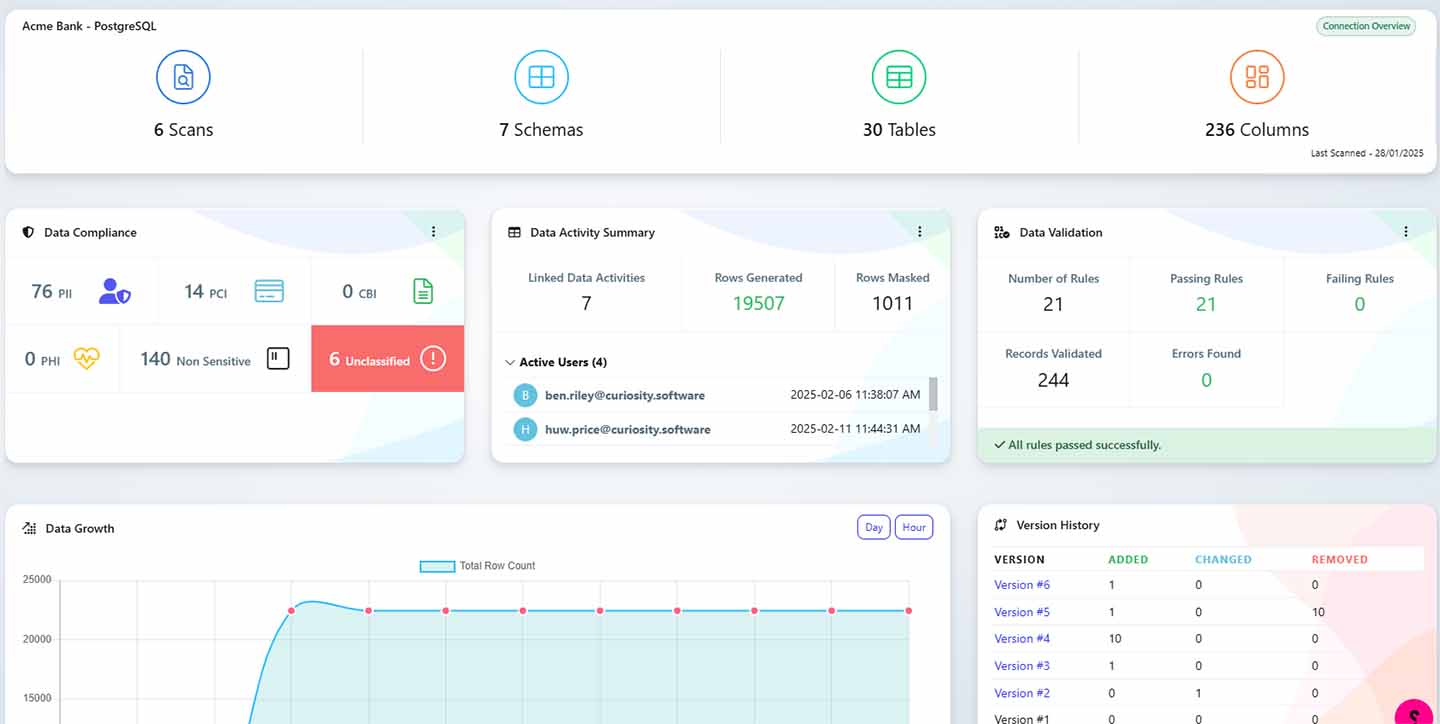
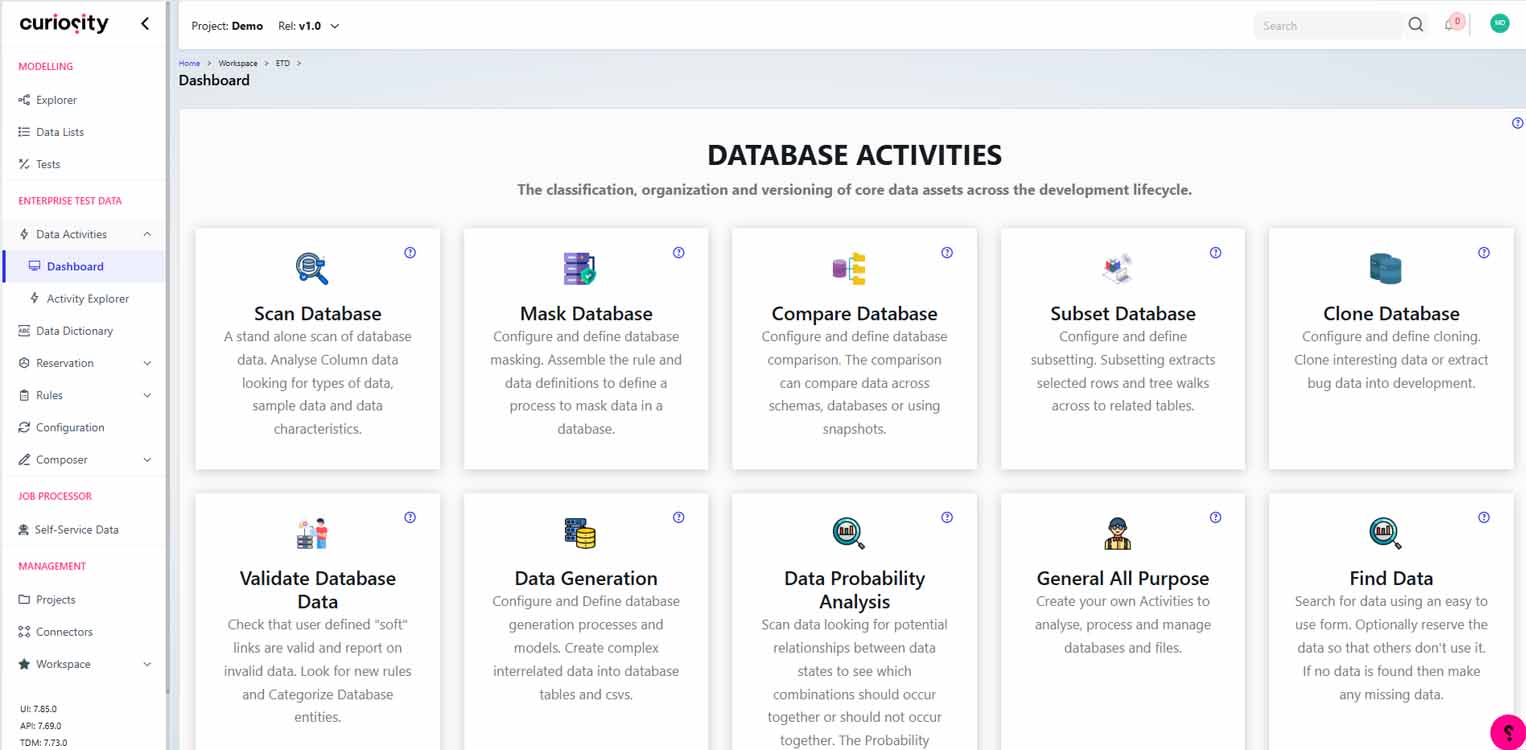
Screenshot of AI-driven insights that create an understanding of current test data landscape and intuitively optimise processes, resources and data for future project needs.Screenshot of how Enterprise Test Data supports a wide range of activities.Screenshot of some of the 250 integrations and connections supported by Curiosity's Enterprise Test Data platform.Screenshot of the visual models used to design, and where to generate synthetic data on demand.