F5 Distributed Cloud WAF leverages F5's Advanced WAF technology, delivering WAF-as-a-Service and combining signature- and behavior-based protection for web applications. It acts as an intermediate proxy to inspect application requests and responses to block and mitigate a broad spectrum of risks stemming from the OW ASP Top 10, persistent and coordinated threat campaigns, bots, and layer 7 DoS.
N/A
Webhook Relay
Score 0.0 out of 10
N/A
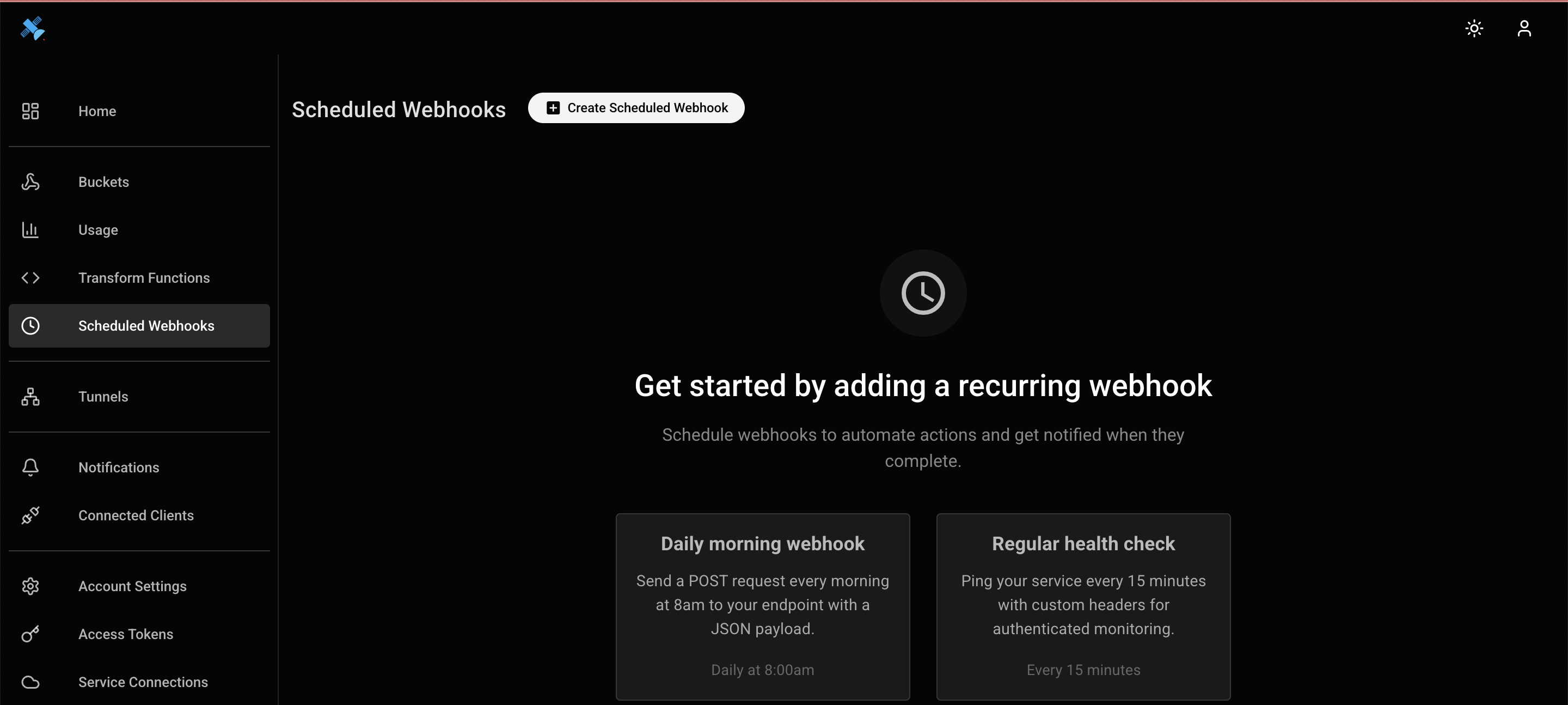
Webhook Relay is a webhook delivery and routing platform that ensures events from any source reach any destination — public URLs, private servers behind firewalls, Kubernetes clusters, or a developer's localhost — without requiring changes to network configuration, firewall rules, or NAT settings. How It Works Webhook Relay acts as a stable intermediary between webhook producers (Stripe, GitHub, Shopify, Bitbucket, and others) and the services that need to consume…
We use bigIP primarily for on-premises infrastructure and protection against volumetric DDoS attacks, including F5 Distributed Cloud WAF (Web Application Firewall).
El bigIP lo utilizamos más para infra on premise, proteccion de ataques volumetricos de DDoS que inculye F5 …
I prefer F5 Distributed Cloud over BIG-IP is due to we have multiple BIG-IPs, and login in to each one and administer them individually is time consuming. Versus maintaining visibility globally on just one dashboard. In addition, the WAAP services in Distributed Cloud is …
Easy to use, clean interface and Dashboard. SaaS offering, easy to onboard. Do not have to worry about upgrades and updates as this is taken care by F5. No worries about operating system bugs and fixes.
ModSecurity (open-source) and F5 (commercial, including NGINX App Protect) are Web Application Firewalls (WAFs) protecting against Layer 7 attacks. ModSecurity offers a free, flexible, OWASP-based solution, while F5 provides enterprise-grade performance, advanced automation, …
we selected F5 Distributed Cloud WAF (Web Application Firewall) for its strong threat protection centralized management ,and effective support and for hybrid cloud enviroments
Not bad, however there were services that were provided by DOS arrest that are automated through F5 cloud and would require attention and expertise to mimic. It does offer the same but must be configured not offered as a bundled configuration.
We considered Cloudflare in the first place because it came with strong appeal upfront, it's easy to deploy especially for small web apps. We even ran a few pilot tests with it during client rollouts but settled on F5 Distributed Cloud WAF instead. Main reason being its …
So a lot of companies that have a digital side and they have a lot of applications in the cloud, this is one of those areas that it can protect the net so it can lock 'em down, it'll build a baseline so you understand what that application's doing. So if it sees something not normal, it'll get protected against that.
Layer seven attacks are becoming far more common. Traditionally it was always layered three, layer four, where you get an additional firewall, but with the application layer attacks become more frequent, more popular, et cetera. So having the web application firewall protecting us, and then with the recent Log4j, that's the most recent use case when it gave us that instant level of protection whilst we remediated the Log4j that we had that and the F5 Distributed Cloud WAF was protecting us.
I have a great relationship with the account manager, my account manager, and I think he drives the best price possible, um, for me, and I'm happy with that price.
F5 Distributed Cloud WAF is always innovating and evolving.
We run a very competitive proof value where we run numerous competitors against each other, and then we evaluate from that and then make the selection, and F5 Distributed Cloud WAF was the winner.
I would continue using F5 Distributed Cloud WAF because I am highly satisfied with its robust and comprehensive features that effectively protect our applications from evolving cyber threats. The advanced AI capabilities enhance threat detection and response, providing proactive security. Additionally, the excellent customer support ensures quick resolution of any issues, making the overall experience reliable and efficient. Trust in the manufacturer’s innovation and continuous updates further motivates me to keep this solution as a core part of our security infrastructure.
I believe is a solution that was designed from the start to be simple and easy to use. Coming from Imperva, it simply eased the burden and complexity of managing and securing our apps on different environments (cloud and on-prem). It easy to scale and very quick to deploy (as a cloud waf should be), provide us with DevOps integrations, visibility and automatic insights from multiple events that guarantee peace of mind for us analysts and opp managers.
It provides fewer false positives and a more granular approach to eliminating them, allowing us to focus on threats. Also, with the need to secure both on-premise and cloud-based web applications, we can only use Azure on the cloud part, but we still need to cover on-premise apps with WAF, so we would need to double the time to deploy and manage. Also, its flexibility of deployment scenarios offers us a faster time to deploy WAF without adjusting the app delivery process to WAF's existence.
It gives us peace of mind knowing that we have an easy way to mitigate any bad traffic coming to our websites and e-commerce. So it really gives us peace of mind. It doesn't affect the job projecting where the traffic is coming from. We actually have the bot functionality as well, so if there is any bot attacking our website, it automatically prevents it. So it's been pretty productive.