
Gavagai vs. Pytorch
| Product | Rating | Most Used By | Product Summary | Starting Price |
|---|---|---|---|---|
 Gavagai | Score10 out of 10 | Enterprise companies (1,001+ employees) | Gavagai Explorer is a text analysis tool for companies that want to keep track of what their customers think – regardless of which language they speak. Explorer analyzes texts in 47 languages. The texts get automatically analyzed and the results are presented in interactive and share-able Dashboards. Gavagai understands meaning The majority of the text data it analyzes comes from sources such as surveys, reviews, emails, chat conversations, and social… | $3,000 Time used to Set Up |
 Pytorch | Score9.4 out of 10 | N/A | Pytorch is an open source machine learning (ML) framework boasting a rich ecosystem of tools and libraries that extend PyTorch and support development in computer vision, NLP and or that supports other ML goals. | N/A |
| Gavagai | Pytorch | |||||||||||||||
|---|---|---|---|---|---|---|---|---|---|---|---|---|---|---|---|---|
| Editions & Modules |
| No answers on this topic | ||||||||||||||
| Offerings |
| |||||||||||||||
| Entry-level Setup Fee | Optional | No setup fee | ||||||||||||||
| Additional Details | Buy extra credits at any time Bought credits never expire | — | ||||||||||||||
| More Pricing Information | ||||||||||||||||
| Gavagai | Pytorch | |
|---|---|---|
| Considered Both Products | No answer on this topic | No answer on this topic |
| Key User Insights | ||
| Would buy again | ||
No answers on this topic | 100% Would buy again 6 Answers | |
| Delivers good value for the price | ||
No answers on this topic | 100% Delivers good value for the price 6 Answers | |
| Happy with the feature set | ||
No answers on this topic | 100% Happy with the feature set 6 Answers | |
| Lived up to sales and marketing promises | ||
No answers on this topic | 100% Lived up to sales and marketing promises 5 Answers | |
| Implementation went as expected | ||
No answers on this topic | 100% Implementation went as expected 5 Answers | |
| Gavagai | Pytorch | |
|---|---|---|
| Small Businesses |  TensorFlow Score7.6 out of 10 | TensorFlow Score7.6 out of 10 |
| Medium-sized Companies |  Google Cloud AI Score8.7 out of 10 | Google Cloud AI Score8.7 out of 10 |
| Enterprises | Google Cloud AI Score8.7 out of 10 | Google Cloud AI Score8.7 out of 10 |
| All Alternatives | View all alternatives | View all alternatives |
| Gavagai | Pytorch | |
|---|---|---|
| Likelihood to Recommend | 10.0 | 9.0 |
| Usability | - | 10.0 |
| Gavagai | Pytorch | |
|---|---|---|
| Likelihood to Recommend |
|
|
| Pros |
|
|
| Cons |
|
|
| Usability | No answers on this topic |
|
| Alternatives Considered |
|
|
| Return on Investment |
|
|
| ScreenShots | Gavagai Screenshots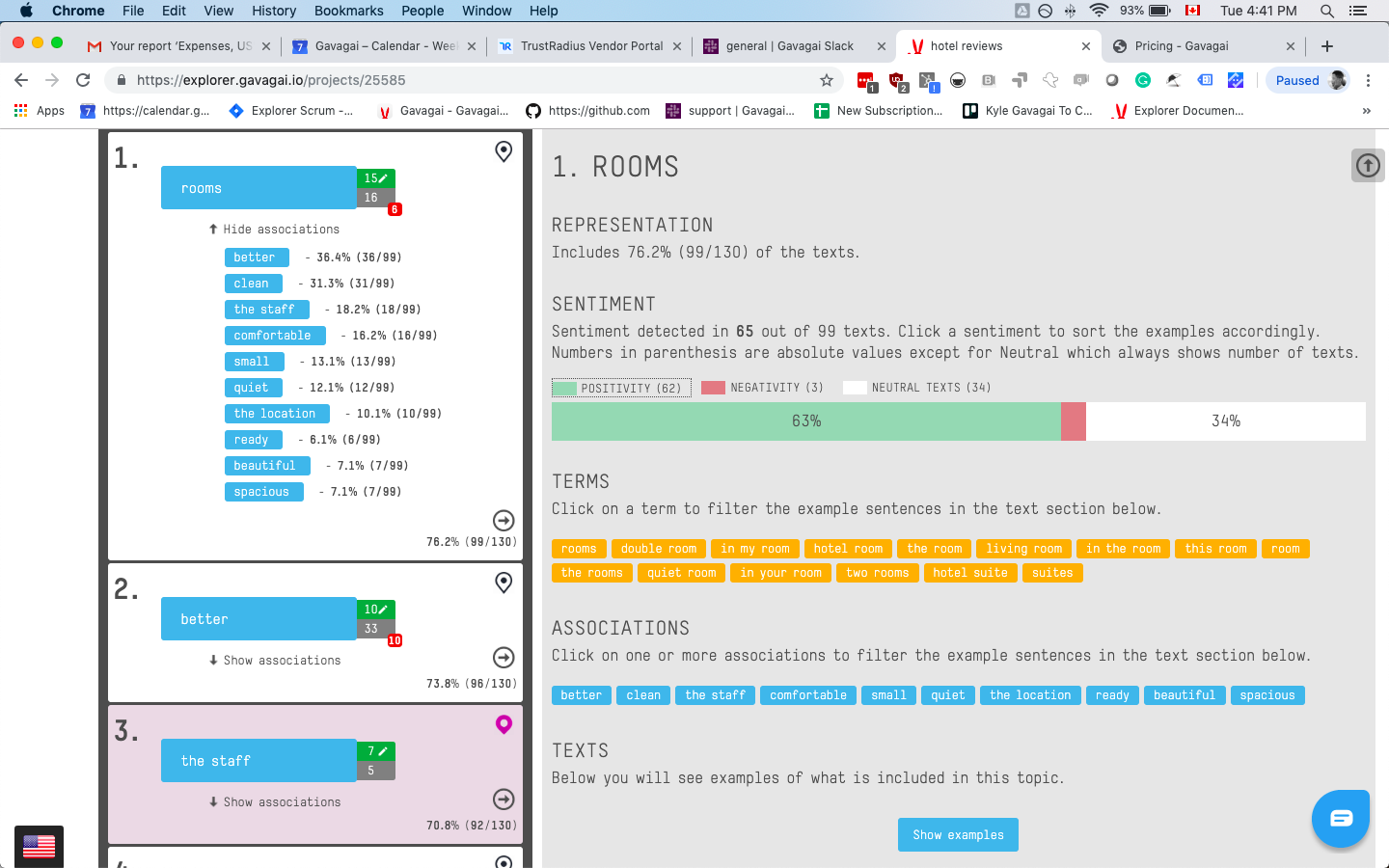   |


