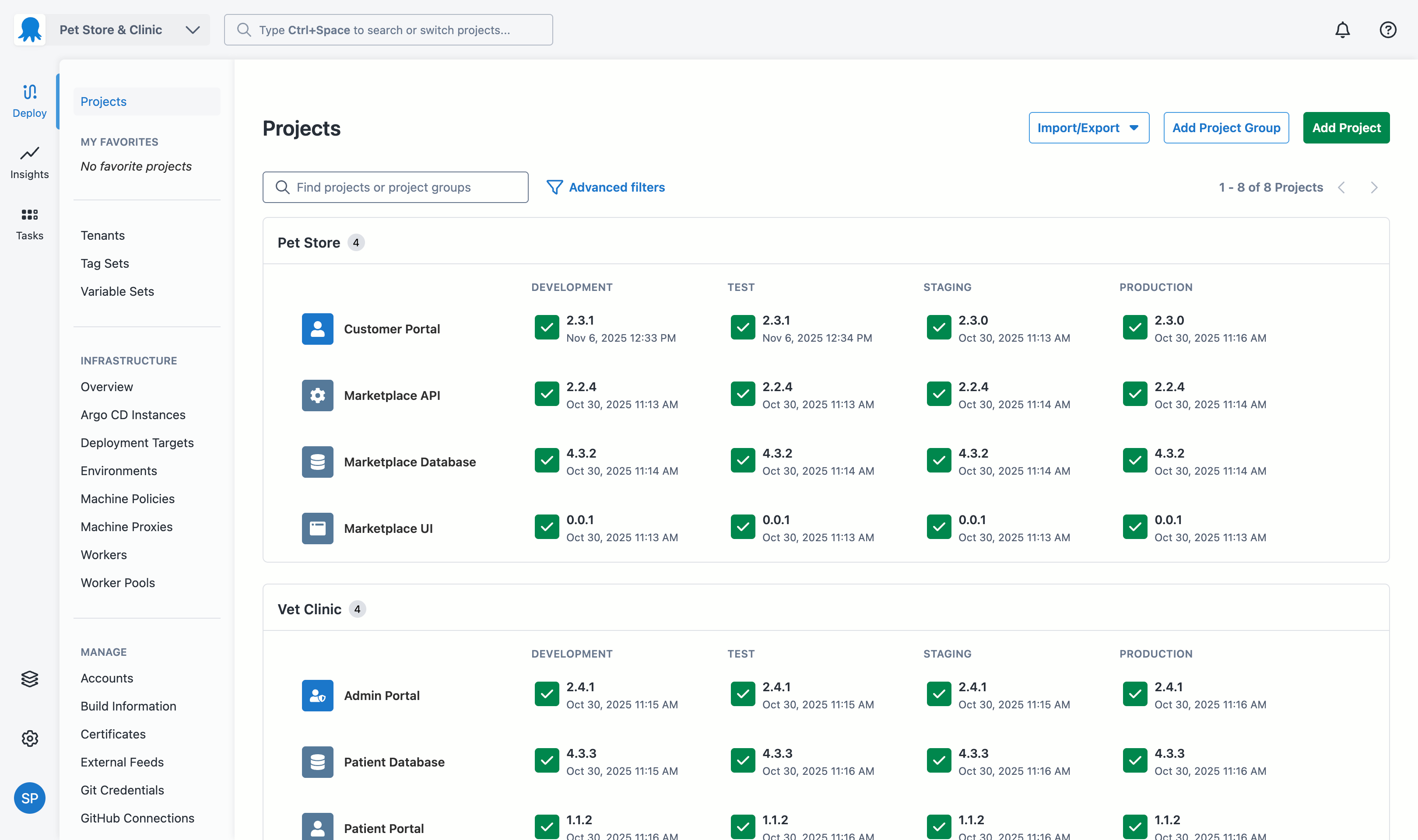
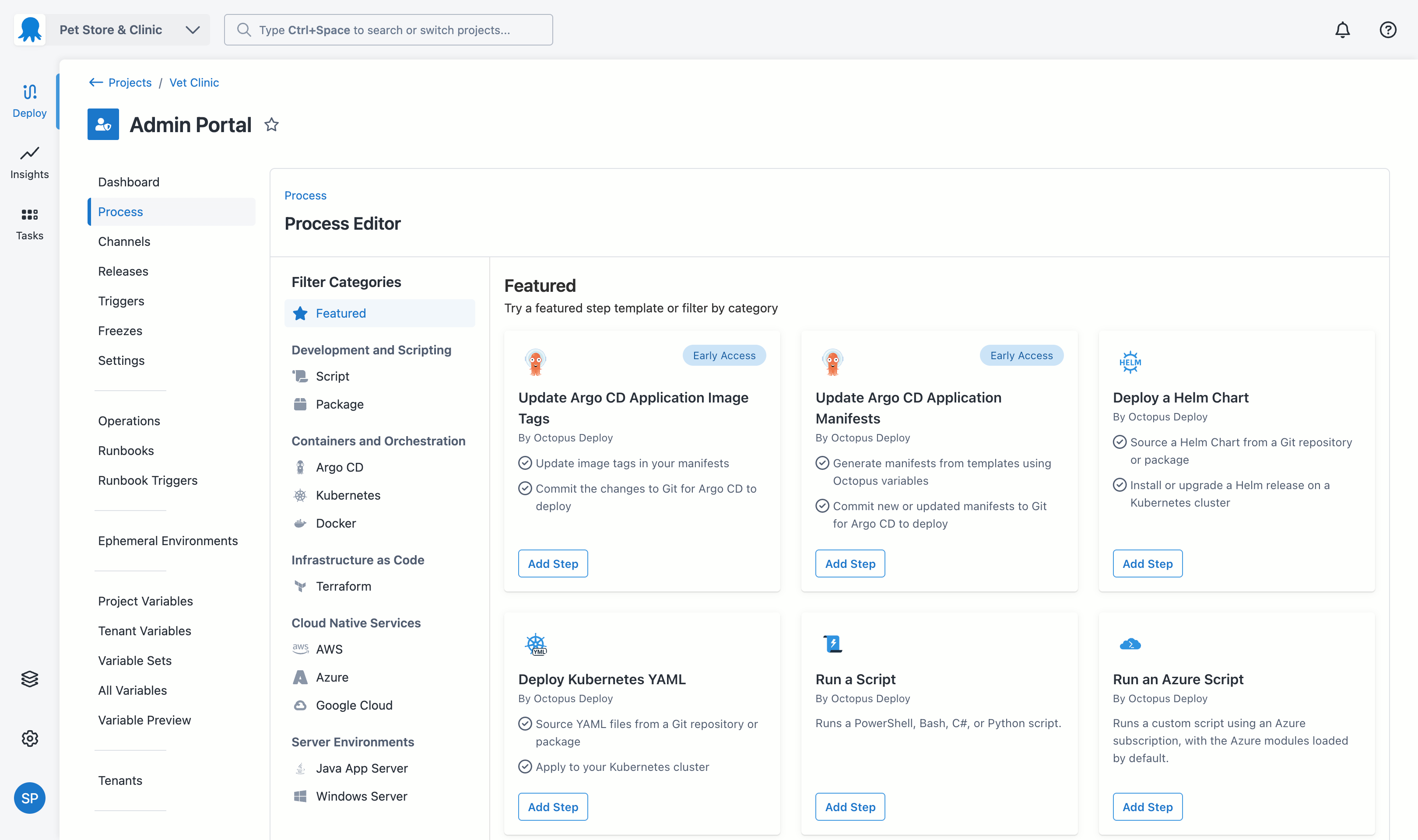
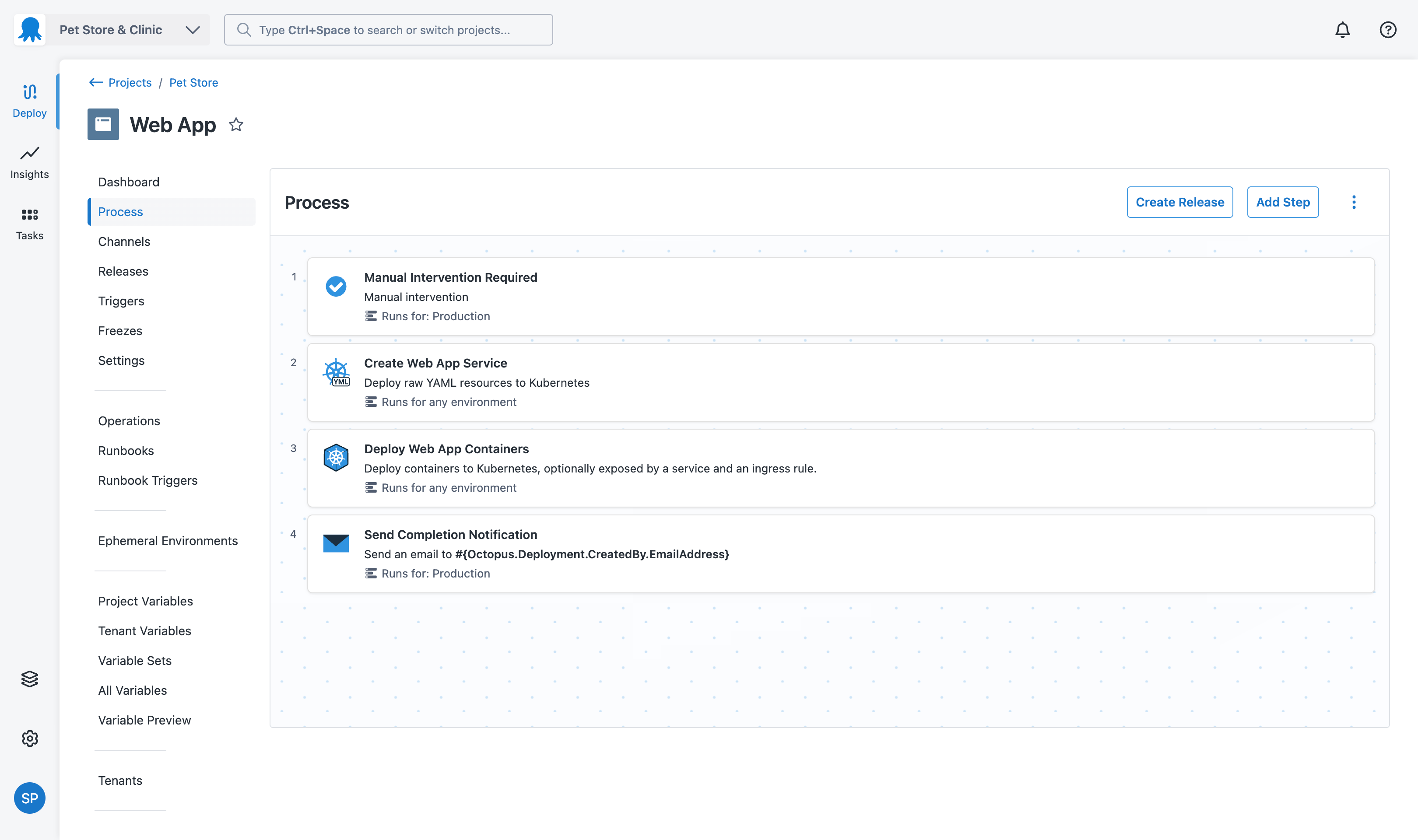
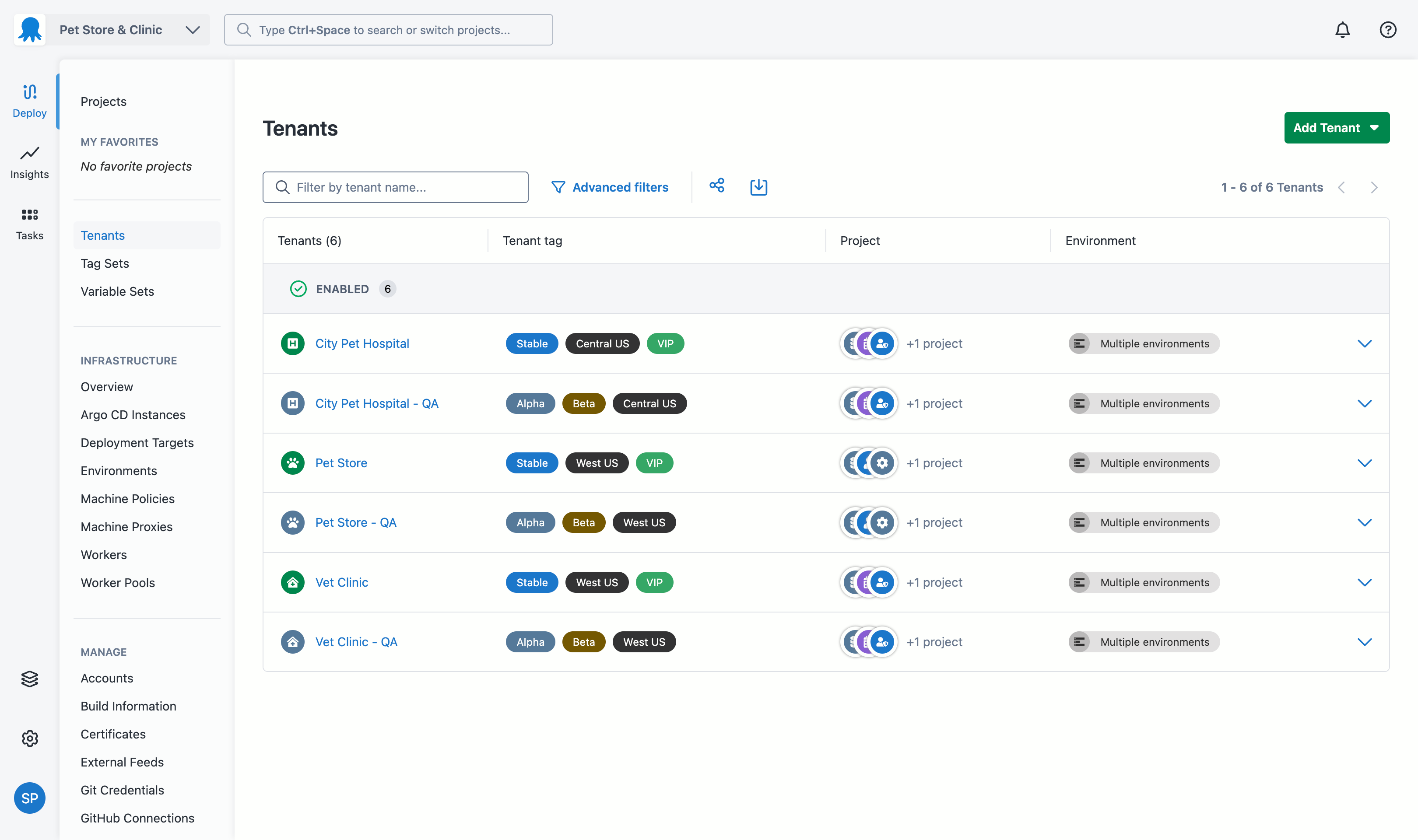
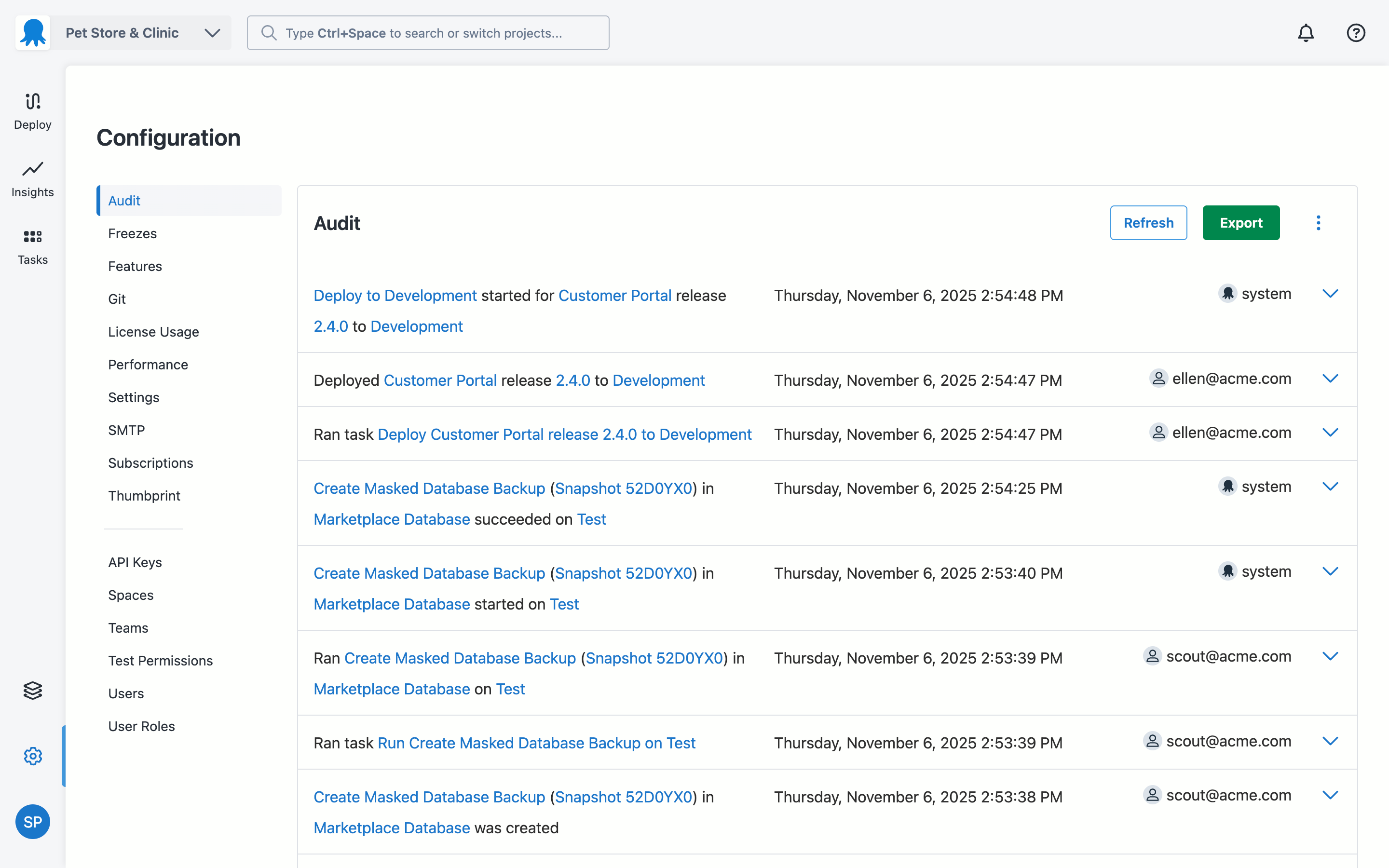
A solution for continuous delivery of any application to any environment, and an application-release solution that infuses automation into the continuous delivery and continuous deployment (CI/CD) process and provides robust visibility, traceability and auditing capabilities.
N/A
Liquibase
Score 8.6 out of 10
Enterprise companies (1,001+ employees)
Liquibase is a database change management tool that extends DevOps best practices to the database, helping teams release software faster and safer by bringing the database change process into existing CI/CD automation. According to the 2021 Accelerate State of DevOps Report, elite performers are 3.4 times more likely to incorporate database change management into their process than low performers. Liquibase value proposition: Liquibase speeds up the development…
N/A
Octopus Deploy
Score 9.1 out of 10
Mid-Size Companies (51-1,000 employees)
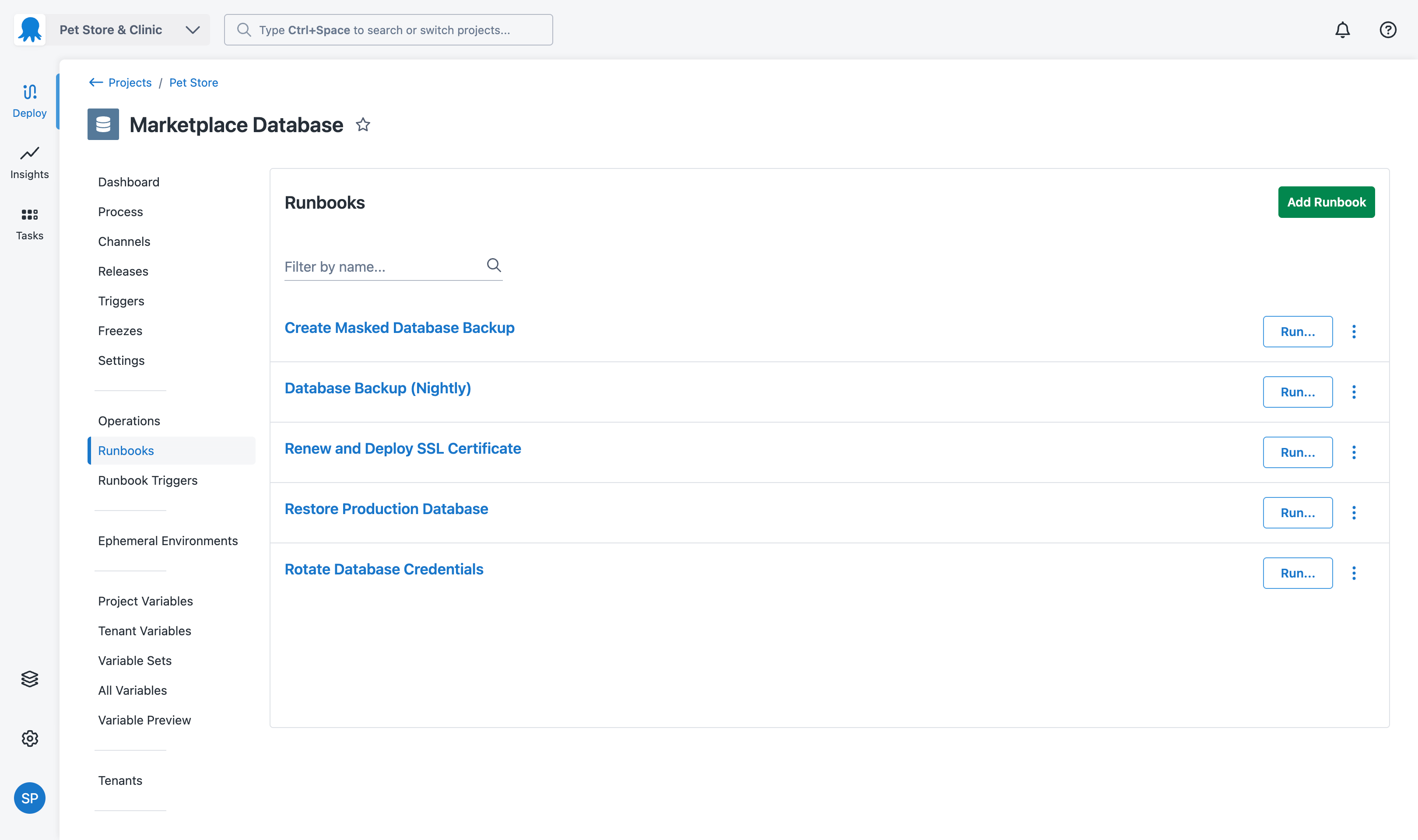
Australian company Octopus Deploy offers their eponymous automated deployment and release management software that integrates with the user's preferred CI server and adds deployment & ops automation capabilities. Octopus Deploy enables developers, release managers, and operations folks to bring all automation into a single place. The vendor states that by reusing configuration variables, environment definition, API keys, connection strings, permissions, service principals, and automation logic,…
$0
per month
Pricing
IBM DevOps Deploy
Liquibase
Octopus Deploy
Editions & Modules
No answers on this topic
No answers on this topic
Octopus Server - Professional
$1920
per year starting with 20 projects
Octopus Cloud - Professional
$4170
per year starting with 20 projects
Octopus Server - Enterprise
$14400
per year starting with 100 projects
Octopus Cloud - Enterprise
$23400
per year starting with 100 projects
Cloud
Free
10 users/10 projects/10 tenants/10 machines
Server
Free
10 users/10 projects/10 tenants/10 machines
Offerings
Pricing Offerings
IBM DevOps Deploy
Liquibase
Octopus Deploy
Free Trial
No
Yes
Yes
Free/Freemium Version
No
Yes
Yes
Premium Consulting/Integration Services
No
Yes
Yes
Entry-level Setup Fee
No setup fee
No setup fee
Optional
Additional Details
—
—
Octopus Deploy offers a Free tier (Cloud and Server) and a 30-day free trial of the Enterprise tier. No credit card needed.
Octopus also offers a Professional tier with 8/5 support (9 am–5 pm on weekdays). The Enterprise tier provides advanced features for teams to scale, including high availability, DevOps Insights, ServiceNow & Jira Service Management integration, unlimited instances, 24/7 support & service credits, and a dedicated Customer Success Manager.
There is no real competitor when it comes to what Liquibase does - at least not at the time we considered it three years ago. It was an easy choice in this regard, but we could have said no to it if it made our workload more difficult. But our proof of concept showed there were …
We adopted Liquibase to complete our Ci/Cd scenarios. Without Liquibase, DB changes were out to scope in our DevOps scenarios. Log and accountability are more clear now.
We looked at IBM UrbanCode Deploy and Release and Microsoft VSTS while looking for Application Release Automation tools. While VSTS doesn't work with cross-platform technologies IBM UrbanCode Deploy commands a premium price for the features it offers. Also, it needs UrbanCode …
IBM UrbanCode Deploy is excellent for code deployments such as Java, .Net, C++, etc. It can also deploy and run SQLs reasonably well. Where it lacks is the ability for executables, Jars, WARs, EARs, etc.
Based on my experience so far on using Liquibase in my current project, I have seen that Liquibase changelogs are version control where multiple team members and developers can work together on database and deployed automatically via CI/CD Pipeline integration using github actions and it applies same changelogs to all enviroments to remain in sync and avoid any enviroment drift. Also as Liquibase stores changelog audits in DATABASECHANGELOG table it helps in tracking purposes and to easily rollback any change . Whereas in some scenarios I feel that Liquibase have some drawbacks where if complex transformation between tables is not optimized for bulk data operations which eventually degrades database performance.
Octopus Deploy is well suited for our requirements of deploying across multiple environments with one consistent release. We are saving a lot of time by not having to package and move release files around. Our release process is more efficient and consistent with automation. There are some parts that we could probably perform with existing tools such as DevOps and there are one or two features we have to workaround to fit for our setup such as the step templates to install websites. These are minor in our opinion.
Liquibase tracks changes in a metadata table contained directly in the target database, making easy administration for the DBA.
Liquibase handles many validation tests out of the box, making it easy to choose which ones you want to include, with options for writing your own if you choose. This makes it robust and flexible in terms of validation before deployment.
Liquibase provides easy integration into deployment pipelines for CI/CD. We use it with GitHub for source control and Circle CI for validation and deployment pipelines.
IBM UrbanCode Deploy does code deployments easy enough, but configurations or ex deployments are a little more complicated. I work on packaged systems, so most of the code I get is form a vendor that I have to deploy.
IBM UebanCode Deploy integration into the mainframe world would be ideal. My company uses Mainframe and OpenSystems technologies, and many times there are dependencies between the deployments.
I would like Liquibase to explore all errors in the changelog files compared to one at a time. We spent a lot of time troubleshooting one error at a time versus having a batch log of errors in each file.
Understanding where to get support on things. I spent a lot of time researching externally to learn what the best practices were. Although I found some of the youtube videos helpful, I would like a little more of a technical support. This may be a feature with the paid tier, however, we leveraged open source.
Seeing more examples of how others use Liquibase and their usecases will be helpful. That way we can learn from each other which may help us improve on our own deployments.
In the past has been somewhat .net focused but that has been changing in recent times
Would be great if community licenses for NFP organizations were perpetual - but in saying that I appreciate that Octopus does provide my organization with a community [license]. Not all organisations do
We are and will continue using Liquibase and it has become an integral part of our portfolio offering, any new product is by default adopting Liquibase stack.
It's challenging to get a working knowledge of the product without having someone show you the ropes. Linking components with applications and applications with resource trees and resource trees with application deploys is not intuitive. However, once past that learning curve, the possibilities open up, and things become easier to understand and allow for further granularity.
Liquibase has several features, on their free plan, that matches exactly our expectations and needs: this already makes it standout from its competitors. On top of that, the setup was straightforward: we are running an integration with Databricks, and there were only two steps truly needed, install the driver and the plugin, done. This is the type of seamless experience our team appreciates the most when evaluating a tool or service.
Octopus Deploy has greatly helped us to improve our reliability and frequency of our deployments and given us the confidence to deploy much more often, with a direct benefit to customers. Cross-platform support and release to Cloud require more focus on the product side.
Octopus Deploy is a software that runs very effectively, is easy to use, does not require such a high learning curve, provides the necessary tools to carry out the functions it offers, making it a very flexible software, it also allows that can be configured according to the needs of the user and provides integrations with other very advantageous tools since they are carried out in a very favorable way.
Liquibase has been responsive and even is letting our group test some new products they are developing and even made code changes to their production system because of a couple bugs we have reported. Liquibase licensing has also been easy and simple. I have nothing bad to say about any of the Liquibase staff I have talked to. They also hold free information webinars for new content that helps spread adoption and moving the product forward.
Octopus Deploy support has always been there for us, even when using the free tier, we get responsive hands-on help. We haven't needed to use that level of support since the documentation is clearly written, and help is readily available within the interface itself. Using Octopus Deploy is a truly joyful experience.
There is no real competitor when it comes to what Liquibase does - at least not at the time we considered it three years ago. It was an easy choice in this regard, but we could have said no to it if it made our workload more difficult. But our proof of concept showed there were easy wins to be had by implementing its software.
There aren't really any competitors in the land of ASP.NET. Deployment is too ad-hoc. Other tools exist that have massive downsides, like Web Deploy. Most aren't even supported anymore. You could argue that containers (Docker) are a competitor, but containers cannot be used for everything and solve a somewhat different problem. Octopus Deploy is even able to help with containers. To us, Octopus Deploy was really the only really polished solution.