IBM watsonx Code Assistant is a family of domain-specific AI Code Assistants & Agentic IDEs built on IBM Granite foundation models. The product portfolio provides targeted generative code recommendation, refactoring, and application modernization capabilities across enterprise domain environments, including IT automation infrastructure and mainframe enterprise systems. Note: IBM is progressively transitioning its domain-specific watsonx Code Assistant tooling into IBM Bob, a unified agentic…
N/A
SonarQube
Score8.7 out of 10
N/A
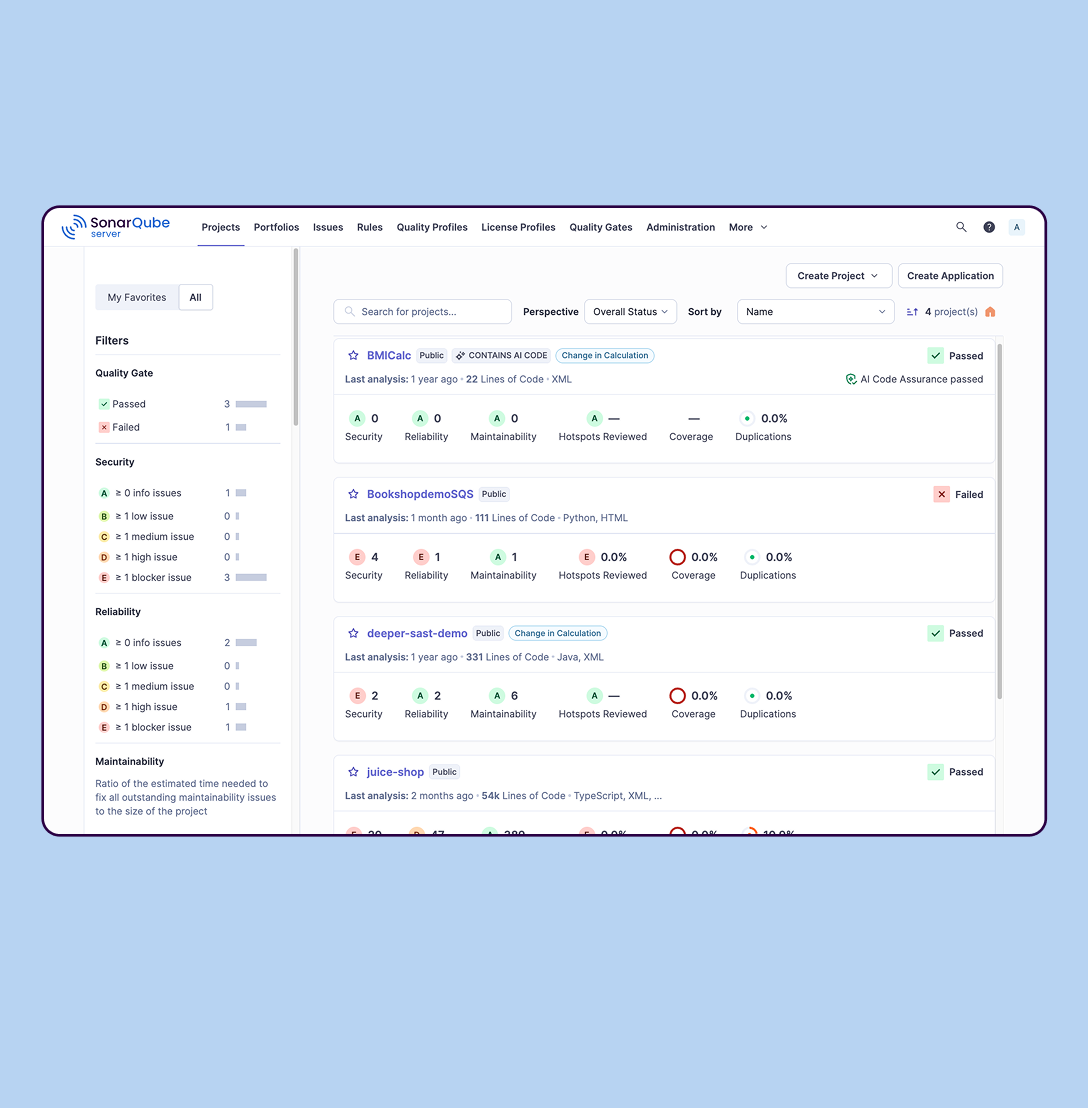
SonarQube is an automated code review solution, serving as the verification layer for code quality and SDLC security. SonarQube is used to ensure that code is secure, reliable, and maintainable. It is available through SaaS or self-managed deployment.
I would recommend for understanding your Mainframe components not for the GenAI piece involved from just my experience. The explanations were not up to the quality we wanted but its deterministic side provided a lot of value for different members of my team. The visuals would be great. I am not sure where it currently stands
A de minimis incentive was given to thank the reviewer for their time. The incentive was not used to bias or drive a particular response, nor was the incentive contingent on a positive endorsement. More Info
SonarQube is excellent if you start using it at the beginning when developing a new system, in this situation you will be able to fix things before they become spread and expensive to correct. It’s a bit less suitable to use on existing code with bad design as it’s usually too expensive to fix everything and only allows you to ensure the situation doesn’t get worse.
A de minimis incentive was given to thank the reviewer for their time. The incentive was not used to bias or drive a particular response, nor was the incentive contingent on a positive endorsement. More Info
It can automatically revamp specific parts of the COBOL code and very useful when we want to maintain the existing codebase but improve its structure. I can highlight a block of COBOL code and use Watsonx Assistant to suggest ways to simplify and optimize it.
Legacy codes, mostly written in COBOL, are cryptic and difficult to understand. Watsonx Assistant analyzes the code and provides insights into its functionalities and dependencies. A great help when working on older applications where understanding the codebase is crucial.
A step-by-step approach to modernize our applications slowly and steadily, so that we can control the process better. I don't have to change everything at once. Instead, I can focus on specific COBOL modules and automatically convert them to Java.
A de minimis incentive was given to thank the reviewer for their time. The incentive was not used to bias or drive a particular response, nor was the incentive contingent on a positive endorsement. More Info
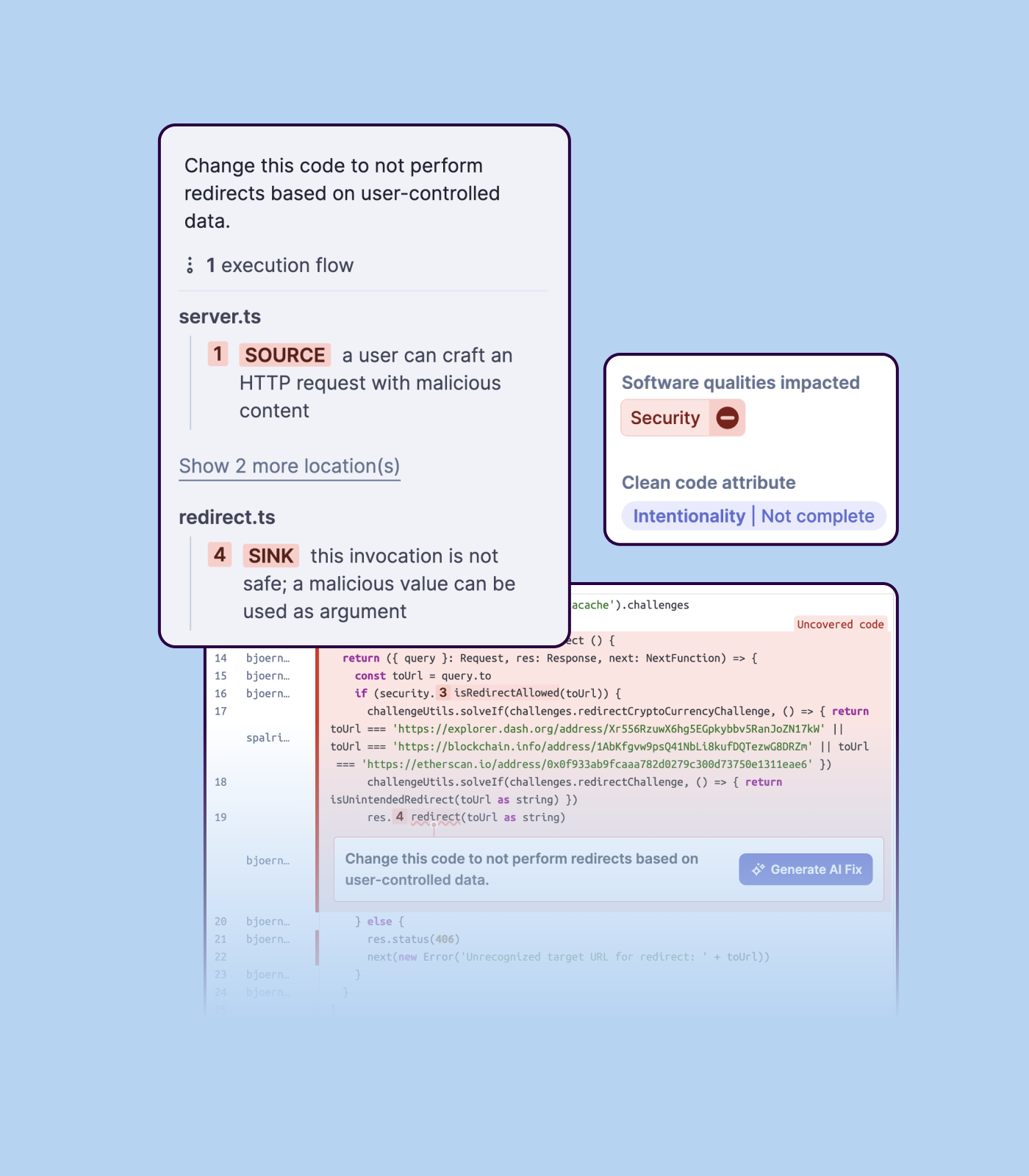
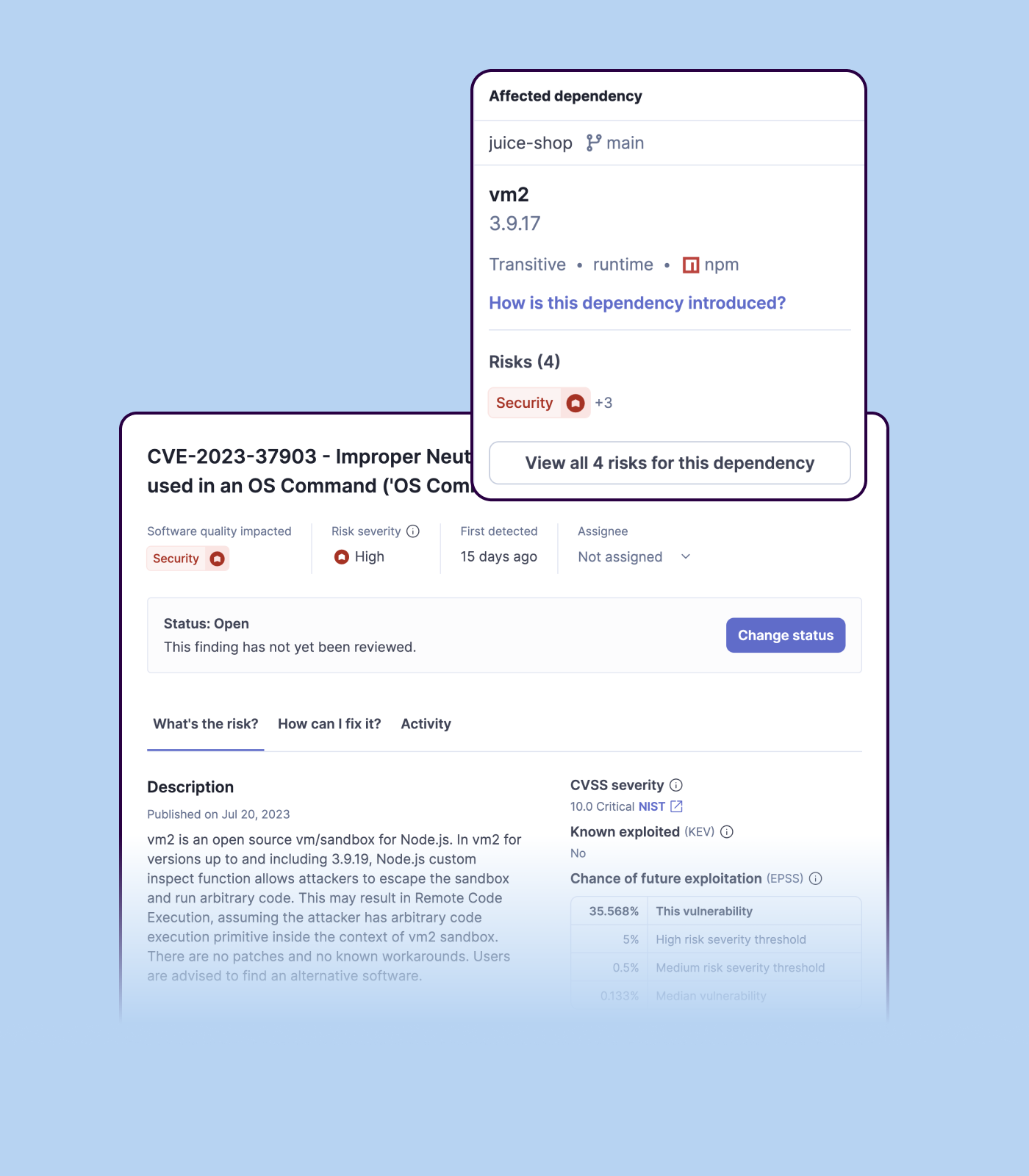
Detecting bugs and vulnerabilities: SonarQube can identify a wide range of bugs and vulnerabilities in code, such as null pointer exceptions, SQL injection, and cross-site scripting (XSS) attacks. It uses static analysis to analyze the code and identify potential issues, and it can also integrate with dynamic analysis tools to provide even more detailed analysis.
Measuring code quality: SonarQube can measure a wide range of code quality metrics, such as cyclomatic complexity, duplicated code, and code coverage. This can help teams understand the quality of their code and identify areas that need improvement.
Providing actionable insights: SonarQube provides detailed information about issues in the code, including the file and line number where the issue occurs and the severity of the issue. This makes it easy for developers to understand and address issues in the code.
Integrating with other tools: SonarQube can be integrated with a wide range of development tools and programming languages, such as Git, Maven, and Java. This allows teams to use SonarQube in their existing development workflow and take advantage of its powerful code analysis capabilities.
Managing technical debt: SonarQube provides metrics and insights on the technical debt on the codebase, enabling teams to better prioritize issues to improve the quality of the code.
Compliance with coding standards: SonarQube can check the code against industry standards like OWASP, CWE and more, making sure the code is compliant with security and coding standards.
A de minimis incentive was given to thank the reviewer for their time. The incentive was not used to bias or drive a particular response, nor was the incentive contingent on a positive endorsement. More Info
A de minimis incentive was given to thank the reviewer for their time. The incentive was not used to bias or drive a particular response, nor was the incentive contingent on a positive endorsement. More Info
Importing a new custom quality profile on SonarQube is a bit tricky, it can be made easier
Every second time when we want to rerun the server, we have to restart the whole system, otherwise, the server stops and closes automatically
When we generate a new report a second time and try to access the report, it shows details of the old report only and takes a lot of time to get updated with the details of the new and fresh report generated
A de minimis incentive was given to thank the reviewer for their time. The incentive was not used to bias or drive a particular response, nor was the incentive contingent on a positive endorsement. More Info
A de minimis incentive was given to thank the reviewer for their time. The incentive was not used to bias or drive a particular response, nor was the incentive contingent on a positive endorsement. More Info
We we easily able to integrate the SonarQube steps into our TFS process via the Microsoft Marektplace, we didn't have the need to call SonarQube support. We've used their online documentation and community forum if we ran into any issues.
A de minimis incentive was given to thank the reviewer for their time. The incentive was not used to bias or drive a particular response, nor was the incentive contingent on a positive endorsement. More Info
Security is very important in the mainframe world. At Watsonx, we work in the trusted Z environment, which has strong security rules, stricter than those of other cloud-based solutions. My domain is primarily mainframe modernization and Watsonx Code Assistant for Z is specifically used to understand and work with COBOL, the language used majorly in mainframe environments, not any general-purpose language that used in various platforms. It understands the nuances of COBOL and Assembler specific to the Z environment, something crucial for my work.
A de minimis incentive was given to thank the reviewer for their time. The incentive was not used to bias or drive a particular response, nor was the incentive contingent on a positive endorsement. More Info
SonarQube is an open-source. It's a scalable product. The costs for this application, for the kind of job it does, are pretty descent. Pipeline scan is more secured in SonarQube. Its a very good tool and its support multiple languages. Its main core competency is of static code analysis and that is why SonarQube exists and it does it exceedingly well. The quality of scan on code convention, best practices, coding standards, unit test coverage etc makes them one of the best competent tool in the market
A de minimis incentive was given to thank the reviewer for their time. The incentive was not used to bias or drive a particular response, nor was the incentive contingent on a positive endorsement. More Info
While manual review and adjustments are still needed, it's a 50-70% reduction in manual coding. Think about it - a project estimated to take a year is done in 4-6 months.
We've been able to introduce new features and improvements more quickly by updating our technology faster. One relevant example is we recently released an important update to our main product 45 days earlier than planned.
It has been a smart move and it's really paid off for our company. We've cut down a lot of time we used to spend doing things manually. We now spend our resources more wisely, work faster and finish projects sooner and as a result, we've reduced our development costs by 25%.
A de minimis incentive was given to thank the reviewer for their time. The incentive was not used to bias or drive a particular response, nor was the incentive contingent on a positive endorsement. More Info
Positive ROI from the standpoint of flagging several issues that would have otherwise likely been unaddressed and caused more time to be spent closer to launch
Slightly positive ROI from time-saving perspective (it's an automated check which is nice, but depending on the issues it finds, can take developers time to investigate and resolve)