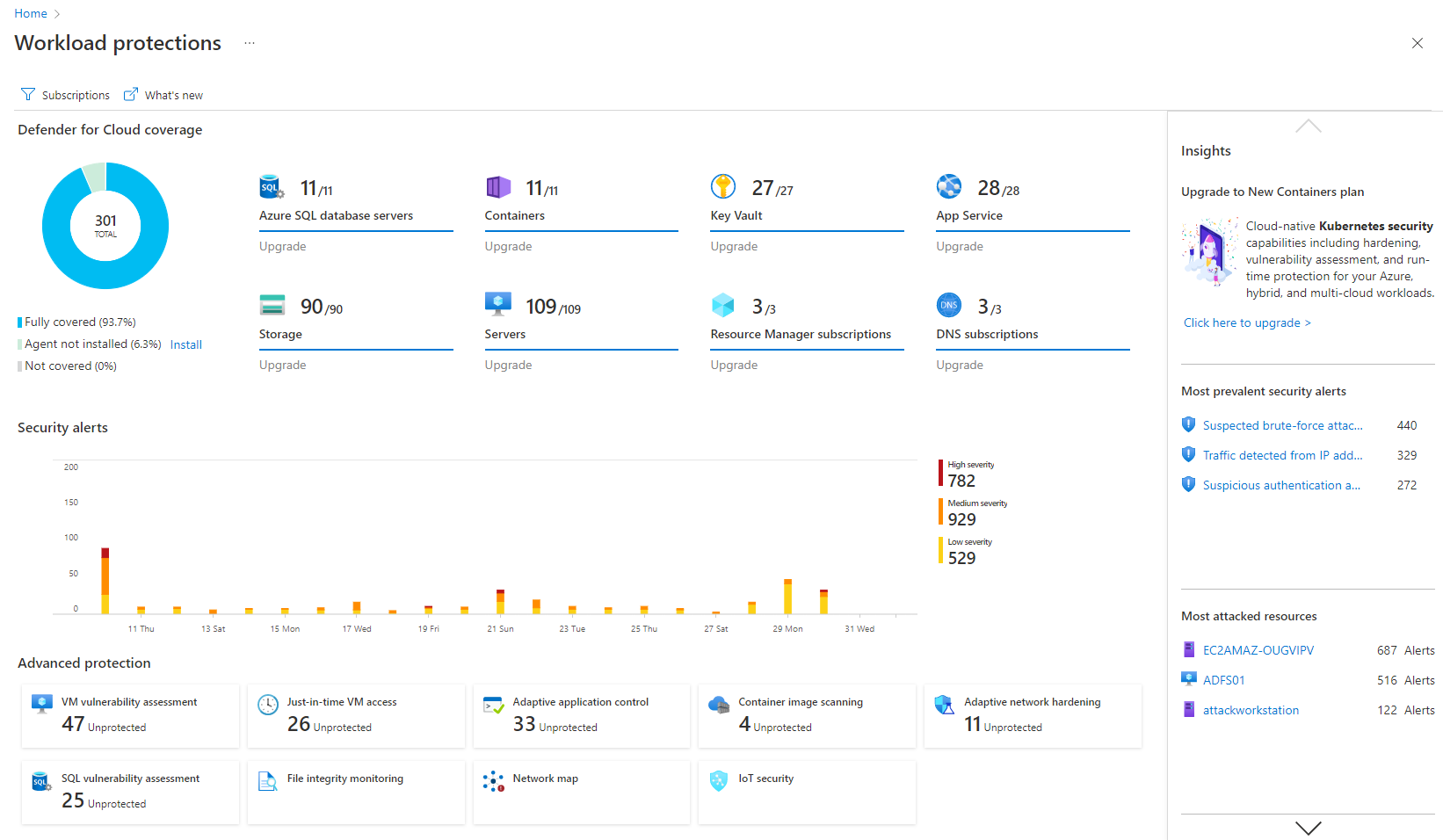
Microsoft Defender for Cloud is a Cloud Security Posture Management (CSPM) and Cloud Workload Protection Platform (CWPP) for Azure, on-premises, and multicloud (Amazon AWS and Google GCP) resources.
N/A
Palo Alto Panorama
Score8.7 out of 10
N/A
According to the information provided by the vendor, Palo
Alto Panorama is a network security management solution that intends to
simplify and enhance cybersecurity processes for businesses. The product's
primary objective is to offer various features, including unified policy
management, centralized visibility, automated threat response, simplified
configuration, unrivaled scalability, and rapid security adoption. It claims to
assist organizations in efficiently managing their firewalls and…
I think it's good for cloud-native companies. A company that, from day zero, they're like, "We're going cloud, and this is how we're going to do it." They get it. It works well for them. Smaller organizations that are under X amount of resources- I don't know what that X might mean- but I feel like it plays well in smaller, more nimble organizations. If you're an older organization or if you're extremely large, it starts becoming a little difficult to manage at scale. And you have to sometimes throw bodies at the problem. Maybe not the most eloquent way of saying it, but that's what it feels like.
A de minimis incentive was given to thank the reviewer for their time. The incentive was not used to bias or drive a particular response, nor was the incentive contingent on a positive endorsement. More Info
I think Palo Alto Panorama is suited for administrators of all levels because certain things can be locked down to certain permission levels. But there are executive dashboards all the way down to the weeds for the highest of administrators. This truly is a single pane of glass tool because you never have to go into the individual firewalls for anything.
A de minimis incentive was given to thank the reviewer for their time. The incentive was not used to bias or drive a particular response, nor was the incentive contingent on a positive endorsement. More Info
It's really well laid out, with an easy-to-use, accessible UI.
With Microsoft Defender for Cloud, it has everything you need with the Safelink attachment, the Safelink emails for URL, the way it scans those URLs and attachments within the product, and you're seeing the results. And that adds an extra layer of security for the user, so you feel comfortable knowing the product monitors those. That's something I really like about that product.
A de minimis incentive was given to thank the reviewer for their time. The incentive was not used to bias or drive a particular response, nor was the incentive contingent on a positive endorsement. More Info
If you need to push a setting or config to multiple firewalls Panorama can do that flawlessly.
Panorama has its logging centralized and this makes it easy to locate and reviews logs compared to having to get logs from each device.
I love how the interface matches the interface on the firewall. This makes the learning curve less steep.
Adding new firewalls to Panorama is super easy and not complex. Panorama can push a lot of the config and settings so you don't have to manually do it.
A de minimis incentive was given to thank the reviewer for their time. The incentive was not used to bias or drive a particular response, nor was the incentive contingent on a positive endorsement. More Info
Integrations with on-premise workloads can sometimes be challenging. Needs improvement and well standardised integration points
Vulnerability categories can be difficult to understand. It should allow teams to focus on critical findings and help them keep aside low-severity or suppressed vulnerabilities
Pricing can be improved as it can be over-priced for smaller businesses and would potentially affect their ROI due to the small scale
A de minimis incentive was given to thank the reviewer for their time. The incentive was not used to bias or drive a particular response, nor was the incentive contingent on a positive endorsement. More Info
The ability to push out OS updates could be improved in Panorama. It has the abilities, but the use is not intuitive, to the point that we generally connect directly to the firewalls to download the OS updates directly.
Scheduling. It would be nice to be able to schedule jobs to run at certain times. Pushing out updates, like OS updates mentioned above, can require significant bandwidth. So being able to schedule that work for hours that would not directly affect the users would be a welcome addition.
The list of devices in the Templates tabs should be sorted the same way that he devices are grouped in the Device Group tab, rather than just alphabetical. If there was a way to chose the order of the devices, maybe by tag, that would work as well.
A de minimis incentive was given to thank the reviewer for their time. The incentive was not used to bias or drive a particular response, nor was the incentive contingent on a positive endorsement. More Info
It is a great product that integrates nicely when running an Azure platform and even multi-cloud environment. Not looking for point-solutions but a suite that answers most requirements. It is very comfortable being able to use KQL, workbooks and automation that is native to the azure platform
Panorama has given us much more than we expected and the support for the product, by Palo Alto Networks has been great. We would like to see some improvements that I mentioned in another review, like scheduling changes, but overall Panorama has provided a very capable product and we are very happy with it.
A de minimis incentive was given to thank the reviewer for their time. The incentive was not used to bias or drive a particular response, nor was the incentive contingent on a positive endorsement. More Info
My visibility is limited because I'm only doing very small pieces of what the overall org does. And also, we have limitations on what we're allowed to use. It's not like we get a new product as users or leadership level users, and everything is on, and we can just do whatever we want. We're very restricted in what we can use any tooling within the org because of the different levels of regulatory constraints we have, because of just the nature of who we are inherently. So that's why. I don't think it's necessarily the product. I think it's more or less of what we're able to do with the product.
A de minimis incentive was given to thank the reviewer for their time. The incentive was not used to bias or drive a particular response, nor was the incentive contingent on a positive endorsement. More Info
It is a solid product, it allows me to connect multiple devices and to manage my cloud, on prem and vmware firewalling devices. I can assign roles with the required visibility depending on the users. I can also consolidate all my logs into it to have a single pane of visibility.
A de minimis incentive was given to thank the reviewer for their time. The incentive was not used to bias or drive a particular response, nor was the incentive contingent on a positive endorsement. More Info
Palo Alto has a very nice customer support. People are very nice and were quick to reply, whenever we had an issue with the subscription or the blacklist tool. There is also a great deal of information on their website that covers each and every detail about the uses and the threat signatures. The community keeps on updating their information very frequently. Small issues are easily solved from the documentation, and for other issues, the customer support service is always present. However, on Fridays it becomes a little delayed as per my observation.
A de minimis incentive was given to thank the reviewer for their time. The incentive was not used to bias or drive a particular response, nor was the incentive contingent on a positive endorsement. More Info
I believe Microsoft Defender for Cloud stacks up well against the other tools we looked at. It is native to the Azure platform and provides the same insights as the other tools. We selected Microsoft Defender for Cloud because it integrates well with the Azure resources and gives the needed insight, security alerts and recommendations.
A de minimis incentive was given to thank the reviewer for their time. The incentive was not used to bias or drive a particular response, nor was the incentive contingent on a positive endorsement. TR verified that a representative sample of customers was invited. More Info
Palo Alto Panorama and Junos Space Security Director have many similar features but Palo Alto Panorama excels in almost all of them. The monitoring tools in Palo Alto Panorama are easy to use and give more in-depth insight into what is going on in your network. Palo Alto's security is ranked much higher and the Web Application Security is also superior to that of the Junos counterpart.
A de minimis incentive was given to thank the reviewer for their time. The incentive was not used to bias or drive a particular response, nor was the incentive contingent on a positive endorsement. TR verified that a representative sample of customers was invited. More Info
A de minimis incentive was given to thank the reviewer for their time. The incentive was not used to bias or drive a particular response, nor was the incentive contingent on a positive endorsement. More Info
At a previous company, I deployed Palo Alto firewalls to a data center, and 12 branch locations. This allowed us to replace MPLS links with IPSec tunnels between the sites. This resulted in significantly more throughput and soft savings of increased productivity. However, the estimated net of $220,000 in hard savings over five years is what is most impressive. I could not have effectively managed all those devices without Palo Alto Panorama.
A de minimis incentive was given to thank the reviewer for their time. The incentive was not used to bias or drive a particular response, nor was the incentive contingent on a positive endorsement. More Info