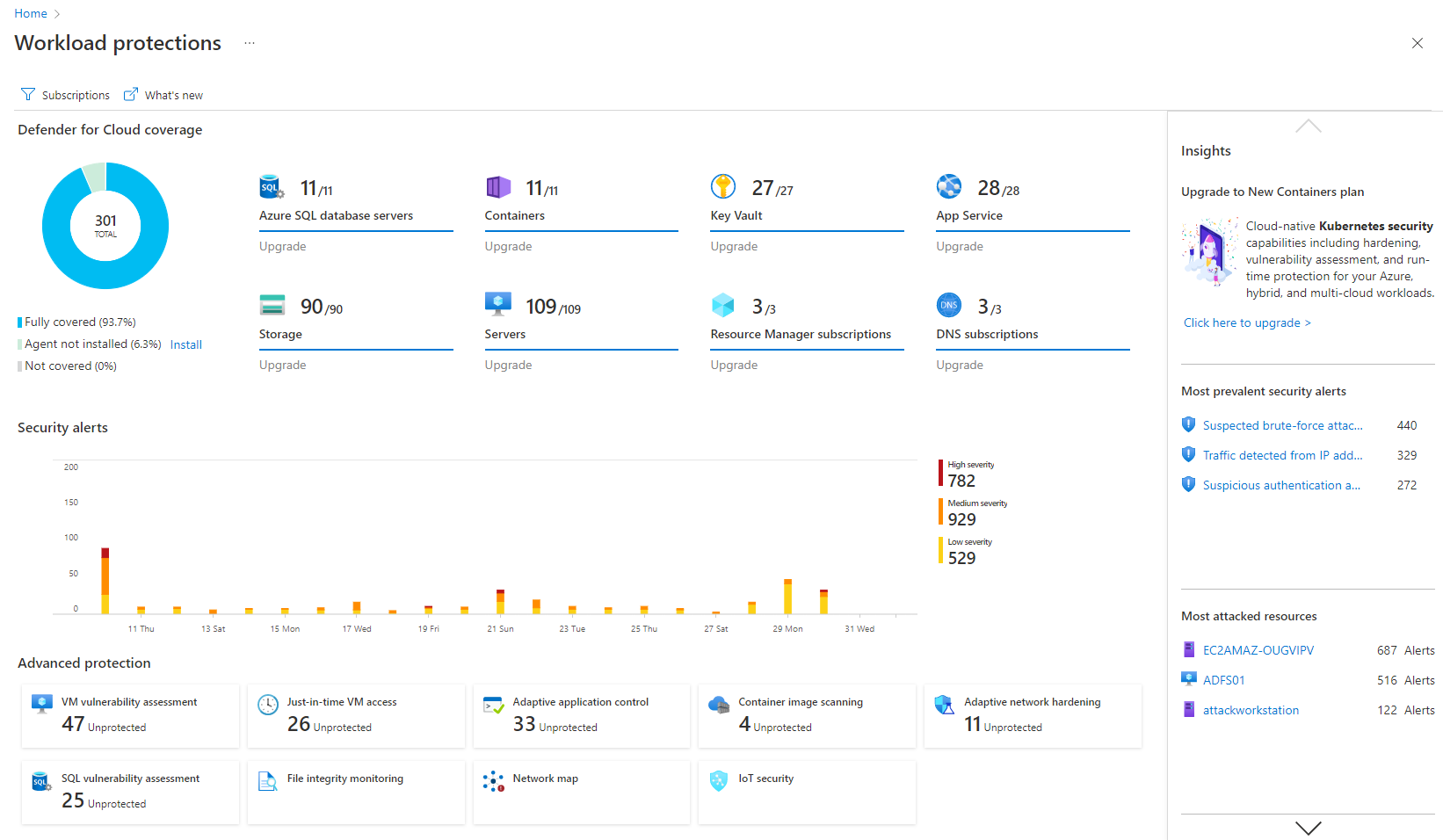
Microsoft Defender for Cloud is a Cloud Security Posture Management (CSPM) and Cloud Workload Protection Platform (CWPP) for Azure, on-premises, and multicloud (Amazon AWS and Google GCP) resources.
N/A
Picus Security
Score8.2 out of 10
N/A
Picus Security, headquartered in San Francisco, offers Continuous Security Validation and Mitigation as the most proactive approach to ensure cyber-resilience. The Picus Platform measures the effectiveness of defenses by using emerging threat samples in production environments, providing the insight required to build the right security strategy to better manage complex operations.
I think it's good for cloud-native companies. A company that, from day zero, they're like, "We're going cloud, and this is how we're going to do it." They get it. It works well for them. Smaller organizations that are under X amount of resources- I don't know what that X might mean- but I feel like it plays well in smaller, more nimble organizations. If you're an older organization or if you're extremely large, it starts becoming a little difficult to manage at scale. And you have to sometimes throw bodies at the problem. Maybe not the most eloquent way of saying it, but that's what it feels like.
A de minimis incentive was given to thank the reviewer for their time. The incentive was not used to bias or drive a particular response, nor was the incentive contingent on a positive endorsement. More Info
If you want to analyze the full path focusing on the signatures it’s the best product in the market. If you want to test phishing, data exfiltration/DLP, DNS I don’t recommend Picus. Scenario based attacks also lacking. However Picus support is awesome and I like the development team. When we open a case, they’ll always return with the right answer
A de minimis incentive was given to thank the reviewer for their time. The incentive was not used to bias or drive a particular response, nor was the incentive contingent on a positive endorsement. More Info
It's really well laid out, with an easy-to-use, accessible UI.
With Microsoft Defender for Cloud, it has everything you need with the Safelink attachment, the Safelink emails for URL, the way it scans those URLs and attachments within the product, and you're seeing the results. And that adds an extra layer of security for the user, so you feel comfortable knowing the product monitors those. That's something I really like about that product.
A de minimis incentive was given to thank the reviewer for their time. The incentive was not used to bias or drive a particular response, nor was the incentive contingent on a positive endorsement. More Info
It has thousands of signatures and up-to-date attack vectors (It's the largest set in the market)
Attack vectors are mapped with existing vendors like Checkpoint and Mcafee, where you don't spend time finding out which cve mapped to which protection
Ability to focus/highlght solely new threats, it's superb for 0days and up-to-date protections. As there are always timing issue between updates and apply the updates on the products.
Blocked vs not blocked ratios on the dashboard with drill down menu specifiying the set of protections or signatures on the defensive measures
Already mapped mitre att&ck framework on the dasboard. SOC and analyst team using the Mitre framework.
Detection analytics enhance the analytics capabilities with pinpoint accuracy where to focus and how to prevent
Timeline and scheduled reports from the dashboard in flexible format
A de minimis incentive was given to thank the reviewer for their time. The incentive was not used to bias or drive a particular response, nor was the incentive contingent on a positive endorsement. More Info
Integrations with on-premise workloads can sometimes be challenging. Needs improvement and well standardised integration points
Vulnerability categories can be difficult to understand. It should allow teams to focus on critical findings and help them keep aside low-severity or suppressed vulnerabilities
Pricing can be improved as it can be over-priced for smaller businesses and would potentially affect their ROI due to the small scale
A de minimis incentive was given to thank the reviewer for their time. The incentive was not used to bias or drive a particular response, nor was the incentive contingent on a positive endorsement. More Info
A de minimis incentive was given to thank the reviewer for their time. The incentive was not used to bias or drive a particular response, nor was the incentive contingent on a positive endorsement. More Info
It is a great product that integrates nicely when running an Azure platform and even multi-cloud environment. Not looking for point-solutions but a suite that answers most requirements. It is very comfortable being able to use KQL, workbooks and automation that is native to the azure platform
My visibility is limited because I'm only doing very small pieces of what the overall org does. And also, we have limitations on what we're allowed to use. It's not like we get a new product as users or leadership level users, and everything is on, and we can just do whatever we want. We're very restricted in what we can use any tooling within the org because of the different levels of regulatory constraints we have, because of just the nature of who we are inherently. So that's why. I don't think it's necessarily the product. I think it's more or less of what we're able to do with the product.
A de minimis incentive was given to thank the reviewer for their time. The incentive was not used to bias or drive a particular response, nor was the incentive contingent on a positive endorsement. More Info
I believe Microsoft Defender for Cloud stacks up well against the other tools we looked at. It is native to the Azure platform and provides the same insights as the other tools. We selected Microsoft Defender for Cloud because it integrates well with the Azure resources and gives the needed insight, security alerts and recommendations.
A de minimis incentive was given to thank the reviewer for their time. The incentive was not used to bias or drive a particular response, nor was the incentive contingent on a positive endorsement. TR verified that a representative sample of customers was invited. More Info
We use other vendors Verodin, AttackIQ, SafeBreach, Cymulate etc. All of them have their advantages and disadvantages. Please take a look at TrustRadius reviews of each product. I don’t want to go head to head for each product in this review. I select Picus because it's local startup company in our region. I like their support and engineering team. Support is marvelous. Product is giving what we expected from the product. Price is adequate. Reporting and dashboard is superb.
A de minimis incentive was given to thank the reviewer for their time. The incentive was not used to bias or drive a particular response, nor was the incentive contingent on a positive endorsement. More Info
A de minimis incentive was given to thank the reviewer for their time. The incentive was not used to bias or drive a particular response, nor was the incentive contingent on a positive endorsement. More Info
With Picus we have the tangible KPIs for the security
Detetcion and Prevention rates for the latest attacks are significantly increased
We work with many security vendors. We use picus scores and share specific outputs with the company in case of decreasing score rates where the development and product team analyzes their updates or product engines to increase the rates.
It helps our strategic plans where to focus and invest for the following years and planning/prioritizing the security budgets to specific highlighted areas
A de minimis incentive was given to thank the reviewer for their time. The incentive was not used to bias or drive a particular response, nor was the incentive contingent on a positive endorsement. More Info