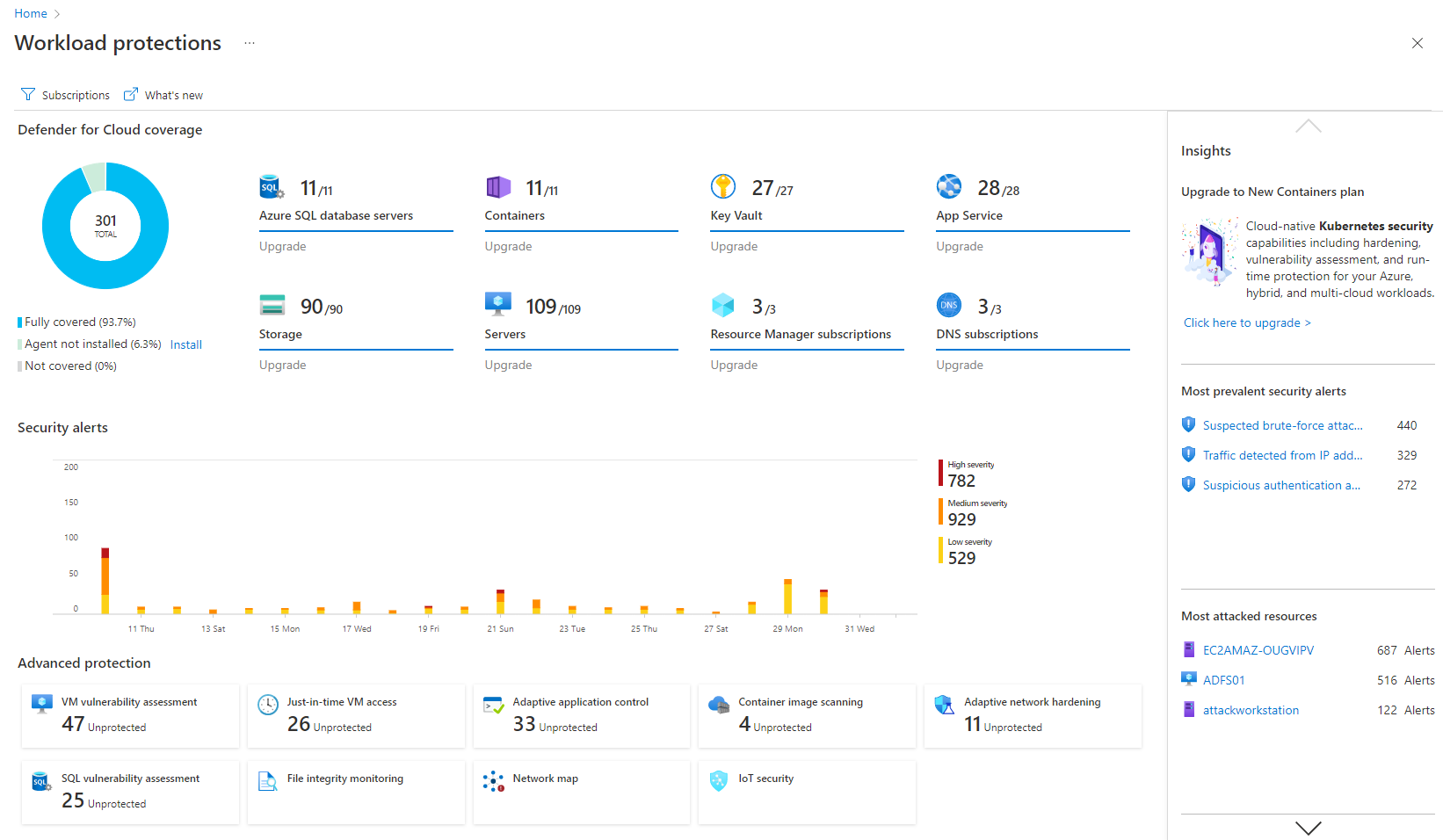
Microsoft Defender for Cloud is a Cloud Security Posture Management (CSPM) and Cloud Workload Protection Platform (CWPP) for Azure, on-premises, and multicloud (Amazon AWS and Google GCP) resources.
N/A
Snow Atlas
Score8 out of 10
N/A
Snow Atlas is a cloud-native platform built from the ground up to provide Technology Intelligence for today’s hybrid enterprises. Based on a microservices architecture and standardized APIs, Snow Atlas provides a unified foundation for Snow’s IT asset management, SaaS management and FinOps solutions. It can be used to display all of the technology in an enterprise's IT stack, or to find opportunities to enhance, optimize and efficiently manage technology assets and share data with…
I think it's good for cloud-native companies. A company that, from day zero, they're like, "We're going cloud, and this is how we're going to do it." They get it. It works well for them. Smaller organizations that are under X amount of resources- I don't know what that X might mean- but I feel like it plays well in smaller, more nimble organizations. If you're an older organization or if you're extremely large, it starts becoming a little difficult to manage at scale. And you have to sometimes throw bodies at the problem. Maybe not the most eloquent way of saying it, but that's what it feels like.
A de minimis incentive was given to thank the reviewer for their time. The incentive was not used to bias or drive a particular response, nor was the incentive contingent on a positive endorsement. More Info
A de minimis incentive was given to thank the reviewer for their time. The incentive was not used to bias or drive a particular response, nor was the incentive contingent on a positive endorsement. More Info
It's really well laid out, with an easy-to-use, accessible UI.
With Microsoft Defender for Cloud, it has everything you need with the Safelink attachment, the Safelink emails for URL, the way it scans those URLs and attachments within the product, and you're seeing the results. And that adds an extra layer of security for the user, so you feel comfortable knowing the product monitors those. That's something I really like about that product.
A de minimis incentive was given to thank the reviewer for their time. The incentive was not used to bias or drive a particular response, nor was the incentive contingent on a positive endorsement. More Info
Integrations with on-premise workloads can sometimes be challenging. Needs improvement and well standardised integration points
Vulnerability categories can be difficult to understand. It should allow teams to focus on critical findings and help them keep aside low-severity or suppressed vulnerabilities
Pricing can be improved as it can be over-priced for smaller businesses and would potentially affect their ROI due to the small scale
A de minimis incentive was given to thank the reviewer for their time. The incentive was not used to bias or drive a particular response, nor was the incentive contingent on a positive endorsement. More Info
SaaS connectors are not always kept up to date usually when Publishers make changes to their Portal API's. Appears to be little active monitoring on Flexera/Snow Atlas' side unless a customer reports an issue with the data being returned. Fixes are normally implemented as as quickly as possible, depending on whether it is considered a Bug Fix or a Feature Enhancement.
Users - Snow on SAM - No ability to add or bulk import manually. Completely reliant on AD Discovery or Entra ID Discovery
Users - SaaS module - No ability for bulk update of Users for things line 'Online only' or 'Qualified' user accounts. This is an issue in larger companies where you have thousands of SaaS Users being reported through connectors like Microsoft E365.
SaaS module Dashboard does not allow for filtering of insights to a specific Publisher.
Not all Back end SMACC functionality form Snow License Manager have been exposed to the front-end access, as Snow Atlas does not allow customer Administrators access to the back end or SQL databases.
If you are migrating from on-prem Snow License Manager to Atlas, migration tools have not been created by Snow and will require a Project to handle your migration. Without Migration tools, we had to use a Managed Service Partner who had to manually create a lot of their own scripts to retrieve data that cannot be downloaded via reports and imported into Atlas. Any attachments documentation on Agreement or License Records has to be manually re-attached/uploaded to the relevant Agreement/License records in Atlas as the migration was performed.
A de minimis incentive was given to thank the reviewer for their time. The incentive was not used to bias or drive a particular response, nor was the incentive contingent on a positive endorsement. More Info
It is a great product that integrates nicely when running an Azure platform and even multi-cloud environment. Not looking for point-solutions but a suite that answers most requirements. It is very comfortable being able to use KQL, workbooks and automation that is native to the azure platform
My visibility is limited because I'm only doing very small pieces of what the overall org does. And also, we have limitations on what we're allowed to use. It's not like we get a new product as users or leadership level users, and everything is on, and we can just do whatever we want. We're very restricted in what we can use any tooling within the org because of the different levels of regulatory constraints we have, because of just the nature of who we are inherently. So that's why. I don't think it's necessarily the product. I think it's more or less of what we're able to do with the product.
A de minimis incentive was given to thank the reviewer for their time. The incentive was not used to bias or drive a particular response, nor was the incentive contingent on a positive endorsement. More Info
A de minimis incentive was given to thank the reviewer for their time. The incentive was not used to bias or drive a particular response, nor was the incentive contingent on a positive endorsement. More Info
Front line support staff done always understand the issue you are explaining or the need to escalate to back end/higher up areas for resolutions and can often require use of the Escalate function or emailing to your Account/Customer Success Manager. That said, once an issue properly is understood, it is handled well.
A de minimis incentive was given to thank the reviewer for their time. The incentive was not used to bias or drive a particular response, nor was the incentive contingent on a positive endorsement. More Info
We should have spun up a Project to manage the implementation. Snow indicated to us the ease in which Snow Atlas could be implemented, however this did not factor in that we were migrating from their on-prem product Snow License Manager hosted through a Managed Servicer Partner. For a clean installation, your implementation can be quick and likely not require a Project. If you are migrating from another products or are a company that can have lots of stakeholders, fingers in the pie, hurdles/business processes that need to be adhered to, definitely use a Project to perform your implementation.
A de minimis incentive was given to thank the reviewer for their time. The incentive was not used to bias or drive a particular response, nor was the incentive contingent on a positive endorsement. More Info
I believe Microsoft Defender for Cloud stacks up well against the other tools we looked at. It is native to the Azure platform and provides the same insights as the other tools. We selected Microsoft Defender for Cloud because it integrates well with the Azure resources and gives the needed insight, security alerts and recommendations.
A de minimis incentive was given to thank the reviewer for their time. The incentive was not used to bias or drive a particular response, nor was the incentive contingent on a positive endorsement. TR verified that a representative sample of customers was invited. More Info
A de minimis incentive was given to thank the reviewer for their time. The incentive was not used to bias or drive a particular response, nor was the incentive contingent on a positive endorsement. More Info
A de minimis incentive was given to thank the reviewer for their time. The incentive was not used to bias or drive a particular response, nor was the incentive contingent on a positive endorsement. More Info