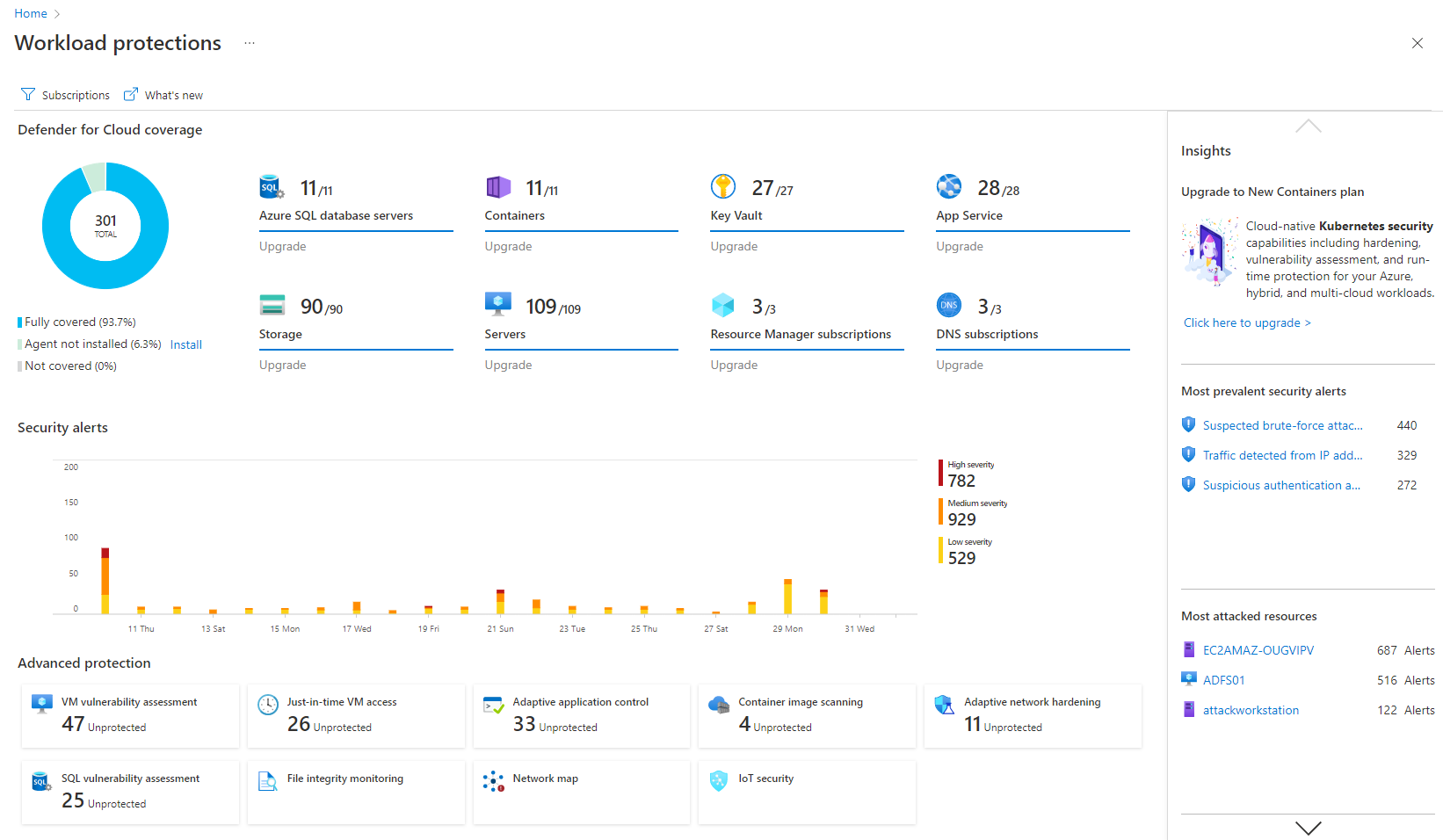
Microsoft Defender for Cloud is a Cloud Security Posture Management (CSPM) and Cloud Workload Protection Platform (CWPP) for Azure, on-premises, and multicloud (Amazon AWS and Google GCP) resources.
N/A
Snyk
Score8.6 out of 10
N/A
Snyk’s Developer Security Platform automatically integrates with a developer’s workflow and helps security teams to collaborate with their development teams. It boasts a developer-first approach that ensures organizations can secure all of the critical components of their applications from code to cloud, driving developer productivity, revenue growth, customer satisfaction, cost savings and an improved security posture. The vendor states Snyk is used by 1,200 customers worldwide today, including…
$0
Pricing
Microsoft Defender for Cloud
Snyk
Editions & Modules
No answers on this topic
Free
$0
Team (Snyk Open Source or Snyk Container or Snyk Infrastructure as Code)
$23
per month per user
Business (Snyk Open Source or Snyk Container or Snyk Infrastructure as Code)
$42
per month per user
Team (Snyk Open Source + Snyk Container + Snyk Code + Snyk Infrastructure as Code)
$98
per month per user
Business (Snyk Open Source + Snyk Container + Snyk Code + Snyk Infrastructure as Code)
$178
per month per user
Enterprise
Contact Sales
Offerings
Pricing Offerings
Microsoft Defender for Cloud
Snyk
Free Trial
Yes
Yes
Free/Freemium Version
No
Yes
Premium Consulting/Integration Services
No
No
Entry-level Setup Fee
No setup fee
No setup fee
Additional Details
—
Pricing is dependent on the number of developers selected, the number of products selected, and the payment term selected. Please visit the Snyk plans page for an interactive pricing calculator.
I think it's good for cloud-native companies. A company that, from day zero, they're like, "We're going cloud, and this is how we're going to do it." They get it. It works well for them. Smaller organizations that are under X amount of resources- I don't know what that X might mean- but I feel like it plays well in smaller, more nimble organizations. If you're an older organization or if you're extremely large, it starts becoming a little difficult to manage at scale. And you have to sometimes throw bodies at the problem. Maybe not the most eloquent way of saying it, but that's what it feels like.
A de minimis incentive was given to thank the reviewer for their time. The incentive was not used to bias or drive a particular response, nor was the incentive contingent on a positive endorsement. More Info
Scenarios Where Snyk Is Well-Suited CI/CD Pipeline Integration (Node.js, Python, etc.) Container Security Open Source License Compliance Infrastructure as Code (IaC) SecurityScenarios Where Snyk May Be Less Appropriate Scanning Proprietary or Custom Code for Unknown Vulnerabilities Complex Monorepos with Custom Build Tools Organizations Requiring Custom Security Rules Advanced Security Teams Needing Correlation and Deep Triage.
A de minimis incentive was given to thank the reviewer for their time. The incentive was not used to bias or drive a particular response, nor was the incentive contingent on a positive endorsement. More Info
It's really well laid out, with an easy-to-use, accessible UI.
With Microsoft Defender for Cloud, it has everything you need with the Safelink attachment, the Safelink emails for URL, the way it scans those URLs and attachments within the product, and you're seeing the results. And that adds an extra layer of security for the user, so you feel comfortable knowing the product monitors those. That's something I really like about that product.
A de minimis incentive was given to thank the reviewer for their time. The incentive was not used to bias or drive a particular response, nor was the incentive contingent on a positive endorsement. More Info
A de minimis incentive was given to thank the reviewer for their time. The incentive was not used to bias or drive a particular response, nor was the incentive contingent on a positive endorsement. More Info
Integrations with on-premise workloads can sometimes be challenging. Needs improvement and well standardised integration points
Vulnerability categories can be difficult to understand. It should allow teams to focus on critical findings and help them keep aside low-severity or suppressed vulnerabilities
Pricing can be improved as it can be over-priced for smaller businesses and would potentially affect their ROI due to the small scale
A de minimis incentive was given to thank the reviewer for their time. The incentive was not used to bias or drive a particular response, nor was the incentive contingent on a positive endorsement. More Info
The tool itself has many capabilities but using them operationally within the platform on a day to day basis for managing vulnerabilities is not a good experience.
Our company was in desparate need of a tool to help us manage vulnerabilities so we could achieve a SOC 2 assurance report without findings.
A de minimis incentive was given to thank the reviewer for their time. The incentive was not used to bias or drive a particular response, nor was the incentive contingent on a positive endorsement. More Info
It is a great product that integrates nicely when running an Azure platform and even multi-cloud environment. Not looking for point-solutions but a suite that answers most requirements. It is very comfortable being able to use KQL, workbooks and automation that is native to the azure platform
My visibility is limited because I'm only doing very small pieces of what the overall org does. And also, we have limitations on what we're allowed to use. It's not like we get a new product as users or leadership level users, and everything is on, and we can just do whatever we want. We're very restricted in what we can use any tooling within the org because of the different levels of regulatory constraints we have, because of just the nature of who we are inherently. So that's why. I don't think it's necessarily the product. I think it's more or less of what we're able to do with the product.
A de minimis incentive was given to thank the reviewer for their time. The incentive was not used to bias or drive a particular response, nor was the incentive contingent on a positive endorsement. More Info
Developer-Centric Design - Snyk integrates directly into IDEs (like VS Code and IntelliJ), CI/CD pipelines, GitHub/GitLab, and container registries. Clear, Actionable Vulnerability report issues are categorized by severity.
Reports include fix recommendations, pull request suggestions, and links to remediation advice.
A de minimis incentive was given to thank the reviewer for their time. The incentive was not used to bias or drive a particular response, nor was the incentive contingent on a positive endorsement. More Info
I believe Microsoft Defender for Cloud stacks up well against the other tools we looked at. It is native to the Azure platform and provides the same insights as the other tools. We selected Microsoft Defender for Cloud because it integrates well with the Azure resources and gives the needed insight, security alerts and recommendations.
A de minimis incentive was given to thank the reviewer for their time. The incentive was not used to bias or drive a particular response, nor was the incentive contingent on a positive endorsement. TR verified that a representative sample of customers was invited. More Info
Unfortunately, neither cover all of the use cases that we would like so we need to use both but they are both excellent tools as part of our vulnerability management. We find that Snyk helps us better with improving our MTTR of identified vulnerabilities when compared to inspector but that may be more based on how we have implemented both tools
A de minimis incentive was given to thank the reviewer for their time. The incentive was not used to bias or drive a particular response, nor was the incentive contingent on a positive endorsement. More Info
A de minimis incentive was given to thank the reviewer for their time. The incentive was not used to bias or drive a particular response, nor was the incentive contingent on a positive endorsement. More Info
A de minimis incentive was given to thank the reviewer for their time. The incentive was not used to bias or drive a particular response, nor was the incentive contingent on a positive endorsement. More Info