MuleSoft Anypoint Platform vs. QuickBI

Overview
ProductRatingMost Used ByProduct SummaryStarting Price
Anypoint Platform
Score 7.9 out of 10
N/A
The Anypoint Platform developed by MuleSoft and acquired by Salesforce in early 2018 is designed to connect apps, data, and devices anywhere, on-premises or in the cloud. This platform was built to offer out-of-the-box connectors as well as tools that architects and developers can adopt quickly to design, build and manage the entire lifecycle of their APIs, applications, and products.N/A
QuickBI
Score 0.0 out of 10
N/A
A data pipeline solution used to connect data rapidly. QuickBI offers over 300 data connectors and maintains a data warehouse so that users get needed data with only a few quicks. Features of the tool include: Daily data sync frequency BigQuery data warehouse 12 months to unlimited history retention Over 300 data sources Fully managed BigQuery data warehouse included in all plans Connects with BI tools (e.g. Power BI, Tableau, Looker…
$99
per month
Pricing
MuleSoft Anypoint PlatformQuickBI
Editions & Modules
No answers on this topic
Basic
€99
per month
Pro
€250
per month
Enterprise
Custom
Offerings
Pricing Offerings
Anypoint PlatformQuickBI
Free Trial
YesNo
Free/Freemium Version
YesNo
Premium Consulting/Integration Services
NoYes
Entry-level Setup FeeNo setup feeNo setup fee
Additional Details
More Pricing Information
Community Pulse
MuleSoft Anypoint PlatformQuickBI
Features
MuleSoft Anypoint PlatformQuickBI
Cloud Data Integration
Comparison of Cloud Data Integration features of Product A and Product B
MuleSoft Anypoint Platform
7.0
12 Ratings
13% below category average
QuickBI
-
Ratings
Pre-built connectors7.612 Ratings00 Ratings
Connector modification7.312 Ratings00 Ratings
Support for real-time and batch integration6.912 Ratings00 Ratings
Data quality services6.012 Ratings00 Ratings
Data security features6.612 Ratings00 Ratings
Monitoring console7.312 Ratings00 Ratings
Best Alternatives
MuleSoft Anypoint PlatformQuickBI
Small Businesses
Make
Make
Score 9.3 out of 10
Skyvia
Skyvia
Score 10.0 out of 10
Medium-sized Companies
IBM App Connect
IBM App Connect
Score 9.2 out of 10
Astera Data Pipeline Builder (Centerprise)
Score 8.8 out of 10
Enterprises
IBM App Connect
IBM App Connect
Score 9.2 out of 10
Control-M
Control-M
Score 9.3 out of 10
All AlternativesView all alternativesView all alternatives
User Ratings
MuleSoft Anypoint PlatformQuickBI
Likelihood to Recommend
7.9
(24 ratings)
-
(0 ratings)
Likelihood to Renew
9.0
(1 ratings)
-
(0 ratings)
Usability
7.4
(4 ratings)
-
(0 ratings)
Support Rating
6.8
(4 ratings)
-
(0 ratings)
User Testimonials
MuleSoft Anypoint PlatformQuickBI
Likelihood to Recommend
Salesforce
MuleSoft Anypoint Platform is best tool in the market for developing APIs with complex structures communicating with various different types of applications including web applications as well as legacy applications. Also applications including database connectivity for fetching and updating data in the DB tables. I cant think of any scenario which MuleSoft Anypoint Platform could not be used for developing the integrations.
Read full review
QuickBI
No answers on this topic
Pros
Salesforce
  • API Manager provides easy API Policy Governance. You do not have to manage multiple platforms for managing the policies.
  • Supports hybrid Mule EBS environments. You can configure both CouldHub-based and on-premise-based API using Mulesoft API manager in a similar manner.
  • It's very easy to implement API proxy.
  • User friendly UI.
  • Single platform to manage all.
Read full review
QuickBI
No answers on this topic
Cons
Salesforce
  • Has more features than what we really need so we're paying for more than we use. Sort of like paying for an Abrams tank when all we really need is a Toyota Corolla.
  • Not a value product, tends to be expensive.
  • Takes a while for developers to learn to use Mulesoft Anypoint.
Read full review
QuickBI
No answers on this topic
Usability
Salesforce
There’s a lot of learning curve at the beginning when it comes to building the code and everything. In terms of usability, I’d say once you get used to it, it’s fine — but it’s not very easy during the initial stages.
Read full review
QuickBI
No answers on this topic
Support Rating
Salesforce
Anypoint Platform support is very responsive. There is also a huge knowledge base and an active online forum where answers to most questions can be found. When needed support engages the engineering group so adequate solutions or workarounds are always provided.
Read full review
QuickBI
No answers on this topic
Alternatives Considered
Salesforce
Once we have moved all of our system integration APIs to the MuleSoft Anypoint Platform, we will need to communicate with a wide variety of external systems. All of our business and service logic is stored in the aforementioned core systems. Anypoint Platform (and all of our APIs) makes it easy to connect to various other platforms. In order to link to these many other systems, connectors and/or components are utilized, and they are simple to configure and integrate.
Read full review
QuickBI
No answers on this topic
Return on Investment
Salesforce
  • Mulesoft can be used to provide an integration platform to a large number of systems like Salesforce, ODBC, JDBC, SAP, Mongo DB, etc.
  • An excellent option to develop microservices and real-time integrations.
  • Not as robust in handling large data volumes, Informatica is better in that respect.
Read full review
QuickBI
No answers on this topic
ScreenShots

Anypoint Platform Screenshots

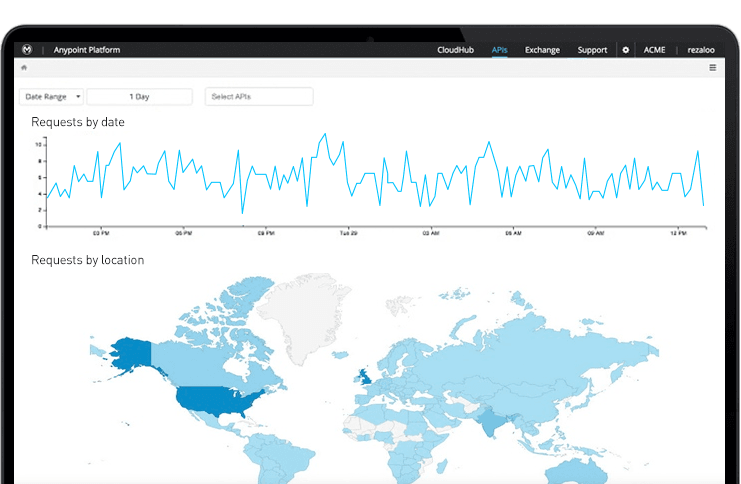
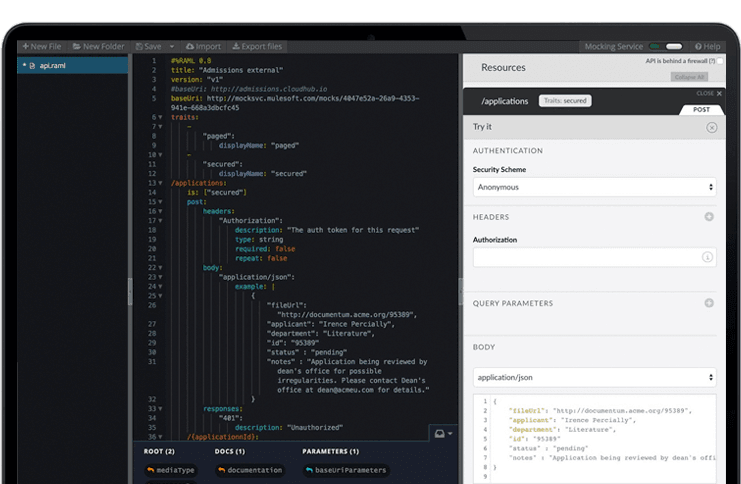
Screenshot of Connect any endpoints using out-of-the-box connectors, dynamic connectivity to API specifications, or by building reusable connectors with Anypoint DevKit™.Screenshot of A reporting suite that provides a real-time view of API consumption trends and operational performance. Analytics provides insight into how your API is being used and informs forward-looking design decisions.Screenshot of A platform to engage with API developers and drive adoption. Share documentation, examples and manage developer access from a single platform.