
MuleSoft Anypoint Platform vs. resynced.io
| Product | Rating | Most Used By | Product Summary | Starting Price |
|---|---|---|---|---|
 Anypoint Platform | Score8.1 out of 10 | N/A | The Anypoint Platform developed by MuleSoft and acquired by Salesforce in early 2018 is designed to connect apps, data, and devices anywhere, on-premises or in the cloud. This platform was built to offer out-of-the-box connectors as well as tools that architects and developers can adopt quickly to design, build and manage the entire lifecycle of their APIs, applications, and products. | N/A |
 resynced.io | N/A | N/A | resynced.io is a platform used to keep data in sync across different tools like monday.com, Google Sheets, Notion, and Smarsheet. It supports both one-way and two-way synchronization, so that the user decides whether changes flow in a single direction or stay in sync across both platforms. The goal of resynced.io is to reduce the need for manual data copying or repetitive updates between tools. For example, if a team manages tasks in monday.com but builds reports in Google… | $29 per month |
| Anypoint Platform | resynced.io | |||||||||||||||
|---|---|---|---|---|---|---|---|---|---|---|---|---|---|---|---|---|
| Editions & Modules | No answers on this topic |
| ||||||||||||||
| Offerings |
| |||||||||||||||
| Entry-level Setup Fee | No setup fee | No setup fee | ||||||||||||||
| Additional Details | — | Discount of up to 20% for annual pricing. | ||||||||||||||
| More Pricing Information | ||||||||||||||||
| Anypoint Platform | resynced.io | |
|---|---|---|
| Considered Both Products | No answer on this topic | No answer on this topic |
| Key User Insights | ||
| Would buy again | ||
93% Would buy again 14 Answers | No answers on this topic | |
| Delivers good value for the price | ||
92% Delivers good value for the price 12 Answers | No answers on this topic | |
| Happy with the feature set | ||
100% Happy with the feature set 15 Answers | No answers on this topic | |
| Lived up to sales and marketing promises | ||
92% Lived up to sales and marketing promises 11 Answers | No answers on this topic | |
| Implementation went as expected | ||
100% Implementation went as expected 13 Answers | No answers on this topic | |
| Anypoint Platform | resynced.io | ||||||||||||||||||||||
|---|---|---|---|---|---|---|---|---|---|---|---|---|---|---|---|---|---|---|---|---|---|---|---|
| Cloud Data Integration |
| ||||||||||||||||||||||
| Anypoint Platform | resynced.io | |
|---|---|---|
| Small Businesses |  Make Score9.3 out of 10 | Make Score9.3 out of 10 |
| Medium-sized Companies |  IBM App Connect Score9 out of 10 | IBM App Connect Score9 out of 10 |
| Enterprises |  Workato Score9.3 out of 10 | Workato Score9.3 out of 10 |
| All Alternatives | View all alternatives | View all alternatives |
| Anypoint Platform | resynced.io | |
|---|---|---|
| Likelihood to Recommend | 9.0 | - |
| Likelihood to Renew | 9.0 | - |
| Usability | 8.7 | - |
| Support Rating | 10.0 | - |
| Online Training | 10.0 | - |
| Anypoint Platform | resynced.io | |
|---|---|---|
| Likelihood to Recommend |
| No answers on this topic |
| Pros |
| No answers on this topic |
| Cons |
| No answers on this topic |
| Usability |
| No answers on this topic |
| Support Rating |
| No answers on this topic |
| Online Training |
| No answers on this topic |
| Alternatives Considered |
| No answers on this topic |
| Return on Investment |
| No answers on this topic |
| ScreenShots | Anypoint Platform Screenshots  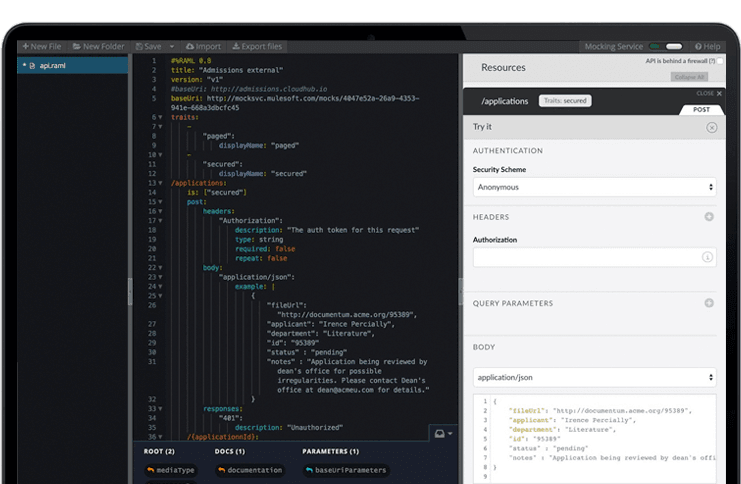 | resynced.io Screenshots  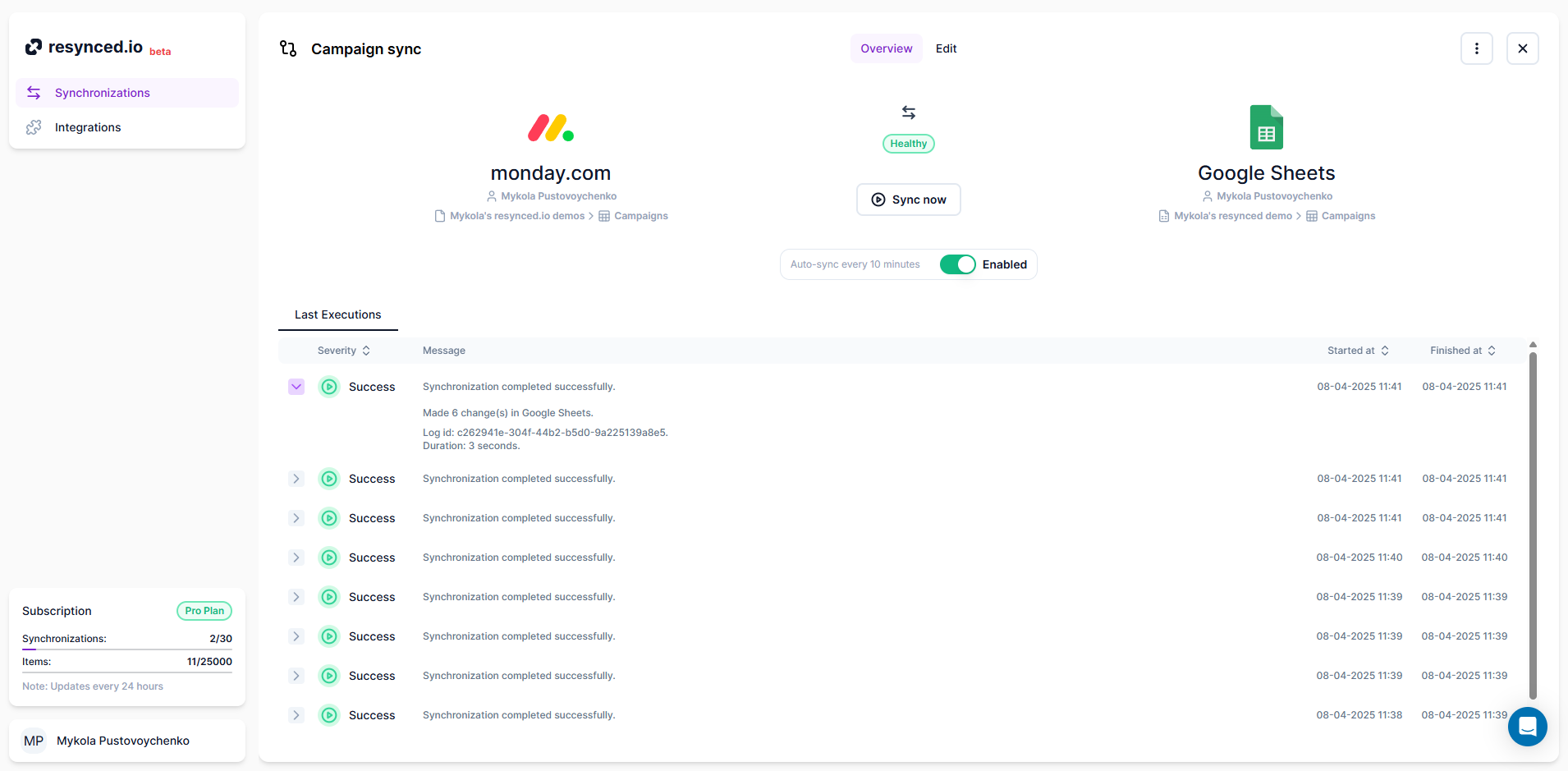 |



