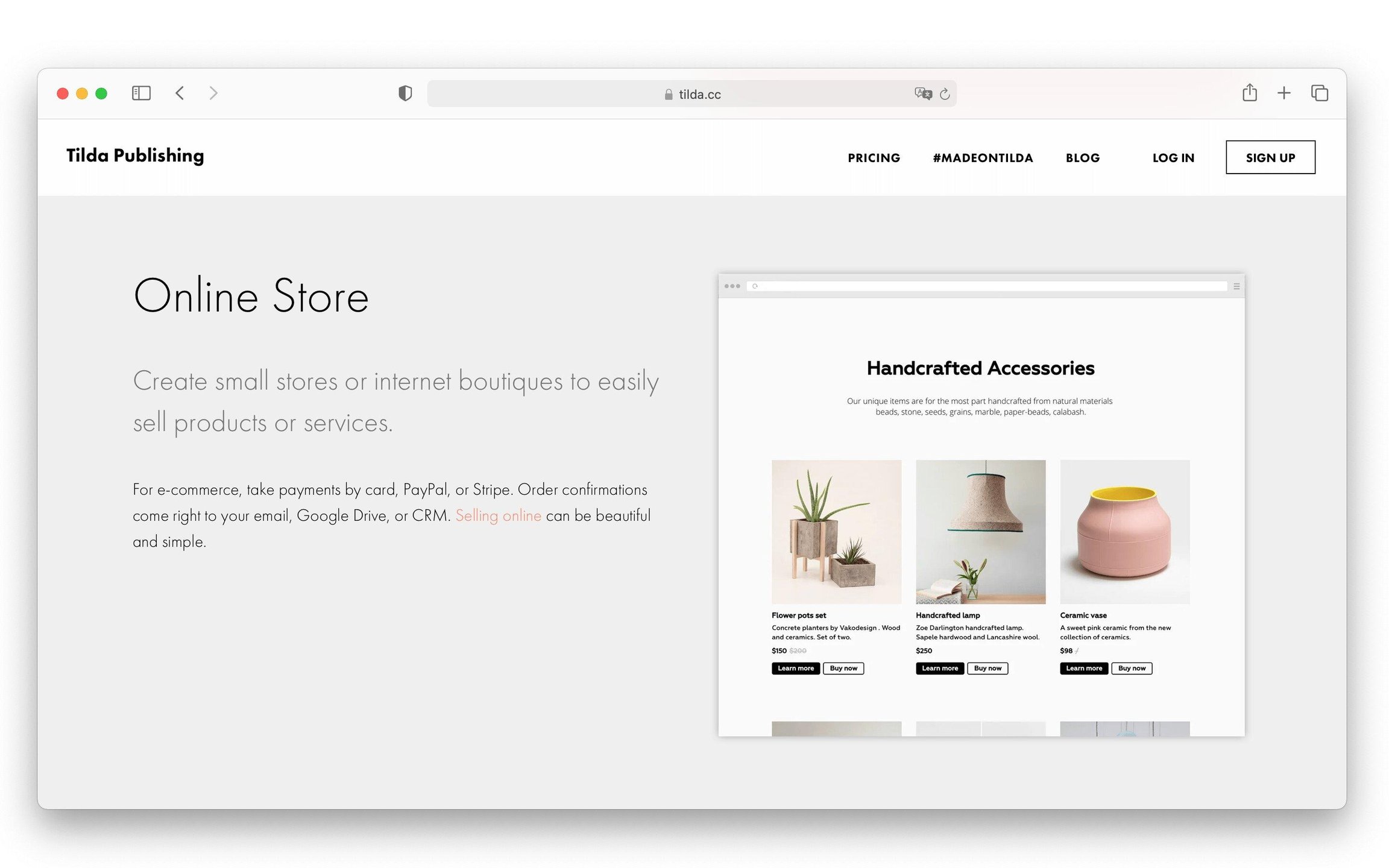
Tilda website builder helps users build websites for business and media. With Tilda users can create long forms and articles, as well as landing pages, websites, blogs and all other kinds of content oriented web projects.
$15
per month
TYPO3
Score8 out of 10
N/A
TYPO3 CMS is an open source web content management system with a global community, backed by the approximately 900 members of the TYPO3 Association.
$0
Pricing
Tilda
TYPO3
Editions & Modules
Personal
$15
per month
Business
$25
per month
No answers on this topic
Offerings
Pricing Offerings
Tilda
TYPO3
Free Trial
No
No
Free/Freemium Version
Yes
Yes
Premium Consulting/Integration Services
No
No
Entry-level Setup Fee
No setup fee
No setup fee
Additional Details
—
—
More Pricing Information
Features
Tilda
TYPO3
Security
Comparison of Security features of Tilda and TYPO3
Feature
Tilda
9.1
1 Ratings
10% above category average
TYPO3
-
Ratings
Role-based user permissions
9.11 Ratings
00 Ratings
Platform & Infrastructure
Comparison of Platform & Infrastructure features of Tilda and TYPO3
Feature
Tilda
8.2
1 Ratings
5% above category average
TYPO3
-
Ratings
API
9.11 Ratings
00 Ratings
Internationalization / multi-language
7.31 Ratings
00 Ratings
Web Content Creation
Comparison of Web Content Creation features of Tilda and TYPO3
Feature
Tilda
8.3
1 Ratings
6% above category average
TYPO3
-
Ratings
WYSIWYG editor
9.11 Ratings
00 Ratings
Code quality / cleanliness
9.11 Ratings
00 Ratings
Admin section
9.11 Ratings
00 Ratings
Page templates
9.11 Ratings
00 Ratings
Library of website themes
9.11 Ratings
00 Ratings
Mobile optimization / responsive design
4.51 Ratings
00 Ratings
Web Content Management
Comparison of Web Content Management features of Tilda and TYPO3
Tilda is very well suited for designers and artists who are aiming for an easy, fast, and creative website builder. Either for personal use or for a client’s work, Tilda is just what you need, if you want a blank canvas with almost full freedom to create the craziest animations and designs. I wouldn’t say there is a less appropriate scenario, since Tilda can be very flexible for anyone who’s looking to create a website. There are templates in a large gallery, as well as a huge support feature that shows tutorials and examples.
TYPO3 is great if you need to connect some systems in company to work together: like ecommerce + CRM + ERP + MRP and build an Extranet for partners/dealers where they can order your products, see particular BOM (bill of material), paid/unpaid invoices and use email marketing on top of it. You can do it but keep in mind that you will need a dedicated hosting, well organized admin(s) and some handwritten code. For simple blog TYPO3 is also a good choose, but WP would be better I think.
A de minimis incentive was given to thank the reviewer for their time. The incentive was not used to bias or drive a particular response, nor was the incentive contingent on a positive endorsement. More Info
A de minimis incentive was given to thank the reviewer for their time. The incentive was not used to bias or drive a particular response, nor was the incentive contingent on a positive endorsement. More Info
A de minimis incentive was given to thank the reviewer for their time. The incentive was not used to bias or drive a particular response, nor was the incentive contingent on a positive endorsement. More Info
compared do Wordpress - far less community support
when you run a simple blog - it is simple as piece of cake. But if it is a large news site, with many user roles, extensions and permissions - it may be hard to find an admin that will organize and keep that stuff working.
server resources: so you want performance and speed with all that modules enabled? make sure that you have dedicated server in most cases. WP works much better here.
A de minimis incentive was given to thank the reviewer for their time. The incentive was not used to bias or drive a particular response, nor was the incentive contingent on a positive endorsement. More Info
A de minimis incentive was given to thank the reviewer for their time. The incentive was not used to bias or drive a particular response, nor was the incentive contingent on a positive endorsement. More Info
A de minimis incentive was given to thank the reviewer for their time. The incentive was not used to bias or drive a particular response, nor was the incentive contingent on a positive endorsement. More Info
A de minimis incentive was given to thank the reviewer for their time. The incentive was not used to bias or drive a particular response, nor was the incentive contingent on a positive endorsement. More Info