

CrunchJunkie
What is CrunchJunkie?
CrunchJunkie is an AI Visibility Software (GEO Tools) and Marketing Analytics platform. The system monitors how brands, products, and websites are cited across generative search engines while consolidating multi-channel advertising and analytics metrics into customizable client reports.
Key Capabilities
- Generative Engine Optimization (GEO) Monitoring: Tracks brand mentions, product-level visibility, rankings, and citations across ten generative answer engines (ChatGPT, Gemini, Perplexity, Claude, Google AI Overviews, Google AI Mode, Microsoft Copilot, Grok, DeepSeek, and Meta AI).
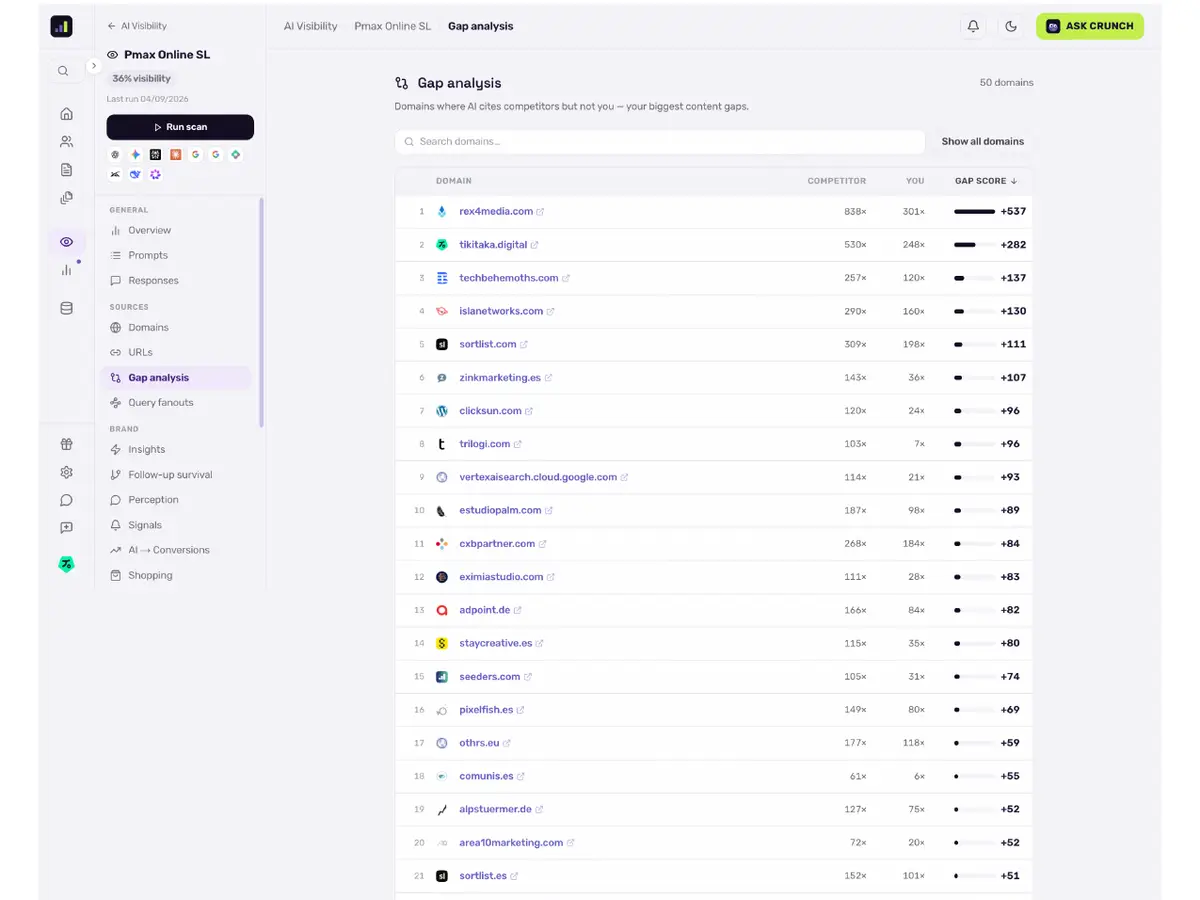
- Statistical Rigor & Auditing: Calculates sample size metrics, margin of error ranges, and pooled rates for prompt evaluations. Includes automated site audit functionality and gap-analysis content brief generation.
- Multi-Channel Reporting Consolidation: Ingests metrics from advertising networks and analytics services (Google Ads, Meta Ads, Microsoft Ads, LinkedIn Ads, Amazon Ads, Reddit Ads, GA4, Search Console, Facebook, Instagram, Matomo, Piwik PRO, and Google Merchant Center) to generate scheduled, white-label client reports.
- Model Context Protocol (MCP) Interface: Incorporates an OAuth-secured MCP connector exposing 45 tools to query reporting data and generate documentation directly from compatible AI clients (including Claude, ChatGPT, and Cursor), featuring workspace owner write controls.
- Attribution & Traffic Analysis: Connects with Google Analytics 4 (GA4) to analyze website traffic attribution originating from AI search engines and assistants.
Audience & Use Cases
- Audience: Digital marketing agencies, in-house growth teams, and search engine optimization (SEO) analysts.
- Use Case: Tracking brand presence and competitive share of voice across AI engines, auditing site structure for generative search readiness, and consolidating cross-channel ad spend and analytics reporting for client presentation.
Technical Specifications
- Supported Integrations: GA4, Google Search Console, Google Merchant Center, Matomo, Piwik PRO, and major digital ad platforms (Google Ads, Meta Ads, Microsoft Ads, LinkedIn Ads, Amazon Ads, Reddit Ads).
- Protocol Support: Model Context Protocol (MCP) via OAuth with configurable read/write permission tiers.
- Data Residency & Infrastructure: Hosted in Frankfurt, Germany (EU-resident infrastructure) with a public sub-processor directory; developed and operated by Tiki-Taka Media GmbH (Hamburg, Germany).
- Vendor Claims: According to the vendor, plans start at €14 per month per brand managed, include a 14-day trial, and support either direct user-provided LLM API keys without vendor markup or metered managed AI models.
Categories & Use Cases
Media



1 / 9
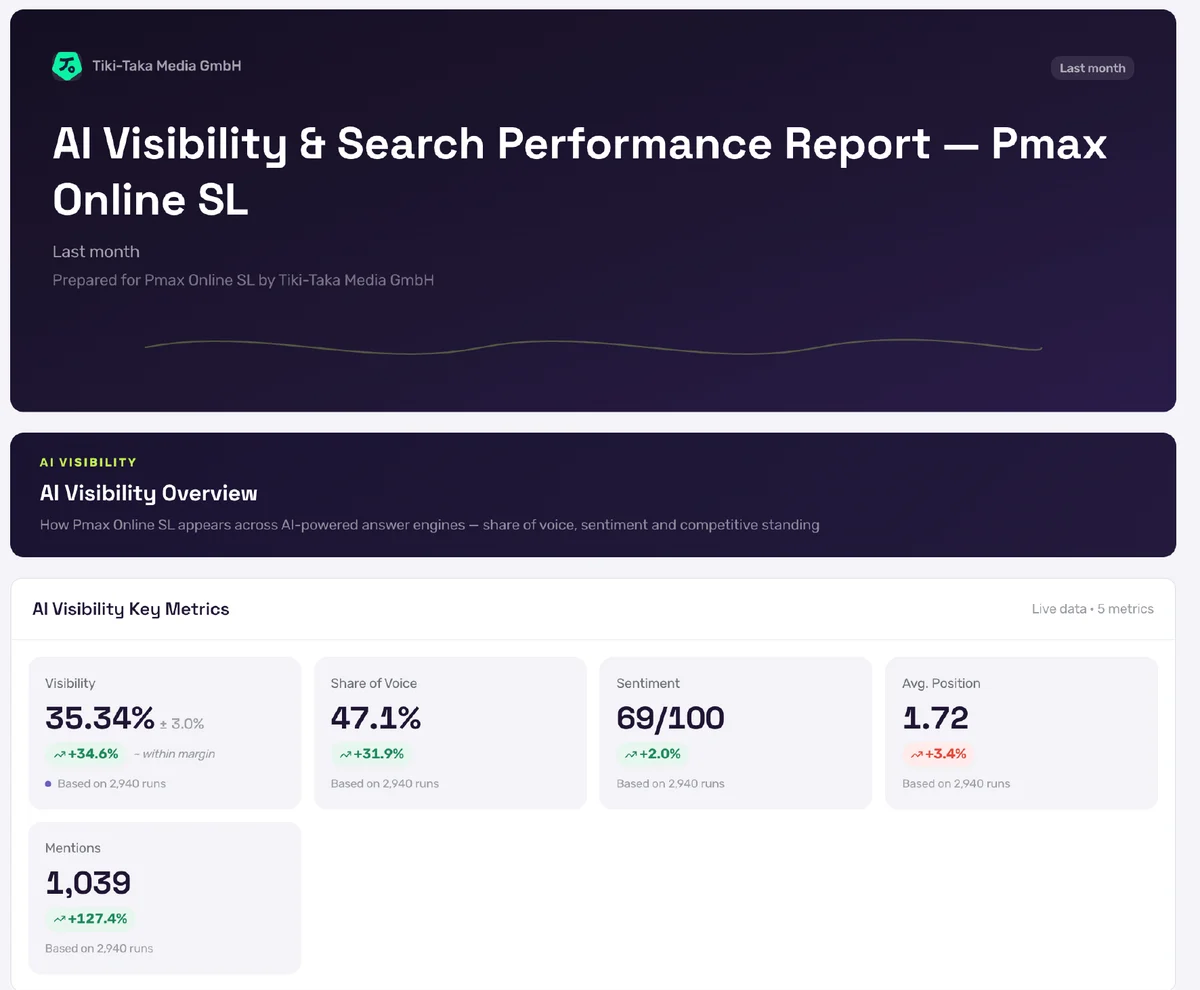
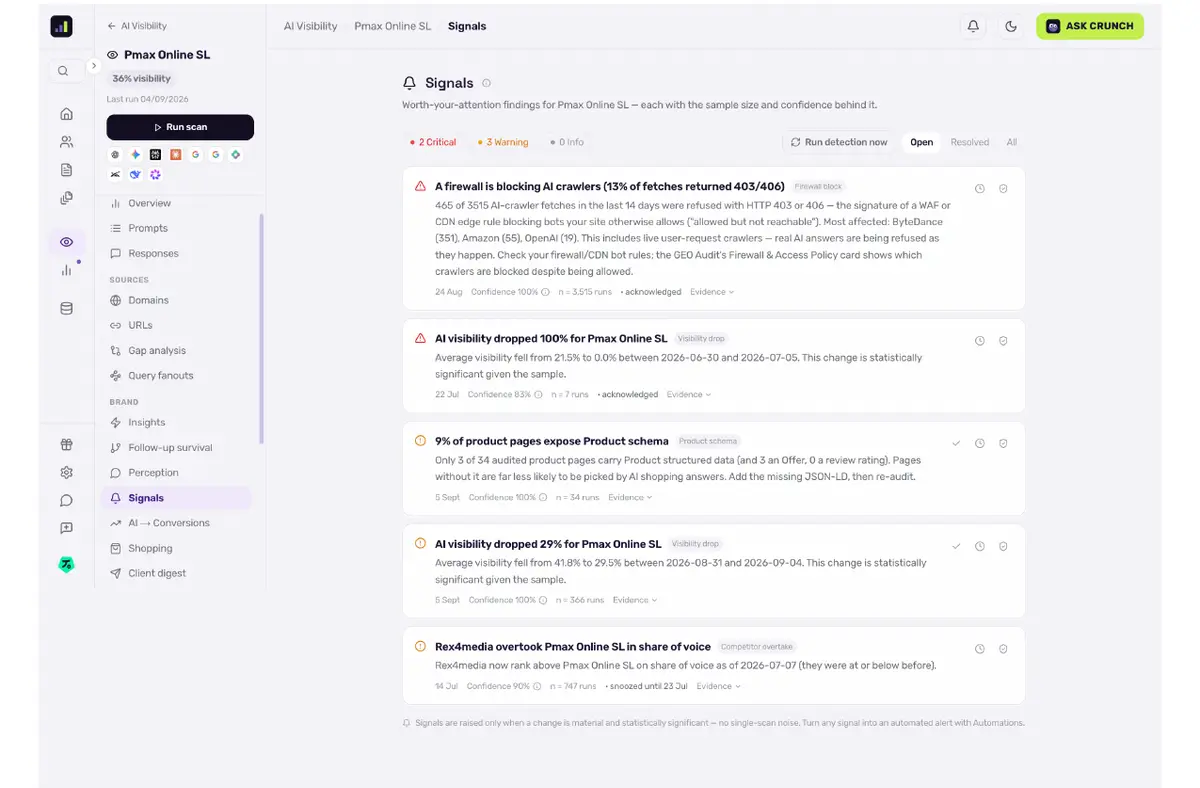
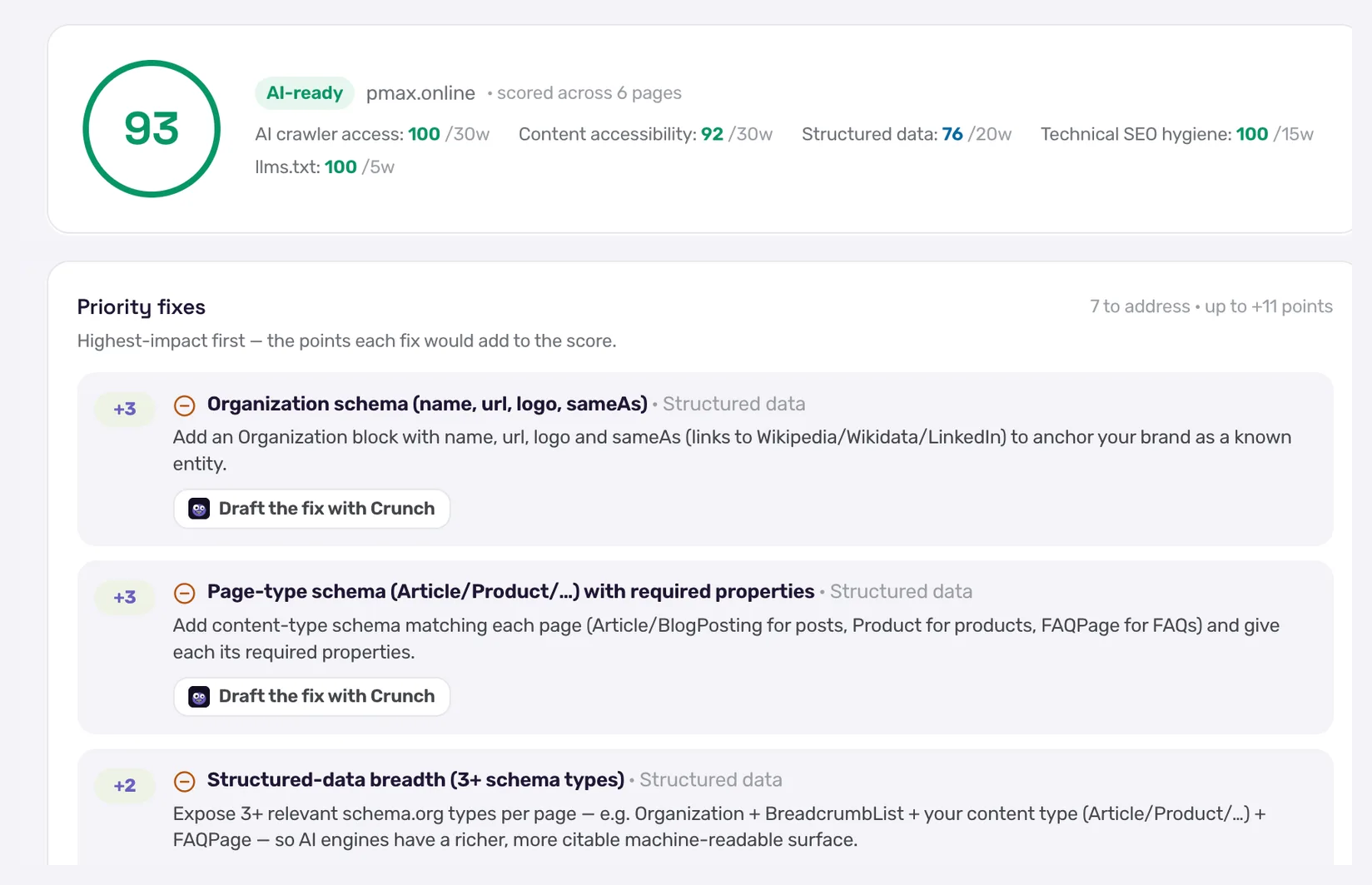
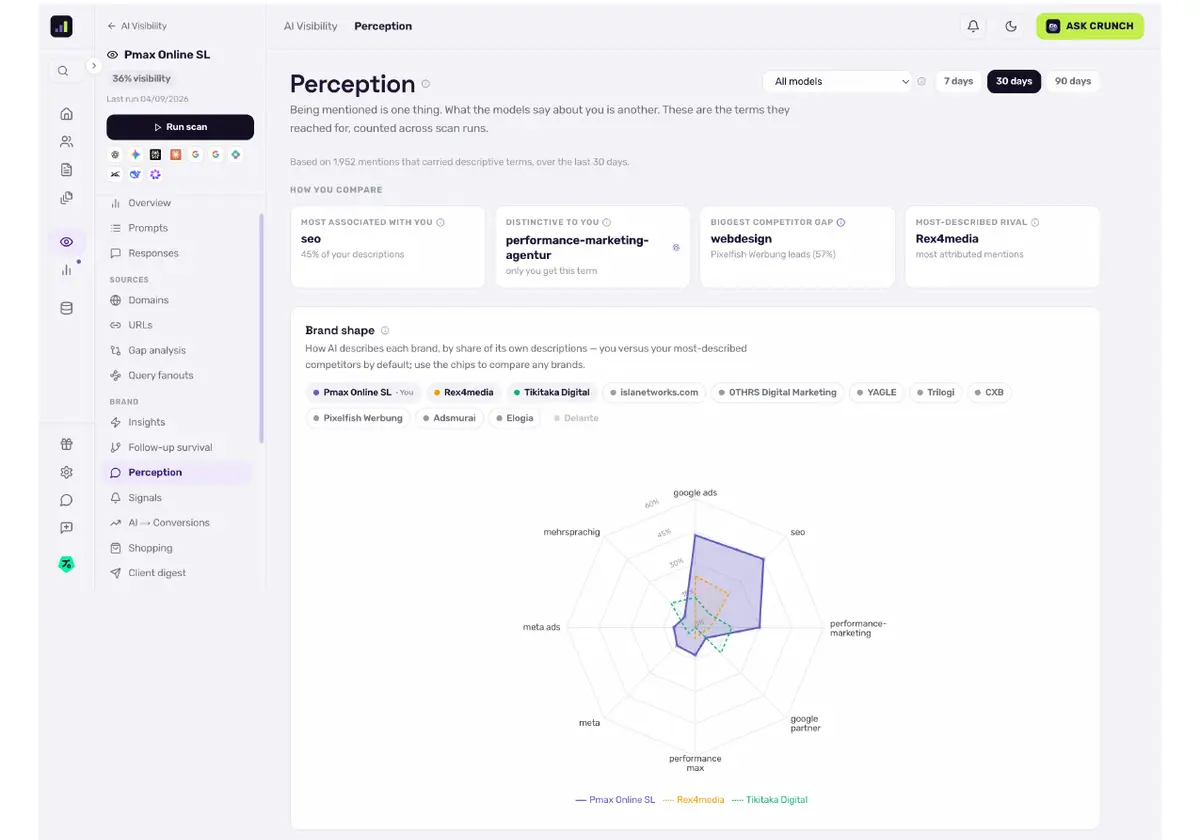
Screenshot of AI Visibility overview for one brand. It shows how often the brand is named across the tracked AI engines (here 35.6% of 2,848 answers, with the margin of error), its average position and sentiment, how often its own pages are retrieved and cited, whether AI crawlers can reach the site, and the mention rate for each tracked prompt. Every percentage carries its sample size.