

Tidal LightMesh
What is Tidal LightMesh?
Tidal LightMesh is an IP address management (IPAM) platform that provides a centralized source of truth for IPv4 and IPv6 address space across cloud, hybrid, and on-premises environments.
LightMesh combines visual subnet planning, automated discovery, Microsoft DHCP visibility, cloud synchronization, audit history, role-based access controls, and API-driven automation. It is designed for organizations moving away from spreadsheets, fragmented network records, or legacy IPAM platforms and can support distributed enterprise environments with millions of IP addresses and thousands of locations.
LightMesh is available as SaaS or as a self-hosted Enterprise deployment.
IP Planning and Visualization
LightMesh provides visual tools for organizing and planning network address space. TreeView presents networks and subnets hierarchically, allowing users to move from high-level address space into individual subnets and IP assignments.
The platform supports IPv4 and IPv6, subnet planning, capacity monitoring, conflict detection, overlapping address spaces across separate zones, custom fields, Network Containers, and global search.
These capabilities help infrastructure teams understand existing address utilization, identify available capacity, and plan network growth from a common IPAM record.
Automated Discovery and Microsoft DHCP
LightMesh includes multiple discovery methods for keeping IP records aligned with network activity.
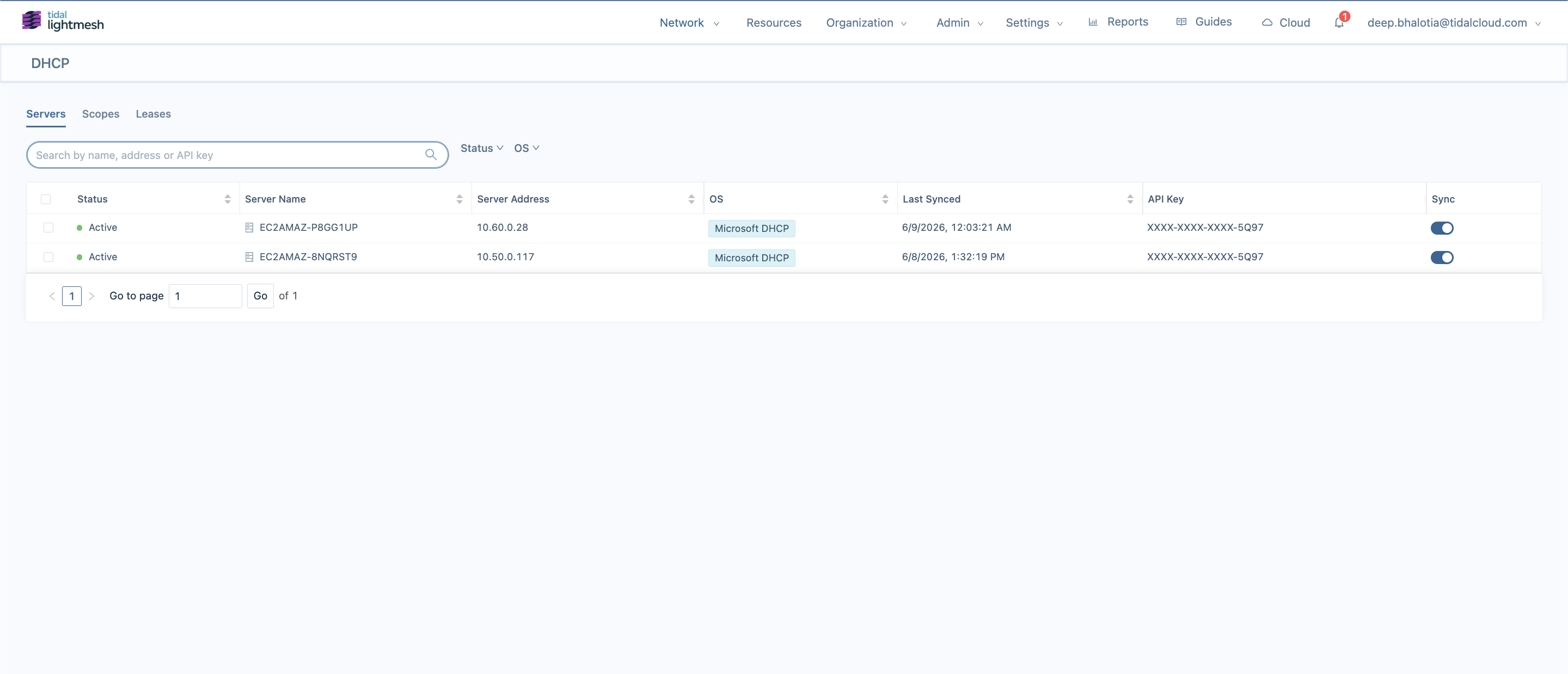
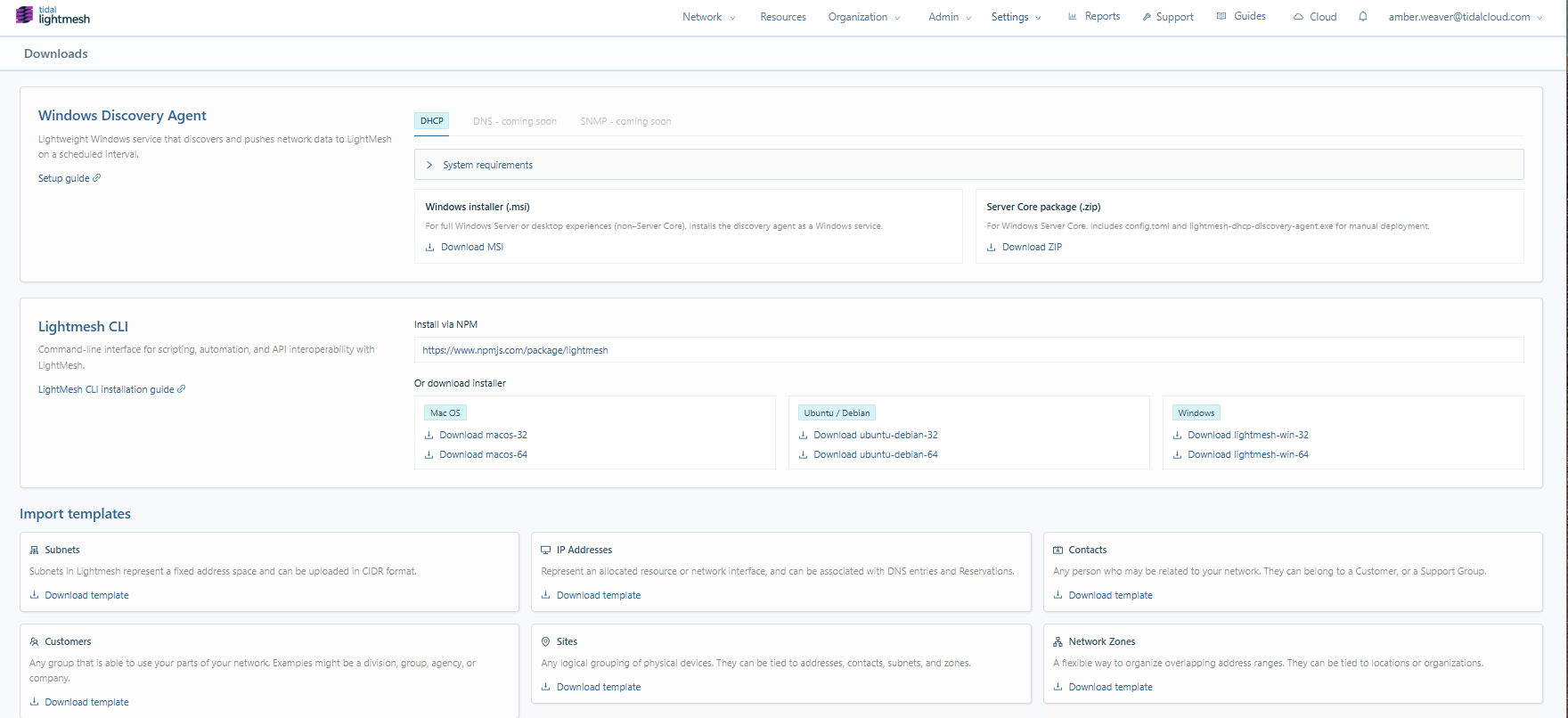
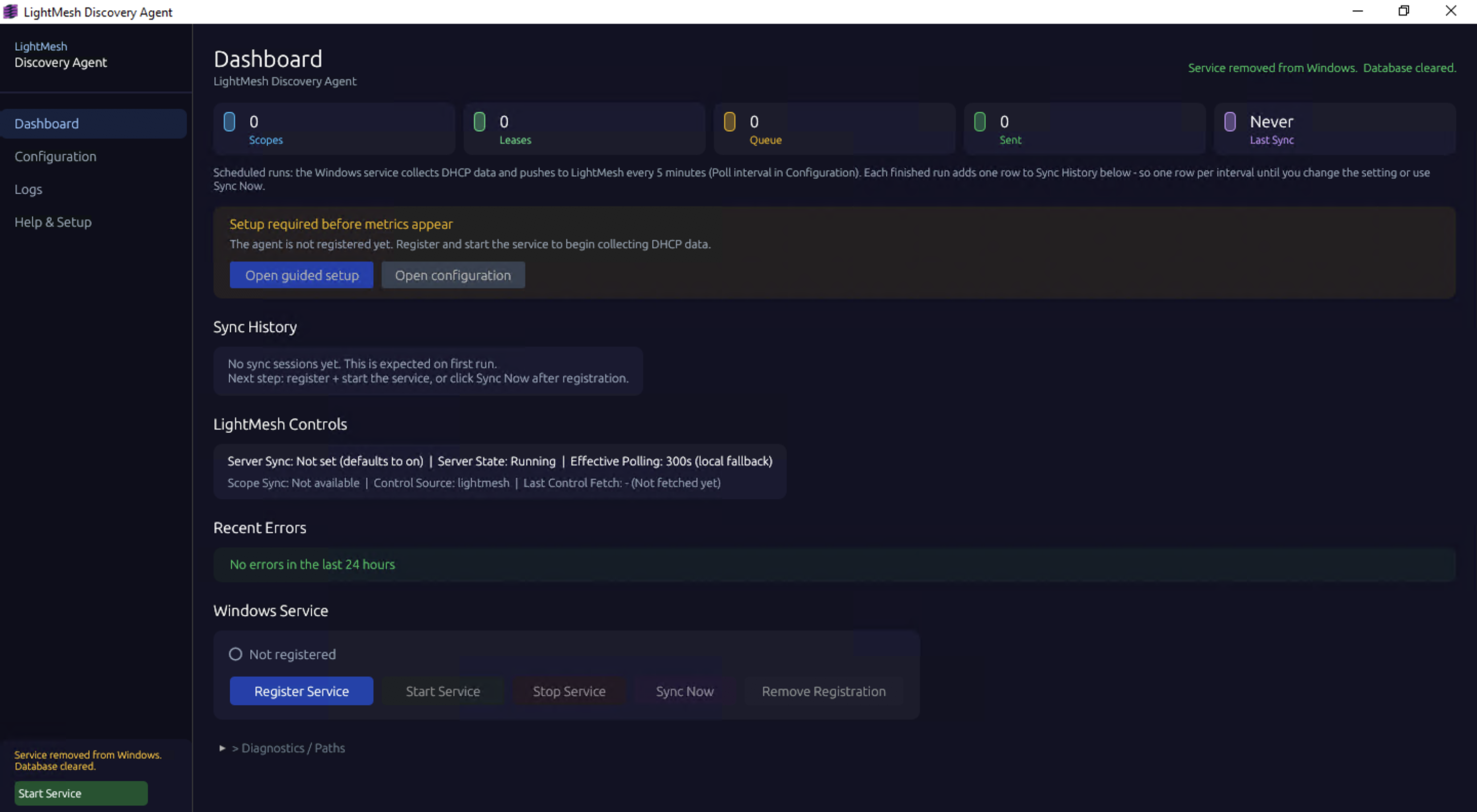
The Windows Discovery Agent integrates with Microsoft DHCP and can synchronize DHCP servers, scopes, leases, lease history, reservations, exclusion ranges, and related address information into LightMesh. This provides searchable DHCP history alongside other IPAM records and can help teams determine which device used an IP address and when.
The same Discovery Agent supports scheduled ICMP Ping Sweeps for selected subnets, identifying reachable hosts and updating Last Seen information. Nmap-based discovery provides an additional method for bringing active-host information into IPAM.
Discovery is read-only toward source infrastructure, allowing LightMesh to collect network information without modifying production DHCP or network configurations.
Cloud and Cisco Meraki Integrations
LightMesh provides read-only AWS and Microsoft Azure integrations so cloud address data can be viewed alongside on-premises IPAM records.
AWS integration discovers VPCs, subnets, IP addresses, accounts, and regions through a read-only IAM connection. Azure integration uses Reader access to discover Virtual Networks, subnets, and IP allocations.
Cisco Meraki integration uses the Meraki Dashboard API to discover supported LAN and VLAN networks and associate matching devices and client IP addresses with LightMesh subnets.
These integrations provide a common view of cloud, DHCP, Meraki, discovered, imported, and manually maintained network information.
Enterprise Security and Governance
LightMesh includes role-based access control for organizations managing IPAM across multiple teams, locations, or business units. Resource-level permissions provide additional control over access to network data.
The Requestor Workflow allows users to request IP resources without requiring full IPAM access, with requests managed through an approval process.
SSO and custom SAML options are available for enterprise environments. Audit history records API activity and create, update, and delete events, allowing teams to review what changed, when it changed, and which user or API key performed the action.
API and Automation
LightMesh uses an API-first architecture with an authenticated GraphQL API and command-line interface.
Infrastructure and DevOps teams can incorporate IPAM into provisioning and operational workflows rather than maintaining it as a separate manual database. Common use cases include IP and subnet allocation, CI/CD workflows, Terraform and Ansible automation, and providing IP context to security and operational systems.
Migration and Enterprise Scale
LightMesh supports imports from CSV, XLS, and XLSX files, with custom field mapping for organization-specific network information. These tools support migrations from spreadsheets and legacy IPAM platforms such as SolarWinds and Infoblox.
The platform supports large and distributed network environments, including overlapping address spaces across separate zones. Deployments can range from individual network teams to environments containing millions of IP addresses, thousands of locations, and hundreds of users.
Enterprise organizations can use LightMesh as SaaS or deploy it within their own cloud or on-premises infrastructure. Self-hosted Enterprise deployments also support AWS GovCloud and Azure Government integrations.
Benefits and Differentiators
LightMesh brings IP planning, Microsoft DHCP activity, cloud networks, Cisco Meraki data, discovered hosts, and manually maintained records into a common IPAM system of record.
This can reduce reliance on spreadsheets and disconnected tools, reduce manual reconciliation of IP data, and make operational information easier to find.
Searchable IP and DHCP history can shorten investigations into address ownership and activity, while capacity monitoring and conflict detection help teams identify address-space issues earlier.
API-driven workflows can further reduce manual provisioning steps by incorporating IPAM into infrastructure automation and CI/CD processes.
Key differentiators include visual subnet planning, read-only discovery, Microsoft DHCP lease history, AWS and Azure synchronization, Cisco Meraki visibility, API-first automation, enterprise access controls, and the choice of SaaS or self-hosted deployment.
A free trial is available.
Categories & Use Cases
Videos
Screenshots





1 / 10
Screenshot of Advanced static filtering
Product Demos
Technical Details
| Deployment Types | On-Premise, SaaS |
|---|---|
| Operating Systems | Windows, Linux, Mac |
| Mobile Application | No |
| Supported Countries | All countries |
| Supported Languages | English |