
TrustRadius: an HG Insights company

SAP Sustainability Control Tower

Score8.7 out of 10

30 Reviews and Ratings

What is SAP Sustainability Control Tower?

SAP Sustainability Control Tower is a software solution that helps to enable users to reach sustainable business ambitions with holistic enterprise-wide sustainability performance management.

Read more details.

Media

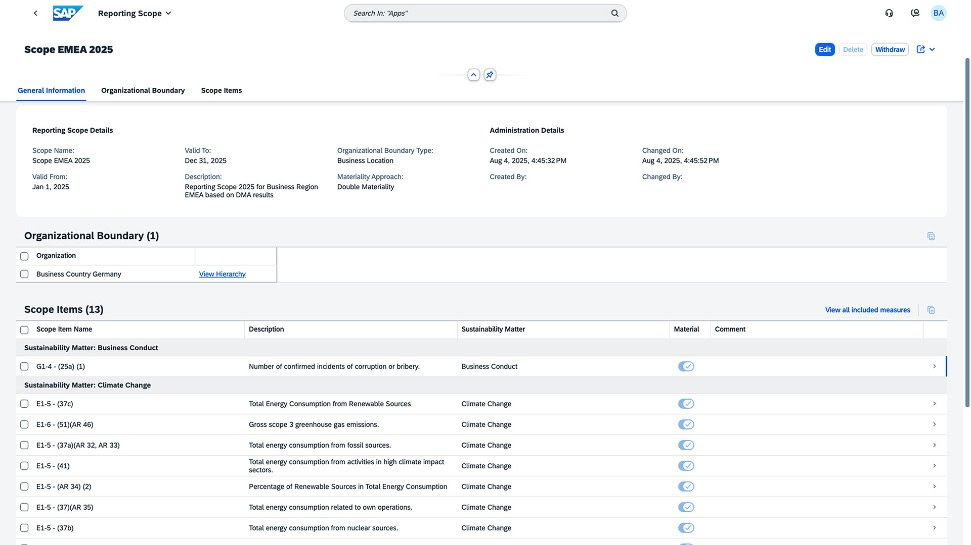
Screenshot of reporting scope details.
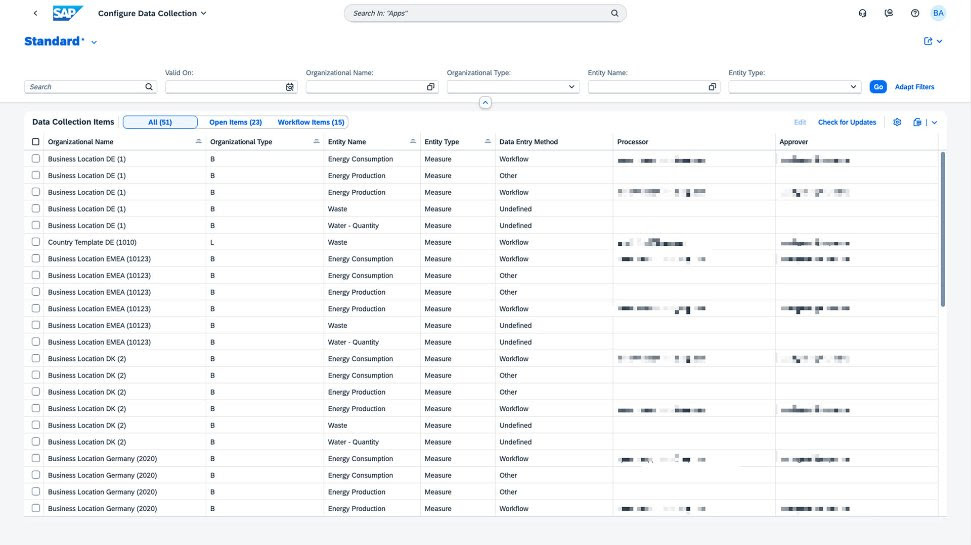
Screenshot of data collection items.
Screenshot of emissions data.
Screenshot of a carbon footprint assessment.
Screenshot of sustainability metrics.

1 / 5

Screenshot of reporting scope details.

Who Buys & Uses SAP Sustainability Control Tower

All your sustainability tracking at one place

Use Cases and Deployment Scope

We use SAP Sustainability Control Tower mostly for EsG reporting purpose for corporate governance and reporting to our main office. With a new and recent addition to our sap suite we are still exploring the capabilities of SAP Sustainability Control Tower for vendor esg data and footprint of supply chain.

Pros

  • ESG report generation
  • Auditing

Cons

  • It is still a new field in our corporation integration with more modules.
  • Help in accurate forecasting

Return on Investment

  • Inpact not yet realized as it is fairly new addition to our SAP suite.

Usability

Other Software Used

SAP Ariba, SAP Manufacturing Integration and Intelligence

SAP Sustainability Control Tower

Use Cases and Deployment Scope

SAP Sustainability Control Tower help us to undestard emision and control.

Pros

  • control
  • analysis
  • calculations
  • analisis
  • calculos

Cons

  • calculate production emissions
  • materials production control dashboard

Return on Investment

  • materials production control dashboard
  • fast ROI

Usability

Alternatives Considered

Joule Studio, Joule, SAP Ariba and Oracle Analytics

Other Software Used

SAP SuccessFactors HCM, Oracle Analytics, eWMS, SAP Ariba

SAP SCT Matters

Use Cases and Deployment Scope

A number of clients we advise, are using it as a holistic steering, reporting, and performance management solution across multiple dimensions of sustainability to become profitable while being efficient. The most common one is that it eliminates fragmented / silo data and ties it down to the different compliance and regulations like CSRD / ESRS etc.

Pros

  • Seamless data integration
  • Configurable KPI mapping
  • Reporting

Cons

  • Licensing / Coming default in the BOM
  • Non-SAP scenarios
  • Better UX

Return on Investment

  • Positive is Time to collect data is greatly reduced
  • Positive is Regulatory Compliance
  • Factor in Change Management & Licensing Costs

Usability

SAP Sustainability Control Tower best solution in ESG

Use Cases and Deployment Scope

Environmental metrics relating to energy and emission data analytics, especially in scope 3 emissions across the value chain, and making complete product life cycle a transparent and business process integration with value chain while calculating emissions and inventories accurately across the enterprise, this product of SAP can seamlessly integrate with other non-SAP products and regulatory compliance integration as a whole.

Pros

  • Seemless integration with other non sap products
  • Emission analytics at it’s best
  • Accurate data management for emissions and activities d
  • Integrated solution

Cons

  • Functional aspects to be included with industry standards
  • More comes out to be technical solution

Return on Investment

  • Good solution across vertices

Usability

Good but more work to be done

Use Cases and Deployment Scope

We use SAP Sustainability Control Tower (SCT) to generate customer-facing dashboards that organize all underlying emissions and "sustainability-related" in an easy to understand format. While the tool works well to get core emissions data such as fleet and transportation, procurement and production emissions, it lacks data from certain industries such as energy, this is our biggest concern with SAP Sustainability Control Tower right now, the availability of industry-specific content.

Pros

  • Easy to understand dashboards
  • Seamless connection to underlying data
  • Preconfigured content (for basic cases)

Cons

  • More Industry-specific content
  • No advanced scenario simulation capabilities
  • Easier connection with third-party data

Return on Investment

  • Ability to better understand where emissions are coming from
  • Presents the data in an easy to understand way despite the complexities of the underlying data set

Alternatives Considered

Microsoft Power BI

Other Software Used

Microsoft Power BI, SAP Analytics Cloud