

Radar by Skyhook
What is Radar by Skyhook?
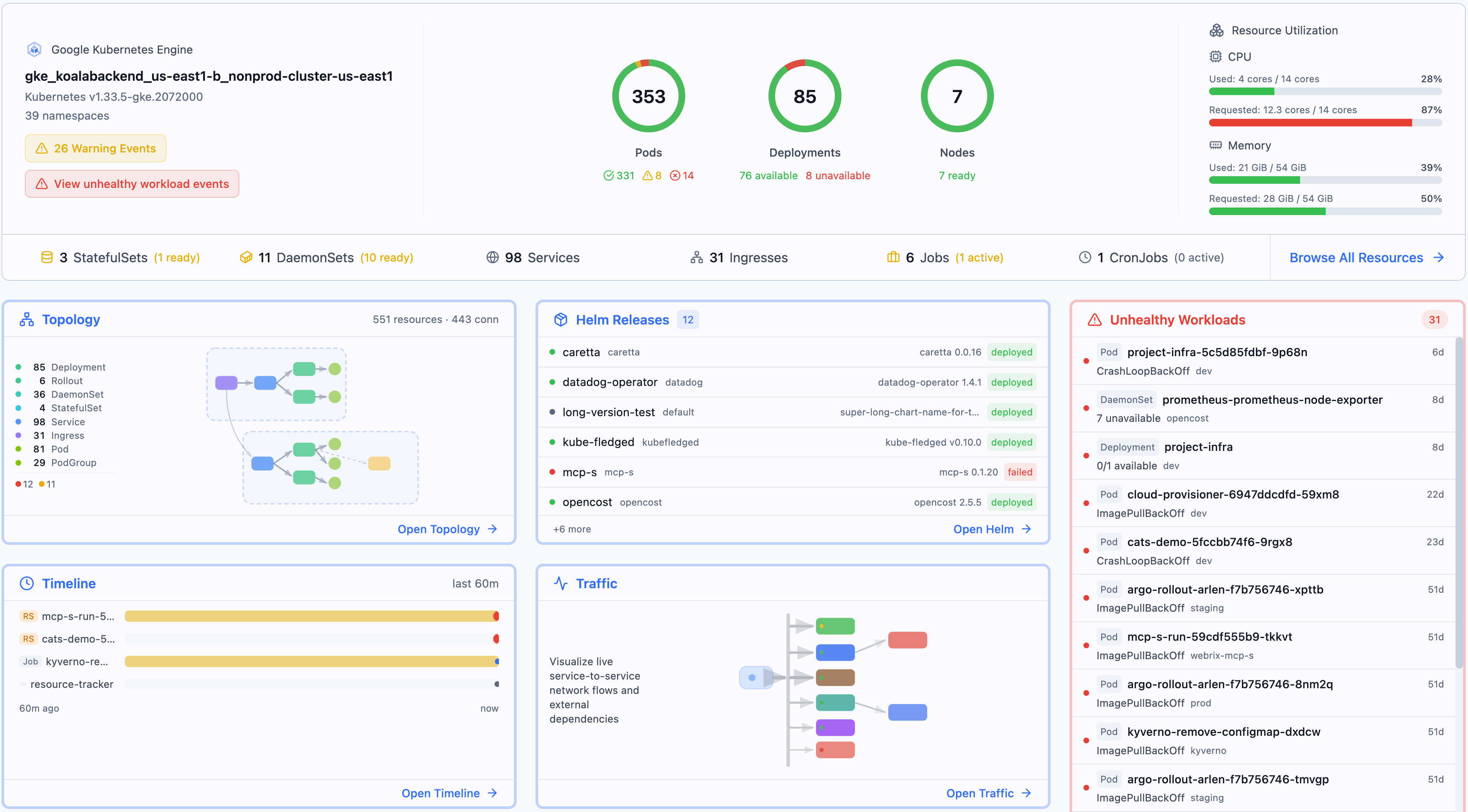
Radar is an open-source Kubernetes interface designed for the humans and AI agents that operate clusters. It addresses a common gap in Kubernetes workflows: clusters are easy to query with kubectl, but hard to understand. Radar presents a live cluster over two surfaces, a graphical UI for engineers and a built-in MCP server for AI assistants, so both can make sense of what is actually running.
Deployment
Radar runs as a single Go binary that talks to the Kubernetes API directly. It can run locally on an engineer's laptop with zero cluster-side installation, or be deployed in-cluster via Helm for shared team access. It requires no CRDs, works against any conformant cluster (GKE, EKS, AKS, minikube, kind, and k3s), and is airgapped-ready because it makes no external calls. Updates stream to the browser in real time using Kubernetes informers.
Key capabilities for engineers
- Topology: a live, auto-laid-out graph of resource relationships, with a separate network-traffic view.
- Resource explorer: full custom-resource auto-discovery, status and problem filtering (for example CrashLoopBackOff and ImagePullBackOff), and one-click access to YAML, logs, events, and related resources.
- Event timeline: every Kubernetes event and change captured in one feed and retained beyond the default one-hour event TTL.
- Log streaming and pod exec directly from the interface.
- Image filesystem viewer: browse the contents of any container image without pulling it locally or shelling in.
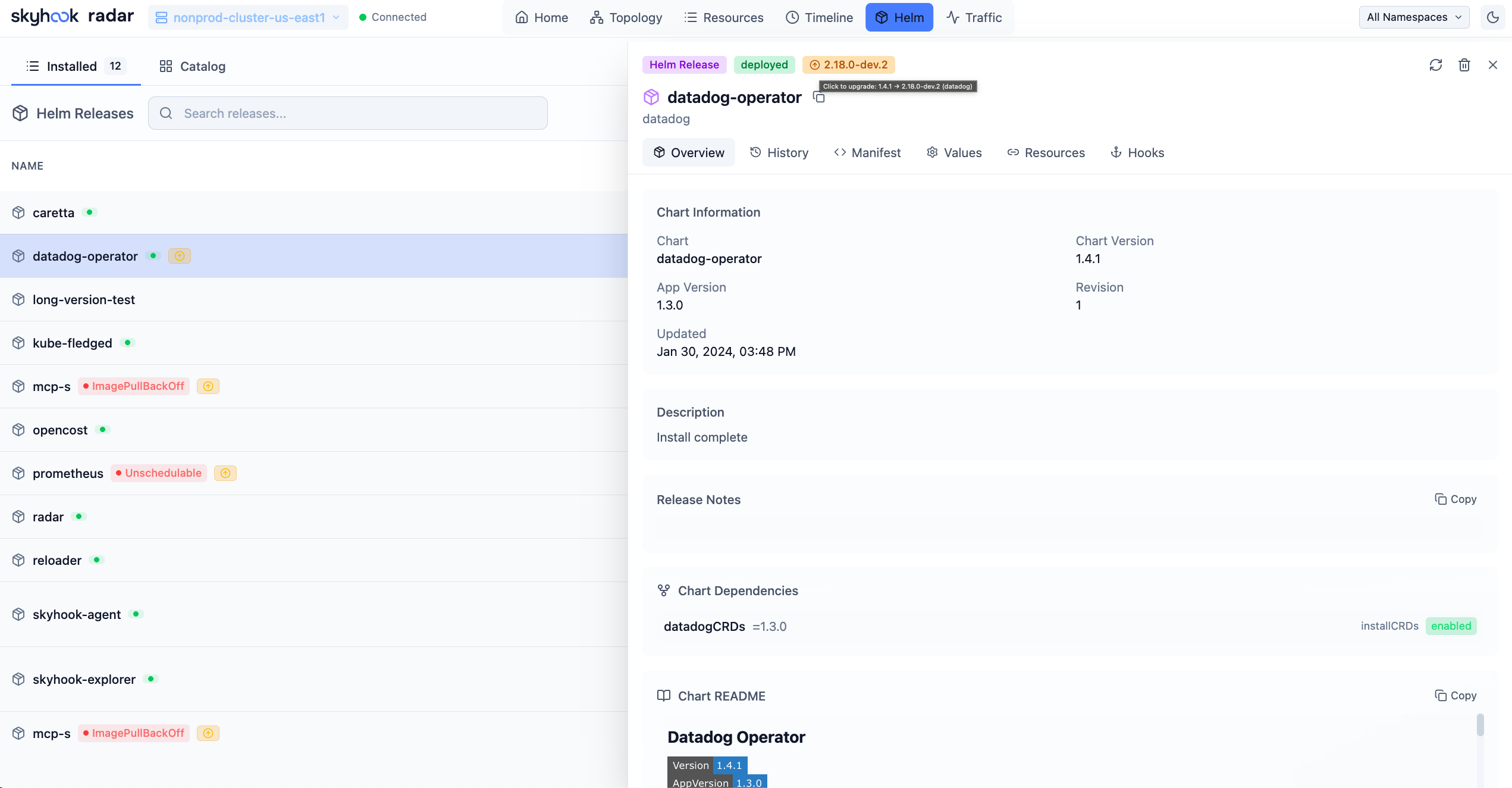
- Helm management: inspect values, compare revisions, and upgrade, roll back, or uninstall releases.
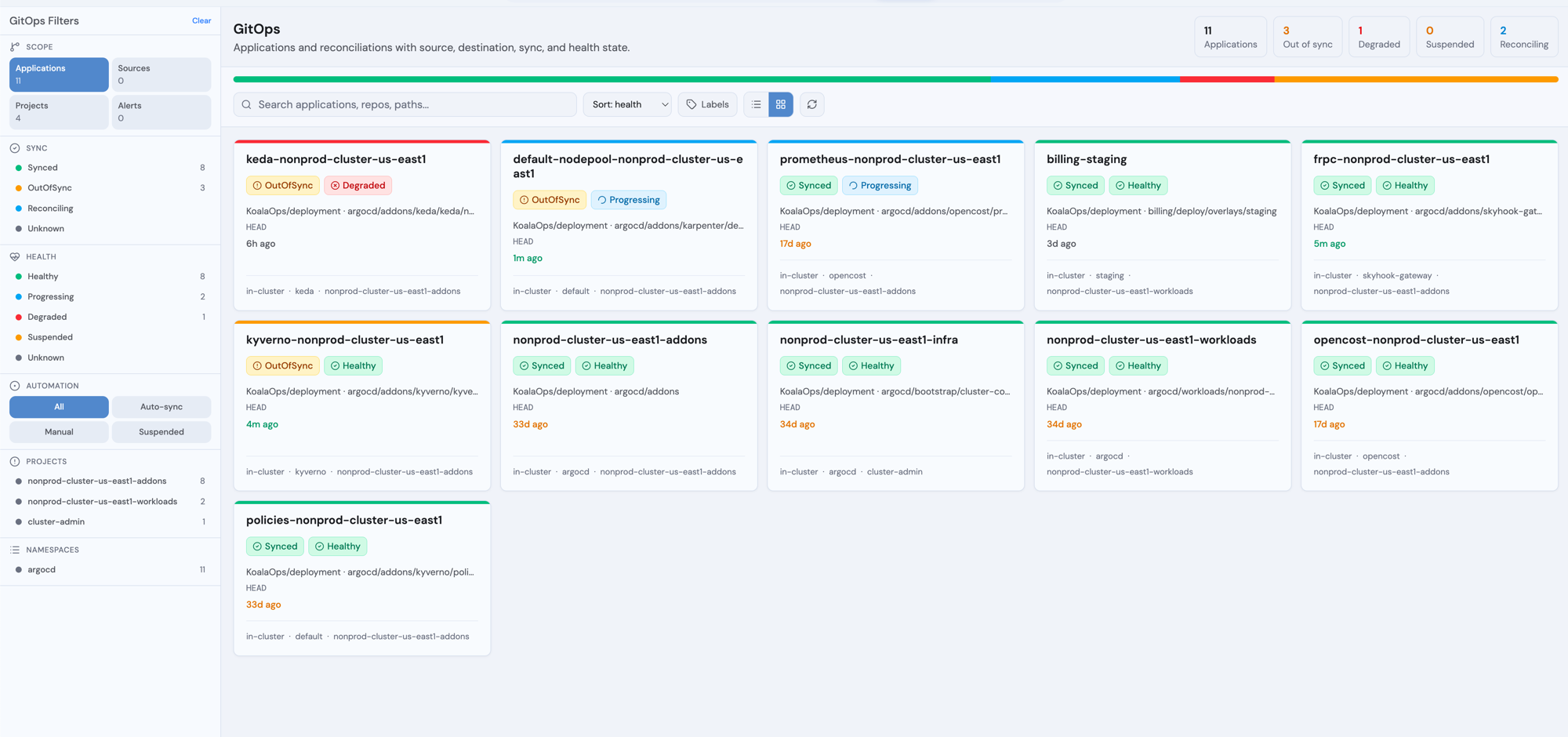
- GitOps: first-class FluxCD and ArgoCD support, including sync status, health, and reconciliation controls.
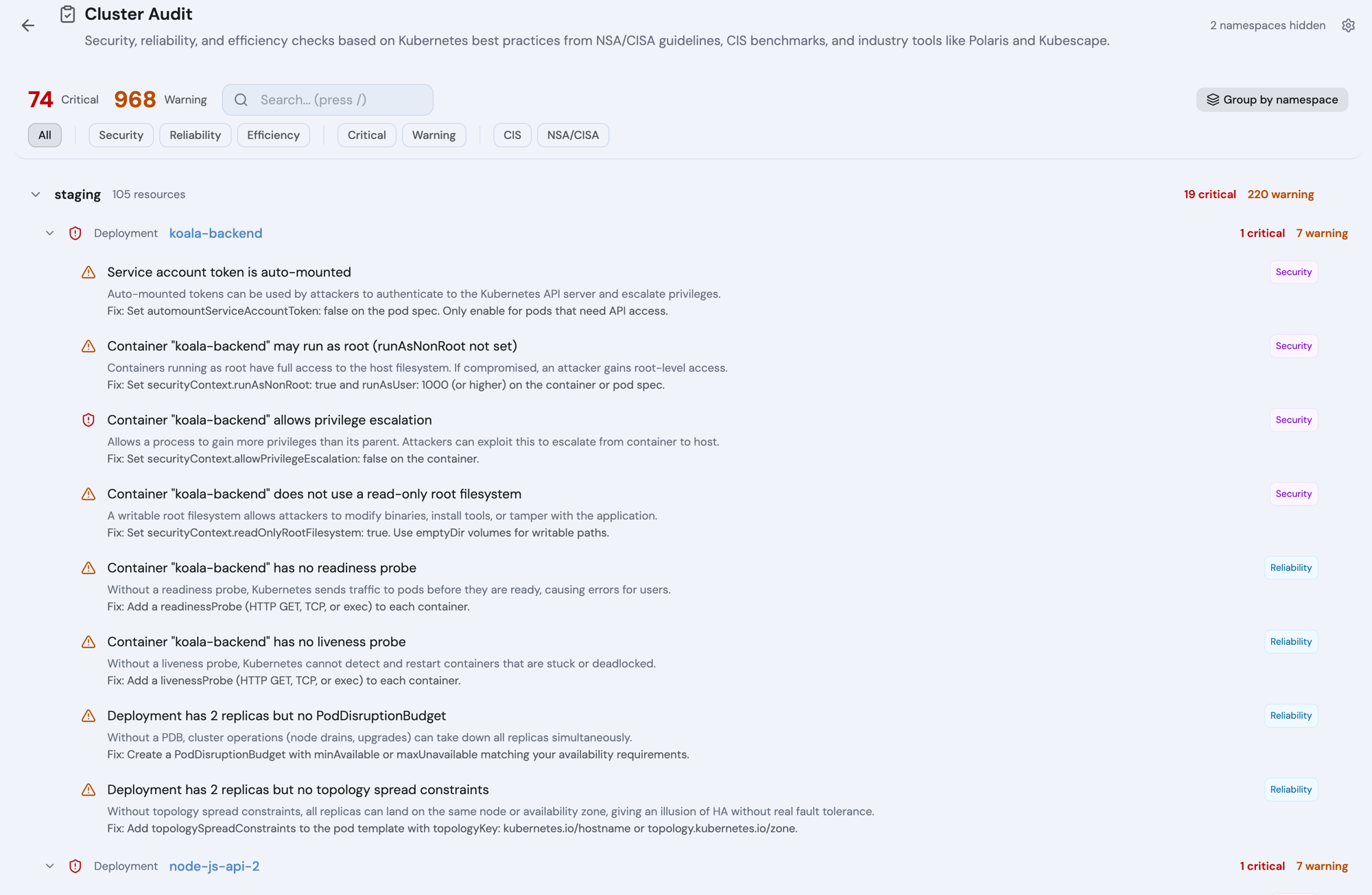
- Cluster audit: 31 best-practice checks across security, reliability, and efficiency, labeled to frameworks including NSA/CISA and CIS, each with remediation guidance.
- TLS certificate expiry monitoring and OpenCost-based cost insights.
Capabilities for AI agents
Radar includes a native Model Context Protocol (MCP) server that lets assistants such as Claude, Cursor, and Copilot query a cluster through Radar. Responses are pre-processed and token-optimized rather than raw YAML, and the read tools are read-only by default, so AI assistants receive useful cluster context without unsafe write access.
Open source and editions
The Radar engine is licensed under Apache 2.0, self-hostable with no node or cluster limits, and free to use, with no feature gates or license keys. Radar Cloud is a hosted tier that runs the same engine as a lightweight in-cluster agent and adds capabilities that a single binary cannot provide on its own: fleet aggregation across all clusters, single sign-on (Google, GitHub, SAML, OIDC), scoped role-based access, persistent audit-log retention with SIEM export, and routed alerts through Slack, PagerDuty, Microsoft Teams, and webhooks. Radar Cloud is priced per cluster rather than per user, offers a free tier for up to three clusters, and carries SOC 2 Type 2 across all plans.
Differentiators
- Serves both engineers and AI agents from one engine, rather than a UI alone.
- Zero cluster-side installation in local mode, with a live view available in roughly 30 seconds.
- Fully open-source core with no paywalled features.
- Per-cluster pricing on the hosted tier, so adding team members does not increase cost.
Categories & Use Cases
Screenshots




1 / 8
Screenshot of Radar opens a real-time web UI in about 30 seconds - no agents, no CRDs, no account required. See cluster health, resources, and activity from a single binary running on your laptop or in-cluster.
Technical Details
| Deployment Types | On-Premise, SaaS |
|---|---|
| Operating Systems | Windows |
| Mobile Application | No |
FAQs
How much does Radar by Skyhook cost?
Radar by Skyhook starts at $0.
What are Radar by Skyhook's top competitors?
Kubernetes Dashboard are common alternatives for Radar by Skyhook.