

Webhook Relay
What is Webhook Relay?
Webhook Relay is a webhook delivery and routing platform that ensures events from any source reach any destination — public URLs, private servers behind firewalls, Kubernetes clusters, or a developer's localhost — without requiring changes to network configuration, firewall rules, or NAT settings.
How It Works
Webhook Relay acts as a stable intermediary between webhook producers (Stripe, GitHub, Shopify, Bitbucket, and others) and the services that need to consume them. A lightweight agent installed inside Docker Compose, Kubernetes, or a bare server establishes an outbound connection to Relay's infrastructure. Incoming webhooks are received, optionally transformed, and forwarded inbound through that connection — meaning internal services never need a public IP or open port to receive live events.
Key Features
Durable Delivery & Retries — Every incoming webhook is persisted to durable storage on arrival. If a destination is temporarily unavailable, Relay retries with exponential backoff across four configurable windows: seconds (blips), hours (outages), days, or up to 30 days for destinations that may take longer to recover.
Fan-out Routing — A single incoming webhook can be forwarded to multiple destinations simultaneously, useful for teams that need the same event consumed by more than one service.
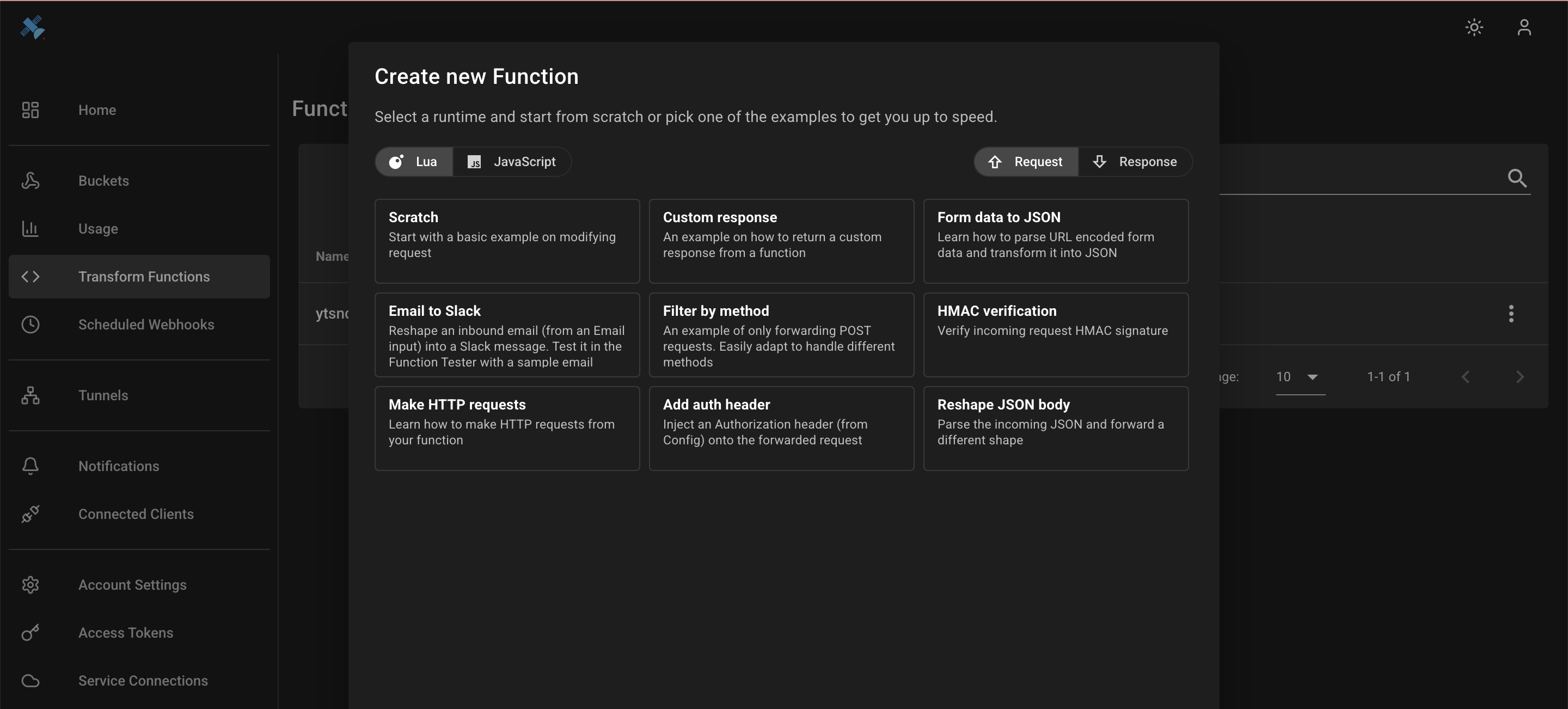
Payload Transformation — Webhooks can be reshaped before forwarding using built-in transformation rules or AI-assisted transformation, resolving mismatches between what a provider sends and what a downstream service expects.
Tunneling Without Exposure — Unlike general-purpose tunneling tools, Relay supports one-way traffic to internal services — events go in, responses don't come out — reducing the attack surface for services that shouldn't be publicly reachable.
CI/CD Integration — Purpose-built support for forwarding GitHub, Bitbucket, and other repository webhooks to self-hosted CI systems (Jenkins, Drone.io) with no public IP required.
Cloud Destinations — Native support for forwarding directly into AWS (S3, SQS, SNS), GCP (Pub/Sub, Cloud Storage), and Azure (Cosmos DB, Blob Storage).
Security & Compliance
Webhook Relay is SOC 2 Type II certified, with AES-256 encryption at rest and TLS in transit. Enterprise features include SSO/SAML with Okta and Azure AD, role-based access control, audit logs, and a self-hosted deployment option for organizations that require all payloads to remain on their own infrastructure.
Who Uses It
Webhook Relay can be used by individual developers, integration-heavy engineering teams, and enterprises managing webhook delivery at scale. Common use cases include local development and debugging, CI/CD pipeline triggers for private infrastructure, IoT device connectivity, and multi-destination event fan-out.
Categories & Use Cases
Screenshots

1 / 3
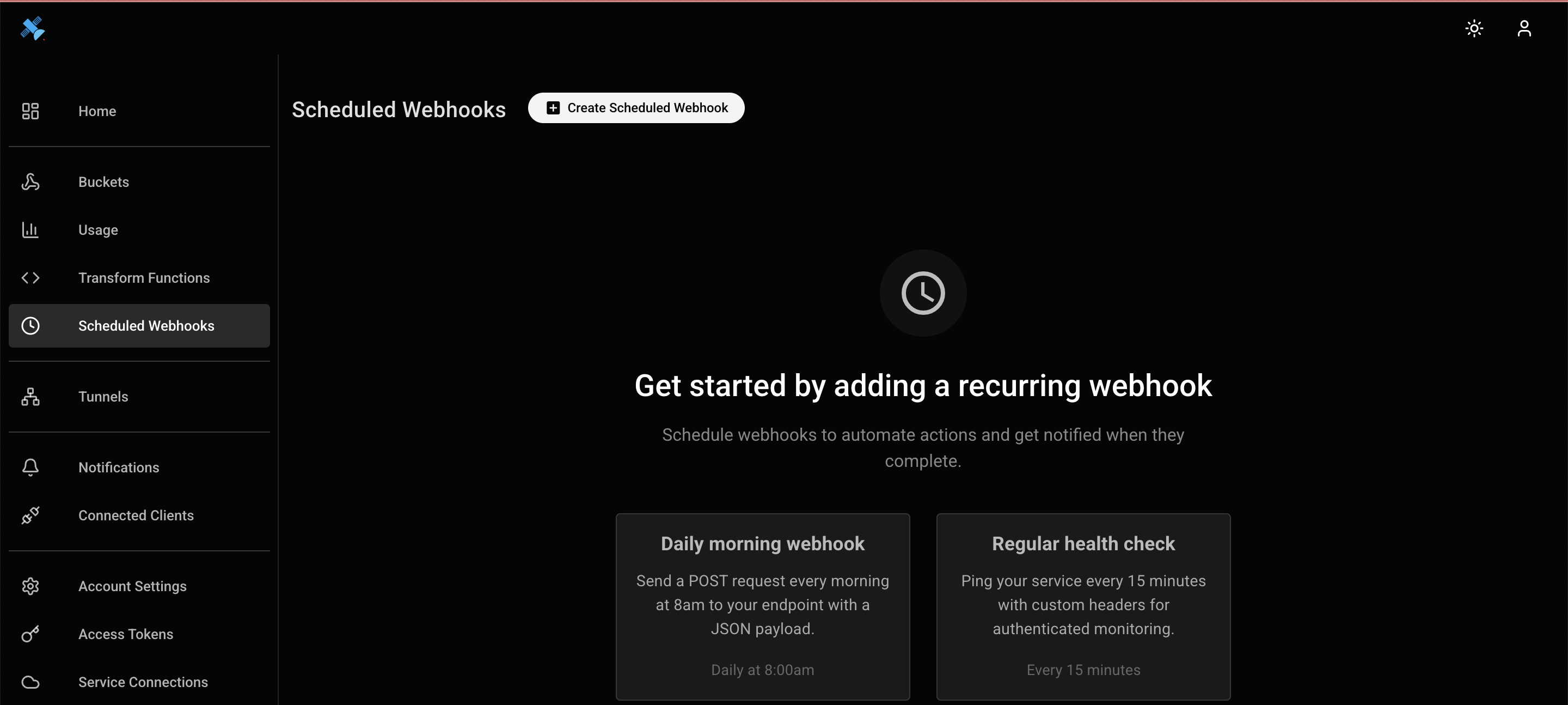
Screenshot of schedule recurring webhooks
Technical Details
| Deployment Types | On-Premise, SaaS |
|---|---|
| Operating Systems | Windows, Linux, Mac |
| Mobile Application | No |
| Supported Countries | Worldwide, except Russia |