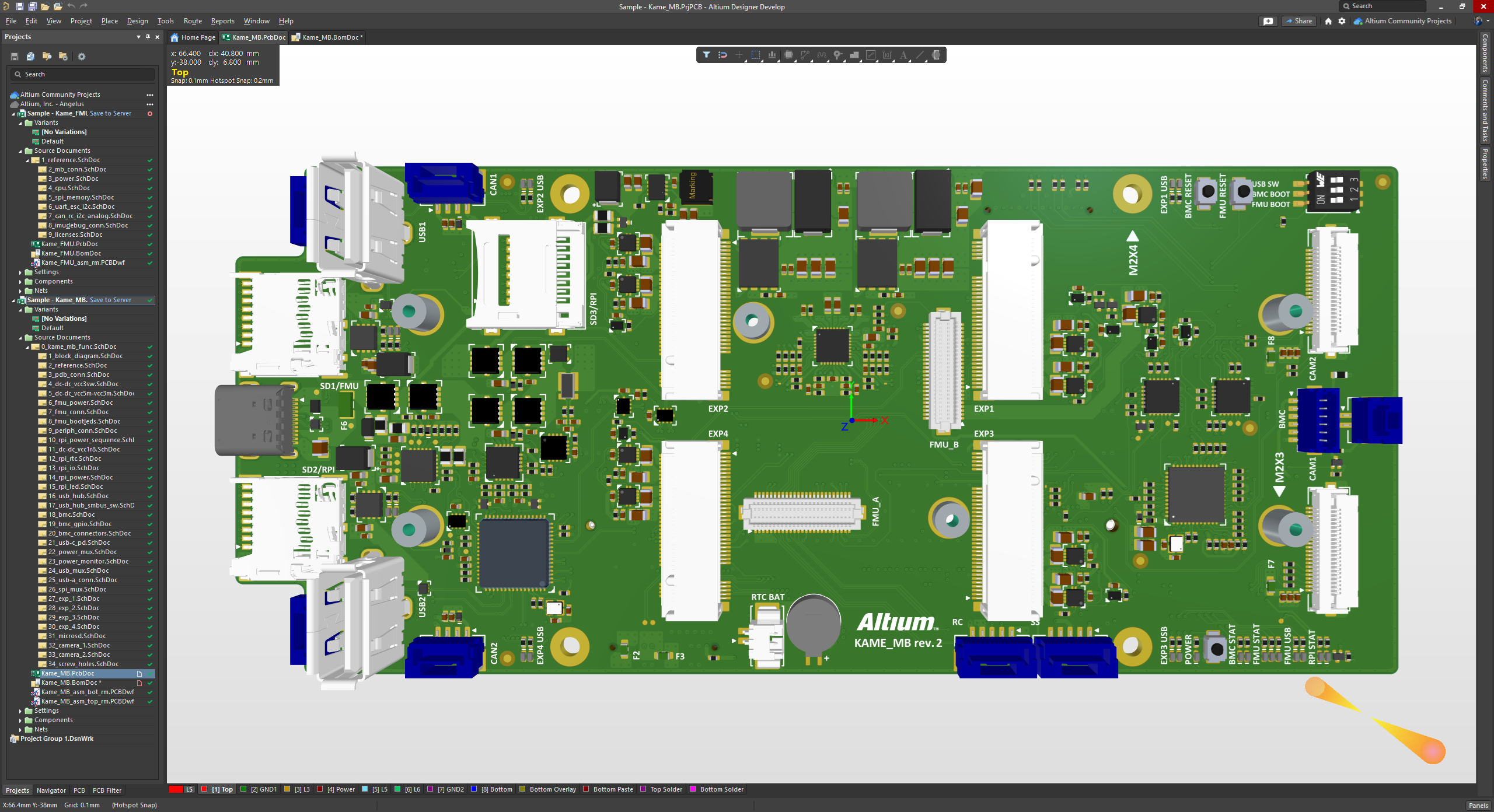
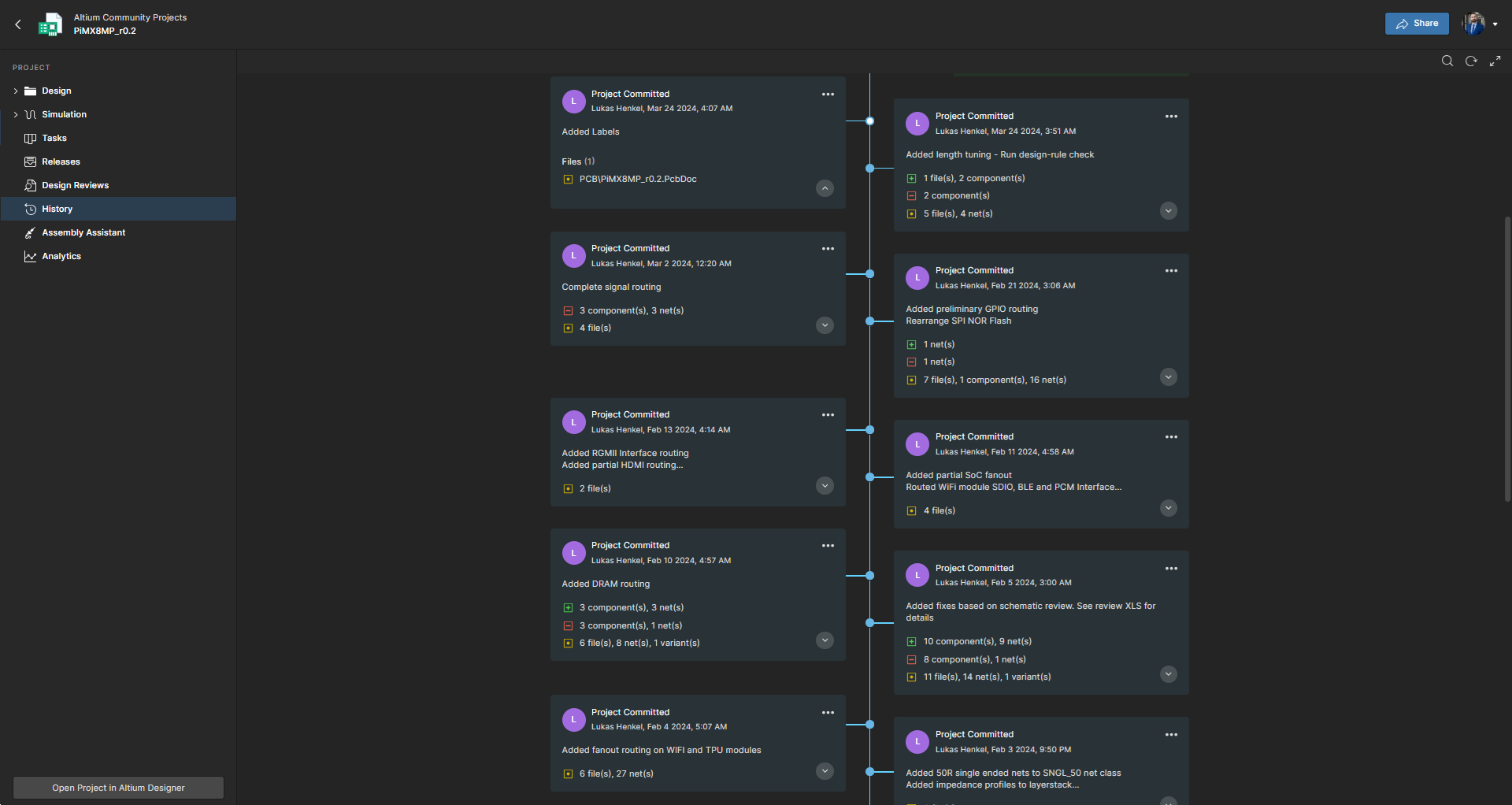
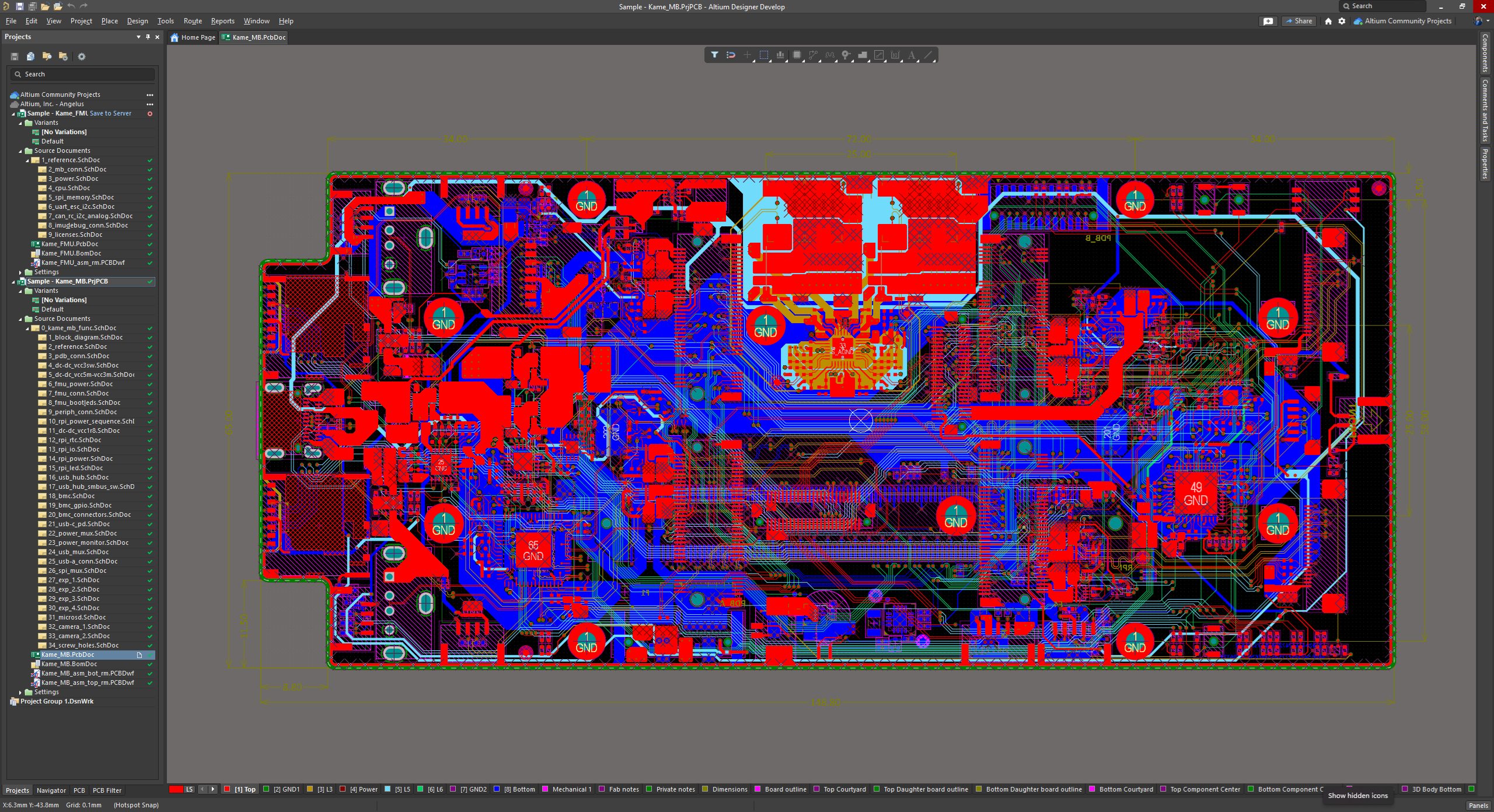
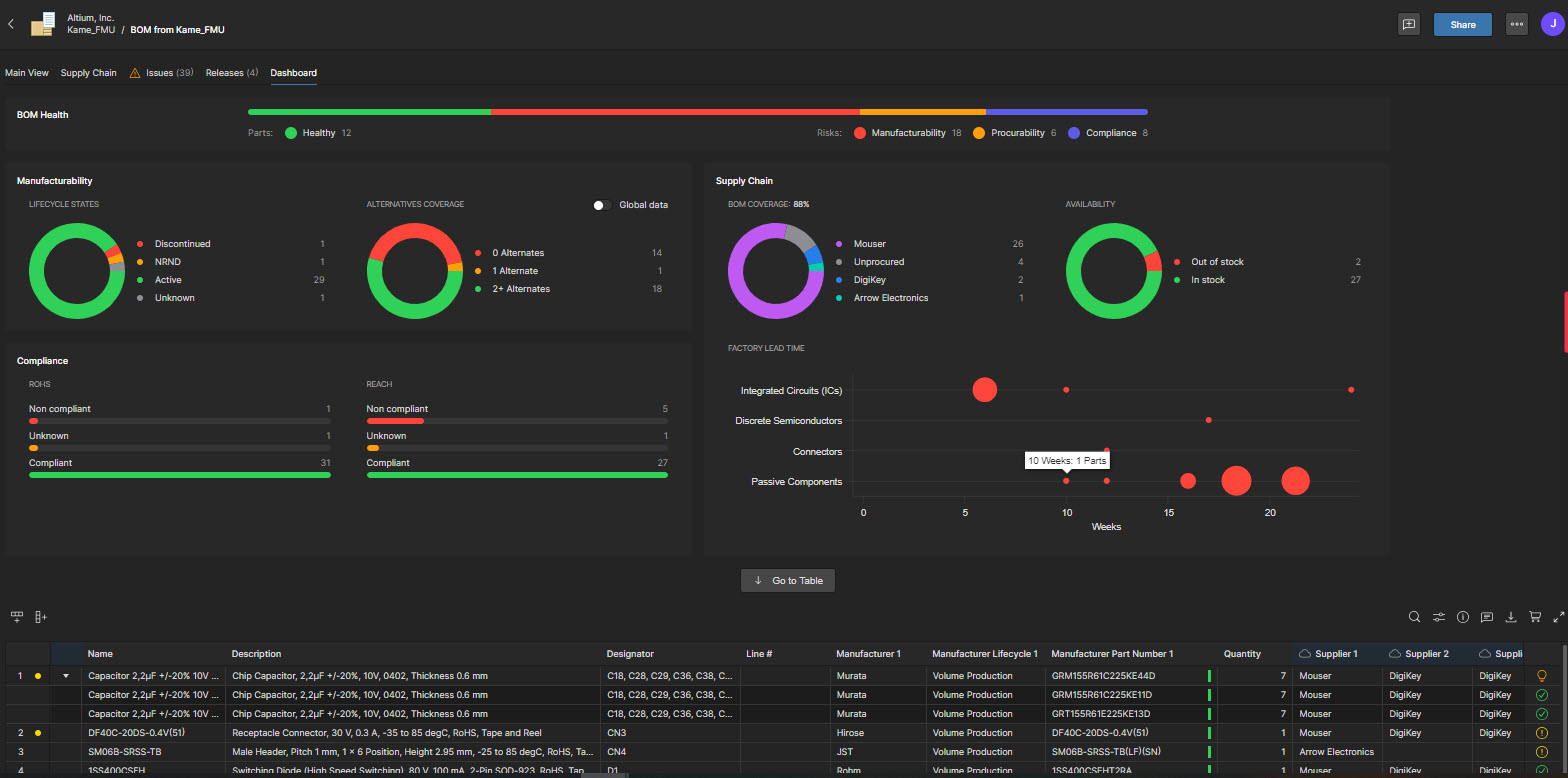
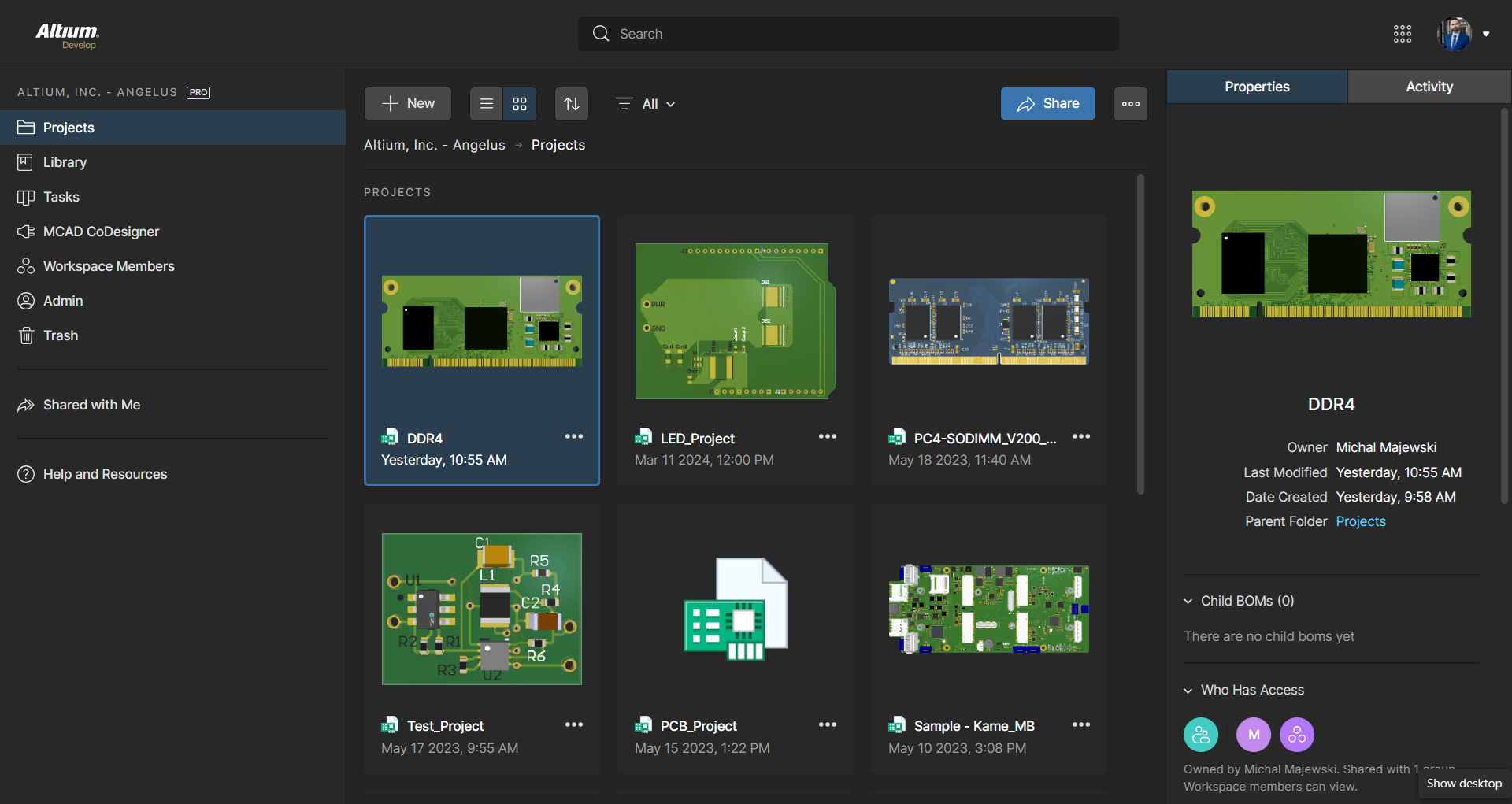
Altium Develop is a platform that unifies multidisciplinary teams across engineering, sourcing, and manufacturing to support seamless co-creation. It provides real-time visibility into designs, requirements, and supply chain data, enabling contributors to work together concurrently rather than in silos.
$1,990
per year
PTC Mathcad
Score 8.0 out of 10
N/A
PTC Mathcad Prime is a digital engineering notebook enabling engineers, mathematicians, and scientists to solve, analyze, document, and share their calculations. It helps users to solve problems accurately the first time numerically and/or symbolically, and then reuse important intellectual property with templates to save time on the next project.
$735
per year per seat
Tacton Design Automation
Score 9.0 out of 10
N/A
Tacton
Design Automation provides constraint-based and parametric engineer-to-order
automation inside SolidWorks, PTC CREO and Autodesk Inventor. With needs-driven design, CAD engineers can configure designs of complex products – including feedback on incompatible
choices - and automatically generate complete 2D drawings, 3D models and quote
documents. The configurator-powered Tacton Design Automation is designed to propose a solution that's not just buildable, but optimal for the…
N/A
Pricing
Altium Develop
PTC Mathcad
Tacton Design Automation
Editions & Modules
No answers on this topic
Mathcad Prime 10 License
$735
per year
No answers on this topic
Offerings
Pricing Offerings
Altium Develop
PTC Mathcad
Tacton Design Automation
Free Trial
Yes
Yes
No
Free/Freemium Version
No
Yes
No
Premium Consulting/Integration Services
No
No
No
Entry-level Setup Fee
No setup fee
No setup fee
No setup fee
Additional Details
Altium Develop is offered as an annual subscription starting at $1,990 per year, which includes one Altium Designer ECAD Design Author and a shared workspace for projects, libraries, and collaboration. The subscription provides unlimited workspace users at no additional cost, enabling broad participation in reviews, commenting, task management, BOM access, and change workflows.
Teams can add up to four additional Altium Designer ECAD Design Authors for $995 per Author per year, allowing organizations to scale active design capacity while keeping contributors and collaborators included at no extra charge.
It's the most approachable "professional" package for small to medium-sized businesses, given the price point. It's fairly mature feature-wise and has improved stability enough over the last 5 years that it no longer constantly crashes. But it feels like there's a push to constantly increase prices until it's no longer an obvious choice. That, coupled with the insistence on subscription models and the terrible user experience when on poorly connected mobile data plans, means it's still my CAD package of choice, but I'm now a reluctant user rather than a fan.
It is great for any manual calculation. You can lay it out as you would on paper, but the math is calculated instantly, similar to how it is in excel. It is superior to either method for most engineering calculations. Being able to copy-and-paste is very helpful for considering multiple scenarios. In some situations where you need to do the same calculation on an array of numbers, Excel is still faster.
For design automation for SOLIDWORKS, I feel Tacton Design Automation is the best solution out there. It's simple to develop and implement for the design/engineering department. But can be implemented within the sales team as well with Tacton CPQ. When a company has products that are modular and/or have many sizing updates, this is where Tacton excels. If you have products that are completely customized, then Tacton or even design automation isn't the best suited for that.
Tacton has a non-linear solver, meaning it can solve lots of equations without them being is a particular order. This enables the software to be incredibly flexible.
Tacton has a great interface to set up configurators for people to use. No knowledge of programming languages is required. The configurator uses equations similar to Excel equations to control what the users options are.
Tacton has the ability to easily add lists of data like product lists, beam or pipe sizes that because available for user selections or for calculations.
The Tacton configurator also automatically builds the user interface as you set up user inputs making it much easier to set up then competitor software.
It is difficult to create new components while reusing existing footprints/symbols. For example, reuse a 1206 package footprint, create a variant for resistors with an appropriate 3D model, and then a variant for capacitors with an appropriate 3D model.
The software's overall responsiveness seems slow, and it does not update properly in all instances. For example, clicking a component in the schematic will not always show its properties; it usually shows the properties of the last selected component. Clicking the blank space in the schematic first, then selecting the component, seems to load some of the correct data. But the 3D model in the properties view would still show the last EDITED part.
Saving components to the server would not always register correctly, requiring the component editor to be closed 'without saving' to close the part out, even though no changes were made since the last save to the server.
It is unclear where a list of footprints/symbols can be managed. For example, deleting a deprecated footprint so that it does not appear as a valid option in the future.
BOM part choice data has an NRFND component selected as in use, causing the status to be yellow. There is no apparent way to select a different manufacturer part as the 'in use' part to resolve the warning.
Updating from the library does not pull the most up-to-date symbol/footprint data for a given component. So far, there does not appear to be a way to do this, even though the component itself has been updated to use the correct references. This may be related to the general delays and consistency/reliability issues with the online link.
Layout mode is probably the most lacking aspect of the software (within Tacon Design Automation Engineer). Something so powerful as having modular parts should be more heavily supported. Although, I've heard Tacton is focusing on updating this with better functionality.
The constraint editor does not display complex/lengthy constraints very well. I end up using Excel to visually break out in cells the different aspects of the constraint.
ALTIUM DESIGNER is the reference tool in the electronic circuit design sector, its use is widespread worldwide. Although there are other alternatives, some of them free do not rival ALTIUM DESIGNER in terms of features and reliability. It is also very practical to request quotes with ALTIUM DESIGNER BOM reports since all suppliers are accustomed to using the tool.
I originally chose Altium Develop for its superior usability. All operations being handled in one cohesive platform greatly improves efficiency. When handling many different designs, project setup and component creation eat into every project's productivity. Templates, defaults and design reuse all speed up design. I hold back from a higher rating because development focus on those usability features seems to have stagnated a bit. Simple missing features requested seem to remain missing. New collaboration features, simulation and sourcing features are released, but I just want to be able to draw dashed lines! I think this reflects a general focus on the 10% of datacenter/AI/smartphone customers over the 90% of 2-4 layer designs. The lack of information available during the platform transition gave me significant pause before buying in as well.
Higher-order math, despite symbolics, become tedious and variable nomenclature isn't as forgiving as other programs. Due to it's sheet-like nature, the greater the complexity the more bothersome the screen usage becomes. But it's a trade-off between a sketchpad-like interface or lines and lines of code. Pick your poison but MathCad was our choice.
In terms of collaborative work, Altium 365 is the easiest to use since KiCad nor OrCAD have sophisticated infrastructure for team members to interact with each other. By allowing features such as organizations and version control, Altium 365 is by far the best product for collaborative work. Additionally, electronics parts management and creation is better in Altium 365 than the other products. Actions such as importing schematic libraries, creating bills of materials, and conducting simulations are simply better in Altium 365.
MathCAD is easier to learn and faster to start with. It has more user-friendly interface and conventional style toolbox and GUI. It is really good for the beginners and those who are afraid of complex math.
Drive Works is the main competitor for the TactonWorks module of Tacton. We actually discovered DriveWorks and purchased it before we discovered Tacton and started to use it. Once we discovered Tacton we liked it so much better we dropped using DriveWorks and switched to Tacton. I think you could accomplish what you need to in DriveWorks, but it is easier to setup in Tacton and Tacton has alot of features that really can make your product configurators nice
Time to produce submittals went from 1-2 weeks down to a couple of days. Then, once approved, normally to produce the fabrication drawings (70+ unique parts) it would take from 4-6 weeks. We can get it down to as little as a few days.