Amazon Elastic Load Balancing vs. F5 Distributed Cloud DNS

Overview
ProductRatingMost Used ByProduct SummaryStarting Price
Elastic Load Balancing
Score 9.2 out of 10
N/A
Amazon's Elastic Load Balancing automatically distributes incoming application traffic across multiple targets, such as Amazon EC2 instances, containers, IP addresses, and Lambda functions. It can handle the varying load of your application traffic in a single Availability Zone or across multiple Availability Zones. Elastic Load Balancing offers three types of load balancers with the vendor states all feature the high availability, automatic scaling, and robust security necessary to make…
$0.01
Partial Hour
F5 Distributed Cloud DNS
Score 8.1 out of 10
N/A
More than 75% of enterprises today operate in multiple clouds, according to the 2022 F5 State of Application Strategy Report. But a much smaller percentage are known to have implemented a cloud-based DNS (Domain Name System), which offers considerable speed and performance benefits for publishing applications. Why? It is because extending traditional DNS to all their applications across different environments, especially those running in the cloud, can be time-consuming and…N/A
Pricing
Amazon Elastic Load BalancingF5 Distributed Cloud DNS
Editions & Modules
Gateway
$0.0125
Partial Hour
Application
$0.0225
Partial Hour
Network
$0.025
Partial Hour
No answers on this topic
Offerings
Pricing Offerings
Elastic Load BalancingF5 Distributed Cloud DNS
Free Trial
NoYes
Free/Freemium Version
NoYes
Premium Consulting/Integration Services
NoNo
Entry-level Setup FeeNo setup feeOptional
Additional Details
More Pricing Information
Community Pulse
Amazon Elastic Load BalancingF5 Distributed Cloud DNS
Best Alternatives
Amazon Elastic Load BalancingF5 Distributed Cloud DNS
Small Businesses
Cloudflare
Cloudflare
Score 8.9 out of 10
Cloudflare
Cloudflare
Score 8.9 out of 10
Medium-sized Companies
Cloudflare
Cloudflare
Score 8.9 out of 10
Cloudflare
Cloudflare
Score 8.9 out of 10
Enterprises
NGINX
NGINX
Score 9.8 out of 10
NGINX
NGINX
Score 9.8 out of 10
All AlternativesView all alternativesView all alternatives
User Ratings
Amazon Elastic Load BalancingF5 Distributed Cloud DNS
Likelihood to Recommend
8.5
(4 ratings)
8.2
(1 ratings)
Usability
7.0
(1 ratings)
9.1
(1 ratings)
Support Rating
7.0
(1 ratings)
-
(0 ratings)
User Testimonials
Amazon Elastic Load BalancingF5 Distributed Cloud DNS
Likelihood to Recommend
Amazon AWS
We use Amazon Elastic Load Balancers to serve mobile applications and websites. It works really well. We have not had any problems until now. Last year we integrated the AWS ELB with the EC2 Auto Scaling and now we have a fully working elastic solution. We increase/decrease EC2s instances based on traffic over our load balancers.
Read full review
F5
Probably less appropriate for smaller, very small IT departments, but more suited like when you're doing migrations to the cloud. If it is going to be doing setups for DNS within the cloud, this will let you help you set it up so there's no loss of communication between the two.
Read full review
Pros
Amazon AWS
  • Most obviously it works great for routing traffic between components hosted on Amazon web services
  • The ability to dynamically spin up connections is fantastic.
  • In general the ease of use and configuration is a selling point.
Read full review
F5
  • I think probably the UI, it's very easily you could scan through and select what you're going to do, and it's kind of similar of the functionality when you compare it to say the Oracle Cloud. So you can go side by side with the windows and then just go through these level when you're going to sell like a new DNS or a new opening on that.
Read full review
Cons
Amazon AWS
  • Occasionally we have a huge number of users using our network at once, and Amazon ELB isn't quite fast enough to scale effectively when that occurs. But this doesn't happen very often as our usage is usually quite stable
  • If we want to add another application to our learning suite, we would have to add another load balancer, which would incur additional cost
  • The setup was not easy and could really only be handled by one person on our team with the technical background to do so
Read full review
F5
  • Probably more like AI suggested customizations, like when you do something and then have something like in the background of the AI. When you start doing something, it'll show you what you previously have done and then you could select, you wouldn't have to go through the whole steps over again. It'll say this is what you've done before, do you want to do a copy? And then just modify a couple of things so you don't have to go through the whole process.
Read full review
Usability
Amazon AWS
AWS Elastic Load Balancing has this trick. First, you need to know how it works. ELB is not the only piece here. ELB has a very close relation with AWS Target Groups. You create or select a target group every time you create a Load balancer. Target groups allow you to connect the load balancer to EC2 autoscaling groups, Lambda functions, or even a single EC2 instance. While this sounds complex, it becomes easy, once you know his tricks. Thanks to the user interface, managing a ELB is an easy task. The rules editor is really useful, although it will need a bit of improvement to some interface items
Read full review
F5
Very user friendly.
Read full review
Support Rating
Amazon AWS
AWS gives you several support plans. On the free plan, you basicaly need to google for help, but the good news is that AWS Elastic Load Balancing works. We has more than 15 load balancers and we never run into a problem that require support. But you mght consider a support plan if you are going to do something more complex or critical
Read full review
F5
No answers on this topic
Alternatives Considered
Amazon AWS
We have not used any other solution out there in the market but our dev-ops team did deep research and AWS provided us the solution we needed to be cost-effective. Also, the decision to keep working with Amazon was strategic. We were already using other AWS features and [Amazon Elastic Load Balancing] integrates great with those.
Read full review
F5
No answers on this topic
Return on Investment
Amazon AWS
  • Currently it is too soon to say for sure what kind of impact this will have.
  • The ideal goal is that this will be cheaper than having to host our own routing on site.
Read full review
F5
  • I guess positive because we know when we're going to open up, say a DNS or anything, or we're going to have to set something up. We can do it quick and fast instead of having to wait longer for the different steps of how we used to do it before.
Read full review
ScreenShots

F5 Distributed Cloud DNS Screenshots
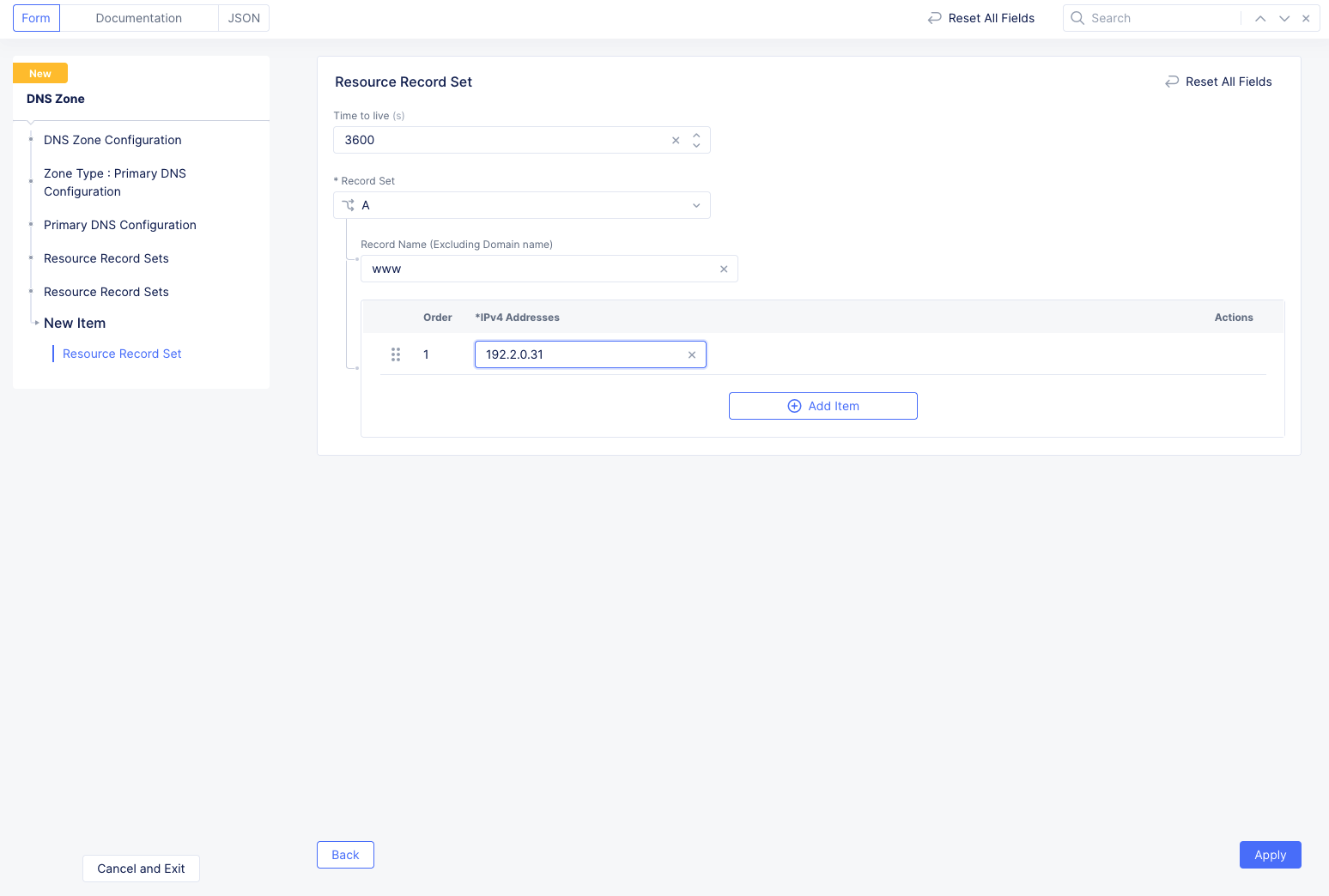
Screenshot of Screenshot of Screenshot of Screenshot of