Anaconda is an enterprise Python platform that provides access to open-source Python and R packages used in AI, data science, and machine learning. These enterprise-grade solutions are used by corporate, research, and academic institutions for competitive advantage and research.
$0
per month
IBM watsonx.governance
Score 8.7 out of 10
N/A
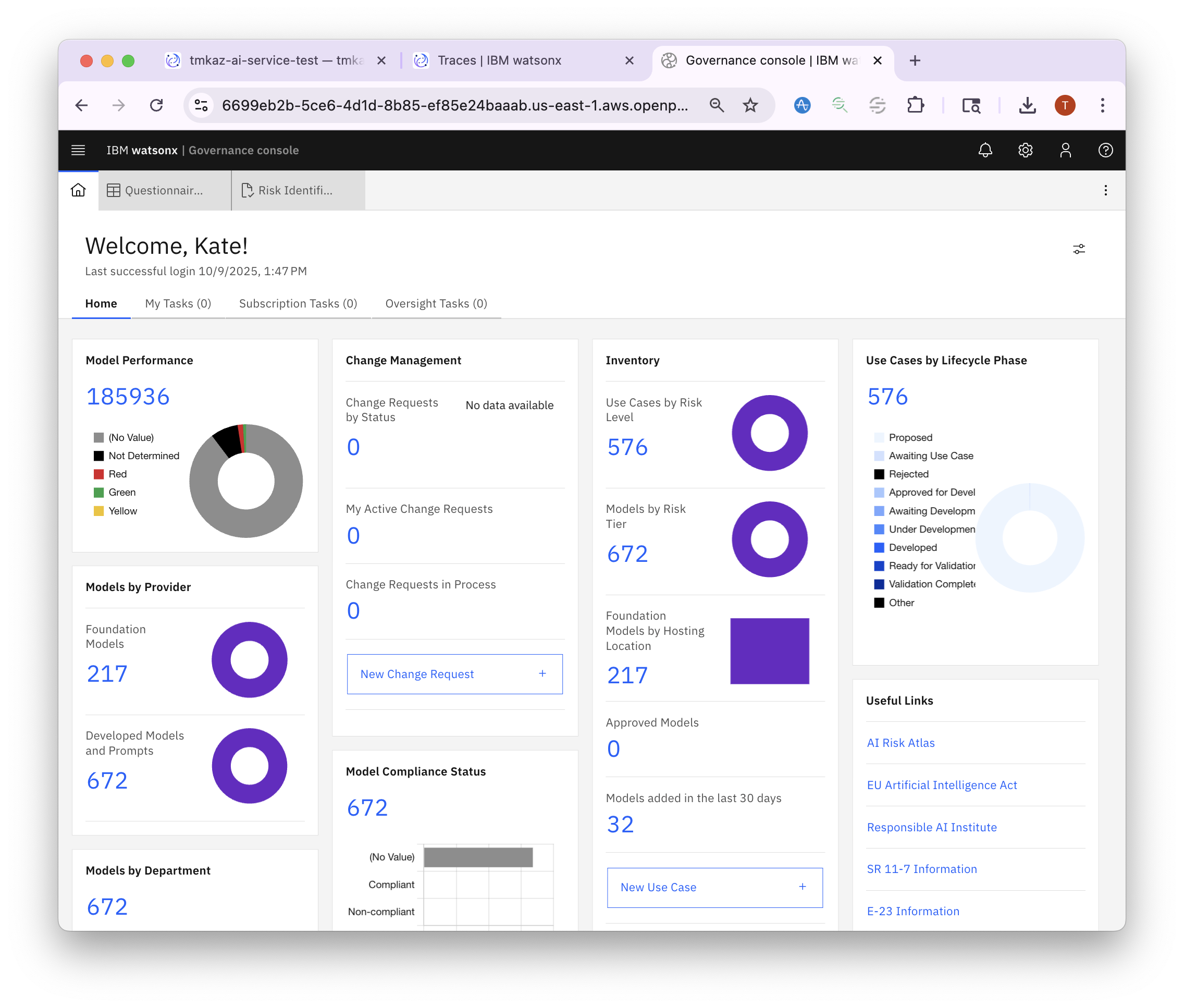
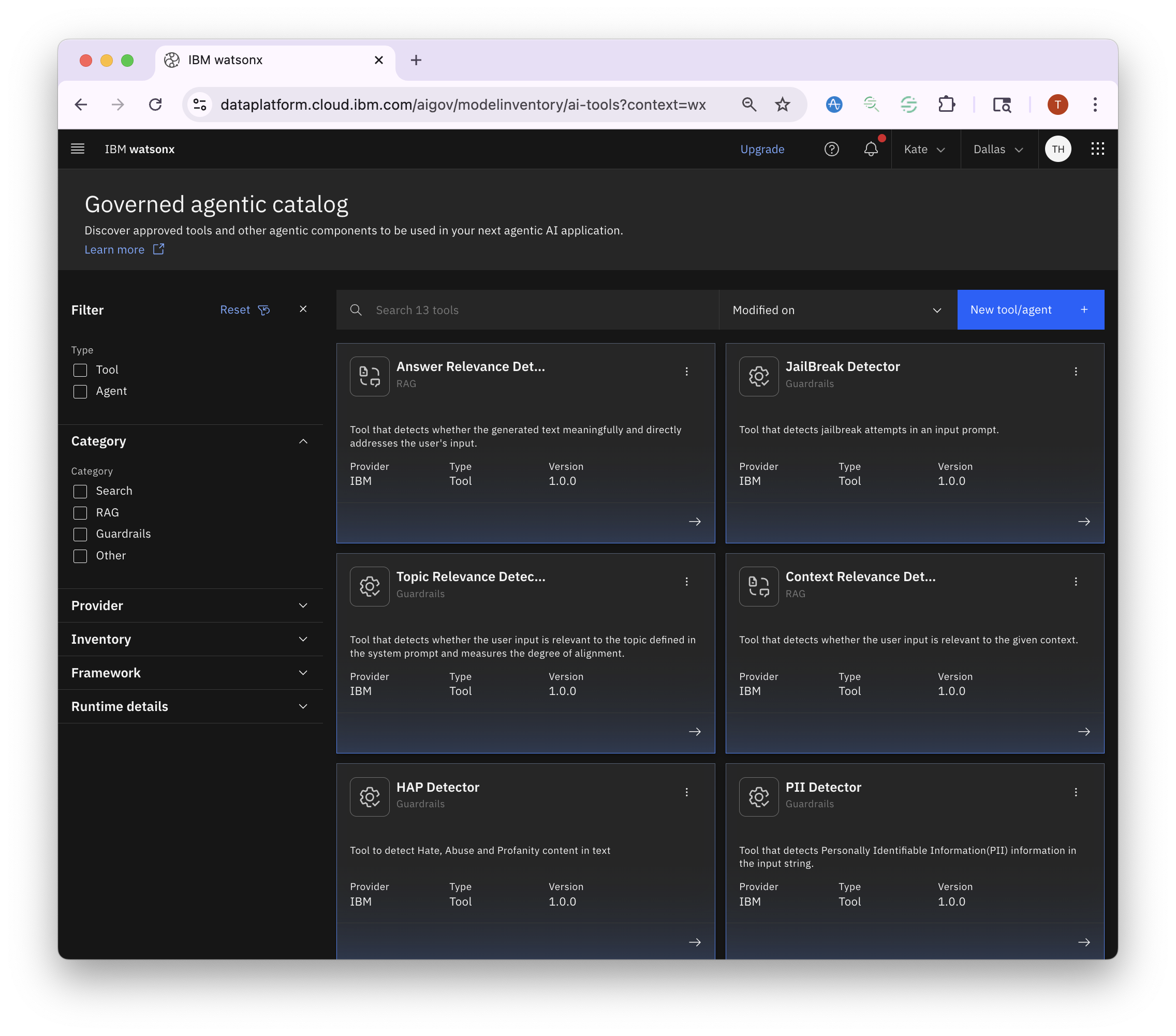
The more AI is embedded into daily workflows, the more proactive governance is required to drive responsible, ethical decisions across the business. Watsonx.governance is used to direct, manage, and monitor an organization’s AI activities, and employs software automation to strengthen the user's ability to mitigate risk, manage regulatory requirements and address ethical concerns without the excessive costs of switching data science platforms—even for models developed using third-party tools.
N/A
Pricing
Anaconda
IBM watsonx.governance
Editions & Modules
Free Tier
$0
per month
Starter Tier
$15
per month per user
Business
$50
per month per user
Custom
Contact Sales
No answers on this topic
Offerings
Pricing Offerings
Anaconda
IBM watsonx.governance
Free Trial
No
Yes
Free/Freemium Version
Yes
No
Premium Consulting/Integration Services
Yes
No
Entry-level Setup Fee
No setup fee
No setup fee
Additional Details
Users within organizations with 200+ employees/contractors (including Affiliates) require a paid Business license. Academic and non-profit research institutions may qualify for exemptions.
I have asked all my juniors to work with Anaconda and Pycharm only, as this is the best combination for now. Coming to use cases: 1. When you have multiple applications using multiple Python variants, it is a really good tool instead of Venv (I never like it). 2. If you have to work on multiple tools and you are someone who needs to work on data analytics, development, and machine learning, this is good. 3. If you have to work with both R and Python, then also this is a good tool, and it provides support for both.
We have been able to make the right decisions based on performance metrics. Data assets across the enterprise have experienced significant growth from comprehensive audits that drive quality growth. The platform has filtered out poorly analyzed data from the workflow chain and introduced stable control mechanisms that meet compliance policies.
Anaconda is a one-stop destination for important data science and programming tools such as Jupyter, Spider, R etc.
Anaconda command prompt gave flexibility to use and install multiple libraries in Python easily.
Jupyter Notebook, a famous Anaconda product is still one of the best and easy to use product for students like me out there who want to practice coding without spending too much money.
I used R Studio for building Machine Learning models, Many times when I tried to run the entire code together the software would crash. It would lead to loss of data and changes I made.
It's really good at data processing, but needs to grow more in publishing in a way that a non-programmer can interact with. It also introduces confusion for programmers that are familiar with normal Python processes which are slightly different in Anaconda such as virtualenvs.
I am giving this rating because I have been using this tool since 2017, and I was in college at that time. Initially, I hesitated to use it as I was not very aware of the workings of Python and how difficult it is to manage its dependency from project to project. Anaconda really helped me with that. The first machine-learning model that I deployed on the Live server was with Anaconda only. It was so managed that I only installed libraries from the requirement.txt file, and it started working. There was no need to manually install cuda or tensor flow as it was a very difficult job at that time. Graphical data modeling also provides tools for it, and they can be easily saved to the system and used anywhere.
Research data can be handled and governed more effectively to save time and minimize errors. Practical learning helps students become more marketable to employers by giving them practical experience with industry-standard tools. Updates content on AI governance in courses to make them more appealing to students. Lowers the time needed to manually check for biases, increasing the validity of research findings.
Anaconda provides fast support, and a large number of users moderate its online community. This enables any questions you may have to be answered in a timely fashion, regardless of the topic. The fact that it is based in a Python environment only adds to the size of the online community.
I have experience using RStudio oustide of Anaconda. RStudio can be installed via anaconda, but I like to use RStudio separate from Anaconda when I am worin in R. I tend to use Anaconda for python and RStudio for working in R. Although installing libraries and packages can sometimes be tricky with both RStudio and Anaconda, I like installing R packages via RStudio. However, for anything python-related, Anaconda is my go to!
With its smooth integrations with different AI models and strong compliance tools, IBM watsonx.governance leads in comprehensive data governance. IBM watsonx.governance provides a well-balanced combination of governance, compliance, and integration capabilities in contrast to Dataiku, which concentrates more on data science workflows, and Holistic AI, which stresses AI ethics and risk management. That was my choice because of its robust integration features and comprehensive approach.
It has helped our organization to work collectively faster by using Anaconda's collaborative capabilities and adding other collaboration tools over.
By having an easy access and immediate use of libraries, developing times has decreased more than 20 %
There's an enormous data scientist shortage. Since Anaconda is very easy to use, we have to be able to convert several professionals into the data scientist. This is especially true for an economist, and this my case. I convert myself to Data Scientist thanks to my econometrics knowledge applied with Anaconda.
It has massively cut down the time our compliance teams spent on preparing compliance packs for EU emissions report. We're talking 4 weeks of manual tracing and spreadsheet validations to just under 3 days now!
IBM watsonx.governance flags anomalies in shipping data 2 weeks earlier than our older system, saving us thousands by renegotiating contracts before spot prices rise