
AWS Config vs. AWS OpsWorks vs. Microsoft Defender for Cloud
AWS Config vs. AWS OpsWorks vs. Microsoft Defender for Cloud
| Product | Rating | Most Used By | Product Summary | Starting Price |
|---|---|---|---|---|
 AWS Config | N/A | Amazon Web Services offers AWS Config, a service that provides monitoring and assessment of AWS resource configurations to support compliance auditing, change management and troubleshooting, with resource histories and comparison of historical configurations against planned configurations. | N/A | |
AWS OpsWorks | N/A | AWS OpsWorks is a configuration management service that provides managed instances of Chef and Puppet. | N/A | |
 Microsoft Defender for Cloud | N/A | Microsoft Defender for Cloud is a Cloud Security Posture Management (CSPM) and Cloud Workload Protection Platform (CWPP) for Azure, on-premises, and multicloud (Amazon AWS and Google GCP) resources. | N/A |
| AWS Config | AWS OpsWorks | Microsoft Defender for Cloud | ||||||||||||||||||||||
|---|---|---|---|---|---|---|---|---|---|---|---|---|---|---|---|---|---|---|---|---|---|---|---|---|
| Editions & Modules | No answers on this topic | No answers on this topic | No answers on this topic | |||||||||||||||||||||
| Offerings |
| |||||||||||||||||||||||
| Entry-level Setup Fee | No setup fee | No setup fee | No setup fee | |||||||||||||||||||||
| Additional Details | With AWS Config, you are charged based on the number of configuration items recorded, the number of active AWS Config rule evaluations and the number of conformance pack evaluations in your account. A configuration item is a record of the configuration state of a resource in your AWS account. An AWS Config rule evaluation is a compliance state evaluation of a resource by an AWS Config rule in your AWS account, and a conformance pack evaluation is the evaluation of a resource by an AWS Config rule within the conformance pack. | — | — | |||||||||||||||||||||
| More Pricing Information | ||||||||||||||||||||||||
| AWS Config | AWS OpsWorks | Microsoft Defender for Cloud |
|---|
| AWS Config | AWS OpsWorks | Microsoft Defender for Cloud | |
|---|---|---|---|
| Small Businesses |  HashiCorp Terraform Score 8.8 out of 10 | HashiCorp Terraform Score 8.8 out of 10 | No answers on this topic |
| Medium-sized Companies |  Ansible Score 9.2 out of 10 | Ansible Score 9.2 out of 10 |  CrowdStrike Falcon Score 9.1 out of 10 |
| Enterprises | Ansible Score 9.2 out of 10 | Ansible Score 9.2 out of 10 | CrowdStrike Falcon Score 9.1 out of 10 |
| All Alternatives | View all alternatives | View all alternatives | View all alternatives |
| AWS Config | AWS OpsWorks | Microsoft Defender for Cloud | |
|---|---|---|---|
| Likelihood to Recommend | 8.8 (6 ratings) | 6.0 (3 ratings) | 8.1 (56 ratings) |
| Likelihood to Renew | - (0 ratings) | - (0 ratings) | 8.9 (4 ratings) |
| Usability | - (0 ratings) | - (0 ratings) | 8.2 (2 ratings) |
| Performance | 9.6 (2 ratings) | - (0 ratings) | - (0 ratings) |
| Support Rating | - (0 ratings) | 6.0 (1 ratings) | - (0 ratings) |
| Ease of integration | 6.2 (2 ratings) | - (0 ratings) | - (0 ratings) |
| AWS Config | AWS OpsWorks | Microsoft Defender for Cloud | |
|---|---|---|---|
| Likelihood to Recommend |  Amazon AWS
| Amazon AWS
 Andrew Raines Backend Software Engineer | Microsoft
|
| Pros | Amazon AWS
| Amazon AWS
| Microsoft
|
| Cons | Amazon AWS
| Amazon AWS
| Microsoft
|
| Likelihood to Renew | Amazon AWS No answers on this topic | Amazon AWS No answers on this topic | Microsoft
|
| Usability | Amazon AWS No answers on this topic | Amazon AWS No answers on this topic | Microsoft
|
| Performance | Amazon AWS
| Amazon AWS No answers on this topic | Microsoft No answers on this topic |
| Support Rating | Amazon AWS No answers on this topic | Amazon AWS
| Microsoft No answers on this topic |
| Alternatives Considered | Amazon AWS
| Amazon AWS
Andrew Raines Backend Software Engineer | Microsoft
|
| Return on Investment | Amazon AWS
| Amazon AWS
| Microsoft
|
| ScreenShots | Microsoft Defender for Cloud Screenshots   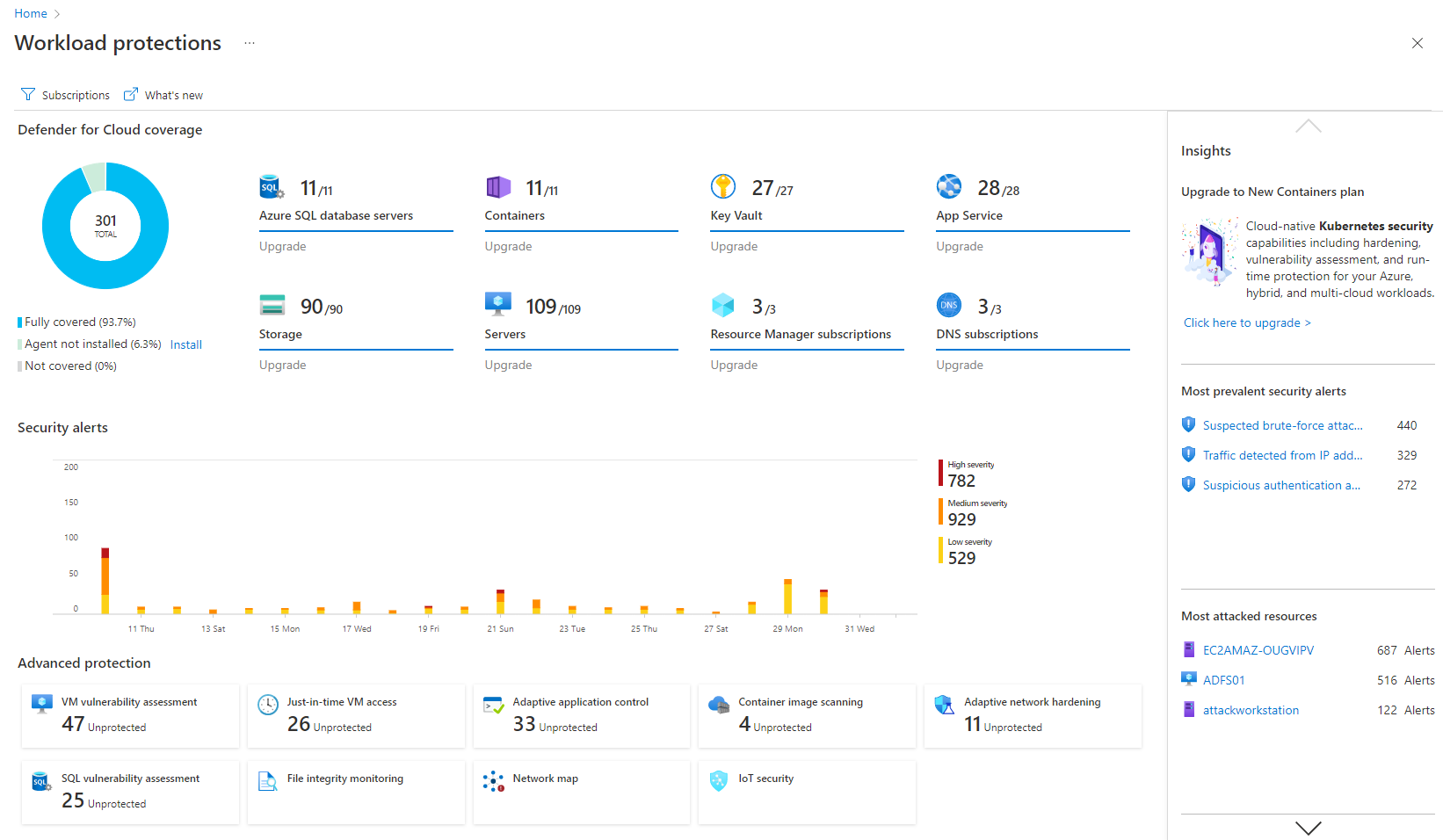   |