
Flowgear vs. WSO2 API Platform
| Product | Rating | Most Used By | Product Summary | Starting Price |
|---|---|---|---|---|
 Flowgear | Score9 out of 10 | N/A | Flowgear is an integration platform that enables organizations to build and manage application, data, and API integrations across cloud and on-premise environments from a single interface. The platform supports both technical and non-technical users, allowing teams to create, edit, and maintain enterprise-grade integrations for internal systems, customers, and partners. Flowgear provides a code-free, drag-and-drop visual designer with a library of prebuilt… | $17,988 per year |
 WSO2 API Platform | Score9.4 out of 10 | Enterprise companies (1,001+ employees) | WSO2 API Manager makes it possible for developers to both develop and manage APIs of different types. Unlike solutions which focus only on managing API proxies, WSO2 API Manager provides tools to develop APIs by integrating different systems as well. It supports a variety of API types from REST, SOAP, GraphQL, WebSockets, WebHooks, SSEs and gRPC APIs with specialized policies and governance for each different type. Being fully open source, its architecture and extensibility… | $0 per month |
| Flowgear | WSO2 API Platform | |||||||||||||||
|---|---|---|---|---|---|---|---|---|---|---|---|---|---|---|---|---|
| Editions & Modules |
| No answers on this topic | ||||||||||||||
| Offerings |
| |||||||||||||||
| Entry-level Setup Fee | Optional | No setup fee | ||||||||||||||
| Additional Details | — | — | ||||||||||||||
| More Pricing Information | ||||||||||||||||
| Flowgear | WSO2 API Platform | |
|---|---|---|
| Considered Both Products | No answer on this topic | No answer on this topic |
| Key User Insights | ||
| Would buy again | ||
100% Would buy again 5 Answers | No answers on this topic | |
| Delivers good value for the price | ||
No answers on this topic | No answers on this topic | |
| Happy with the feature set | ||
100% Happy with the feature set 5 Answers | No answers on this topic | |
| Lived up to sales and marketing promises | ||
No answers on this topic | No answers on this topic | |
| Implementation went as expected | ||
100% Implementation went as expected 5 Answers | No answers on this topic | |
| Flowgear | WSO2 API Platform | |||||||||||||||||||||||||
|---|---|---|---|---|---|---|---|---|---|---|---|---|---|---|---|---|---|---|---|---|---|---|---|---|---|---|
| Cloud Data Integration |
| |||||||||||||||||||||||||
| API Management |
| |||||||||||||||||||||||||
| Flowgear | WSO2 API Platform | |
|---|---|---|
| Small Businesses |  Make Score9.3 out of 10 |  Amazon API Gateway Score7.2 out of 10 |
| Medium-sized Companies |  IBM App Connect Score9 out of 10 |  Azure API Management Score9.1 out of 10 |
| Enterprises |  Workato Score9.3 out of 10 |  OCI API Management Score7.9 out of 10 |
| All Alternatives | View all alternatives | View all alternatives |
| Flowgear | WSO2 API Platform | |
|---|---|---|
| Likelihood to Recommend | 9.0 | 9.5 |
| Online Training | 10.0 | - |
| Flowgear | WSO2 API Platform | |
|---|---|---|
| Likelihood to Recommend |
|
|
| Pros |
|
|
| Cons |
|
|
| Online Training |
| No answers on this topic |
| Alternatives Considered |
|
|
| Return on Investment |
|
|
| ScreenShots | Flowgear Screenshots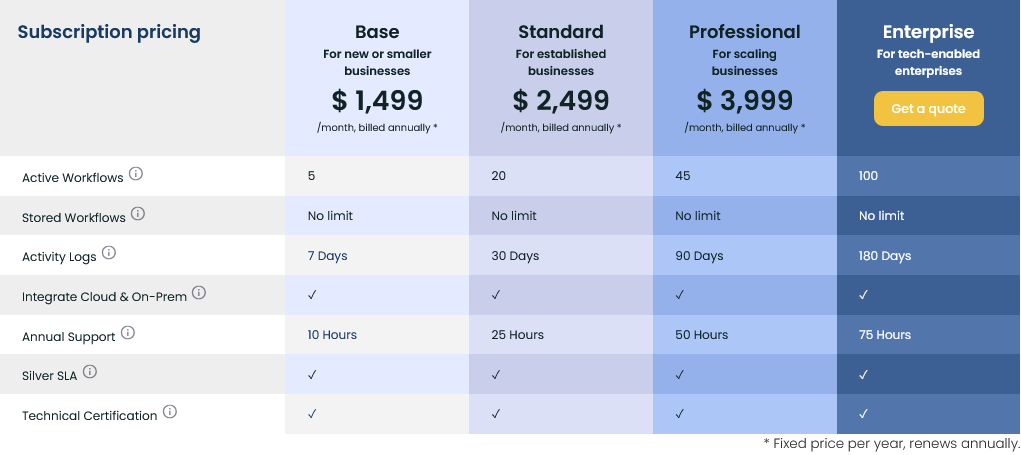      |


