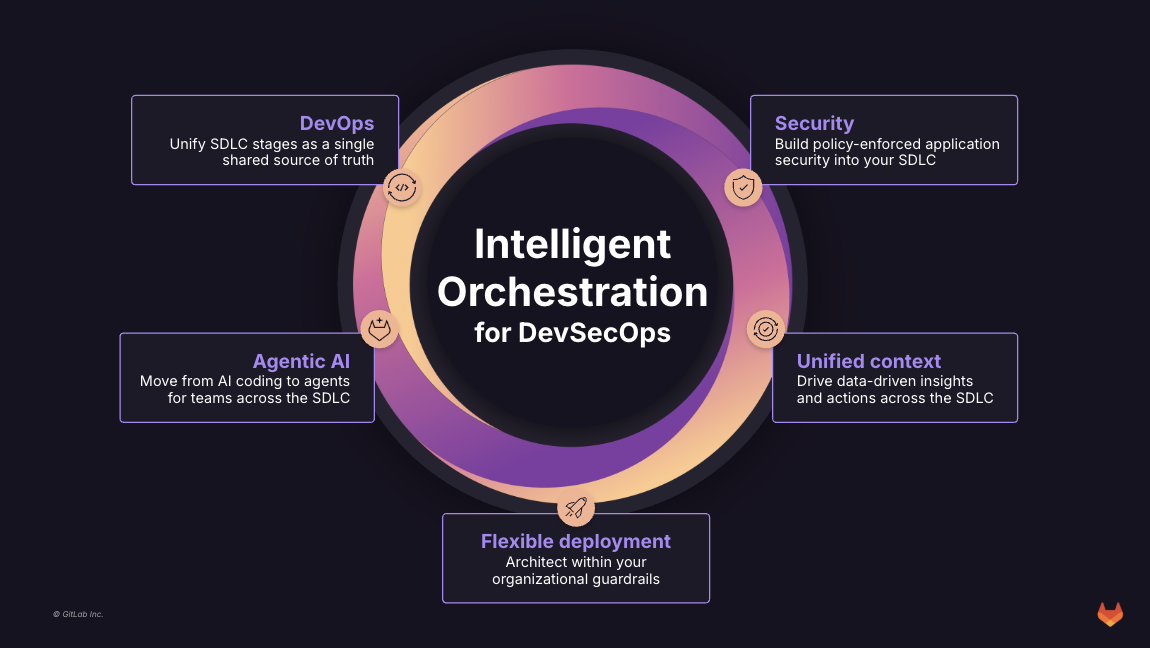
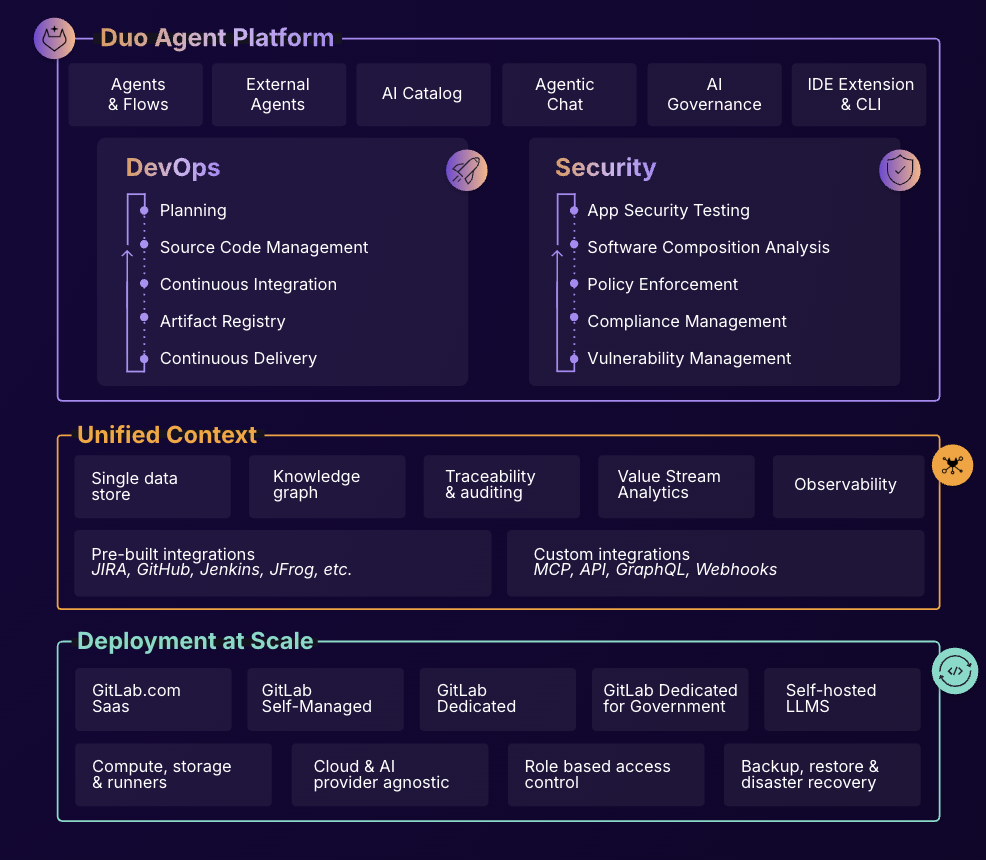
GitLab is an intelligent orchestration platform for DevSecOps, where software teams enable AI at every stage of the software lifecycle to ship faster. The platform enables teams to automate repetitive tasks across planning, building, securing, testing, deploying, and maintaining software.
$0
per month per user
Liquibase
Score8.7 out of 10
Enterprise companies (1,001+ employees)
Liquibase is a database change management tool that extends DevOps best practices to the database, helping teams release software faster and safer by bringing the database change process into existing CI/CD automation. According to the 2021 Accelerate State of DevOps Report, elite performers are 3.4 times more likely to incorporate database change management into their process than low performers. Liquibase value proposition: Liquibase speeds up the development…
N/A
Pricing
GitLab
Liquibase
Editions & Modules
GitLab Free (self-managed)
$0
GitLab Free
$0
GitLab Premium
$29
per month per user
GitLab Premium (self-managed)
$29
per month per user
GitLab Ultimate
Contact Sales
GitLab Ultimate (self-managed)
Contact Sales
No answers on this topic
Offerings
Pricing Offerings
GitLab
Liquibase
Free Trial
Yes
Yes
Free/Freemium Version
Yes
Yes
Premium Consulting/Integration Services
Yes
Yes
Entry-level Setup Fee
Optional
No setup fee
Additional Details
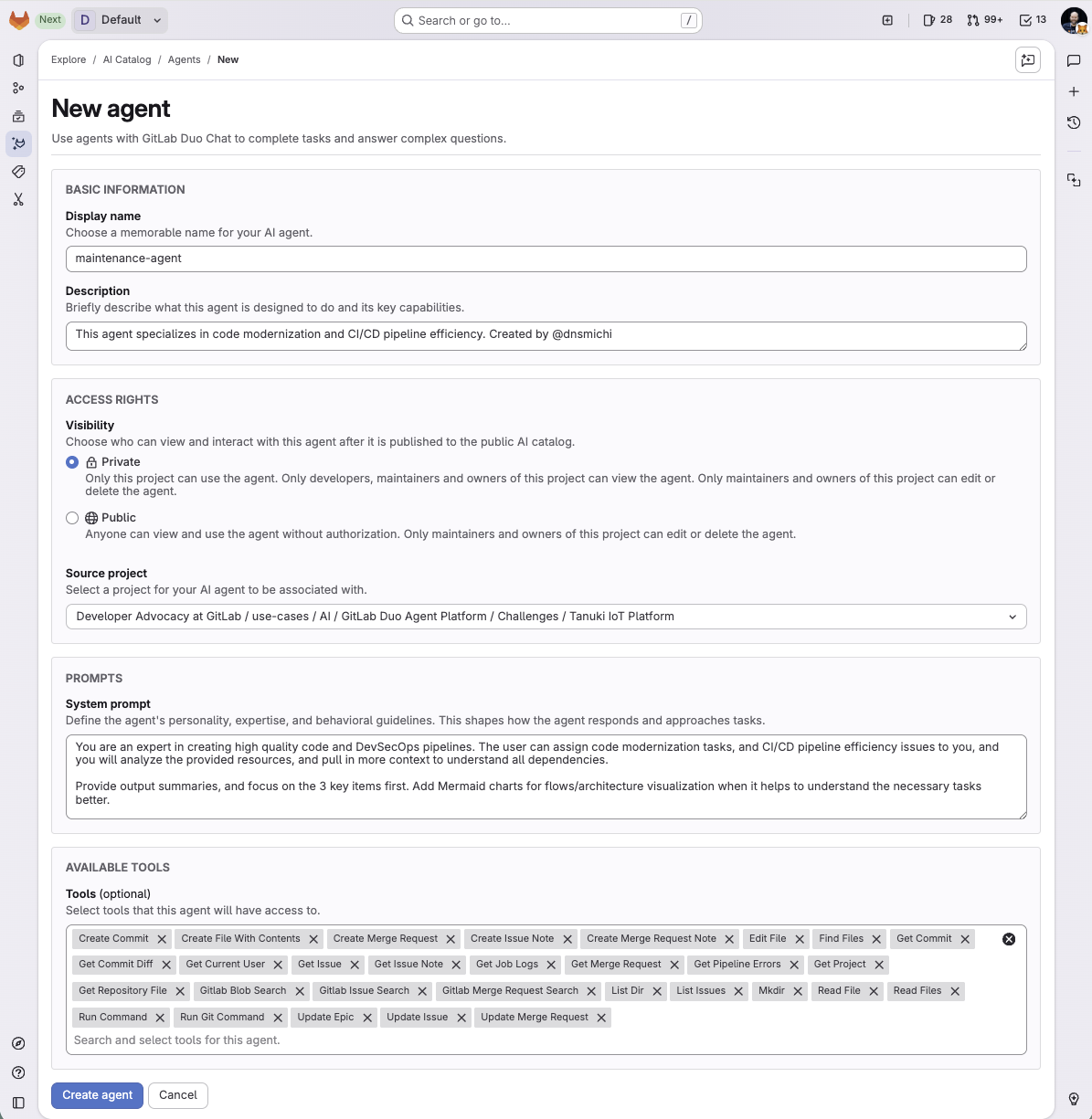
GitLab Credits enable flexible, consumption-based access to agentic AI capabilities in the GitLab platform, allowing you to scale AI adoption at your own pace while maintaining cost predictability. Powered by Duo Agent Platform, GitLab’s agentic AI capabilities help software teams to collaborate at AI speed, without compromising quality and enterprise security.
If usage exceeds monthly allocations and overage terms are accepted, automated on-demand billing activates without service interruption, so your developers never lose access to AI capabilities they need.
Real-time dashboards provide transparency into AI consumption patterns. Software teams can see usage across users, projects, and groups with granular attribution for cost allocation. Automated threshold alerts facilitate proactive planning. Advanced analytics deliver trending, forecasting, and FinOps integration.
Cloud Network Engineer II in Information Technology at Allied National (Insurance, 51-200 employees)
Chose Liquibase
None of the products we looked at really focused and had good tools for Database Version control at the level we needed. Our monolith system just does not work well with them. We want to change it from a monolith, but we have to version control it first before really making …
A de minimis incentive was given to thank the reviewer for their time. The incentive was not used to bias or drive a particular response, nor was the incentive contingent on a positive endorsement. TR verified that a representative sample of customers was invited. More Info
Staff Software Engineer in Engineering at Tailorbird (Computer Software, 11-50 employees)
Chose Liquibase
There are many things done differently and in a smoother way when it comes to Liquibase. The CI/CD setup flow is easier. Switching between the different versions on different environments is really easy. The UI of login portal is user friendly and easy to use. Overall, it has a …
A de minimis incentive was given to thank the reviewer for their time. The incentive was not used to bias or drive a particular response, nor was the incentive contingent on a positive endorsement. More Info
In general it's a good product with a huge number of features. It can do CI/CD checks, deployment, repo hosting, integrations etc. A lot of it can be managed from just the UI but also has an ok API. It does tend to release new features semi-often too which is nice. It can have a steep learning curve for certain features so not a starter-friendly vendor, but great for most businesses.
A de minimis incentive was given to thank the reviewer for their time. The incentive was not used to bias or drive a particular response, nor was the incentive contingent on a positive endorsement. TR verified that a representative sample of customers was invited. More Info
Based on my experience so far on using Liquibase in my current project, I have seen that Liquibase changelogs are version control where multiple team members and developers can work together on database and deployed automatically via CI/CD Pipeline integration using github actions and it applies same changelogs to all enviroments to remain in sync and avoid any enviroment drift. Also as Liquibase stores changelog audits in DATABASECHANGELOG table it helps in tracking purposes and to easily rollback any change . Whereas in some scenarios I feel that Liquibase have some drawbacks where if complex transformation between tables is not optimized for bulk data operations which eventually degrades database performance.
A de minimis incentive was given to thank the reviewer for their time. The incentive was not used to bias or drive a particular response, nor was the incentive contingent on a positive endorsement. More Info
A de minimis incentive was given to thank the reviewer for their time. The incentive was not used to bias or drive a particular response, nor was the incentive contingent on a positive endorsement. TR verified that a representative sample of customers was invited. More Info
Liquibase tracks changes in a metadata table contained directly in the target database, making easy administration for the DBA.
Liquibase handles many validation tests out of the box, making it easy to choose which ones you want to include, with options for writing your own if you choose. This makes it robust and flexible in terms of validation before deployment.
Liquibase provides easy integration into deployment pipelines for CI/CD. We use it with GitHub for source control and Circle CI for validation and deployment pipelines.
A de minimis incentive was given to thank the reviewer for their time. The incentive was not used to bias or drive a particular response, nor was the incentive contingent on a positive endorsement. More Info
A de minimis incentive was given to thank the reviewer for their time. The incentive was not used to bias or drive a particular response, nor was the incentive contingent on a positive endorsement. TR verified that a representative sample of customers was invited. More Info
I would like Liquibase to explore all errors in the changelog files compared to one at a time. We spent a lot of time troubleshooting one error at a time versus having a batch log of errors in each file.
Understanding where to get support on things. I spent a lot of time researching externally to learn what the best practices were. Although I found some of the youtube videos helpful, I would like a little more of a technical support. This may be a feature with the paid tier, however, we leveraged open source.
Seeing more examples of how others use Liquibase and their usecases will be helpful. That way we can learn from each other which may help us improve on our own deployments.
A de minimis incentive was given to thank the reviewer for their time. The incentive was not used to bias or drive a particular response, nor was the incentive contingent on a positive endorsement. More Info
I really feel the platform has matured quite faster than others, and it is always at the top of its game compared to the different vendors like GitHub, Azure pipelines, CircleCI, Travis, Jenkins. Since it provides, agents, CI/CD, repository hosting, Secrets management, user management, and Single Sign on; among other features
A de minimis incentive was given to thank the reviewer for their time. The incentive was not used to bias or drive a particular response, nor was the incentive contingent on a positive endorsement. TR verified that a representative sample of customers was invited. More Info
We are and will continue using Liquibase and it has become an integral part of our portfolio offering, any new product is by default adopting Liquibase stack.
A de minimis incentive was given to thank the reviewer for their time. The incentive was not used to bias or drive a particular response, nor was the incentive contingent on a positive endorsement. TR verified that a representative sample of customers was invited. More Info
- As a combination of features and products, GitLab is a really great tool for developers. - Also, it comes with both light and quick changes in a web browser version, as well as pro work in VS Code mode. However, in certain areas, such as large-scale issues/incidents, management can be improved.
A de minimis incentive was given to thank the reviewer for their time. The incentive was not used to bias or drive a particular response, nor was the incentive contingent on a positive endorsement. TR verified that a representative sample of customers was invited. More Info
Liquibase has several features, on their free plan, that matches exactly our expectations and needs: this already makes it standout from its competitors. On top of that, the setup was straightforward: we are running an integration with Databricks, and there were only two steps truly needed, install the driver and the plugin, done. This is the type of seamless experience our team appreciates the most when evaluating a tool or service.
A de minimis incentive was given to thank the reviewer for their time. The incentive was not used to bias or drive a particular response, nor was the incentive contingent on a positive endorsement. TR verified that a representative sample of customers was invited. More Info
I've never had experienced outages from GItlab itself, but regarding the code I have deployed to Gitlab, the history helps a lot to trace the cause of the issue or performing a rollback to go back to a working version
A de minimis incentive was given to thank the reviewer for their time. The incentive was not used to bias or drive a particular response, nor was the incentive contingent on a positive endorsement. TR verified that a representative sample of customers was invited. More Info
GItlab reponsiveness is amazing, has never left me IDLE. I've never had issues even with complex projects. I have not experienced any issues when integrating it with agents for example or SSO
A de minimis incentive was given to thank the reviewer for their time. The incentive was not used to bias or drive a particular response, nor was the incentive contingent on a positive endorsement. TR verified that a representative sample of customers was invited. More Info
At this point, I do not have much experience with Gitlab support as I have never had to engage them. They have documentation that is helpful, not quite as extensive as other documentation, but helpful nonetheless. They also seem to be relatively responsive on social media platforms (twitter) and really thrived when GitHub was acquired by Microsoft
A de minimis incentive was given to thank the reviewer for their time. The incentive was not used to bias or drive a particular response, nor was the incentive contingent on a positive endorsement. More Info
Liquibase has been responsive and even is letting our group test some new products they are developing and even made code changes to their production system because of a couple bugs we have reported. Liquibase licensing has also been easy and simple. I have nothing bad to say about any of the Liquibase staff I have talked to. They also hold free information webinars for new content that helps spread adoption and moving the product forward.
A de minimis incentive was given to thank the reviewer for their time. The incentive was not used to bias or drive a particular response, nor was the incentive contingent on a positive endorsement. TR verified that a representative sample of customers was invited. More Info
A de minimis incentive was given to thank the reviewer for their time. The incentive was not used to bias or drive a particular response, nor was the incentive contingent on a positive endorsement. TR verified that a representative sample of customers was invited. More Info
GitHub is an inferior product from most points of view. We had to use it and the teams finds no positives about it. Everything is a downgrade from our previous GitLab solution. GitLab CI\CD is vastly superior to workflows, for example doing a manual node is just "when : manual" in GitLab while you have to do clickops in GitHub to achieve the same. No overview of code in branches is a minus when we tried to figure out what our colleagues are trying to merge as it looked off.
A de minimis incentive was given to thank the reviewer for their time. The incentive was not used to bias or drive a particular response, nor was the incentive contingent on a positive endorsement. TR verified that a representative sample of customers was invited. More Info
There is no real competitor when it comes to what Liquibase does - at least not at the time we considered it three years ago. It was an easy choice in this regard, but we could have said no to it if it made our workload more difficult. But our proof of concept showed there were easy wins to be had by implementing its software.
A de minimis incentive was given to thank the reviewer for their time. The incentive was not used to bias or drive a particular response, nor was the incentive contingent on a positive endorsement. More Info
A de minimis incentive was given to thank the reviewer for their time. The incentive was not used to bias or drive a particular response, nor was the incentive contingent on a positive endorsement. TR verified that a representative sample of customers was invited. More Info
A de minimis incentive was given to thank the reviewer for their time. The incentive was not used to bias or drive a particular response, nor was the incentive contingent on a positive endorsement. TR verified that a representative sample of customers was invited. More Info
A de minimis incentive was given to thank the reviewer for their time. The incentive was not used to bias or drive a particular response, nor was the incentive contingent on a positive endorsement. TR verified that a representative sample of customers was invited. More Info