Kaspersky Endpoint Security Cloud provides a solution for organizations' IT security needs, blocking ransomware, file-less malware, zero-day attacks and other emerging threats. Kaspersky’s cloud-based approach helps users to work securely on any device, and collaborate safely online, at work or at home, from remote offices and in the field. The cloud-native console means the organization's security can be managed from anywhere, any time.
$215
Microsoft Defender for Endpoint
Score8.8 out of 10
N/A
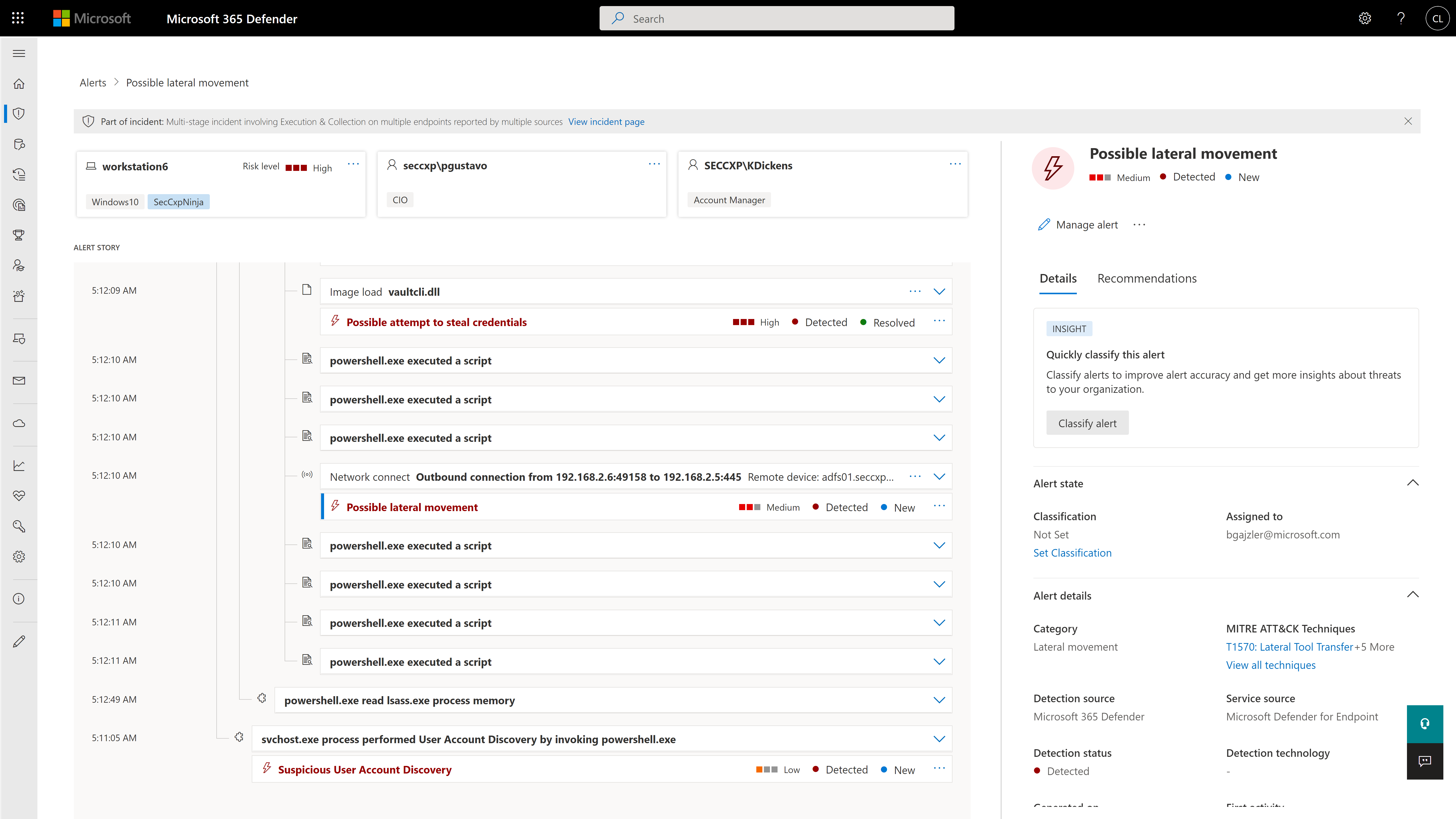
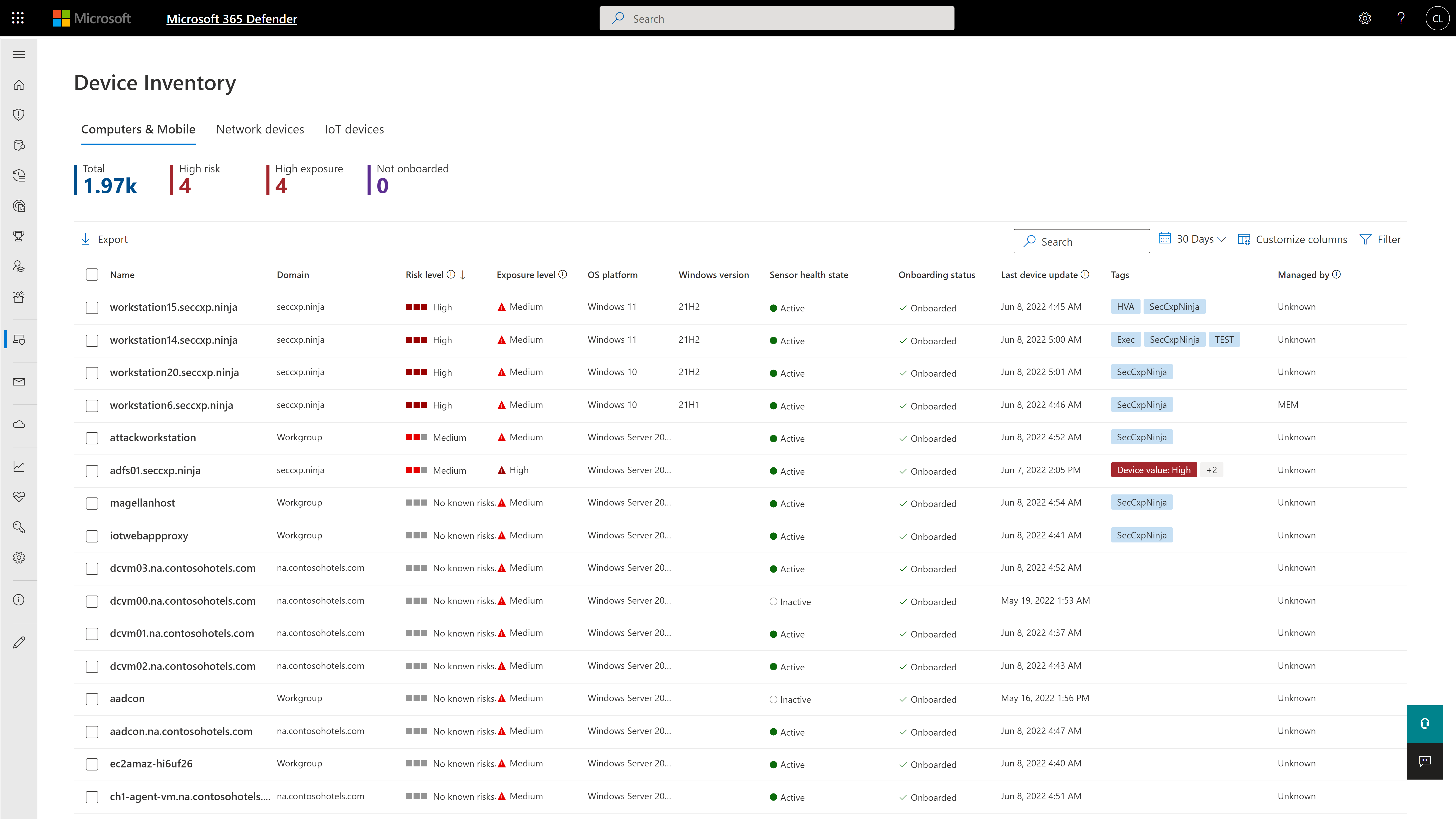
Microsoft Defender for Endpoint (formerly Microsoft Defender ATP) is a holistic, cloud delivered endpoint security solution that includes risk-based vulnerability management and assessment, attack surface reduction, behavioral based and cloud-powered next generation protection, endpoint detection and response (EDR), automatic investigation and remediation, managed hunting services, rich APIs, and unified security management.
Well-Suited Scenarios:Small to Medium-sized Businesses (SMBs): Kaspersky Endpoint Security Cloud is well-suited for SMBs with limited IT resources. Its cloud-based management simplifies deployment and ongoing security administration, allowing smaller businesses to benefit from enterprise-grade protection without the complexity.Distributed Workforces: In scenarios where employees work remotely or across multiple locations, the cloud-based nature of Kaspersky Endpoint Security Cloud is advantageous. It enables centralized management of security policies, ensuring consistent protection for all endpoints regardless of their physical location.Proactive Threat Detection: Organizations that prioritize proactive threat detection and response benefit from Kaspersky's advanced capabilities. The endpoint detection and response (EDR) features help identify and mitigate potential threats in real-time, crucial for industries handling sensitive data.Less Appropriate Scenarios:Highly Regulated Industries with Specific Compliance Requirements: In industries with stringent compliance regulations, organizations may require specialized solutions that offer more granular control and reporting features tailored to specific compliance standards. Kaspersky may need to enhance customization options to cater to these specific needs.Resource-Constrained Environments: While Kaspersky Endpoint Security Cloud is generally efficient, organizations with extremely resource-constrained environments, such as older hardware or limited bandwidth, might find the solution demanding in terms of system resources.
If you have multiple endpoints in your environment, if you're looking to understand what your environment looks like, if you're trying to identify the health of your environment, or identify any risks or vulnerabilities in your environment pertaining to your endpoints and devices.
A de minimis incentive was given to thank the reviewer for their time. The incentive was not used to bias or drive a particular response, nor was the incentive contingent on a positive endorsement. TR verified that a representative sample of customers was invited. More Info
Excellent Customer Service - Every time I need something from my main contact at Kaspersky I will get the fastest support within a day or two max, depending on the hour I call.
Excellent Performance - KES has been I can say a ghost on my company and my clients because of it's performance, since is light weight when processing and protecting.
Excellent Administration of Cloud Console - It's easy to navigate thru the KES Cloud Console having a quick help that orientates for any easy doubt to clear out, if needed to escalate I can always setup a Ticket and get a fast response.
A de minimis incentive was given to thank the reviewer for their time. The incentive was not used to bias or drive a particular response, nor was the incentive contingent on a positive endorsement. More Info
The big thing for us is on endpoint, it kind of integrates with everything else that we already have because we use Microsoft completely. And so that helps us with being able to integrate, and send things over to Azure Sentinel as we need to as well.
A de minimis incentive was given to thank the reviewer for their time. The incentive was not used to bias or drive a particular response, nor was the incentive contingent on a positive endorsement. More Info
Though the Kaspersky Endpoint Security Cloud provides security from all the types of Cyber threat but it will be great to have the protection from the attacks which occurs from inside of an organization.
As Kaspersky Endpoint Security Cloud provides the Cyber security training to it's users in only Kaspersky Endpoint Security Cloud Pro which should be included in it's all versions so that the users will be aware of the Cyber threats.
The feature of root cause analysis is a great feature of Kaspersky Endpoint Security Cloud but I feel there is a scope for improvement in it.
A de minimis incentive was given to thank the reviewer for their time. The incentive was not used to bias or drive a particular response, nor was the incentive contingent on a positive endorsement. More Info
I'd say building out summaries and log reviews for analysts reviewing incidents. So, pivoting from the alerts themselves to actually getting the detail underneath. Trying to understand what caused an alert, where they went from there, et cetera, et cetera. And then trying to get into deeper log review to take that investigation further can be a pain point.
A de minimis incentive was given to thank the reviewer for their time. The incentive was not used to bias or drive a particular response, nor was the incentive contingent on a positive endorsement. More Info
We have been using Kaspersky Endpoint Security products for several years and the jump to the console cloud has been very comfortable for us since we do not have to dedicate a server to the Kaspersky Endpoint Security console but rather the console is in the cloud so that we save the server and its financial amount, electrical expense, cost of its housing in the CPD.
A de minimis incentive was given to thank the reviewer for their time. The incentive was not used to bias or drive a particular response, nor was the incentive contingent on a positive endorsement. More Info
Cost add-ons for Security features is nickel and diming the process to keep pace with cybercrime. Limited Education budgets require us to be more pro-active in finding cost-effective measures to protect our devices, staff and students. Defender is a strong, well-featured product that is pricing itself out of the education market
A de minimis incentive was given to thank the reviewer for their time. The incentive was not used to bias or drive a particular response, nor was the incentive contingent on a positive endorsement. TR verified that a representative sample of customers was invited. More Info
It allows us to roll out endpoint protection quickly from a cloud interface to hundreds of users within seconds and keep those devices secure. From deployment of BitLocker and keeping track of the keys from the interface has saves many users from stolen laptops and devices since we used Kaspersky as our main device protection.
A de minimis incentive was given to thank the reviewer for their time. The incentive was not used to bias or drive a particular response, nor was the incentive contingent on a positive endorsement. More Info
Because it's hard to find things sometimes. I can find things now because I know where they are. But you have to work with it a little while to figure out how. I'd basically say it was a security tool designed by developers. So you have to get that mindset to find things. So a new hire, a new person in the SOC would have a difficult time. I know that's sitting in here, or that screen is in here somewhere. So it's gotten better.
A de minimis incentive was given to thank the reviewer for their time. The incentive was not used to bias or drive a particular response, nor was the incentive contingent on a positive endorsement. More Info
Kaspersky is a market leader company, so I had no doubt that I could trust their cloud services availability. As of now, I haven't experienced any downtime on their cloud portal or any issue in the agent itself. I would recommend it in terms of reliability.
A de minimis incentive was given to thank the reviewer for their time. The incentive was not used to bias or drive a particular response, nor was the incentive contingent on a positive endorsement. More Info
Microsoft Defender for Endpoint chugs along just fine no matter what we throw at it and what systems it's running on. It doesn't take up a lot of resources either, so that's welcomed.
A de minimis incentive was given to thank the reviewer for their time. The incentive was not used to bias or drive a particular response, nor was the incentive contingent on a positive endorsement. More Info
We have had no major issues with Kaspersky Endpoint Security Cloud. The product has a very low overhead. There have been issues in the past where web pages have been slow to load, as they are being processed by the Kaspersky Security Network. That said, when the issue was reported to technical support, they were quick to assess and provide a viable work around.
A de minimis incentive was given to thank the reviewer for their time. The incentive was not used to bias or drive a particular response, nor was the incentive contingent on a positive endorsement. More Info
A de minimis incentive was given to thank the reviewer for their time. The incentive was not used to bias or drive a particular response, nor was the incentive contingent on a positive endorsement. More Info
We only had to send a query to Kaspersky Endpoint Security Cloud support. We had a problem accessing the cloud console and we opened a case with them. They assisted us quickly and gave us precise and concise instructions to access the Kaspersky Endpoint Security cloud console.After completing the steps indicated we were able to access the console
A de minimis incentive was given to thank the reviewer for their time. The incentive was not used to bias or drive a particular response, nor was the incentive contingent on a positive endorsement. More Info
The first time I tried to onboard my macOS endpoints to MDE I struggled for quite a bit. I had to reach out to Microsoft's MDE support team. The tech was very helpful in walking me through the steps during a screen share session
A de minimis incentive was given to thank the reviewer for their time. The incentive was not used to bias or drive a particular response, nor was the incentive contingent on a positive endorsement. More Info
The Kaspersky Endpoint Security Cloud online training was very complete and access to the console and the main administration tasks were explained to us.Also how to view security events, customer inventories and reports.In addition, Kaspersky provides a large number of manuals, web help, and videos to refresh your knowledge in the future.
A de minimis incentive was given to thank the reviewer for their time. The incentive was not used to bias or drive a particular response, nor was the incentive contingent on a positive endorsement. More Info
The Kaspersky Endpoint Security Cloud online training was very complete and access to the console and the main administration tasks were explained to us.Also how to view security events, customer inventories and reports.In addition, Kaspersky provides a large number of manuals, web help, and videos to refresh your knowledge in the future.
A de minimis incentive was given to thank the reviewer for their time. The incentive was not used to bias or drive a particular response, nor was the incentive contingent on a positive endorsement. More Info
The implementation of this product is easy, the console is mounted and from it the client is distributed to the rest of the computers. In this way, the Kaspersky Endpoint Security client is installed on all the computers in the company's IT park and its servers.The installation of clients requires that they have visibility with the console that is in the cloud.
A de minimis incentive was given to thank the reviewer for their time. The incentive was not used to bias or drive a particular response, nor was the incentive contingent on a positive endorsement. More Info
Deployment was handled by our team here and everything went pretty smoothly. We did have a few hiccups in our test group, but that only took a bit to get ironed out.
A de minimis incentive was given to thank the reviewer for their time. The incentive was not used to bias or drive a particular response, nor was the incentive contingent on a positive endorsement. More Info
Comparison: Scope and Sophistication: Kaspersky Endpoint Security Cloud offers a comprehensive security suite with a focus on simplicity and cloud-based management.Kaspersky EDR Expert is specialized in advanced threat detection and response, suited for organizations with a higher level of cybersecurity maturity and a need for proactive threat hunting.Target Audience:Kaspersky Endpoint Security Cloud is ideal for SMBs seeking a user-friendly, all-in-one security solution.Kaspersky EDR Expert caters to larger enterprises with a focus on in-depth threat analysis, incident response, and continuous monitoring.Deployment Options:Kaspersky Endpoint Security Cloud is cloud-centric, simplifying deployment and management.Kaspersky EDR Expert provides flexibility with on-premises or hybrid deployment, accommodating diverse IT infrastructures.Ultimately, the choice between the two depends on the organization's size, cybersecurity maturity, and specific requirements. Kaspersky Endpoint Security Cloud is a versatile and accessible solution, while Kaspersky EDR Expert is tailored for organizations with a heightened focus on advanced threat detection and response capabilities.
Particularly, we're evaluating Symantec Endpoint Protection, the commercial version. We've looked at eSet, a couple of the others, and it's much too heavy or difficult to manage, things like that. Ease of use, ease of integration. It's already there. It's super easy to update it with the regular OS updates and everything. So we can manage it whether we're using SCCM or Intune or Dato, it's very easy to deploy updates and manage things.
A de minimis incentive was given to thank the reviewer for their time. The incentive was not used to bias or drive a particular response, nor was the incentive contingent on a positive endorsement. More Info
The manufacturer Kaspersky was very flexible with the terms of the contract for the Kaspersky Endpoint Security Cloud product since it has prices by number of licenses, offering discounts for the volume of licenses to be contracted as well as for the duration of the contract. They show a very empathetic attitude with the client, trying to adapt to what the client needs.
A de minimis incentive was given to thank the reviewer for their time. The incentive was not used to bias or drive a particular response, nor was the incentive contingent on a positive endorsement. More Info
Kaspersky Endpoint Security Cloud is a distributed product, you connect to the console and the client is installed on the computers and servers and the only configuration it needs is the console address. Then they connect and the console downloads the virus definitions and defined policies.There are no client limitations, you can even have multiple consoles if you want to have "separate" clients.
A de minimis incentive was given to thank the reviewer for their time. The incentive was not used to bias or drive a particular response, nor was the incentive contingent on a positive endorsement. More Info
A de minimis incentive was given to thank the reviewer for their time. The incentive was not used to bias or drive a particular response, nor was the incentive contingent on a positive endorsement. More Info
KES Cloud is the next step on security, where clients did not believe on Cloud solutions, now with this approach of not having servers onsite they are Hapy with the solution, less asset management and updates of hardware is one of the best. At least per Year Min a 6-10K up to 20-30K per year saving with KES Cloud.
Cloud Console has been a great change due to de easiness to manage it ad reporting as well.
A de minimis incentive was given to thank the reviewer for their time. The incentive was not used to bias or drive a particular response, nor was the incentive contingent on a positive endorsement. More Info
I think the positive impact overall is that we do a lot of sitting in front of assessors- federal assessors, government assessors. And it really comes down to when the assessor has to think about another product that you're bringing in that's not Microsoft, it creates a lot of confusion, more paperwork, more explanation. But the positive impact is that they know it, everybody kind of knows Microsoft. And so when you tell them you have this endpoint for Microsoft Defender for Endpoint, they're like, okay. The questions go away, and it makes the overhead a lot less during an assessment.
A de minimis incentive was given to thank the reviewer for their time. The incentive was not used to bias or drive a particular response, nor was the incentive contingent on a positive endorsement. More Info