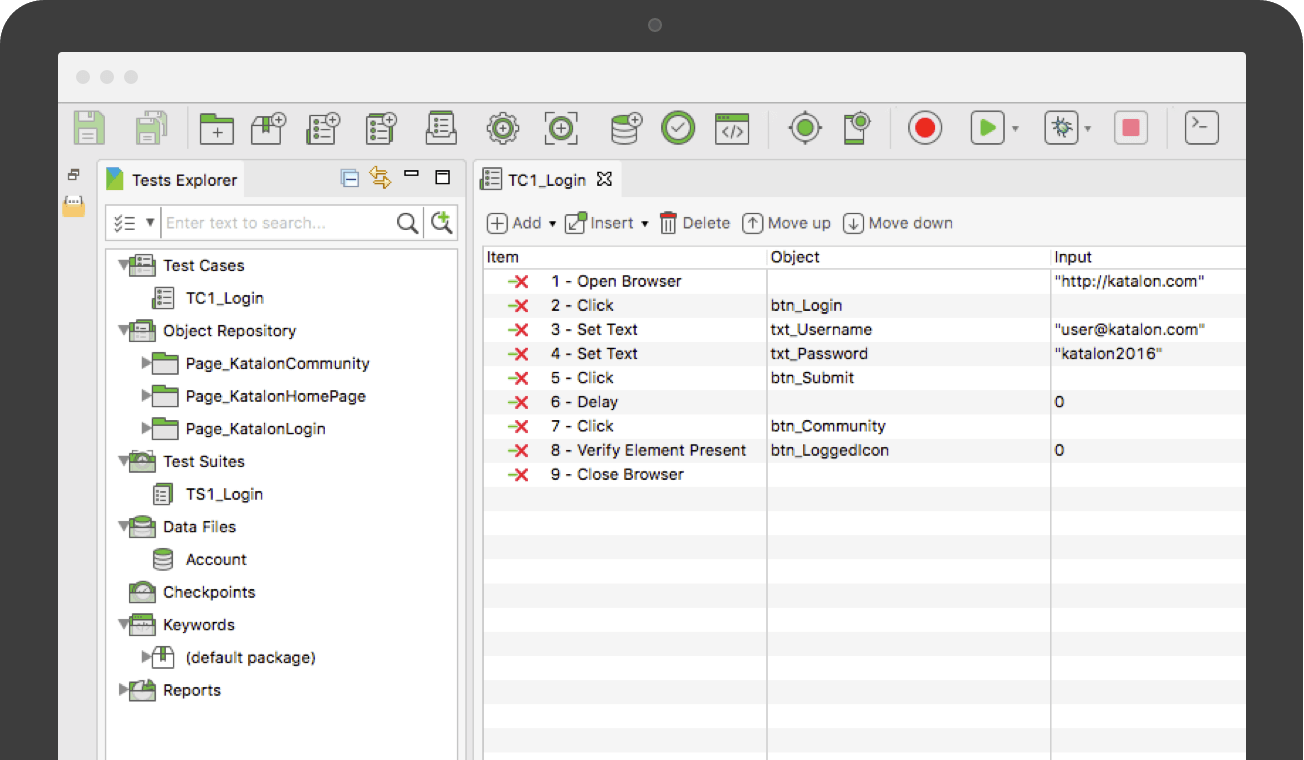
Katalon Studio is provided by the vendor as a free and robust automation solution for API, Web and Mobile testing. It is designed to eliminate the complexities of building an automation framework by integrating all necessary test components with built-in keywords and project templates. Katalon Studio includes a full feature set for a complete test automation process covering multiple platforms and testing types. New users can get started with test automation using its easy-to-use…
$69
per month
Ansible
Score9.1 out of 10
N/A
The Red Hat Ansible Automation Platform (acquired by Red Hat in 2015) is a foundation for building and operating automation across an organization. The platform includes tools needed to implement enterprise-wide automation, and can automate resource provisioning, and IT environments and configuration of systems and devices. It can be used in a CI/CD process to provision the target environment and to then deploy the application on it.
$5,000
per year
Pricing
Katalon
Ansible
Editions & Modules
Node Locked License
$69.00
per month
Floating License
$1,529.00
per year
Basic Tower
5,000
per year
Enterprise Tower
10,000
per year
Premium Tower
14,000
per year
Offerings
Pricing Offerings
Katalon
Ansible
Free Trial
Yes
No
Free/Freemium Version
Yes
No
Premium Consulting/Integration Services
Yes
No
Entry-level Setup Fee
No setup fee
No setup fee
Additional Details
Katalon Studio was originated from KMS Technology R&D. It has been a successful solution for numerous automation projects ranging from small team to enterprise client.
Katalon Studio is free for use, product development is funded by the testing services provided by KMS Technology. To support future releases, please consider subscribing to our business support services.
Katalon TestOps is well suited for an oraganization who want to organize their automation collections and have everything in one place. It provides good insight on test runs, failures and also helps in defect tracking. It is extremely easy to schedule and run test suites automatically. With the help of test history, it becomes easier to triage the report and identify if it is a product issue or a test flakiness. Also with the automation run scheduling features with custom options, user do not have to manually trigger the runs and just run the scheduler to do the job.
A de minimis incentive was given to thank the reviewer for their time. The incentive was not used to bias or drive a particular response, nor was the incentive contingent on a positive endorsement. More Info
I think it's the best defacto orchestrator for automation because it's so easy to integrate in other tools to it (dynatrace, cyberark, terraform, etc). It is a lot for a new or smaller team to use so I wouldn't recommend it to a new team using Ansible, in that case using Ansible navigator is a better start to understanding playbooks/inventories before diving into the complexity of Red Hat Ansible Automation Platform. EDA also takes a lot of connectivity between Red Hat Ansible Automation Platform and target systems to get working which can be difficult in very locked down envs unless you have approval from many other teams like networking and security.
A de minimis incentive was given to thank the reviewer for their time. The incentive was not used to bias or drive a particular response, nor was the incentive contingent on a positive endorsement. TR verified that a representative sample of customers was invited. More Info
Easy to setup and quick to get started: As Katalon comes with built-in features a new automation tester can automate easily. Script creation time is quick.
Test Analytics: Katalon also provides analytics which tells you the pattern of your automated tests at a different instance of time.
Third Party Integration: Katalon provides amazing integration with 3rd party tools like JIRA, ALM, GIT, JENKINS, etc.
Image-based testing: Katalon also provides inbuilt image based test automation.
A de minimis incentive was given to thank the reviewer for their time. The incentive was not used to bias or drive a particular response, nor was the incentive contingent on a positive endorsement. More Info
A de minimis incentive was given to thank the reviewer for their time. The incentive was not used to bias or drive a particular response, nor was the incentive contingent on a positive endorsement. TR verified that a representative sample of customers was invited. More Info
Integration with Azure is painstakingly slow as it takes too much time to upload reports to Azure. When raised with the support team i was advised to contact Microsoft who promptly and correctly replied that its an issue with the katalon plugin.
Non Responsive Customer Support. Several mails were replied late.
The Desktop app uses too much memory when booting up and running tests even on a 16gb RAM.
A de minimis incentive was given to thank the reviewer for their time. The incentive was not used to bias or drive a particular response, nor was the incentive contingent on a positive endorsement. TR verified that a representative sample of customers was invited. More Info
We are extremely happy with the use of AAP. It's better than expected, There is almost no limit when thinking of automation. The only problem is that the day to day is consuming a big part of our time. Patching and checking vulnerabilities are virtually killing us. But we can only improve with AAP.
A de minimis incentive was given to thank the reviewer for their time. The incentive was not used to bias or drive a particular response, nor was the incentive contingent on a positive endorsement. TR verified that a representative sample of customers was invited. More Info
A de minimis incentive was given to thank the reviewer for their time. The incentive was not used to bias or drive a particular response, nor was the incentive contingent on a positive endorsement. More Info
Everything has room for improvement, but Ansible is the best tool out there for what it does and what it can do. There are plenty of features and capabilities that can be added, but it's just a matter of time before it happens.
A de minimis incentive was given to thank the reviewer for their time. The incentive was not used to bias or drive a particular response, nor was the incentive contingent on a positive endorsement. More Info
Great in almost every way compared to any other configuration management software. The only thing I wish for is python3 support. Other than that, YAML is much improved compared to the Ruby of Chef. The agentless nature is incredibly convenient for managing systems quickly, and if a member of your term has no terminal experience whatsoever they can still use the UI.
A de minimis incentive was given to thank the reviewer for their time. The incentive was not used to bias or drive a particular response, nor was the incentive contingent on a positive endorsement. More Info
I love the support. They have provided answers and solutions for most of our questions or doubts that could come up. They also have provided basic tutorials on how to get familiarized with the program.
A de minimis incentive was given to thank the reviewer for their time. The incentive was not used to bias or drive a particular response, nor was the incentive contingent on a positive endorsement. More Info
There is a lot of good documentation that Ansible and Red Hat provide which should help get someone started with making Ansible useful. But once you get to more complicated scenarios, you will benefit from learning from others. I have not used Red Hat support for work with Ansible, but many of the online resources are helpful.
A de minimis incentive was given to thank the reviewer for their time. The incentive was not used to bias or drive a particular response, nor was the incentive contingent on a positive endorsement. More Info
A de minimis incentive was given to thank the reviewer for their time. The incentive was not used to bias or drive a particular response, nor was the incentive contingent on a positive endorsement. More Info
Katalon Studio is above both the tools is due to its codeless test automation feature and having API, desktop, web, and mobile automation in one place but obviously there is room for improvement when desktop automation is of primary importance in the automation.
A de minimis incentive was given to thank the reviewer for their time. The incentive was not used to bias or drive a particular response, nor was the incentive contingent on a positive endorsement. More Info
AAP compares favorably with Terraform and Power Automate. I don't have much experience with Terraform, but I find AAP and Ansible easier to use as well as having more capabilities. Power Platform is also an excellent automation tool that is user friendly but I feel that Ansible has more compatibility with a variety of technologies.
A de minimis incentive was given to thank the reviewer for their time. The incentive was not used to bias or drive a particular response, nor was the incentive contingent on a positive endorsement. More Info
Support can be better: As mentioned before, katlon community is still growing but is currently a small community. If you are stuck, its hard to find help in the community and one has to reach out to the support for help. This takes a while before you can get solution to your problem.
Result upload takes little longer time: It is been observed that uploading tests results takes little longer.
Sometimes it gets hard to integrate: Since this is fairly a new tool, requires lot of learning curve to get the job done effectively.
A de minimis incentive was given to thank the reviewer for their time. The incentive was not used to bias or drive a particular response, nor was the incentive contingent on a positive endorsement. More Info
First, it keeps our entire server infrastructure aligned with our standards and reduces the time and effort needed to maintain our systems.
Automate routine IT tasks to save time, reduce errors, and ensure every server is configured and updated consistently.
Tasks that used to take our teams weeks to complete manually now run automatically and reliably, with full visibility, making our infrastructure management more effective and our compliance tracking much easier.
A de minimis incentive was given to thank the reviewer for their time. The incentive was not used to bias or drive a particular response, nor was the incentive contingent on a positive endorsement. TR verified that a representative sample of customers was invited. More Info