
Microsoft Defender for Cloud vs. Symantec Cloud Workload Protection
Microsoft Defender for Cloud vs. Symantec Cloud Workload Protection
| Product | Rating | Most Used By | Product Summary | Starting Price |
|---|---|---|---|---|
 Microsoft Defender for Cloud | N/A | Microsoft Defender for Cloud is a Cloud Security Posture Management (CSPM) and Cloud Workload Protection Platform (CWPP) for Azure, on-premises, and multicloud (Amazon AWS and Google GCP) resources. | N/A | |
 Symantec Cloud Workload Protection | N/A | Symantec provides cloud security via the Symantec Cloud Workload Protection application, providing auto-discovery and vulnerability protection of cloud applications and services. | N/A |
| Microsoft Defender for Cloud | Symantec Cloud Workload Protection | |||||||||||||||
|---|---|---|---|---|---|---|---|---|---|---|---|---|---|---|---|---|
| Editions & Modules | No answers on this topic | No answers on this topic | ||||||||||||||
| Offerings |
| |||||||||||||||
| Entry-level Setup Fee | No setup fee | No setup fee | ||||||||||||||
| Additional Details | — | — | ||||||||||||||
| More Pricing Information | ||||||||||||||||
| Microsoft Defender for Cloud | Symantec Cloud Workload Protection |
|---|
| Microsoft Defender for Cloud | Symantec Cloud Workload Protection | |
|---|---|---|
| Small Businesses | No answers on this topic |  Armor Score 6.0 out of 10 |
| Medium-sized Companies |  CrowdStrike Falcon Score 9.0 out of 10 |  Druva Security Cloud Score 9.4 out of 10 |
| Enterprises | CrowdStrike Falcon Score 9.0 out of 10 | Druva Security Cloud Score 9.4 out of 10 |
| All Alternatives | View all alternatives | View all alternatives |
| Microsoft Defender for Cloud | Symantec Cloud Workload Protection | |
|---|---|---|
| Likelihood to Recommend | 8.4 (69 ratings) | 8.0 (2 ratings) |
| Likelihood to Renew | 8.9 (4 ratings) | - (0 ratings) |
| Usability | 7.8 (14 ratings) | - (0 ratings) |
| Microsoft Defender for Cloud | Symantec Cloud Workload Protection | |
|---|---|---|
| Likelihood to Recommend | Microsoft
| Broadcom
 Brandon R Hudson Software Engineer |
| Pros | Microsoft
| Broadcom
|
| Cons | Microsoft
 Sushant Said Associate Architect - Platform Engineer | Broadcom
Brandon R Hudson Software Engineer |
| Likelihood to Renew | Microsoft
| Broadcom No answers on this topic |
| Usability | Microsoft
| Broadcom No answers on this topic |
| Alternatives Considered | Microsoft
| Broadcom No answers on this topic |
| Return on Investment | Microsoft
| Broadcom
|
| ScreenShots | Microsoft Defender for Cloud Screenshots   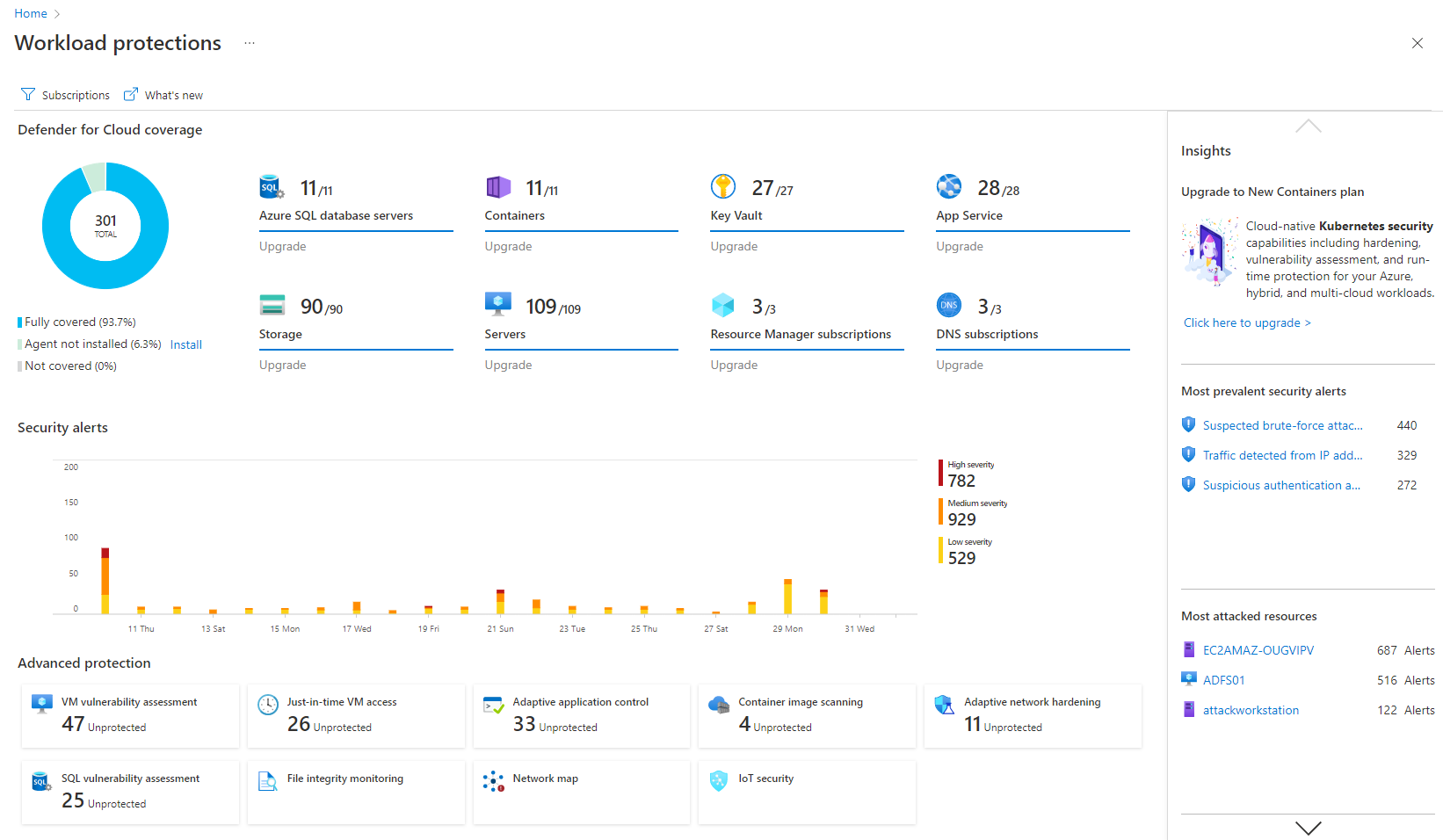   |