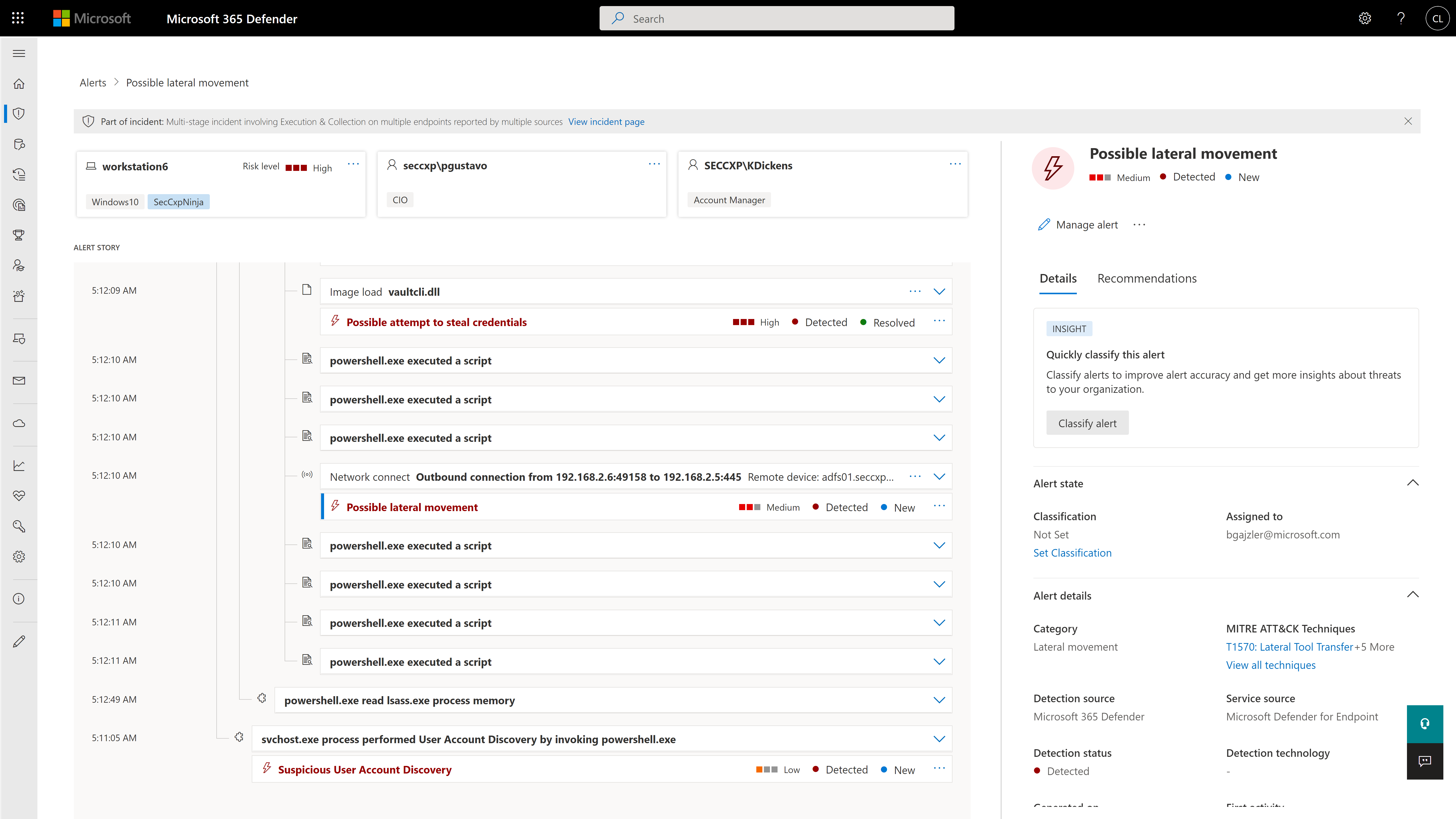
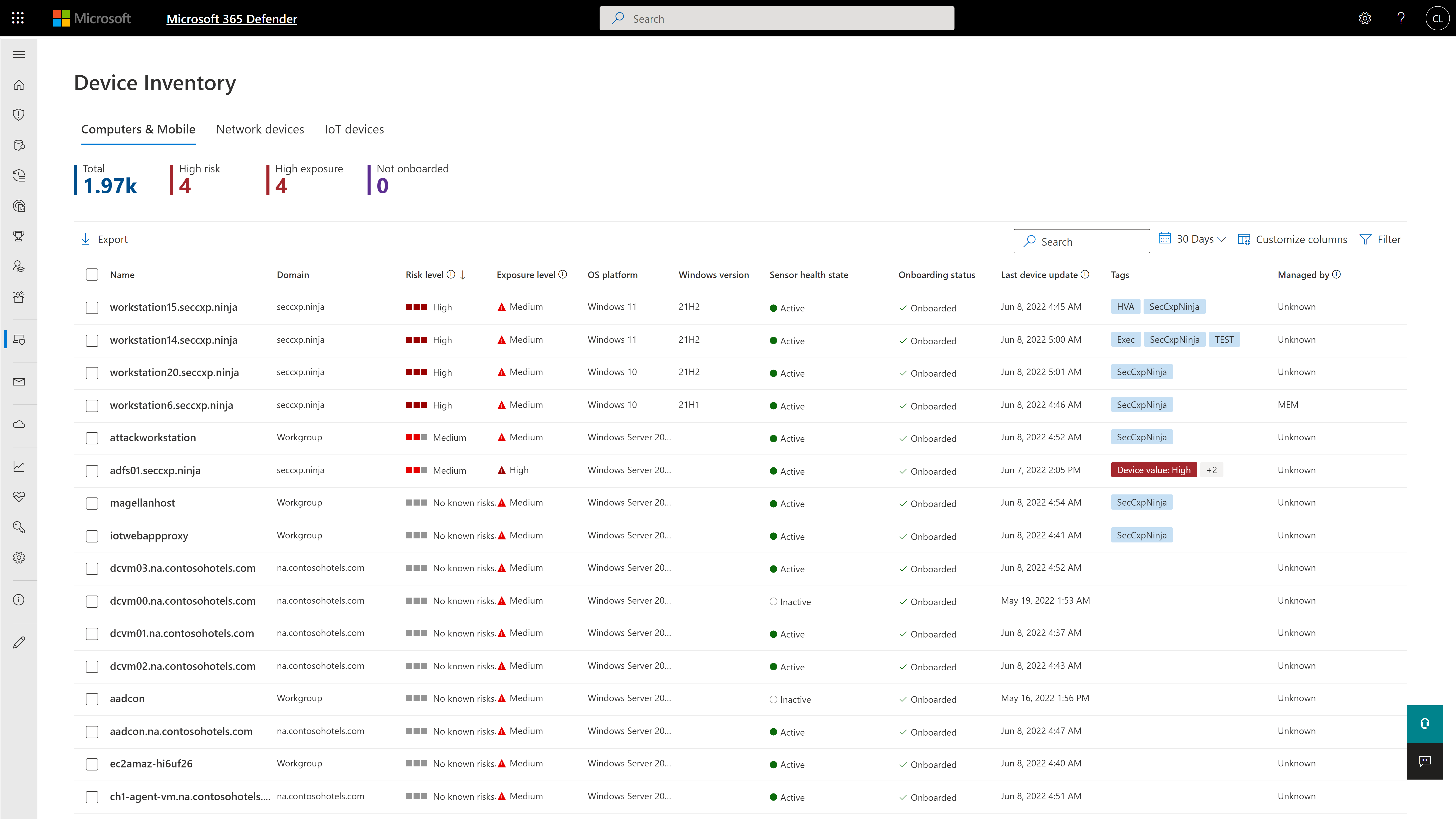
Microsoft Defender for Endpoint (formerly Microsoft Defender ATP) is a holistic, cloud delivered endpoint security solution that includes risk-based vulnerability management and assessment, attack surface reduction, behavioral based and cloud-powered next generation protection, endpoint detection and response (EDR), automatic investigation and remediation, managed hunting services, rich APIs, and unified security management.
$2.50
per user/per month
Tenable Nessus
Score 8.7 out of 10
N/A
Tenable headquartered in Columbia offers Nessus, a vulnerability scanning and security assessment solution used to analyze an entity's security posture, vulnerability testing, and provide configuration assessments.
MDE integrates much more into our M365 ecosystem than any other MDR possibly could. Bitdefender may have provided a similar level of endpoint protection but the reporting, vulnerability reporting and other incident tracking and correlation are critical in today's business …
Before we switched to using Endpoint, we were using McAfee and we weren't getting the most use out of that, weren't super happy with it, and so we switched, got rid of that and switched to just using all the endpoint features.
It is well integrated with the Microsoft Admin center providing a quick way to find everything you're looking for. However, if there is a problem that needs addressed, you may have to click through a few more pages to find the solution. It will definitely let you know what's going on in your environment.
It is an excellent tool for scanning servers, workstations, and network devices to identify missing patches and misconfiguration; we regularly use it to confirm patch effectiveness after the update; it also helps us for preparing audits such as iso 27001, and regulatory requirements, it also helps us to identify open ports and services that violate security.
One, it's crazy lightweight, so compared to some of the competitors that we also have used with our security services, it's really lightweight and so I don't have a lot of overhead on the system that it's running on.
Nessus is best at performing vulnerability scans, in fact, it gives findings and moreover accurate findings of the assessments. It does not do penetration testing or exploit the vulnerabilities because it is concerned about scanning the systems/applications.
In fact, Nessus has multiple profiles/policies to perform different types of scans such as, scans oriented for PCI-DSS, malware scans, web application scans, bad shell shock detection scan to name a few.
Nessus has the ability to classify the vulnerabilities into risk-based categories from critical to even informational which I think is one of the things that separates Nessus from other vulnerability scanners.
So the fact that Defender for Endpoint still works with signatures is actually, I don't know, a little difficult for us because, I mean, since Microsoft trusts those signatures, you can easily inject code. And we've done it many times. To show that you can inject code through vulnerabilities like CV 2013, 99, and 33 but still keep the signature. So because of the trust of those signatures, the malware just kind of slides into the environment without Defender knowing. That's the first part. The second part is that the behavioral analysis is not precisely its Prime. It's not Defender's best capability for endpoints. So, Defender does not identify all behaviors considered by other EDRs in the market.
The tool has lots of options for setting up before scanning any device, this methodology could be simplified further with default configuration for various devices predefined, anyhow we can use this technique by making use of policies.
For advanced users we cannot disable the plugins inside the plugin groups, we can enable the whole set of plugins at a time, for few hundreds its ok, but thousands of plugins are of waste of resource and time.
Cost add-ons for Security features is nickel and diming the process to keep pace with cybercrime. Limited Education budgets require us to be more pro-active in finding cost-effective measures to protect our devices, staff and students. Defender is a strong, well-featured product that is pricing itself out of the education market
Nessus is best and easy to use application for Vulnerabilities finding and reporting, it has multiple platforms and wide scope covering almost all devices for security improvement so far, thus we are very likely to continue its services.
It offers multiple security features and integrates well with Microsoft ecosystems. A workflow for threat detection, investigation, automated remediation, and a centralized dashboard is an added advantage. This application is mainly designed for experienced users; new users may feel challenged.
Tenable Nessus is a great product and provides a lot of value, but it is difficult to set up and use and the amount of data it generates can be overwhelming. It does help us prioritize based on the severity of the detection, however there are sometimes mitigating factors that we have implemented that Nessus does not account for, which causes lots of noise in the reports.
Microsoft Defender for Endpoint chugs along just fine no matter what we throw at it and what systems it's running on. It doesn't take up a lot of resources either, so that's welcomed.
The first time I tried to onboard my macOS endpoints to MDE I struggled for quite a bit. I had to reach out to Microsoft's MDE support team. The tech was very helpful in walking me through the steps during a screen share session
I haven't needed to contact support yet. But issues are easily solved with a quick internet search which means support and by extension, the larger community are involved and knowledgeable.
Deployment was handled by our team here and everything went pretty smoothly. We did have a few hiccups in our test group, but that only took a bit to get ironed out.
Defender is far easier to deploy and manage than Sophos and tends to work without as many issues. The threat assessment portal provides an in-depth view of the organization's security posture, whereas Sophos only shows the patching status of the PCs. We did need Intune to get many of the control features (disabling USB drives) that Sophos offered out of the box.
Sometimes when we identify a vulnerability with Nessus that has an exploit, we made a proof of concept with Metasploit in order to show to the IT managers the importance of the software/hardware hardening.
Nessus certainly has a positive impact while me while performing my job, either as security research, or performing vulnerability assessments for clients. It gives a lot of information about the system/application after performing scans. The number of false positives is also less compared to other vulnerability scanners.
The professional edition is very useful as policy templates available in this edition are very handy and useful even to perform compliance scan like PCI DSS scan.
Also, the ability to export the scan results into reports in formats like HTML, PDF is very useful which could be for performing system/application reviews.