Microsoft Defender for Endpoint vs. VMware Cloud Foundation

Overview
ProductRatingMost Used ByProduct SummaryStarting Price
Microsoft Defender for Endpoint
Score 8.9 out of 10
N/A
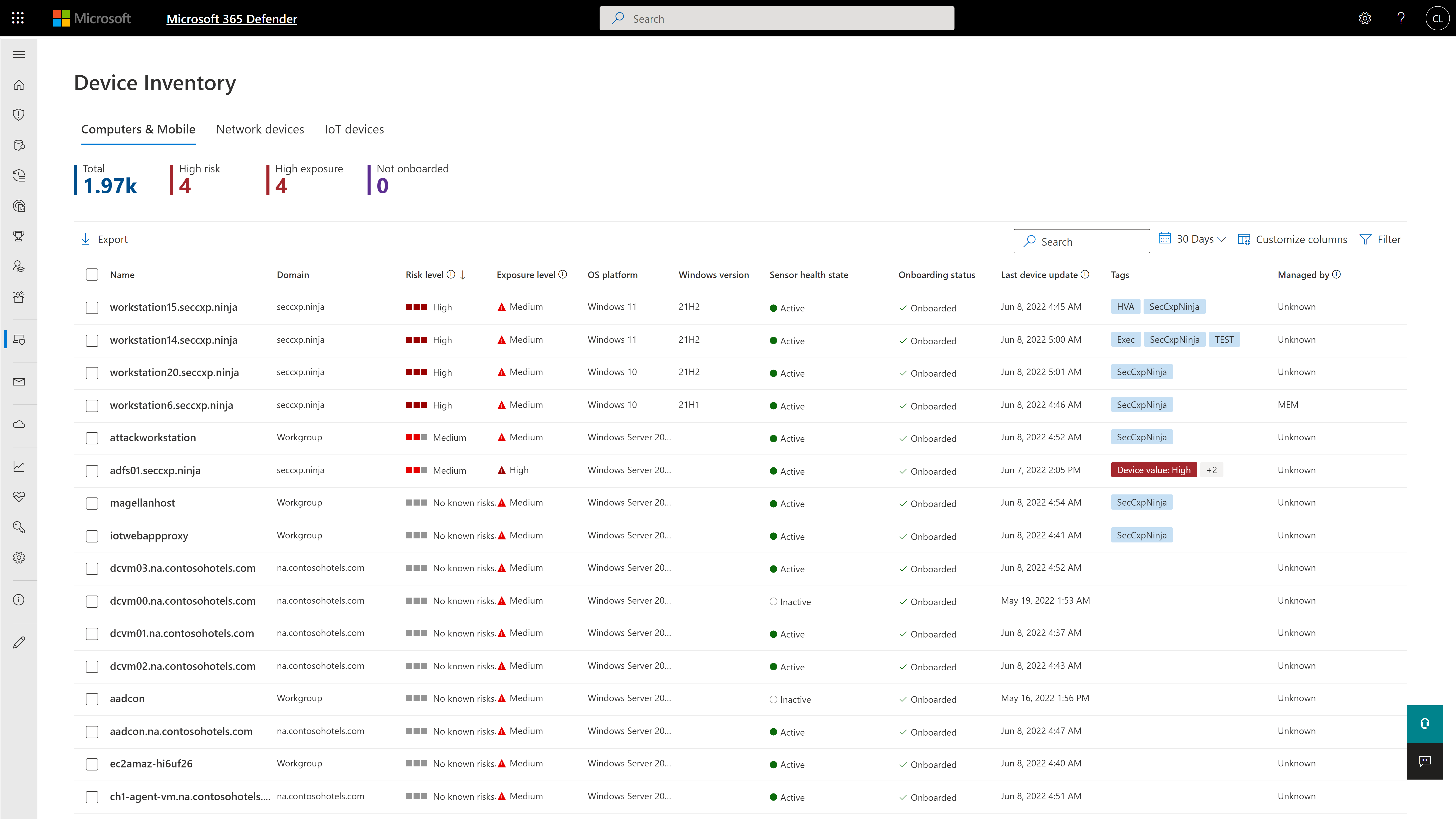
Microsoft Defender for Endpoint (formerly Microsoft Defender ATP) is a holistic, cloud delivered endpoint security solution that includes risk-based vulnerability management and assessment, attack surface reduction, behavioral based and cloud-powered next generation protection, endpoint detection and response (EDR), automatic investigation and remediation, managed hunting services, rich APIs, and unified security management.
$2.50
per user/per month
VMware Cloud Foundation
Score 8.9 out of 10
N/A
VMware Cloud Foundation is a hybrid cloud platform for managing VMs and orchestrating containers, built on full-stack hyperconverged infrastructure (HCI) technology. With a single architecture that is desribed by the vendor as easy to deploy, VMware Cloud Foundation aims to enable consistent, secure infrastructure and operations across private and public cloud.N/A
Pricing
Microsoft Defender for EndpointVMware Cloud Foundation
Editions & Modules
Academic
$2.50
per user/per month
Standalone
$5.20
per user/per month
No answers on this topic
Offerings
Pricing Offerings
Microsoft Defender for EndpointVMware Cloud Foundation
Free Trial
YesNo
Free/Freemium Version
NoNo
Premium Consulting/Integration Services
NoNo
Entry-level Setup FeeNo setup feeNo setup fee
Additional Details
More Pricing Information
Community Pulse
Microsoft Defender for EndpointVMware Cloud Foundation
Features
Microsoft Defender for EndpointVMware Cloud Foundation
Endpoint Security
Comparison of Endpoint Security features of Product A and Product B
Microsoft Defender for Endpoint
8.7
77 Ratings
3% above category average
VMware Cloud Foundation
-
Ratings
Anti-Exploit Technology8.874 Ratings00 Ratings
Endpoint Detection and Response (EDR)9.176 Ratings00 Ratings
Centralized Management8.876 Ratings00 Ratings
Hybrid Deployment Support7.210 Ratings00 Ratings
Infection Remediation9.074 Ratings00 Ratings
Vulnerability Management8.671 Ratings00 Ratings
Malware Detection9.175 Ratings00 Ratings
Best Alternatives
Microsoft Defender for EndpointVMware Cloud Foundation
Small Businesses
ThreatLocker
ThreatLocker
Score 9.4 out of 10
StarWind HCA
StarWind HCA
Score 9.5 out of 10
Medium-sized Companies
BlackBerry Protect (CylancePROTECT)
Score 9.1 out of 10
StarWind HCA
StarWind HCA
Score 9.5 out of 10
Enterprises
BeyondTrust Endpoint Privilege Management
Score 9.9 out of 10
Nutanix Cloud Infrastructure
Score 8.8 out of 10
All AlternativesView all alternativesView all alternatives
User Ratings
Microsoft Defender for EndpointVMware Cloud Foundation
Likelihood to Recommend
8.9
(136 ratings)
7.0
(1 ratings)
Likelihood to Renew
8.4
(10 ratings)
-
(0 ratings)
Usability
8.7
(11 ratings)
-
(0 ratings)
Availability
9.1
(1 ratings)
-
(0 ratings)
Performance
9.1
(1 ratings)
-
(0 ratings)
Support Rating
9.0
(7 ratings)
-
(0 ratings)
Implementation Rating
7.3
(1 ratings)
-
(0 ratings)
Configurability
8.2
(1 ratings)
-
(0 ratings)
Product Scalability
9.1
(1 ratings)
-
(0 ratings)
User Testimonials
Microsoft Defender for EndpointVMware Cloud Foundation
Likelihood to Recommend
Microsoft
It is well integrated with the Microsoft Admin center providing a quick way to find everything you're looking for. However, if there is a problem that needs addressed, you may have to click through a few more pages to find the solution. It will definitely let you know what's going on in your environment.
Read full review
VMware by Broadcom
It is best suited for an on-premise cloud solution where customer can shift their entire production environment. Also, the customer has a preference for a Homogenous Infrastructure Environment where budget is not a challenge. It is not at all suited for a Heterogenous Environment, e.g., a Public cloud where integration becomes a huge issue, also in SMB sections where budget is challenging.
Read full review
Pros
Microsoft
  • One, it's crazy lightweight, so compared to some of the competitors that we also have used with our security services, it's really lightweight and so I don't have a lot of overhead on the system that it's running on.
  • It does really fantastic PowerShell integration.
Read full review
VMware by Broadcom
  • Cloud enabled Solution.
  • Support Container based Apps.
  • Cost efficient.
  • Supports both Public and Private Environments.
Read full review
Cons
Microsoft
  • So the fact that Defender for Endpoint still works with signatures is actually, I don't know, a little difficult for us because, I mean, since Microsoft trusts those signatures, you can easily inject code. And we've done it many times. To show that you can inject code through vulnerabilities like CV 2013, 99, and 33 but still keep the signature. So because of the trust of those signatures, the malware just kind of slides into the environment without Defender knowing. That's the first part. The second part is that the behavioral analysis is not precisely its Prime. It's not Defender's best capability for endpoints. So, Defender does not identify all behaviors considered by other EDRs in the market.
Read full review
VMware by Broadcom
  • The Deployment is complex.
  • Recommended Number of Physical Nodes is three or more; with less than 3 Nodes, it becomes difficult to install V-SAN.
  • Need for better integration. If we go on the public cloud, it is a huge challenge while integrate with an open source platform.
  • Cost can be marginally reduced. SMB segments still prefer a separate license instead of VCF, or they postpone their purchase plans.
Read full review
Likelihood to Renew
Microsoft
Cost add-ons for Security features is nickel and diming the process to keep pace with cybercrime. Limited Education budgets require us to be more pro-active in finding cost-effective measures to protect our devices, staff and students. Defender is a strong, well-featured product that is pricing itself out of the education market
Read full review
VMware by Broadcom
No answers on this topic
Usability
Microsoft
It offers multiple security features and integrates well with Microsoft ecosystems. A workflow for threat detection, investigation, automated remediation, and a centralized dashboard is an added advantage. This application is mainly designed for experienced users; new users may feel challenged.
Read full review
VMware by Broadcom
No answers on this topic
Reliability and Availability
Microsoft
Microsoft Defender for Endpoint chugs along just fine no matter what we throw at it and what systems it's running on. It doesn't take up a lot of resources either, so that's welcomed.
Read full review
VMware by Broadcom
No answers on this topic
Performance
Microsoft
Microsoft Defender for Endpoint is easy on memory and resources on clients.
Read full review
VMware by Broadcom
No answers on this topic
Support Rating
Microsoft
The first time I tried to onboard my macOS endpoints to MDE I struggled for quite a bit. I had to reach out to Microsoft's MDE support team. The tech was very helpful in walking me through the steps during a screen share session
Read full review
VMware by Broadcom
No answers on this topic
Implementation Rating
Microsoft
Deployment was handled by our team here and everything went pretty smoothly. We did have a few hiccups in our test group, but that only took a bit to get ironed out.
Read full review
VMware by Broadcom
No answers on this topic
Alternatives Considered
Microsoft
Defender is far easier to deploy and manage than Sophos and tends to work without as many issues. The threat assessment portal provides an in-depth view of the organization's security posture, whereas Sophos only shows the patching status of the PCs. We did need Intune to get many of the control features (disabling USB drives) that Sophos offered out of the box.
Read full review
VMware by Broadcom
Although the public Cloud Model follows Opex Costing Model, it actually leads to very high costs also, the infra model in my organization is not suited for a Public Cloud Model. Hence We decided on an On-Premise Model, and the best suited was VMware Cloud Foundation, which is a complete Software-Defined Scale-Out Architecture. I also prefer a Homogenous environment; i.e, support and services from a Single OEM, so that I Can get faster resolutions to my tickets raised.
Read full review
Scalability
Microsoft
Microsoft Defender for Endpoint is easily scaled from small orgs to giant enterprises.
Read full review
VMware by Broadcom
No answers on this topic
Return on Investment
Microsoft
  • Reduced incidents of security breaches lead to lower remediation costs and avoid potential financial losses and reputational damage.
  • Reduces the need for additional third-party security solutions and training, thereby lowering overall security management costs.
  • Increased efficiency and productivity of IT staff lead to better allocation of resources and cost savings.
  • Reduces the risk of fines and sanctions associated with non-compliance, ensuring business continuity and protecting revenue.
Read full review
VMware by Broadcom
  • My organization has a size of 1300+ employees, using multiple applications and an exchange mail server that is hosted on On-Premise Cloud, hence scalability has not been a challenge.
  • Having hosted my Production environment and Mail exchange Server on VCF, there has been optimum resource utilization with very little scope downtime. Hence have been able to save a lot of funds on Hardware resources.
  • Due to the size of my organization and due the data load, I have been able to save on Resource Utilization and Organization Funds
Read full review
ScreenShots

Microsoft Defender for Endpoint Screenshots
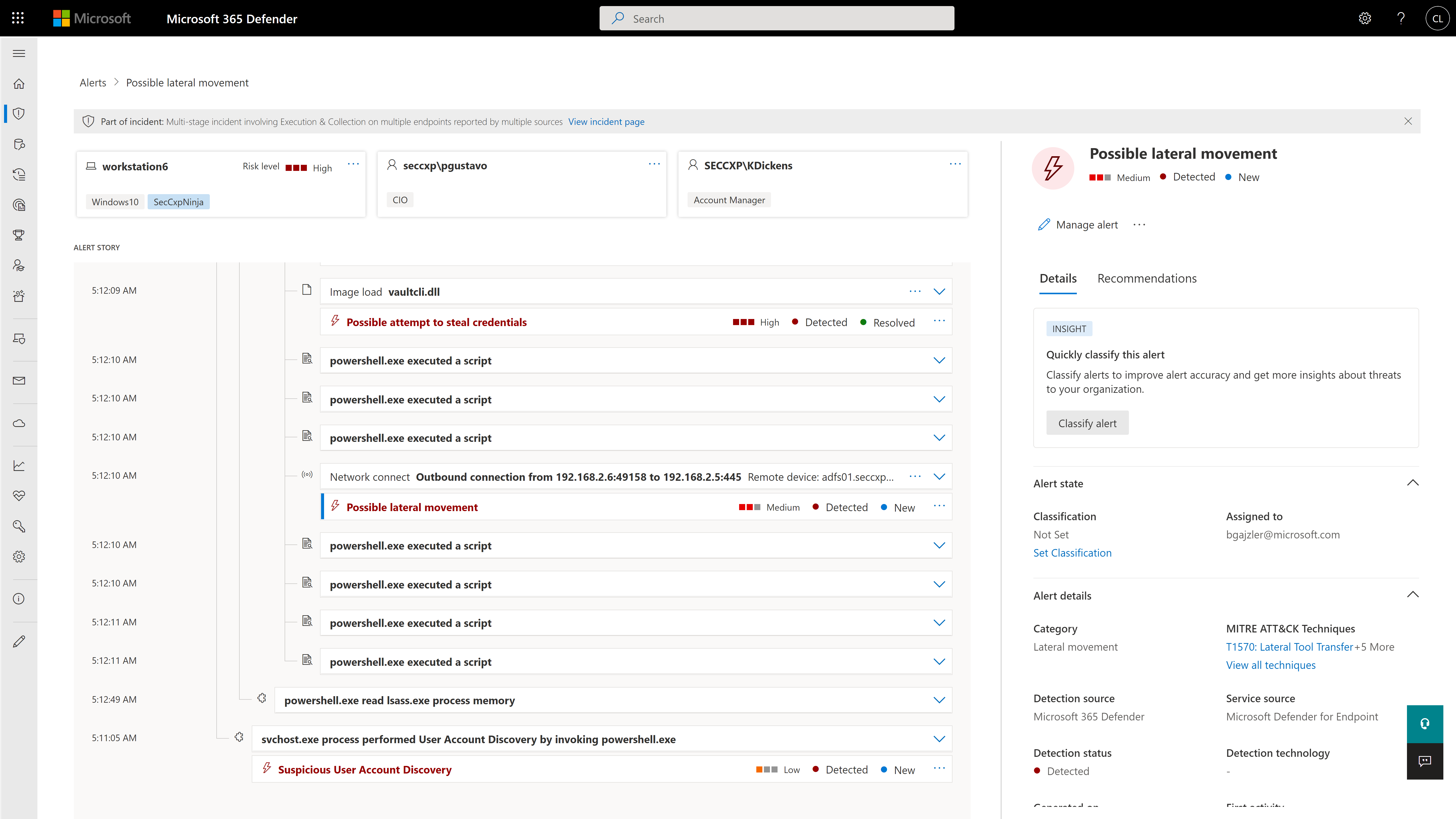
Screenshot of blocked activitiesScreenshot of Detects & respondsScreenshot of discovers vulnerabilityScreenshot of Eliminates blind spotsScreenshot of Risk management