
Lakkireddy Rama Narayana Reddy
Software Engineer
Chose Progress MarkLogic
Because Hadoop cannot parse the XML and Json files as marklogic does

| Product | Rating | Most Used By | Product Summary | Starting Price |
|---|---|---|---|---|
 MongoDB | N/A | MongoDB is an open source document-oriented database system. It is part of the NoSQL family of database systems. Instead of storing data in tables as is done in a "classical" relational database, MongoDB stores structured data as JSON-like documents with dynamic schemas (MongoDB calls the format BSON), making the integration of data in certain types of applications easier and faster. | $0.10 million reads | |
 Progress MarkLogic | N/A | MarkLogic Server is a multi-model database that has both NoSQL and trusted enterprise data management capabilities. The vendor states it is the most secure multi-model database, and it’s deployable in any environment. They state it is an ideal database to power a data hub. | $0.01 per MCU/per hour + 0.10 per GB/per month |
| MongoDB | Progress MarkLogic | |||||||||||||||
|---|---|---|---|---|---|---|---|---|---|---|---|---|---|---|---|---|
| Editions & Modules |
|
| ||||||||||||||
| Offerings |
| |||||||||||||||
| Entry-level Setup Fee | No setup fee | No setup fee | ||||||||||||||
| Additional Details | Fully managed, global cloud database on AWS, Azure, and GCP | — | ||||||||||||||
| More Pricing Information | ||||||||||||||||
| MongoDB | Progress MarkLogic | |
|---|---|---|
| Considered Both Products |  MongoDB No answer on this topic |  Progress MarkLogic Lakkireddy Rama Narayana Reddy Software Engineer Chose Progress MarkLogic Because Hadoop cannot parse the XML and Json files as marklogic does  Prabhudayal Acharya Senior Software Engineering Chose Progress MarkLogic In comparison to both Mongo and HBase, MarkLogic wins in terms of integration to other systems, while loosing in terms of pricing. In terms of documentation all will be in same range putting MarkLogic a bit forward.  Marcus Young Web Application Developer Chose Progress MarkLogic MarkLogic is good at what it does: storing and searching XML with a REST interface. The amount of support out there for the other NoSQL products is what gives them the best advantage. Many plugins exist for those, none exist for MarkLogic. Even the proprietary ones like …  Harry Bakken Principal Consultant Chose Progress MarkLogic There's no other single product that directly compares to all the features that are packed into MarkLogic. Generally speaking, you're looking at a combination of many products to build a stack that competes feature-for-feature. Even if you're leveraging only a limited set of …  Daniel Davenport Search Engineer Chose Progress MarkLogic I have used most of the common RDBMS databases (SQL Server, Oracle, MySQL, etc.). MarkLogic is more dependable, faster, and flexible. I would not willingly go back to RDBMS. As far as open source competition to MarkLogic such as MongoDB, I haven't used it myself so I don't have …  Beverly Jamison Senior Director, IT Architecture and Publishing Solutions Chose Progress MarkLogic We had Fast in place when Microsoft had bought it up and was going to change / deprecate it. One of the biggest advantages of MarkLogic for search actually had to do with the rest of the content pipeline - it allowed us to have it all in one technology. On the NoSQL side, we … |
| MongoDB | Progress MarkLogic | ||||||||||||||||||||||||
|---|---|---|---|---|---|---|---|---|---|---|---|---|---|---|---|---|---|---|---|---|---|---|---|---|---|
| NoSQL Databases |
|
| MongoDB | Progress MarkLogic | |
|---|---|---|
| Small Businesses |  IBM Cloudant Score 7.4 out of 10 | IBM Cloudant Score 7.4 out of 10 |
| Medium-sized Companies | IBM Cloudant Score 7.4 out of 10 | IBM Cloudant Score 7.4 out of 10 |
| Enterprises | IBM Cloudant Score 7.4 out of 10 | IBM Cloudant Score 7.4 out of 10 |
| All Alternatives | View all alternatives | View all alternatives |
| MongoDB | Progress MarkLogic | |
|---|---|---|
| Likelihood to Recommend | 10.0 (79 ratings) | 9.0 (7 ratings) |
| Likelihood to Renew | 10.0 (67 ratings) | 7.0 (7 ratings) |
| Usability | 10.0 (15 ratings) | 9.0 (1 ratings) |
| Availability | 9.0 (1 ratings) | - (0 ratings) |
| Support Rating | 9.6 (13 ratings) | 9.0 (1 ratings) |
| Implementation Rating | 8.4 (2 ratings) | - (0 ratings) |
| MongoDB | Progress MarkLogic | |
|---|---|---|
| Likelihood to Recommend | MongoDB
 Kendal Droddy Senior System Engineer | Progress Software
Prabhudayal Acharya Senior Software Engineering |
| Pros | MongoDB
 Ronald Melendez Desarrollador de software | Progress Software
Marcus Young Web Application Developer |
| Cons | MongoDB
 Joshua Weaver Developer | Progress Software
Harry Bakken Principal Consultant |
| Likelihood to Renew | MongoDB
 Jon Kern Manager Strategic Products | Progress Software
Daniel Davenport Search Engineer |
| Usability | MongoDB
 Jose Manuel Ortega Software Engineer && Security researcher | Progress Software
Harry Bakken Principal Consultant |
| Support Rating | MongoDB
 Mehmet Fatih Onal Technical Architect | Progress Software
Harry Bakken Principal Consultant |
| Implementation Rating | MongoDB
 Tom Maiaroto Sr. Platform Developer / UX Designer / Optimization Engineer | Progress Software No answers on this topic |
| Alternatives Considered | MongoDB
 Oleg Chumin Java Software Engineer | Progress Software
Beverly Jamison Senior Director, IT Architecture and Publishing Solutions |
| Return on Investment | MongoDB
 Jeff Sherard Senior Leader | Progress Software
 Richard Winslow Director, Platform Engineering |
| ScreenShots | MongoDB Screenshots     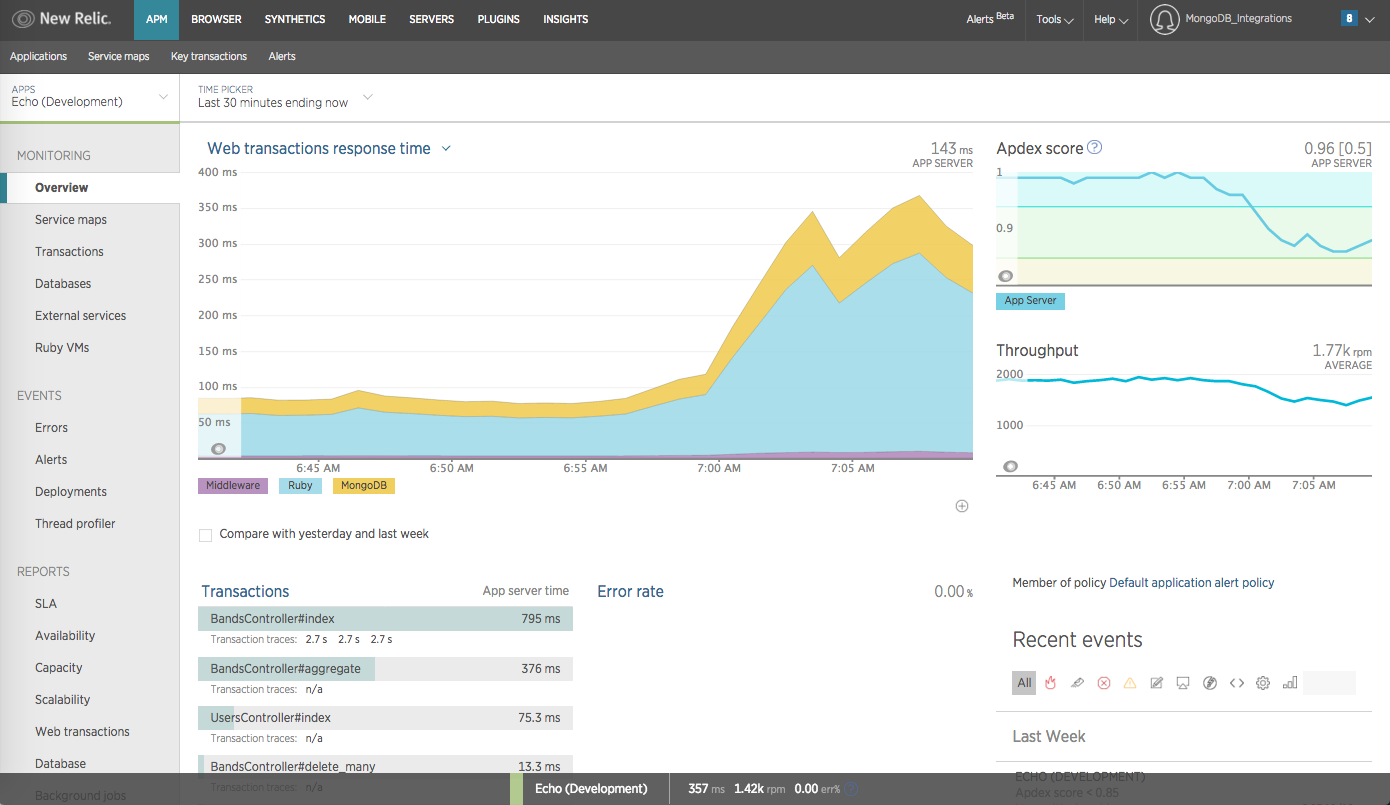 |