
Databricks Data Intelligence Platform vs. Nextqore AI Data Preprocessor
Databricks Data Intelligence Platform vs. Nextqore AI Data Preprocessor
| Product | Rating | Most Used By | Product Summary | Starting Price |
|---|---|---|---|---|
 Databricks Data Intelligence Platform | N/A | Databricks offers the Databricks Lakehouse Platform (formerly the Unified Analytics Platform), a data science platform and Apache Spark cluster manager. The Databricks Unified Data Service provides a platform for data pipelines, data lakes, and data platforms. | $0.07 Per DBU | |
 Nextqore AI Data Preprocessor | Small Businesses (1-50 employees) | Nextqore is an AI Data Preprocessor designed to get enterprise data ready for AI before it reaches any model. What It Does The platform is built on two standalone products. AnySource Data Combiner ingests and unifies data from disparate enterprise systems into a single, clean feed. Data Context Builder adds semantic and relational context, ontology, and full data lineage to that combined data. Each product solves a distinct problem and can be deployed on… | $1,200 per month per installation |
| Databricks Data Intelligence Platform | Nextqore AI Data Preprocessor | |||||||||||||||
|---|---|---|---|---|---|---|---|---|---|---|---|---|---|---|---|---|
| Editions & Modules |
| No answers on this topic | ||||||||||||||
| Offerings |
| |||||||||||||||
| Entry-level Setup Fee | No setup fee | $1,200 undefined | ||||||||||||||
| Additional Details | — | Nextqore uses a consumption-based pricing model with three subscription tiers, priced by monthly data volume therein aligning with an enterprises consumption growth. Standard is $1,200/month for up to 10,000 unique rows processed; Professional is $2,800/month for up to 30,000 rows; Enterprise is $10,000/month for up to 100,000 rows. All three tiers include both core products (AnySource Data Combiner and Data Context Builder) plus Analytics, Visualization, Notifications, and the Enterprise AI Connector — the tiers differ only in volume limits and author/role counts, minimally by feature access. There is no minimum commitment period. Usage beyond the included volume is billed per additional 1,000 rows, at a rate that decreases by tier ($120 on Standard, $100 on Professional, $80 on Enterprise), so unit costs fall as consumption grows. Add-ons include a knowledge-graph-based Ontology/Business Schema layer ($500/month on Standard and Professional, included on Enterprise) and Machine Learning model add-ons priced per model per year ($1,300–$4,500 depending on tier). Organizations with non-standard volume, deployment, or SLA requirements can request a custom configuration directly from Nextqore. | ||||||||||||||
| More Pricing Information | ||||||||||||||||
| Databricks Data Intelligence Platform | Nextqore AI Data Preprocessor |
|---|
| Databricks Data Intelligence Platform | Nextqore AI Data Preprocessor | |
|---|---|---|
| Small Businesses | No answers on this topic |  IBM SPSS Modeler Score 9.5 out of 10 |
| Medium-sized Companies |  Snowflake Score 8.7 out of 10 |  IBM InfoSphere Information Server Score 8.0 out of 10 |
| Enterprises | Snowflake Score 8.7 out of 10 | IBM InfoSphere Information Server Score 8.0 out of 10 |
| All Alternatives | View all alternatives | View all alternatives |
| Databricks Data Intelligence Platform | Nextqore AI Data Preprocessor | |
|---|---|---|
| Likelihood to Recommend | 9.4 (21 ratings) | - (0 ratings) |
| Usability | 9.7 (7 ratings) | - (0 ratings) |
| Support Rating | 8.7 (2 ratings) | - (0 ratings) |
| Contract Terms and Pricing Model | 8.0 (1 ratings) | - (0 ratings) |
| Professional Services | 10.0 (1 ratings) | - (0 ratings) |
| Databricks Data Intelligence Platform | Nextqore AI Data Preprocessor | |
|---|---|---|
| Likelihood to Recommend |  Databricks
 Austin Franchino Senior Data and Security Engineer | Nextqore No answers on this topic |
| Pros | Databricks
| Nextqore No answers on this topic |
| Cons | Databricks
| Nextqore No answers on this topic |
| Usability | Databricks
| Nextqore No answers on this topic |
| Support Rating | Databricks
 Jonatan Bouchard Director Data Science | Nextqore No answers on this topic |
| Alternatives Considered | Databricks
| Nextqore No answers on this topic |
| Return on Investment | Databricks
| Nextqore No answers on this topic |
| ScreenShots | Nextqore AI Data Preprocessor Screenshots 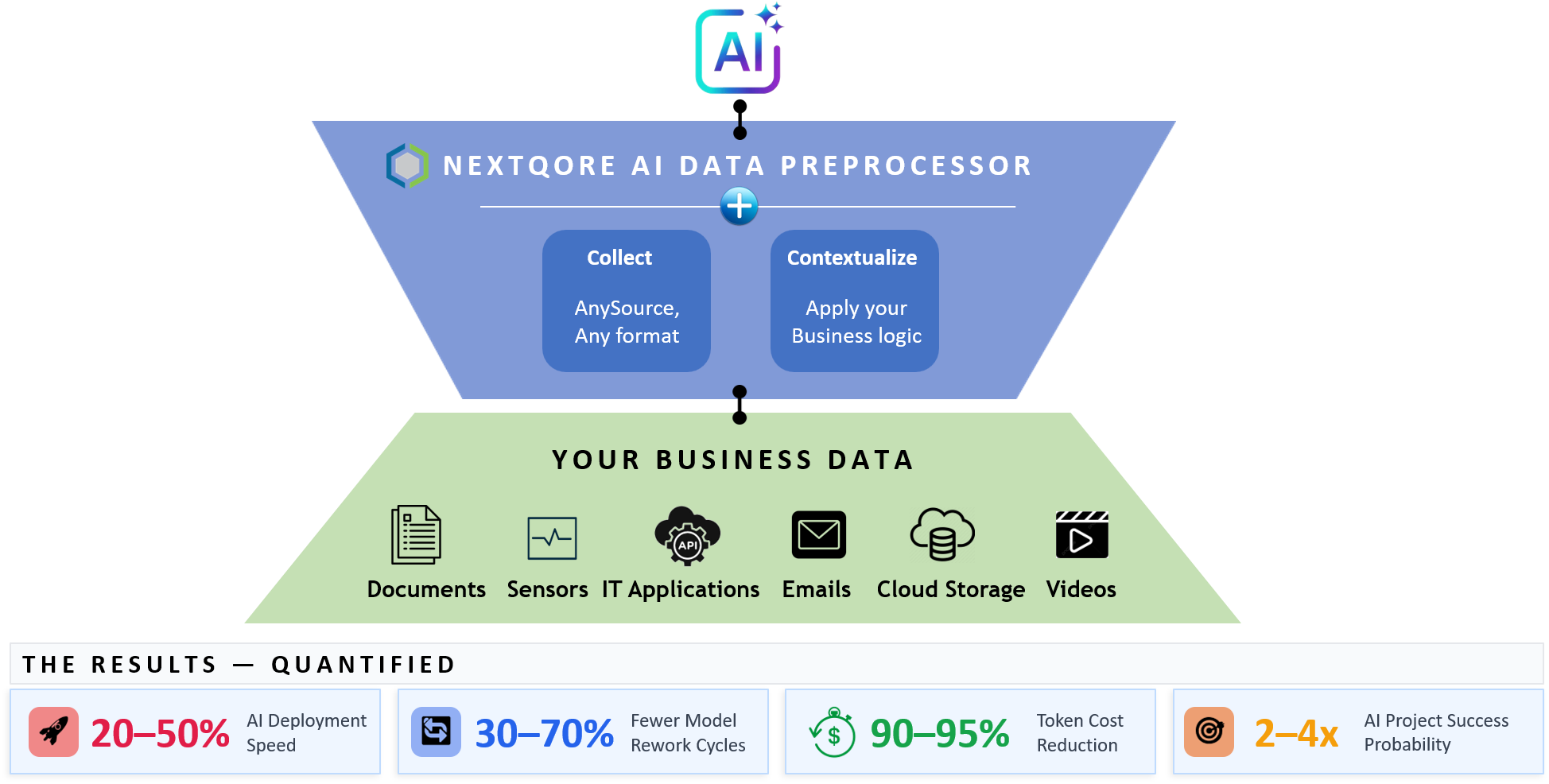 |