OmniFocus is a project management platform for iOS: Mac, iPad, and iPhone. It has features such as task management, Siri capture, and workflow automation.
$4.99
per month
StoriesOnBoard
Score1.1 out of 10
N/A
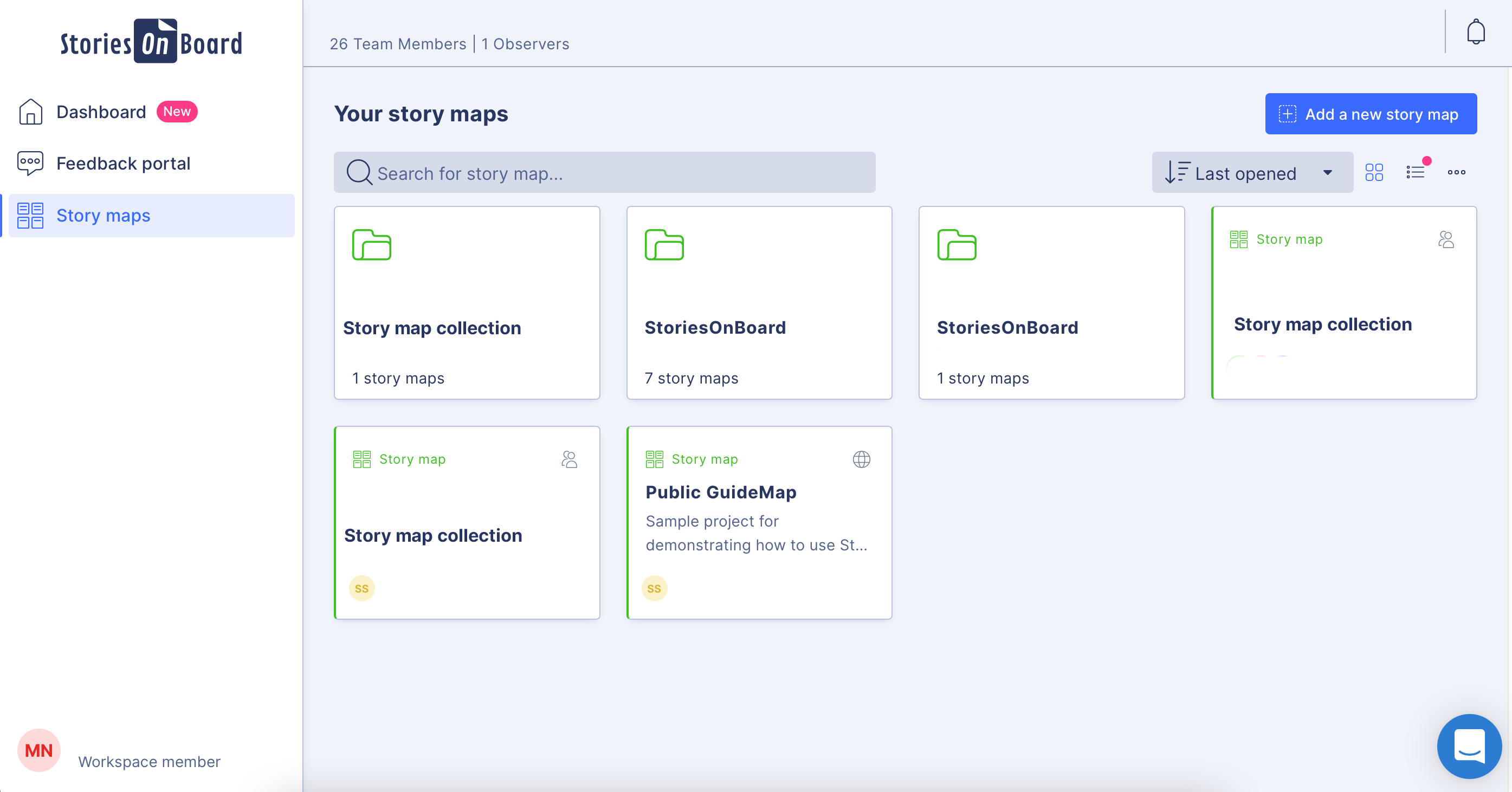
StoriesOnBoard is a holistic product management tool powered by user feedback. Through collecting user and customer feedback into a single repository and sorting it based on custom rules and collaborating with stakeholders to form actionable feature ideas from them, users can make sure their ideas will be driven by real user needs. Ideas can be validated on a public roadmap and then placed on a user story map to plan releases. StoriesOnBoard supports the product management…
1) Great for managing your work and personal activities. 2) One of the best implementations of the Getting Things Done method. 3) Not really suited for collaborative work management; OmniFocus is managed on a per-user basis so you can't share/assign tasks.
A de minimis incentive was given to thank the reviewer for their time. The incentive was not used to bias or drive a particular response, nor was the incentive contingent on a positive endorsement. More Info
As mentioned earlier, we also use StoriesOnBoard to create other processes (customer and employee journey). We use the swim lanes to differentiate between measures, tools and processes and working with them is very easy and understandable for this purpose.
Less easy is the use of context, i.e. when one part of a story map depends on another story map. This cannot be avoided (at least for us) to avoid creating redundancy (and the risk of creating different stages). At appropriate places, we refer to the other map in the title.
Ease of viewing what tasks need to be done at the present moment and the sorting of those tasks by availability, due date, start date, needed resources, and project.
The visual interface is really nice to work with, the UX/UI is intelligent and intuitive.
It's the most extensible software I've used. There is a community of people that publish compatible scripts for Omnifocus at no charge.
The code is robust and I've almost never had a bug or a glitch that resulted in issues.
The software syncs in the cloud between MacOS and iOS seamlessly and faster than other To-Do software. The sync aspect is available free of charge.
The development team at Omnifocus is on top of bugs and they have been adding releases regularly to increase functionality and performance.
While OmniFocus adheres to the GTD (Getting things done) principles, it can be used in almost any manner and you aren't stuck with just that methodology.
A de minimis incentive was given to thank the reviewer for their time. The incentive was not used to bias or drive a particular response, nor was the incentive contingent on a positive endorsement. More Info
I would really like to see graphic presentations of how I allocate my time, what categories of tasks don't get accomplished, etc.
I would like to see OmniFocus include Gantt chart functionality, such as allowing me to see how long it took me to accomplish a task from start to finish. Allowing me to actually input time spent, and seeing it on a Gantt chart, would be icing on the cake.
A de minimis incentive was given to thank the reviewer for their time. The incentive was not used to bias or drive a particular response, nor was the incentive contingent on a positive endorsement. More Info
A de minimis incentive was given to thank the reviewer for their time. The incentive was not used to bias or drive a particular response, nor was the incentive contingent on a positive endorsement. More Info
StoriesOnBoard works really well; all features are well thought through. It could look a bit fresher, although the new updated dashboard is already much better than it was.
OmniFocus has excellent user forums. They're active as well as mature, since the product has been around for years. I've never needed to actually contact customer support because OmniFocus is popular enough that I've always been able to find an answer in the forums, or in an article, or in a YouTube video.
A de minimis incentive was given to thank the reviewer for their time. The incentive was not used to bias or drive a particular response, nor was the incentive contingent on a positive endorsement. More Info
OmniFocus is built for the user with a lot going on - consequently, it does a great job at organizing lots of things in a manageable workload. It's perfect for taking a project and breaking it down into small tasks for yourself or teams. Once you get past the learning curve, it's quick at adding new tasks. Overall, it's an excellent product.
A de minimis incentive was given to thank the reviewer for their time. The incentive was not used to bias or drive a particular response, nor was the incentive contingent on a positive endorsement. More Info
The only other competitor we looked at was cardboardit.com. Both had solid functionality, but StoriesOnBoard was more user-friendly and quick to learn and use in our opinion.
OmniFocus keeps our tasks moving forward. Using a free script you can search all your current projects for projects that have no next step assigned to it to ensure nothing falls through the cracks.
When we serve our clients, the attention to detail we are able to give them comes from accurate tracking of what we need to deliver.
We complete projects 25% faster than before and we can see where the bottlenecks are immediate. We have also been forced to document tasks in a more concrete manner which allows for better execution.
A de minimis incentive was given to thank the reviewer for their time. The incentive was not used to bias or drive a particular response, nor was the incentive contingent on a positive endorsement. More Info
StoriesOnBoard (and story mapping in general) creates a low-cost visual method of aligning on high-level business and technical requirements early in a project and provides an ongoing reference as the project progresses. Having this alignment is critical for the later stages of the project.