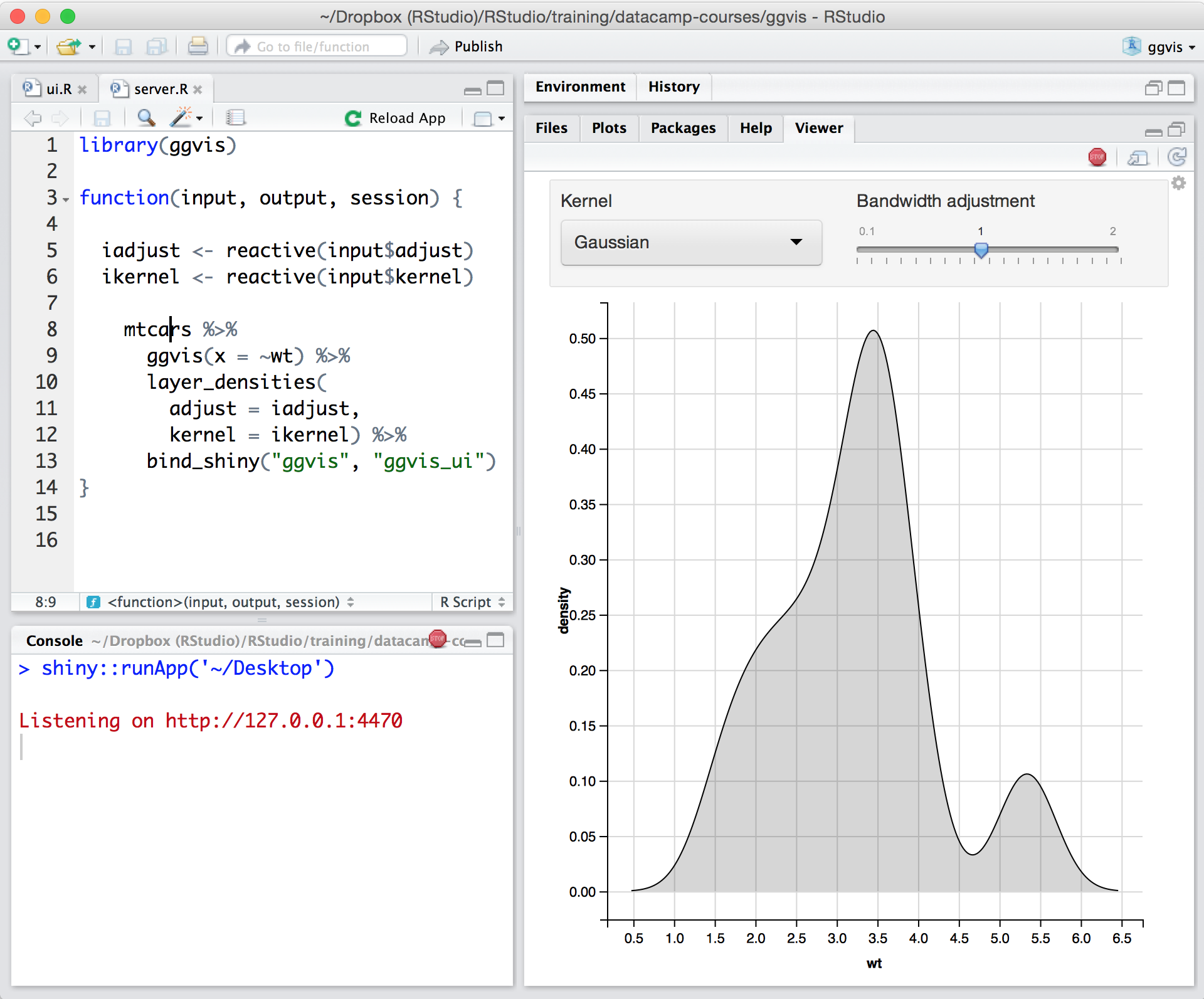
Posit, formerly RStudio, is a modular data science platform, combining open source and commercial products.
N/A
Teradata Autonomous Knowledge Platform
Score8 out of 10
N/A
Teradata Vantage is presented as a modern analytics cloud platform that unifies everything—data lakes, data warehouses, analytics, and new data sources and types. Supports hybrid multi-cloud environments and priced for flexibility, Vantage delivers unlimited intelligence to build the future of business.
Users can deploy Vantage on public clouds (such as AWS, Azure, and GCP), hybrid multi-cloud environments, on-premises with Teradata IntelliFlex, or on commodity hardware with VMware.
In my humble opinion, if you are working on something related to Statistics, RStudio is your go-to tool. But if you are looking for something in Machine Learning, look out for Python. The beauty is that there are packages now by which you can write Python/SQL in R. Cross-platform functionality like such makes RStudio way ahead of its competition. A couple of chinks in RStudio armor are very small and can be considered as nagging just for the sake of argument. Other than completely based on programming language, I couldn't find significant drawbacks to using RStudio. It is one of the best free software available in the market at present.
A de minimis incentive was given to thank the reviewer for their time. The incentive was not used to bias or drive a particular response, nor was the incentive contingent on a positive endorsement. TR verified that a representative sample of customers was invited. More Info
Teradata Vantage is well suited for large scale ETL pipelines like the ones we developed for anti money laundering risk matrices. It handles heavy joins, aggregations, and transformations on transactional data efficiently. We generate alert variables, adjust for inflation, and monitor establishments monthly with it, all integrated with Python and Control-M for a centralised automation across the company. For less appropriate, I would say that heavy resource demands might slow down experimentation for iterative work.
The support is incredibly professional and helpful, and they often go out of their way to help me when something doesn't work.
The one-click publishing from RStudio Connect is absolutely amazing, and I really like the way that it deploys your exact package versions, because otherwise, you can get in a terrible mess.
Python doesn't feel quite as native as R at the moment but I have definitely deployed stuff in R and Python that works beautifully which is really nice indeed.
A de minimis incentive was given to thank the reviewer for their time. The incentive was not used to bias or drive a particular response, nor was the incentive contingent on a positive endorsement. More Info
A de minimis incentive was given to thank the reviewer for their time. The incentive was not used to bias or drive a particular response, nor was the incentive contingent on a positive endorsement. More Info
Python integration is newer and still can be rough, especially with when using virtual environments.
RStudio Connect pricing feels very department focused, not quite an enterprise perspective.
Some of the RStudio packages don't follow conventional development guidelines (API breaking changes with minor version numbers) which can make supporting larger projects over longer timeframes difficult.
A de minimis incentive was given to thank the reviewer for their time. The incentive was not used to bias or drive a particular response, nor was the incentive contingent on a positive endorsement. TR verified that a representative sample of customers was invited. More Info
Teradata is an excellent option but only for a massive amount of data warehousing or analysis. If your data is not that big then it could be a misfit for your company and cost you a lot. The cost associated is quite extensive as compared to some other alternative RDBMS systems available in the market.
Migration of data from Teradata to some other RDBMS systems is quite painful as the transition is not that smooth and you need to follow many steps and even if one of them fails. You need to start from the beginning almost.
Last but not least the UI is pretty outdated and needs a revamp. Though it is simple, it needs to be presented in a much better way and more advanced options need to bee presented on the front page itself.
A de minimis incentive was given to thank the reviewer for their time. The incentive was not used to bias or drive a particular response, nor was the incentive contingent on a positive endorsement. More Info
There is no viable alternative right now. The toolset is good and the functionality is increasing with every release. It is backed by regular releases and ongoing development by the RStudio team. There is good engagement with RStudio directly when support is required. Also there's a strong and growing community of developers who provide additional support and sample code.
A de minimis incentive was given to thank the reviewer for their time. The incentive was not used to bias or drive a particular response, nor was the incentive contingent on a positive endorsement. TR verified that a representative sample of customers was invited. More Info
Teradata is a mature RDBMS system that expands its functionality towards the current cloud capabilities like object storage and flexible compute scale.
A de minimis incentive was given to thank the reviewer for their time. The incentive was not used to bias or drive a particular response, nor was the incentive contingent on a positive endorsement. More Info
For someone who learns how to use the software and picks up on the "language" of R, it's very easy to use. For beginners, it can be hard and might require a course, as well as the appropriate statistical training to understand what packages to use and when
A de minimis incentive was given to thank the reviewer for their time. The incentive was not used to bias or drive a particular response, nor was the incentive contingent on a positive endorsement. More Info
Teradata Vantage allows us to create a scalable infrastructure to support our strategic initiatives. The dedicated compute power ensures reliable performance with isolated workloads and dedicated resources, optimizing workflows for faster, more efficient data transfers. The compute clusters support ETL processes and OSF’s developers and data science team with the flexibility to create self-service analytics, to spin up/down at any time, driving better performance and minimizing costs.
RStudio is very available and cheap to use. It needs to be updated every once in a while, but the updates tend to be quick and they do not hinder my ability to make progress. I have not experienced any RStudio outages, and I have used the application quite a bit for a variety of statistical analyses
A de minimis incentive was given to thank the reviewer for their time. The incentive was not used to bias or drive a particular response, nor was the incentive contingent on a positive endorsement. TR verified that a representative sample of customers was invited. More Info
Since R is trendy among statisticians, you can find lots of help from the data science/ stats communities. If you need help with anything related to RStudio or R, google it or search on StackOverflow, you might easily find the solution that you are looking for.
A de minimis incentive was given to thank the reviewer for their time. The incentive was not used to bias or drive a particular response, nor was the incentive contingent on a positive endorsement. More Info
We have meetings at the beginning with the technical team to explain our requirements to them and they were really putting in a lot of effort to come up with a solution which will address all our needs. They implemented the software and also trained a few of our resources on the same too. We can get in touch with them now as well whenever we run into a roadblock but it's very less now.
A de minimis incentive was given to thank the reviewer for their time. The incentive was not used to bias or drive a particular response, nor was the incentive contingent on a positive endorsement. More Info
RStudio was provided as the most customizable. It was also strictly the most feature-rich as far as enabling our organization to script, run, and make use of R open-source packages in our data analysis workstreams. It also provided some support for python, which was useful when we had R heavy code with some python threaded in. Overall we picked Rstudio for the features it provided for our data analysis needs and the ability to interface with our existing resources.
A de minimis incentive was given to thank the reviewer for their time. The incentive was not used to bias or drive a particular response, nor was the incentive contingent on a positive endorsement. TR verified that a representative sample of customers was invited. More Info
Teradata is way ahead of its competitor because of its unique features of ensuring data privacy and data never gets corrupted even in worst case scenario. In most cases, the data corruption is a major issue if left unused and it leads to important data being wiped off which in ideal case should be stored for 3 years
A de minimis incentive was given to thank the reviewer for their time. The incentive was not used to bias or drive a particular response, nor was the incentive contingent on a positive endorsement. More Info
RStudio is very scalable as a product. The issue I have is that it doesn't necessarily fit in nicely with the mainly Microsoft environment that everybody else is using. Having RStudio for us means dedicated servers and recruiting staff who know how to manage the environment. This isn't a fault of the product at all, it's just part of the data science landscape that we all have to put up with. Having said that RStudio is absolutely great for running on low spec servers and there are loads of options to handle concurrency, memory use, etc.
A de minimis incentive was given to thank the reviewer for their time. The incentive was not used to bias or drive a particular response, nor was the incentive contingent on a positive endorsement. More Info
Using it for data science in a very big and old company, the most positive impact, from my point of view, has been the ability of spreading data culture across the group. Shortening the path from data to value.
Still it's hard to quantify economic benefits, we are struggling and it's a great point of attention, since splitting out the contribution of the single aspects of a project (and getting the RStudio pie) is complicated.
What is sure is that, in the long run, RStudio is boosting productivity and making the process in which is embedded more efficient (cost reduction).
A de minimis incentive was given to thank the reviewer for their time. The incentive was not used to bias or drive a particular response, nor was the incentive contingent on a positive endorsement. TR verified that a representative sample of customers was invited. More Info
Moving to Teradata in the Cloud-enabled a level of agility that previously didn't exist in the organization. It also enabled a level of analytic competency that was not achievable using other options on the aggressive timeline that was required. We didn't want to settle for reinventing a wheel when we had a super tuned performance capable beast readily available in Teradata. Teradata lets us focus on our business rather than spending money and effort trying to design software or database foundations features on an open source or lower performance platform.
A de minimis incentive was given to thank the reviewer for their time. The incentive was not used to bias or drive a particular response, nor was the incentive contingent on a positive endorsement. More Info