QMetry is a test management tool that offers test case authoring, reusable test cases, test execution, 140+ reports including deep traceability and test case coverage reports with customization options, and integrations with Jira, CI/CD tools like Bamboo/Jenkins, and Automation frameworks.
N/A
Tricentis qTest
Score 8.6 out of 10
N/A
Tricentis qTest (formerly QASymphony) provides enterprise-level agile testing tools giving businesses visibility and control needed to ensure application quality in fast-paced development environments. Tricentis and QASymphony merged in summer 2018.
Senior Manager – Developer Productivity & Digital Software Quality Engineering
Chose QMetry
QMetry provides an easy path for migration from the legacy test management tool. The migration utility is free compared to other vendors. We have received great customer support from day one of the engagement starting with POC, implementation, and ongoing support. Overall, …
Extensive integration options with various third-party tools, enabling seamless integration into existing workflows. Allows for flexibility and customization of workflows, fields, and permissions to adapt to unique testing requirements. Supports robust requirements traceability, …
QMetry, like any new-gen test management tool, works well with any type of development methodologies, be it agile, waterfall or hybrid. It is positioned to be a tool for enterprises of any size. QMetry also provides easy migration of existing test artifacts from a legacy test management tool to QMetry without loss of any information. The one thing that I see as an opportunity for improvement is trying to provide out-of-box integration with all major test automation tools. Another area could be to expand the offering to include it as a product suite with accessibility testing, security testing, performance testing, and test automation which is what the trend is.
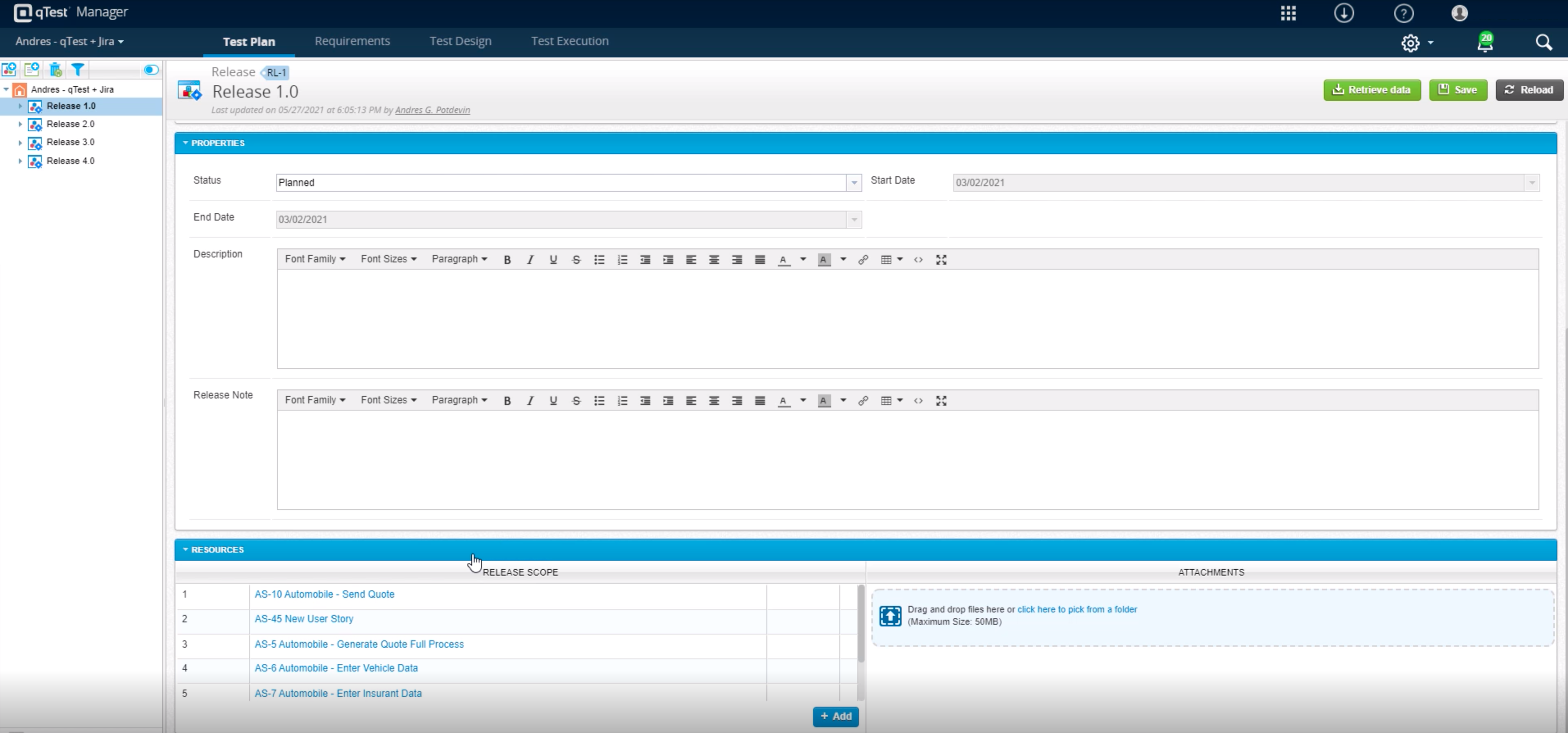
Tricentis qTest integrates seamlessly with Jira, making it ideal for teams that manage user stories and defects in Jira while keeping test cases and execution in qTest. When paired with automation tools like tosca, Selenium, or WebdriverIO, qTest is excellent for aggregating both manual and automated test results in one place.
As a fresher, when I started using qTest it was very handy and easy to understand.
It helps us trace the test cases that are used to test the quality in a single location
The main thing is its integration with JIRA as soon as we create a ticket we would be getting all the requirements in the qTest so it became easy for me
In requirements , we can't add multiple test cases at once, or search multiple cases at once, need to do one by one. Here actually qtest needs to improve.
Linking cloud hosted qtest and on-premise TOSCA is very difficult especially when you are working with client system with security wall. It requires tunnelling software which is not recommended.
It successfully balances deep enterprise functionality with a clean and modern interface. One of its strongest points is the intuitive, folder based navigation, which makes organizing test case and cycles feel natural. Learning curve is relatively shallow for the new team members to become productive without extensive onboarding. Also the deep integration with JIRA is a significant boost to its usability.
QMetry provides an easy path for migration from the legacy test management tool. The migration utility is free compared to other vendors. We have received great customer support from day one of the engagement starting with POC, implementation, and ongoing support. Overall, pricing and licensing model are affordable and attractive.
All of them offer formidable solutions in the test management realm, but each one caters to different niche and need. qTest distinguishes itself with its deep integration capabilities, especially with Agile and DevOps tools, enabling streamlined CI/CD process. Its modern, user-centric interface contrasts with ALM's more dated appearance and complex setup. While TestRail provides a clean user experience and caters to a broad spectrum of business, qTest's scalability, from SMBs to large enterprises, stands out. PractiTest's cloud-based solution is geared towards mid-sized companies, but qTest's flexibility, advanced analytics, and robust reporting grant teams actionable insights. qTest' approach to a more holistic test management closely aligning with modern software development practices